Service
Why Choose Zhongde?
Custom Products
Plastic Parts Solution
Rubber Parts Solution
TPE Parts Solution
Polyurethane Parts Solution
CNC Parts Solution
Materials We Offer
Surface Fishing
FAQs
Knowledge Hub
Application
Zhongde Case Study
Catagories
Most Popular
Snap Fit Design: A Complete Guide to Types, Principles, and Key Considerations
A Comprehensive Guide For Polycarbonate Injection Molding
Calculating Injection Molding Cost for Plastic Parts
Principle of Injection Molding Process
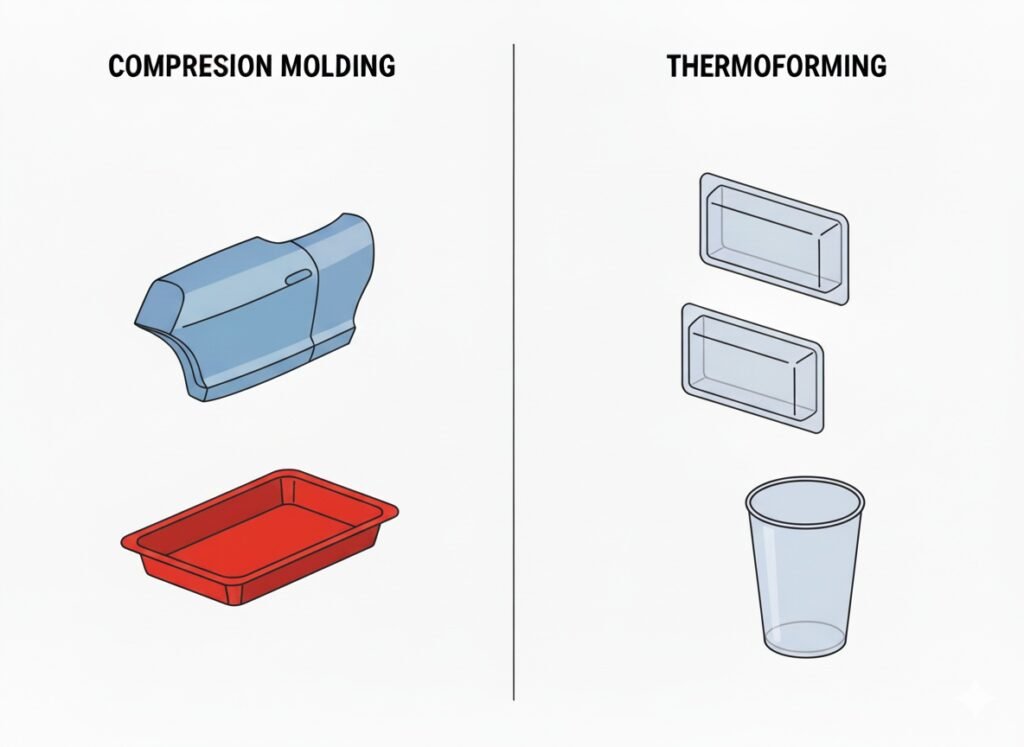
Compression Moulding vs Thermoforming: Key Differences
When you’re choosing a manufacturing process for plastic parts, two common options often come up: compression molding and thermoforming. At
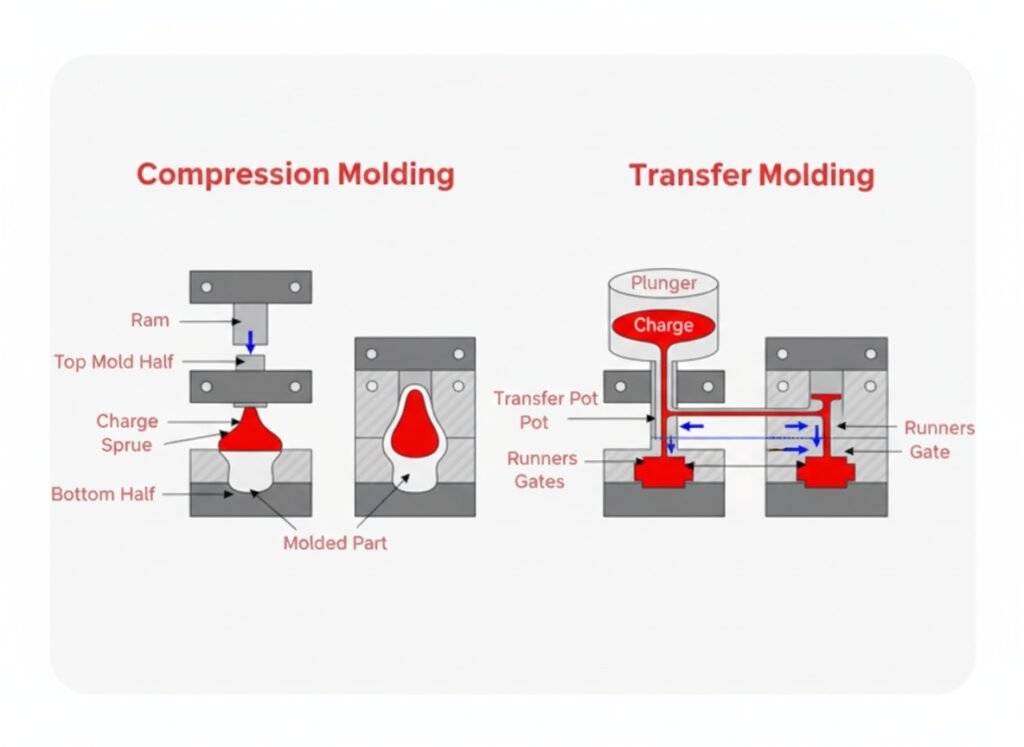
Transfer Molding Vs Compression Molding
In rubber and thermoset manufacturing, transfer molding and compression molding stand out as two of the most widely applied methods.
Compression Molding Design Principles for Reliable Production
Compression molding is often perceived as a simpler alternative to injection molding, with fewer design constraints. This leads to a
What Is Silicone Overmolding Process?
Silicone overmolding involves bonding silicone materials to a substrate to create integrated parts. The primary material used in this process
What is Water Assisted Injection Molding process?
The water assisted injection molding process, one of injection molding types, builds on traditional injection molding by using water pressure
Considerations for Plastic Prototyping Manufacturing
Before a plastic part ever reaches mass production, it usually has to go through one critical step: prototyping. A CAD
Design Corners for Plastic Injection-Molded Parts
In injection molding, corners are one of the most sensitive features in a plastic part design. Sharp edges can lead
Medical Silicone Molding Components: Material Selection
Medical silicone molding is an important technology for both implantable and non-implantable medical components. Implantable parts, such as seals in
A Comprehensive Guide to Silicone Compression Molding
Silicone compression molding is a manufacturing process used to produce parts from silicone rubber materials. Silicone compression molding is applied
The Ultimate Guide to PTFE Compression Molding
Polytetrafluoroethylene (PTFE), a fluoropolymer with properties such as chemical resistance, thermal stability up to 260°C, low friction, and electrical insulation,
Understanding Silicone Injection Molding: From Process to Applications
Silicone injection molding combines the unique properties of silicone with the precision of injection molding to create parts that are
How to Remove Flash From Rubber Parts?
Rubber flash is a common defect that occurs during the molding of rubber parts, impacting both aesthetics and functionality. Understanding