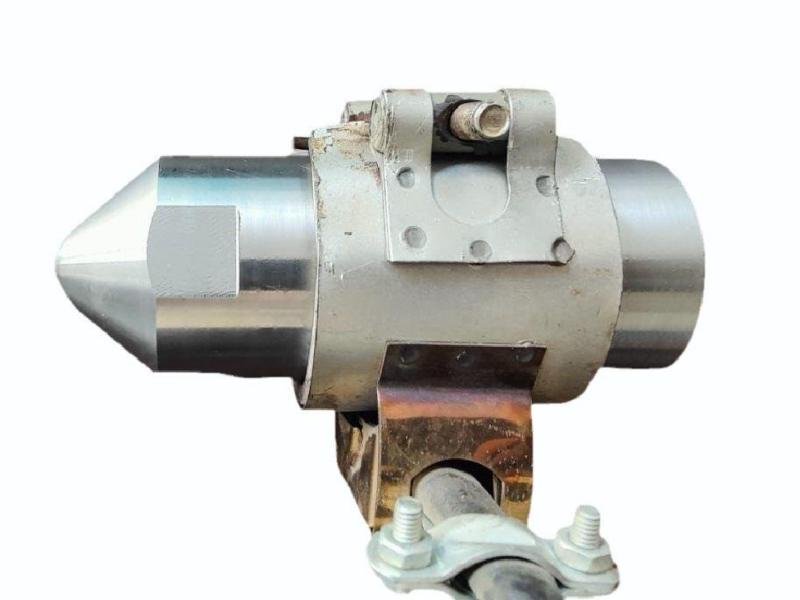
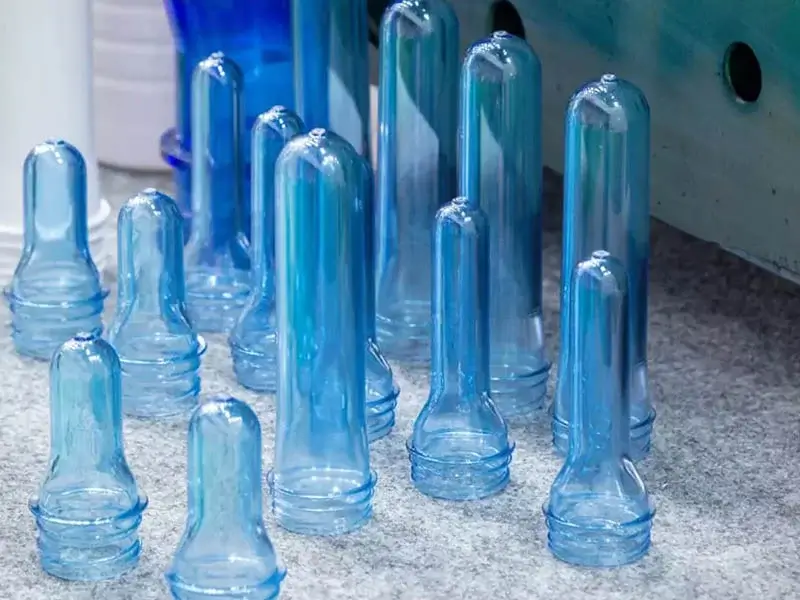
Many injection molding materials can be modified with additives to enhance specific properties. UV stabilizers protect ABS or PC parts in outdoor applications, while impact modifiers improve toughness for thin-wall designs. Fillers such as glass fibers increase stiffness and dimensional stability, but they require careful attention to rib thickness and draft angles. Keep in mind that additives can alter flow behavior, shrinkage, and warpage, so they should always be considered in part geometry and mold design decisions.
If you want to learn more about common injection molding materials, check out our detailed guide on An In-Depth Guide to Common Injection Molding Materials.
Key Injection Molding Design Features
After choosing a material, the next step in mold injection design is shaping it into a real part that can be manufactured reliably.
To make this easier to understand, injection molding design is usually considered from two connected sides. One is the part design, which focuses on the shape of the product itself—what the user will hold, see, or assemble. The other is the mold design, because every plastic part is created inside a mold, and the shape of that mold determines whether the part can actually be produced in a stable and cost-effective way. In other words, the part defines what you want, while the mold defines how it can be made.
Separating these two perspectives helps avoid a common misunderstanding: a design may look perfectly fine as a product, but still fail in production if it cannot be properly filled, cooled, or ejected from the mold. By looking at both the part and the mold together, we can reduce these risks early in the design stage.
Part Geometry in Injection Molding Part Design
Part geometry is the most visible side of injection molding design—it defines the actual shape of the product, the areas users will touch, and how the part will fit or function in an assembly. But beyond appearance, every wall, corner, and structure also affects how the molten plastic flows inside the mold and how the part behaves as it cools.
In the following section, we will look at the key geometric elements that influence both performance and manufacturability.
Wall Thickness
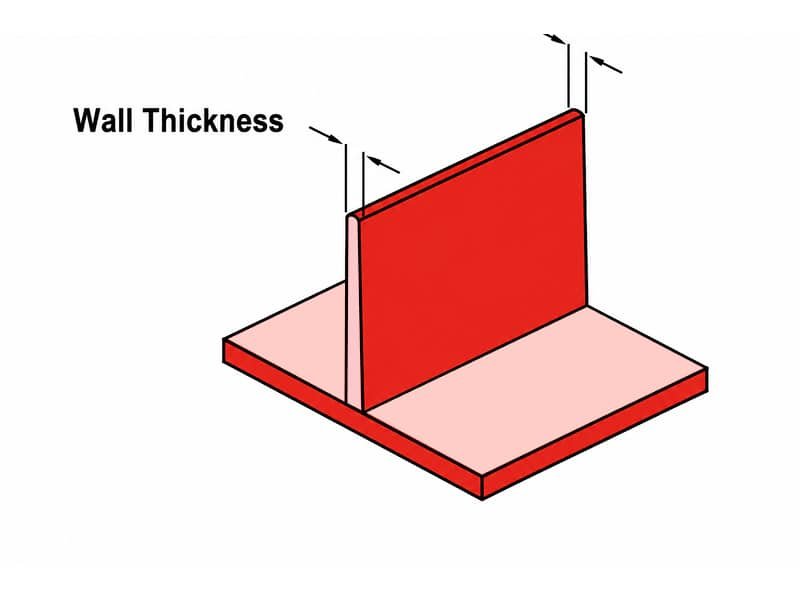
Wall thickness is the distance between the inner and outer surfaces of a part. Wall thickness should be designed as a controlled and consistent value rather than adjusted locally for strength. In most cases, strength should be achieved through structural features like ribs instead of thick solid sections. Uneven wall thickness forces the material to cool at different rates, which leads to warpage and internal stress. When thickness changes are unavoidable, they should transition gradually to maintain stable flow and cooling behavior across the part.
If you want to learn more about wall thickness, check out our guide on Injection Molding Wall Thickness Guideline.
Transitions
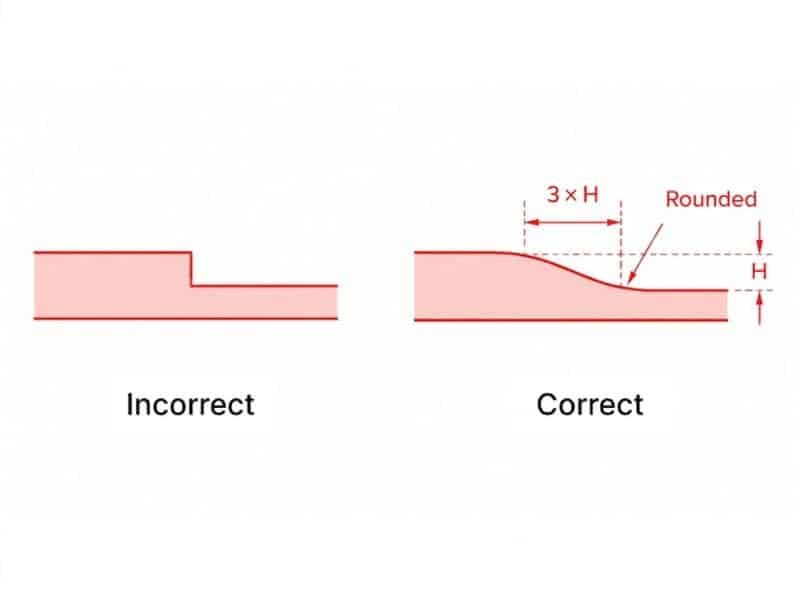
Transitions are the zones where the part changes thickness or where features join, such as where a handle meets its base or where a side wall thickens into a mounting boss. Transitions should always be treated as flow-sensitive zones rather than simple geometric connections. Any sudden change in thickness creates a disruption in melt flow and cooling, which increases the risk of sink marks or weak structural areas. A well-designed transition distributes material smoothly, allowing the cavity to fill uniformly and solidify without localized stress concentration.
Corners
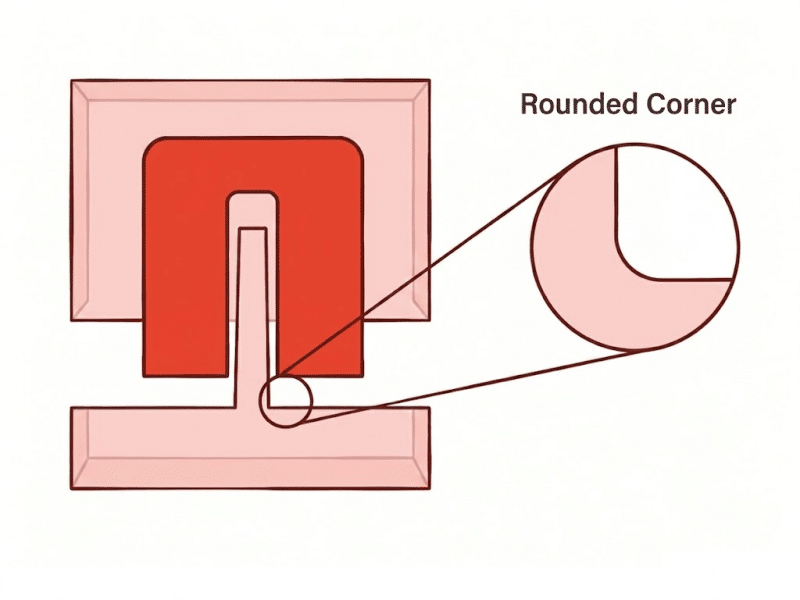
Corners are found at the junctions of walls, such as the inside corner of a box or the base of a rib. Sharp corners can trap stress and cause cracks or flow defects. Adding a radius to the corner allows the plastic to flow smoothly, strengthens the part, and improves mold release. For instance, the corner where a lid meets the wall of a container should be rounded rather than sharp.
You can find more useful information about corners in our article Design Corners for Plastic Injection-Molded Parts.
Ribs and Bosses
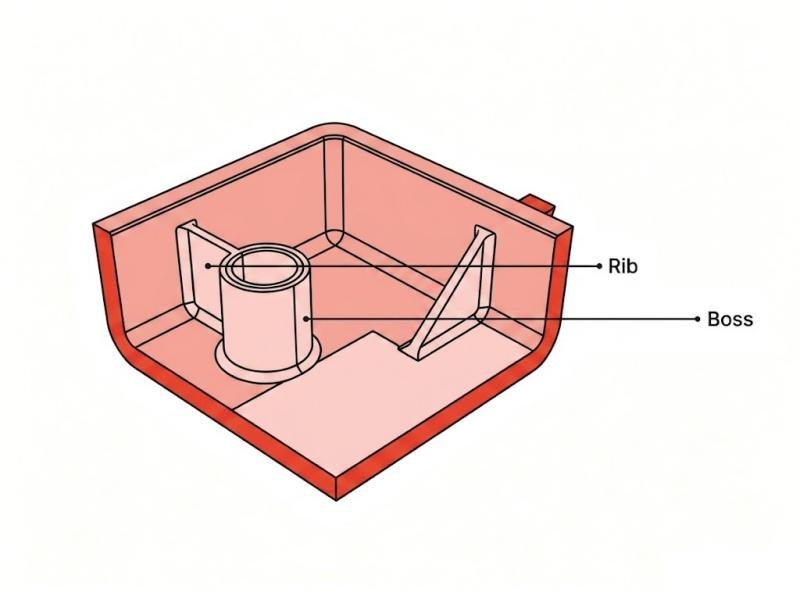
Ribs and bosses should be used as structural reinforcement strategies rather than geometric additions. Ribs are more effective when they support flat surfaces without significantly increasing wall thickness, while bosses should be designed to distribute load from fasteners without creating localized thick areas. Poor rib or boss design often leads to sink marks or weak ejection points, so their thickness, height, and connection to the base wall must be carefully balanced with material shrinkage behavior.
For more information about ribs and bosses, read Plastic Parts Rib Design and Mastering Molded Parts Plastic Boss Design Guideline.
Textures
Textures should be considered early in the design stage because they directly influence both mold release and visual quality. Deep or aggressive textures require additional draft and can affect how the material flows into the cavity surface. In practical terms, textures are not only aesthetic features but also functional tools for improving grip and masking minor surface variations caused by molding. Their design must align with both material capability and part geometry to ensure consistent replication.
Tooling Features in Plastic Injection Mold Design
If part geometry defines what the product should be, tooling design defines how that product is actually formed in real production. Every plastic part is created inside a mold, and this is where plastic injection mold design becomes critical for controlling flow, cooling, and ejection behavior. By designing with the mold in mind, you can reduce defects, lower production costs, and ensure the part comes out of the machine looking and performing as intended.
Parting Lines
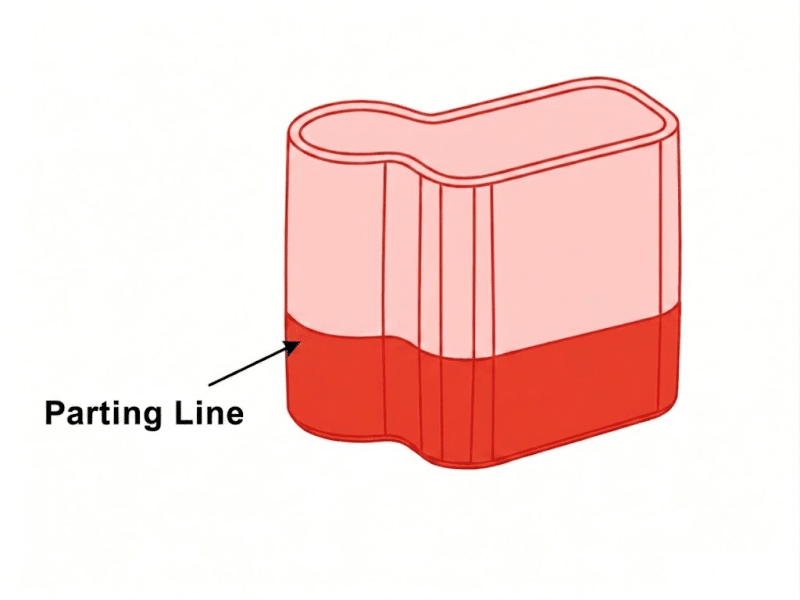
A parting line is the seam where the two halves of a mold meet. Every injection molded part has one, whether it is visible or not. On a plastic enclosure, it may run along the side edge; on a handle, it often follows the contour of the grip.
When planning parting lines, designers should consider both appearance and manufacturability. A poorly placed parting line can leave visible marks on cosmetic surfaces or increase mold complexity. Whenever possible, place parting lines along natural edges, corners, or less noticeable areas where they will have minimal impact on the finished product.
To dive deeper into this topic, check out our detailed guide on How to Deal with Possible Problems with Parting Line.
Draft
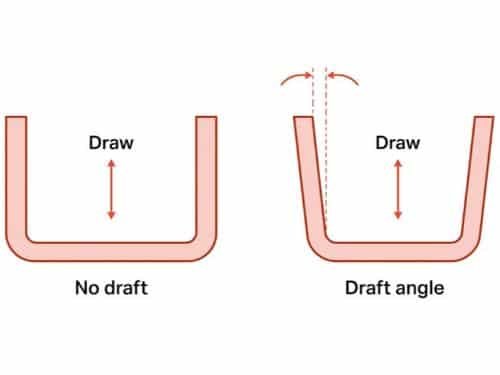
Draft is the slight angle added to vertical surfaces to help the part release from the mold. Without draft, the plastic can stick to the mold cavity during ejection, potentially causing scratches, deformation, or even part damage.
Features such as side walls, ribs, bosses, and textured surfaces should all include adequate draft. The deeper the feature, the more important draft becomes. For example, a deep battery compartment or a tall enclosure wall typically requires more draft than a shallow feature. Textured surfaces often need additional draft because the texture increases friction between the part and the mold.
For more details about draft angles, visit our blog Injection Molding Draft Angles.
Gates
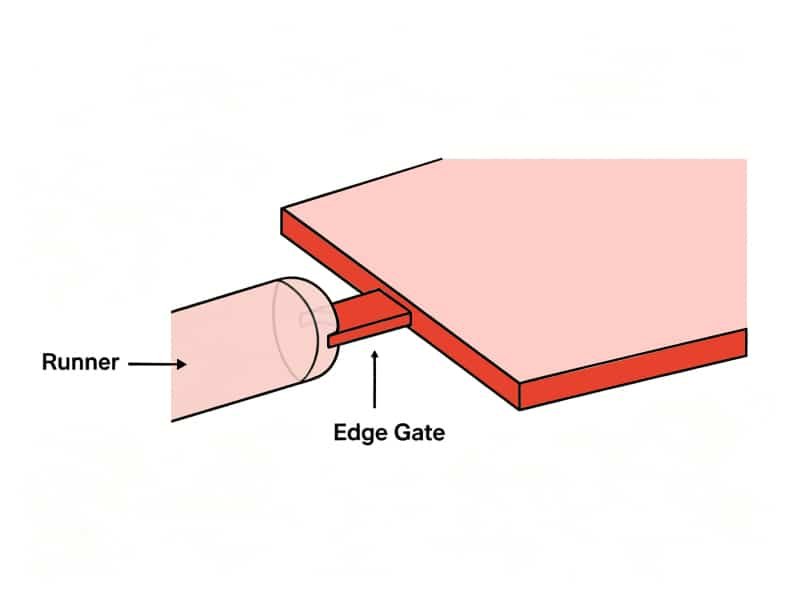
A gate is the entry point where molten plastic enters the mold cavity. Although the gate is removed after molding, its location can affect filling behavior, surface quality, and dimensional stability.
When selecting gate locations, designers should aim for balanced material flow and complete cavity filling. Gates are often positioned in thicker sections where the material can flow more easily. Poor gate placement may lead to visible weld lines, trapped air, sink marks, or uneven shrinkage. For cosmetic parts, gate marks should also be located in less visible areas whenever possible.
We have explained this topic in more detail in our blog Injection Molding Gate Design.
Ejector Pins
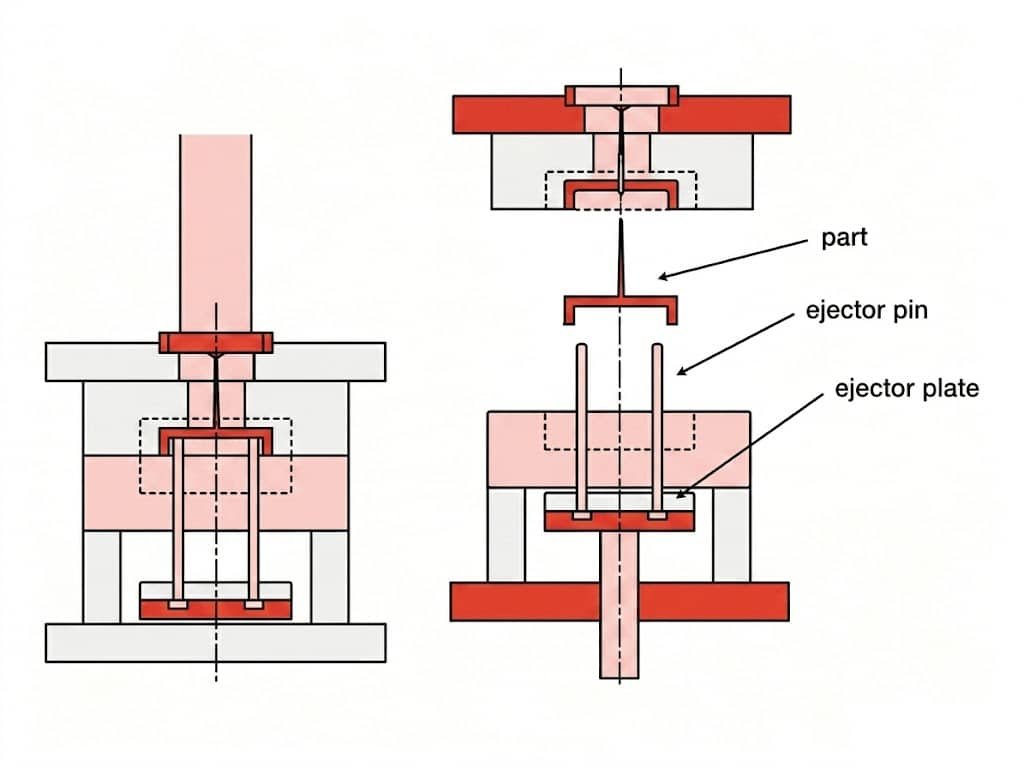
Ejector pins push the finished part out of the mold once it has cooled. Most molded parts contain small circular marks left by these pins, often found on the interior surfaces of housings, containers, or structural components.
Good ejector pin placement distributes ejection force evenly across the part. Pins positioned in weak or highly visible areas may leave noticeable marks or cause deformation during ejection. Designers typically place them on hidden surfaces, reinforced areas, or regions that can better withstand ejection forces.
For more information about ejector pins, explore Comprehensive Understanding Injection Molding Ejector Pins.
Design Guidelines for Injection Molded Parts
Now that we are familiar with the main principles of designing for injection molding, we can start putting them into practice. In real projects of design injection molded parts, no two parts are identical, but most design decisions still follow a common set of rules and practical ranges that help ensure the part can be molded successfully.
How to Optimize Wall Thickness
For most general-purpose plastics, maintain walls between 1.5 mm and 4 mm. Thin walls (<1 mm) can be difficult to fill, while thick walls (>5 mm) risk shrinkage and sink marks.
When varying thickness is unavoidable, use gradual transitions of less than 3:1 thickness ratio between adjacent sections to prevent stress concentration and warping. For example, if a handle base is 4 mm thick, the adjoining rib should not exceed 12 mm in thickness.
How to Manage Thickness Changes
Where walls change thickness or where a rib meets a main wall, use smooth transitions rather than abrupt steps. For example, a rib joining a side wall should have a fillet radius at least 0.5–1 times the rib thickness. Sharp transitions concentrate stress and can lead to cracks or warpage during cooling. Gradual tapers allow the molten plastic to flow evenly, improving both dimensional stability and surface quality.
How to Select Appropriate Draft Angles
To reduce stress concentration and improve mold filling, apply appropriate radii to internal and external corners. Apply internal radii of at least 0.5–1 times the wall thickness and external radii around 0.25–0.5 times the wall thickness.
For instance, in a rectangular housing with 3 mm walls, internal corners should have a radius of 1.5–3 mm. This not only strengthens the part but also improves mold flow and reduces ejection friction.
How to Add Effective Ribs and Bosses
Ribs provide stiffness without increasing overall wall thickness. When designing ribs, maintain a thickness roughly 60–70% of the adjacent wall, with a height no greater than three times the rib thickness to avoid sink marks. Bosses for screws or snap-fits should include fillets at the base and a draft angle of 1–2° per side to aid ejection. Placing bosses too close together or making them excessively tall can cause localized warpage.
How to Select Appropriate Draft Angles
Draft angles help the part release from the mold cleanly. For vertical walls or features deeper than 20 mm, add 1–2° of draft for standard plastics; higher-drag materials like Polycarbonate or glass-filled nylon may require up to 3°. Even textured surfaces need additional draft because the pattern increases friction between part and mold. Without adequate draft, parts may stick, deform, or incur ejection marks.
Review Mold Requirements Before Finalizing the Design
Finally, review the design from the mold’s perspective. Identify where parting lines will fall, where gates should enter the cavity, and where ejector pins will contact the part. For example, placing gates in thicker areas ensures complete filling, while ejector pins are best located on interior surfaces or reinforced areas to minimize visible marks. Early consideration of these mold-related features reduces costly revisions and ensures smoother production.
Common Injection Molding Defects
Even with a well-designed part, issues can still occur during injection molding due to material behavior, mold conditions, or processing parameters. These defects are usually the result of imbalances in flow, cooling, or mold design.
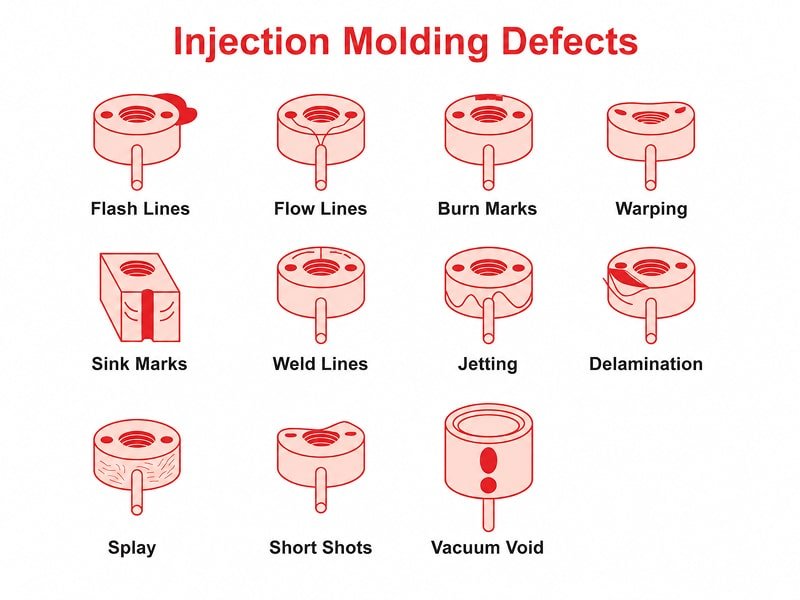
Common injection molding defects include warping, sink marks, short shots, and flash.
Warping refers to parts twisting or bending due to uneven cooling. Sink marks are small dents that often appear in thicker sections. Short shots occur when the mold cavity is not completely filled with material. Flash is excess plastic that leaks out along the mold parting line.
Other common issues include weld lines, which are visible lines formed where two flow fronts meet, and air traps or voids, which are small bubbles or empty spaces trapped inside the part.
If you are interested in learning more, our article 20 Common Defects in Injection Molding provides additional details.
Conclusion
If you’ve made it this far, you probably already notice that injection molding design is not a simple topic. There are many small details that interact with each other in ways that are not immediately obvious at the early design stage.
That’s why working with an experienced manufacturer can make a big difference. A skilled team can evaluate manufacturability, suggest practical improvements, and help you avoid hidden issues before production begins. If you are developing a new product or refining an existing design, Zhongde’s Custom Tooling Service can help you move from concept to production with fewer risks anlined a more stable manufacturing outcome.