During plastic molding, the outer surface of a part cools faster than the inner area. This uneven cooling can lock residual stress into the material, affecting dimensional stability and long-term performance.
Annealing provides a controlled way to relieve these stresses through carefully managed heating and cooling cycles, allowing the material to reach a more stable state.
What Is Plastic Annealing?
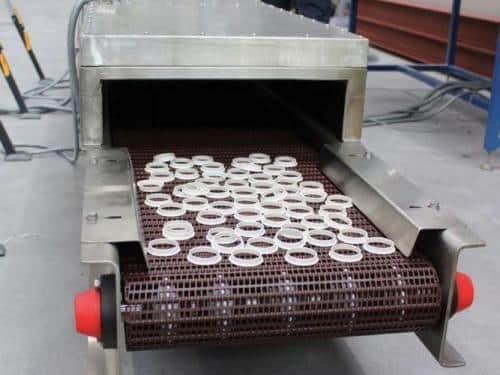
Plastic annealing is a post-processing heat treatment that involves gradually raising a plastic part to a specific temperature below its melting point, holding it there for a set period, and then cooling it slowly and evenly. This process allows the polymer chains to relax and redistribute, releasing internal stresses that built up during molding, extrusion, or machining.
Plastic Annealing Process
The annealing process typically involves several stages, each helping release internal stresses and improve part stability:
- Preheating: If stored in a cold environment, the part is gradually warmed to avoid thermal shock.
- Heating: Temperature is slowly increased to a target level below the plastic’s melting or glass transition temperature, depending on the material.
- Soaking: The part is held at this temperature for a set period, allowing heat to distribute evenly and residual stresses to relax.
- Controlled cooling: The part is cooled gradually, often inside the oven or chamber, to prevent new stresses from developing.
- Inspection: Dimensions and surface condition are checked to verify stability after annealing.
Benefits of Plastic Annealing
Beyond relieving residual stress, annealing improves several aspects of part performance, especially when parts are exposed to demanding conditions:
Improved Impact and Fatigue Resistance
Reduced internal stress helps parts distribute mechanical loads more evenly, improving resistance to repeated stress cycles and sudden impacts during shipping, installation, or use.
Better Machinability
Parts with lower residual stress maintain their shape more reliably during drilling, cutting, or tapping, making secondary machining more predictable.
Enhanced Optical Clarity
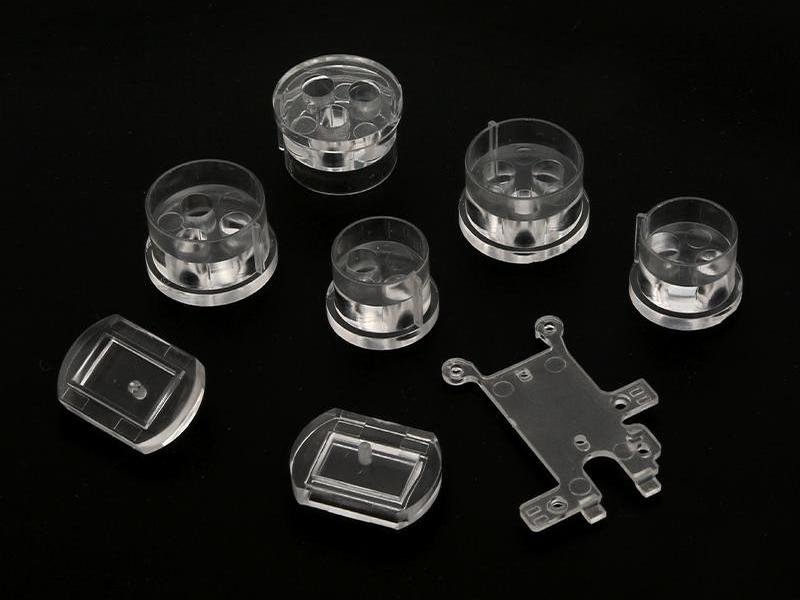
For transparent or translucent plastics, annealing can reduce stress marks and haze, creating a clearer and more uniform appearance.
Better Bonding and Coating Performance
Lower internal stress provides a more stable surface for adhesives, paints, and coatings, reducing the risk of peeling or delamination over time.
When Plastic Annealing Is Needed
Not every plastic part requires annealing — it is most useful when residual stress is likely to affect dimensional stability, appearance, or long-term performance.
High-Precision or Tight-Tolerance Parts
Components with strict dimensional requirements — such as optical housings, precision gears, or tight assemblies — can benefit from annealing to reduce dimensional changes after molding or machining.
High-Stress Molding Conditions
High injection pressures, rapid cooling, or uneven filling can leave more residual stress in the material, making stress relief more valuable.
Post-Machining Operations
Cutting, drilling, or milling can release existing stresses and cause deformation, so annealing may help stabilize parts before final assembly or use.
Components Exposed to Temperature Swings
Parts used outdoors, in automotive environments, or under repeated thermal cycling can benefit from improved stability, reducing the risk of warping during service.
Materials Sensitive to Stress Cracking
Plastics such as polycarbonate and acrylic are more prone to stress cracking, so annealing is often considered when part geometry, tolerances, or application conditions increase the risk.
Stress-Sensitive Materials
Plastics such as polycarbonate and acrylic are more prone to stress cracking, so annealing is often considered when part geometry, tolerances, or application conditions increase the risk.
Plastics Commonly Annealed
While annealing can be applied to many plastics, certain materials benefit more due to their sensitivity to residual stress, dimensional changes, or thermal history:
- Polycarbonate (PC): Highly sensitive to stress cracking, making annealing an important step for parts with high residual stress or demanding service conditions.
- Acrylic (PMMA): Prone to stress crazing after molding, machining, or forming, with annealing helping stabilize the material and reduce long-term cracking risks.
- Nylon (PA): Absorbs moisture and undergoes dimensional changes, while annealing helps stabilize dimensions and relieve residual stress from processing.
- Polyethylene (PE) and Polypropylene (PP): Semi-crystalline plastics where annealing improves dimensional consistency by allowing more controlled crystalline development, especially in precision or thick-section parts.
- POM (Acetal): Widely used for precision machined components, where annealing helps relieve residual stress and minimize post-machining distortion.
- PET and PBT: Engineering plastics used in demanding applications, where annealing supports dimensional stability and consistent performance.
How to Improve Annealing Results
Consistent annealing results depend on both equipment capability and careful control of key process variables:
Matching Temperature to Material Properties
Annealing temperature is selected based on the material’s glass transition temperature (Tg), melting point, and recommended processing range. For amorphous plastics, it is typically set below Tg, while semi-crystalline plastics are treated below their melting point to avoid distortion.
Controlling Heating and Cooling Rates
Heating and cooling rates should remain slow enough to minimize temperature differences across the part. Rapid expansion or contraction can create new residual stresses during the process.
Calculating Soak Time by Section Thickness
Soak duration depends strongly on part thickness because heat transfer is limited by diffusion. As a general rule, thicker sections require significantly longer dwell times for the core to reach the target temperature.
Using Uniform Heating Equipment
Well-calibrated ovens with consistent temperature distribution reduce uneven treatment. Hot spots or poor airflow can leave some areas under-annealed.
Verifying Results After Treatment
Post-anneal checks such as dimensional measurement, polarized-light stress analysis for transparent parts, or solvent stress-cracking tests help confirm whether residual stress has been sufficiently reduced.
Conclusion
Proper annealing helps reduce residual stress and improve plastic part stability, but material selection, molding conditions, and part design also play critical roles. Zhongde provides custom plastic injection molding with controlled processing to produce reliable parts for demanding applications.