When people hear “nylon,” they often first think of everyday items like fishing lines or fabric. But in engineering, nylon is much more than that—it behaves like a tough, slightly flexible building material that can be shaped into precise mechanical parts.
In CNC machining, nylon is widely used because it is strong enough to carry load, but still easy to machine into complex shapes. You can think of it as a material that sits between rigid plastics and metal—light like plastic materials, but much more durable than most everyday polymers.
In this article, we will walk through what nylon is, its key properties, common grades, how it is machined, practical tips, and where it is used.
What Is Nylon?
Nylon is a family of engineering plastics known for their toughness and flexibility. If you imagine metal as something rigid and glass as something brittle, nylon sits in the middle—it can bend slightly, absorb impact, and still return to shape.

Key properties include:
- Strong and tough under mechanical stress
- Good resistance to wear and friction
- Can handle repeated movement without breaking easily
- Naturally slippery surface (low friction)
- Resistant to oils and many industrial chemicals
- Absorbs a small amount of moisture from air
That last point is important: nylon is a bit like a sponge in a very mild way—it slowly absorbs water from the environment, which can slightly change its size or feel over time.
Common Nylon Grades in CNC Machining
In CNC machining, nylon is available in several common grades, and each behaves slightly differently during cutting and in final performance. Choosing the right grade helps balance machinability, strength, and dimensional stability.
Nylon 6 (PA6)
Nylon 6 is one of the most commonly used grades in CNC machining. It is relatively soft compared to other engineering plastics, which makes it easier for cutting tools to shape. However, because it absorbs more moisture, finished parts may slightly change in size after exposure to air.
It is often used for general mechanical parts such as spacers, covers, and non-critical functional components.
Nylon 66 (PA66)
PA66 is like a “reinforced version” of Nylon 6. In CNC machining, it feels slightly harder and more stable under cutting forces.
It produces more heat during machining, so tool condition and cutting parameters need more attention. In return, it offers better strength and thermal resistance in the final part.
This grade is commonly used in automotive and industrial components where stability under load is more important.
Glass-Filled Nylon
Glass-filled nylon contains short glass fibers that improve stiffness and strength. It is more abrasive on cutting tools, meaning tools wear faster compared to standard nylon. However, the result is a much stiffer and more dimensionally stable part.
It is often used for structural components, brackets, and load-bearing parts.
Lubricated or Oil-Filled Nylon
This grade is engineered specifically for friction reduction. During CNC machining, it behaves similarly to standard nylon, but the real advantage appears in use.
The material has built-in lubrication properties, which makes it suitable for moving components like gears, bushings, and sliding parts.
Advantages of CNC Machining Nylon
Nylon is widely used in CNC machining not only because of its material performance, but also because it behaves in a very “machinable” way. In other words, it is a material that is relatively easy to shape into functional parts while still maintaining good durability in real use.
Here are the key advantages of using nylon for CNC machining:
Good balance between strength and weight
Nylon is strong enough for many mechanical applications, but still much lighter than metal.
In CNC machining, this makes it a practical choice for parts that need to move, rotate, or reduce overall system weight without losing structural reliability.
Easy to machine into complex shapes
Compared to many engineering plastics, nylon is relatively forgiving during cutting.
It allows CNC machines to produce detailed geometries, thin walls, and functional features without excessive cracking or chipping.
This makes it suitable for both prototypes and final functional parts.
Performs well in moving parts
Nylon naturally has a low-friction surface.
After CNC machining, this property remains useful in components like gears, bushings, and sliding parts, where smooth motion is important.
In many cases, nylon parts can run without additional lubrication.
Reduces noise and vibration
Compared with metal, CNC machined nylon parts operate more quietly.
This is especially useful in assemblies where repeated contact or movement occurs, helping reduce vibration and “metal sound” during operation.
Cost-effective for functional production
For many mid-volume or custom parts, CNC machining nylon can be more economical than machining metal or producing complex injection molds.
It is often chosen when the goal is to balance performance, lead time, and cost—rather than maximizing only one factor.
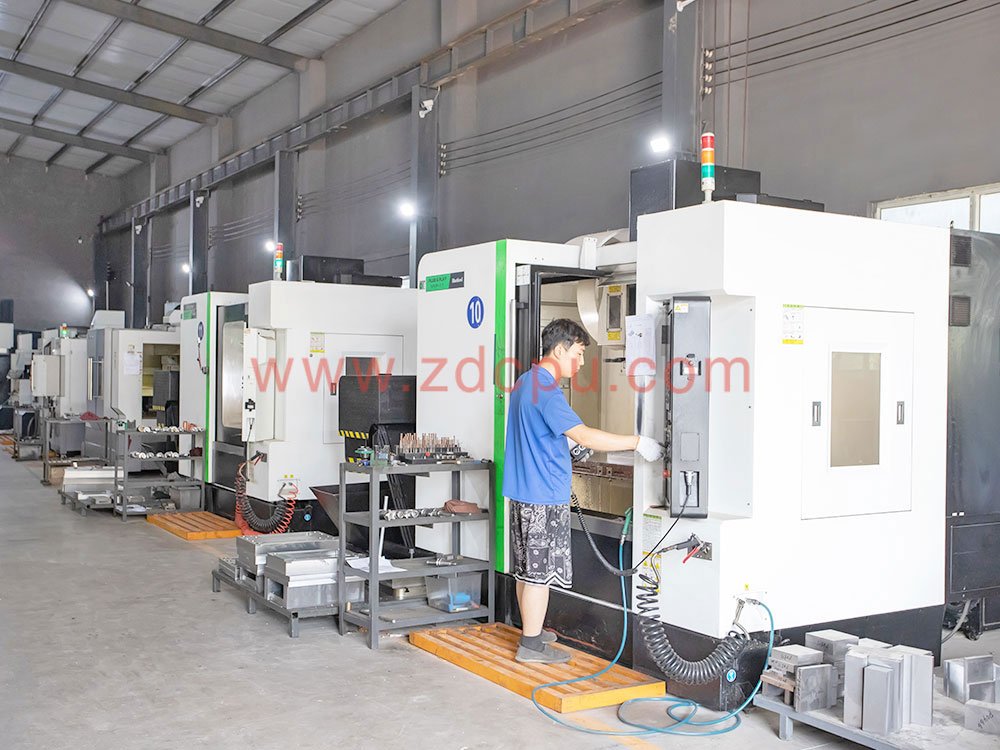
CNC Machining Process for Nylon
CNC machining nylon is not just about cutting material into shape—it is more like carefully “guiding” a slightly flexible material into a precise final form. Because nylon can react to heat and moisture, the machining process needs to be controlled step by step to ensure stable results.
Material preparation and conditioning
Before nylon machining begins, nylon material is usually inspected and sometimes pre-dried.
This is because nylon naturally absorbs moisture from the air, and too much moisture can slightly affect machining accuracy.
Think of it like preparing a sponge—you want it in a stable condition before shaping it.
Rough machining (initial shaping)
In the first stage, CNC machines remove most of the excess material.
This is done with controlled cutting speeds to avoid generating too much heat, since nylon can soften if it gets too warm.
At this stage, the part is still “rough,” but the basic shape is already formed.
Finish machining (precision shaping)
Once the basic form is ready, the machine moves into fine cutting.
This step focuses on achieving accurate dimensions and smooth surfaces.
Because nylon is slightly flexible, this stage is carefully controlled to avoid deformation while maintaining precision.
Cooling and chip control
Unlike metals, nylon is usually machined with air cooling instead of heavy liquid coolant.
This helps avoid introducing extra moisture and keeps the material behavior stable during cutting.
At the same time, chip removal is important to prevent material from melting or sticking during processing.
Post-machining stabilization and inspection
After machining, nylon parts may slightly change shape as internal stress and moisture balance out.
For this reason, parts are often left to stabilize before final inspection.
This step ensures that the final dimensions match real working conditions, not just the freshly machined state.
Tips for Successful Nylon Machining
Nylon is not a difficult material to machine, but it does behave differently from metals and many other plastics. Small process details can make a big difference in final accuracy and stability. Below are some practical tips that help ensure better CNC machining results for nylon parts.
Use sharp cutting tools
Nylon responds best to sharp tools with clean cutting edges.
If the tool is dull, it generates more heat instead of cutting smoothly, which can cause the material to soften or deform slightly during machining.
In simple terms, nylon machining prefers a “clean slice” rather than a forced cut.
Avoid excessive heat buildup
Heat is one of the main factors that affects nylon during CNC machining.
If cutting speed or feed rate is too aggressive, the material may expand or become slightly unstable.
That’s why controlled cutting conditions are important—not too fast, not too forceful.
Allow time for material stabilization
After machining, nylon does not always stay exactly in its freshly cut shape.
It can slowly adjust as internal stress and moisture levels balance out.
For tight-tolerance parts, it is often better to let the component sit for a short period before final measurement.
Secure the workpiece properly without over-clamping
Nylon is slightly flexible compared to metals.
If it is clamped too tightly, it may deform during machining and spring back afterward.
A balanced setup—firm but not excessive pressure—helps maintain dimensional accuracy.
Keep material dry before machining
Because nylon absorbs moisture from the environment, storing it in a dry condition before machining is important.
Too much moisture can lead to small but noticeable changes in size and machining consistency.
Consider grade differences during processing
Different nylon grades behave differently during CNC machining.
For example, glass-filled nylon is stiffer but more abrasive on tools, while standard nylon is easier to cut but more sensitive to deformation.
Understanding the grade helps adjust machining strategy more accurately.
Applications of CNC Machined Nylon Parts
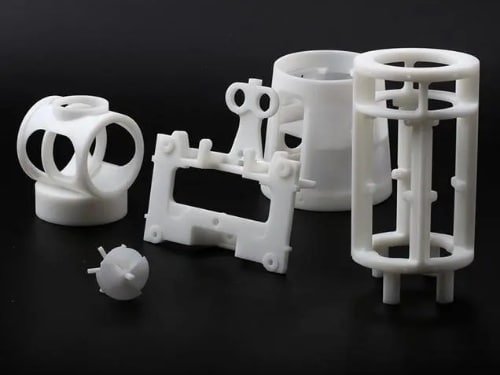
CNC machined nylon parts appear in many different industries, often inside systems that people don’t directly see but rely on every day. In many cases, they replace metal parts where weight, noise, or friction becomes a concern.
Automotive industry
In the automotive sector, nylon machining is widely used for both interior and functional under-the-hood components.
CNC machined nylon parts are often found in clips, brackets, housings, and small mechanical supports. These parts help reduce vehicle weight compared to metal while maintaining enough strength for vibration and temperature changes during daily operation.
In many cases, nylon is chosen when metal would be too heavy or would create unnecessary noise.
Electrical and electronics industry
In electrical systems, insulation and stability are key requirements.
CNC machined nylon is commonly used for insulating housings, connectors, and support structures. Because nylon does not conduct electricity and can be precisely machined, it helps ensure components fit accurately while maintaining electrical safety.
It works like a protective barrier that keeps electrical systems separated and stable.
Industrial machinery
In industrial equipment, many parts are exposed to continuous movement and wear.
Nylon is often used for gears, bushings, rollers, and sliding components. Its low friction helps machines operate more smoothly, while its wear resistance reduces maintenance frequency.
In CNC machining form, these parts can be customized to fit specific mechanical systems.
Manufacturing tools and fixtures
In production environments, nylon is widely used in jigs, fixtures, and assembly tools.
Unlike metal tools, nylon fixtures are less likely to damage finished surfaces. This makes them suitable for positioning, holding, or guiding parts during assembly processes where surface protection is important.
They act like a “soft but stable holder” in manufacturing workflows.
Prototyping and product development
In engineering and product design, CNC machined nylon is often used for functional prototypes.
Unlike simple visual models, nylon prototypes can withstand real mechanical testing, allowing engineers to evaluate fit, movement, and durability before moving to mass production.
This makes nylon a practical bridge between concept and final product.
Conclusion
CNC machining nylon is a practical way to turn a versatile engineering plastic into reliable functional parts. From gears and bushings to automotive and industrial components, nylon performs well wherever a balance of strength, low friction, and lightweight design is needed. If you are evaluating suppliers for custom nylon parts or integrated manufacturing support, you may consider reaching out to Zhongde to discuss your project requirements and get technical feedback before production.