What Is Plastic Melting Temperature?
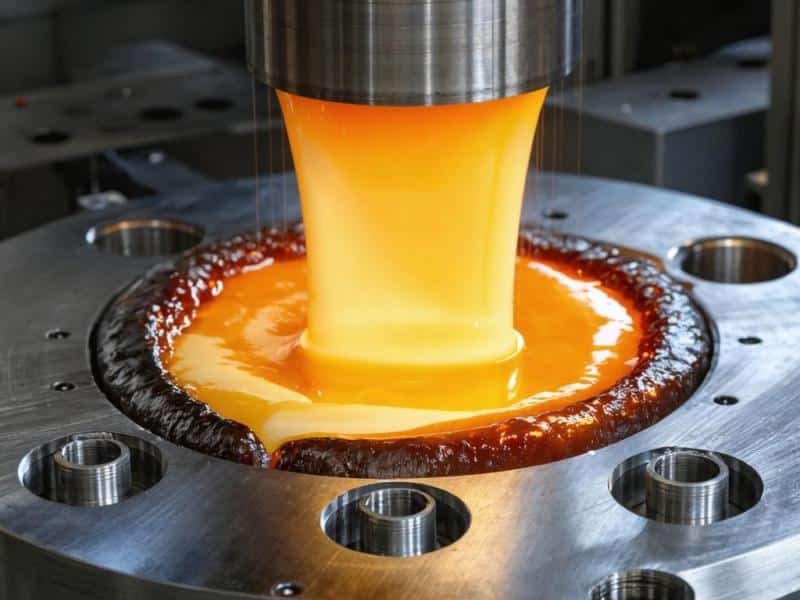
Plastic melting temperature (also known as melting point or Tm) refers to the temperature at which a plastic material changes from a solid state into a molten or highly softened state. At this temperature, polymer chains gain sufficient thermal energy to move relative to one another, allowing the material to lose its rigid structure and begin to flow.
It is important to understand that plastic melting temperature is not a fixed value for all materials. It varies significantly depending on the type of polymer, its molecular structure, and any additives used during production. Some plastics have a relatively sharp and well-defined melting point, while others soften gradually across a range of temperatures instead of melting at a single specific point.
How Do Plastics Melt?
Plastics are composed of long polymer chains, and the way these chains are arranged determines how the material responds to heat. Based on their molecular structure, plastics are generally divided into two main categories: thermoplastics and thermosets. These two types of plastics behave very differently when exposed to heat.
Thermoplastics: Melting and Re-melting
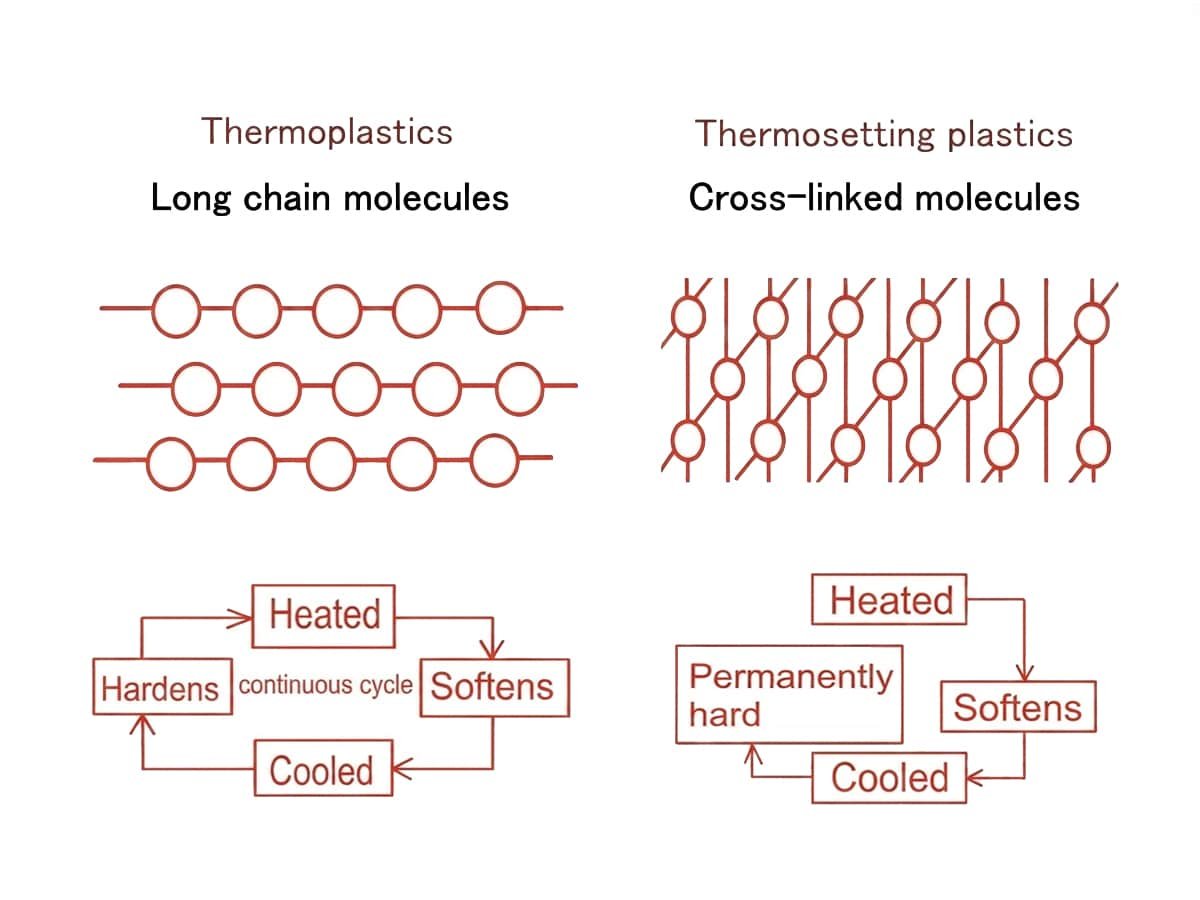
Thermoplastics—such as polyethylene (PE), polypropylene (PP), polystyrene (PS), and PVC—consist of polymer chains that are not permanently cross-linked. Instead, the chains are held together mainly by weaker intermolecular forces, such as van der Waals forces and hydrogen bonding.
When heated, these intermolecular forces weaken, allowing the polymer chains to move past one another. This is why thermoplastics soften and melt when exposed to heat, then harden again after cooling. Because this process can be repeated, thermoplastics can be reheated and reshaped multiple times, making them widely used in applications such as injection molding and mechanical recycling.
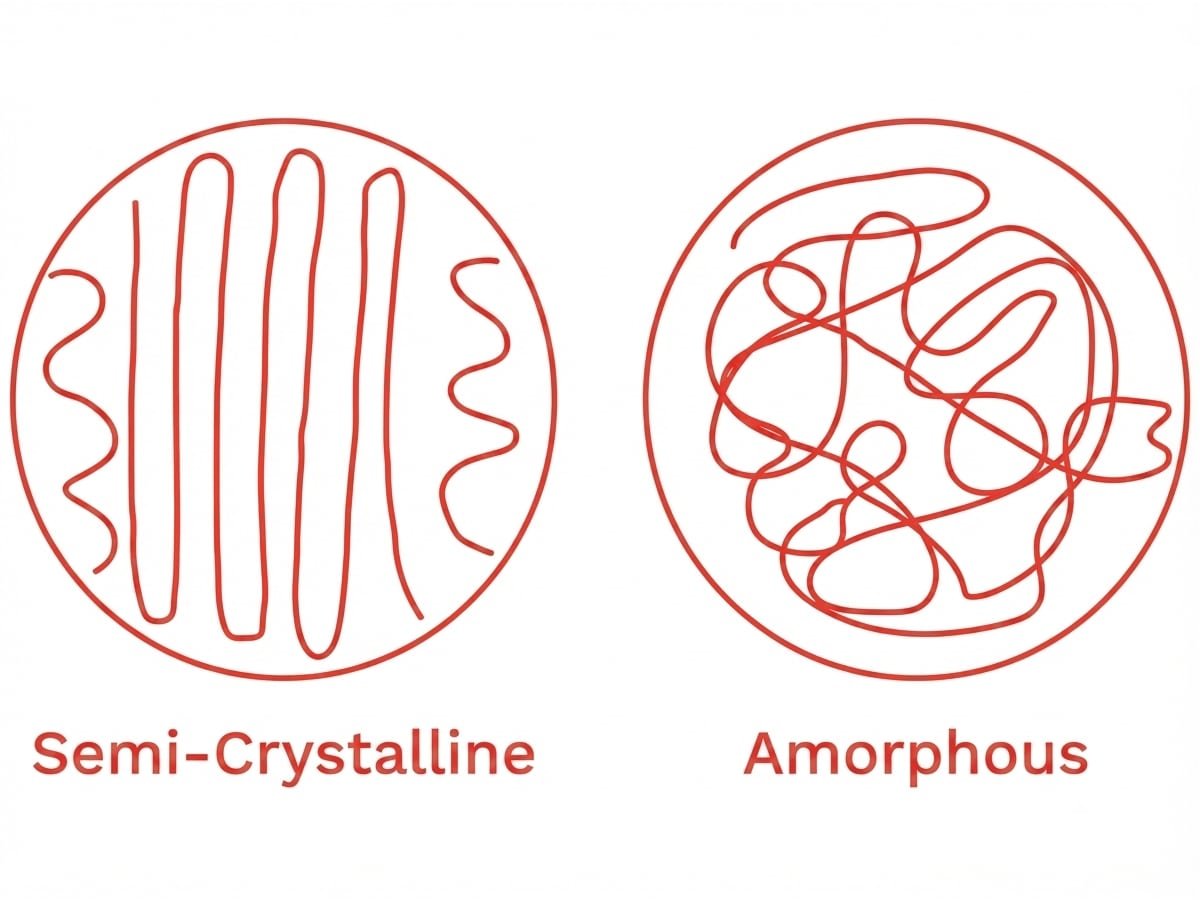
Within thermoplastics, there is a further distinction between semi-crystalline and amorphous plastics:
- Semi-crystalline plastics, such as polyethylene and nylon, contain polymer chains that are partially arranged into ordered, tightly packed crystalline regions. These materials typically have a sharper and more defined melting point because a specific amount of thermal energy is required to disrupt these ordered structures.
- Amorphous plastics, such as polystyrene and polycarbonate, contain randomly arranged polymer chains without an ordered crystalline structure. Instead of having a distinct melting point, these materials gradually soften over a temperature range around their glass transition temperature (Tg). Tg is the point at which the material changes from a hard, glass-like state into a softer, rubber-like state before eventually becoming capable of flowing at higher temperatures.

Thermosets: Why They Do Not Melt
Thermosets—such as epoxy resins and melamine-formaldehyde resins—behave very differently from thermoplastics. During manufacturing, their polymer chains form permanent cross-linked bonds through a process known as curing. These cross-links create a rigid three-dimensional network that gives thermosets their high strength and dimensional stability.
Because these cross-linked structures cannot be loosened through heating, thermosets do not soften and flow in the same way as thermoplastics. Instead, when exposed to excessive heat, they will eventually degrade, burn, or char as their chemical bonds break down irreversibly. This is why cured thermosets cannot be remelted or reshaped after the curing process.
Learn more about the differences between thermoplastics and thermosetting plastics.
Common Plastics and Their Melting Points
The table below summarizes the typical melting points (or, for amorphous plastics, glass transition temperatures) of some of the most widely used plastic materials. These values can vary slightly depending on the specific grade, additives, and manufacturing process used.
| Plastic Type | Abbreviation | Melting Point (Tm) | Category |
|---|---|---|---|
| Low-Density Polyethylene | LDPE | 105–115°C (221–239°F) | Semi-crystalline |
| High-Density Polyethylene | HDPE | 120–135°C (248–275°F) | Semi-crystalline |
| Polypropylene | PP | 160–170°C (320–338°F) | Semi-crystalline |
| Polyvinyl Chloride (Rigid) | PVC | 100–260°C (212–500°F)* | Amorphous |
| Polystyrene | PS | 100–120°C (Tg, softening)* | Amorphous |
| Acrylonitrile Butadiene Styrene | ABS | 105°C (Tg, softening)* | Amorphous |
| Polyethylene Terephthalate | PET | 250–260°C (482–500°F) | Semi-crystalline |
| Polycarbonate | PC | 150–155°C (Tg, softening)* | Amorphous |
| Polyamide (Nylon 6) | PA6 | 220–225°C (428–437°F) | Semi-crystalline |
| Polyamide (Nylon 6,6) | PA66 | 255–265°C (491–509°F) | Semi-crystalline |
| Polytetrafluoroethylene (Teflon) | PTFE | 327°C (621°F) | Semi-crystalline |
| Polymethyl Methacrylate (Acrylic) | PMMA | 130–140°C (Tg, softening)* | Amorphous |
Note: Amorphous plastics (like PS, ABS, PC, PMMA, and rigid PVC) don’t have a sharp melting point. The values marked with an asterisk () refer to their glass transition temperature (Tg)—the point at which they begin to soften—rather than a true melting point.
Melting Temperatures of Common Plastics Explained
While the table above provides a quick reference, understanding why each plastic has its particular melting point—and how that property shapes its real-world use—offers a fuller picture. Below is a closer look at each material, connecting its melting behavior to its typical processing requirements and common applications.
Low-Density Polyethylene (LDPE) — 105–115°C
LDPE has a relatively low melting point, which makes it easy to process at lower energy costs and gives it excellent flexibility even after cooling. This low melting range is why LDPE is commonly used for plastic bags, squeezable bottles, and shrink wrap—applications that benefit from softness and easy heat-sealing.
Polypropylene (PP) — 160–170°C
PP has a higher melting point than most polyolefins, which contributes to its good heat resistance and makes it suitable for products exposed to elevated temperatures, such as food containers and bottle caps. Its semi-crystalline structure also provides good rigidity and fatigue resistance, making PP a common choice for living hinges, including flip-top caps.
Polyvinyl Chloride (PVC)
Rigid PVC does not have a true melting point. Instead, it softens gradually and can begin to degrade at excessive temperatures, releasing hydrochloric acid gas. This relatively narrow processing window requires careful temperature control during extrusion and molding. Despite this challenge, PVC remains widely used for pipes, window frames, and cable insulation because of its rigidity, durability, and low cost.
Polystyrene (PS)
As an amorphous plastic, PS does not melt sharply but gradually softens around its glass transition temperature. Its molecular structure makes it easy to process and thermoform, which is why it is widely used for disposable cutlery, expanded foam packaging (such as EPS), and CD cases. However, its relatively low heat resistance means PS products may warp or deform under elevated temperatures.
Polyethylene Terephthalate (PET)
PET has a high melting point and excellent mechanical strength due to its molecular structure and crystallinity. It also provides strong barrier properties against gases and moisture, making it widely used for beverage bottles and food packaging films. Certain PET grades can withstand hot-fill processes, although recycling requires careful temperature control to prevent thermal degradation.
Factors That Influence Plastic Melting Temperature
Beyond the differences between crystalline and amorphous structures, several factors can influence the melting behavior of plastics and cause actual transition temperatures to differ from typical reference values.
Molecular Weight
Higher molecular weight polymers generally have longer chains, which require more energy for molecular movement. As a result, higher molecular weight grades of the same polymer may show slightly higher melting temperatures. However, factors such as crystallinity and molecular structure often have a greater influence.
Additives and Plasticizers
Commercial plastics often contain additives such as plasticizers, stabilizers, flame retardants, or colorants that can change their thermal behavior. Plasticizers reduce intermolecular interactions and increase chain mobility, lowering the glass transition temperature and softening point. This is why flexible PVC behaves differently from rigid PVC when heated.
Pressure
Pressure can slightly affect the temperature at which polymers transition between solid and molten states, especially for semi-crystalline plastics. However, its influence is generally smaller than factors such as polymer structure, crystallinity, and processing conditions.
Thermal History and Cooling Rate
Previous processing and cooling conditions can affect a plastic’s crystallinity and melting behavior. Slow cooling allows polymer chains to form more ordered crystalline regions, while rapid cooling can reduce crystallinity and change the observed melting behavior during reheating.
Moisture Content
For moisture-sensitive plastics such as nylon (polyamide), absorbed water can act as a plasticizer by increasing chain mobility. This mainly lowers the glass transition temperature and affects softening behavior, which is why proper drying is essential before processing hygroscopic plastics.
How Plastic Melting Temperature Affects Part Design Considerations
A plastic’s melting behavior does more than determine how it is processed—it also influences many practical decisions engineers and designers make during part development. Understanding these factors early can help prevent costly redesigns and performance issues later.
Operating Temperature Margins
Parts should be designed with sufficient temperature margin between their operating environment and the material’s melting point (or glass transition temperature for amorphous plastics). Keeping continuous operating temperatures well below these limits helps prevent softening, creep, and dimensional changes over time, especially in load-bearing or precision components.
Wall Thickness and Cooling Design
Plastics with higher melting points often require longer cooling times in the mold to solidify properly, which can influence decisions around wall thickness. Thicker sections take longer to cool and may develop warping, sink marks, or internal stress if not designed with uniform wall thickness and appropriate ribbing. Designers working with high-melting-point materials may need to plan for more aggressive cooling channel layouts in the mold to keep cycle times reasonable.
Mold Material and Tooling Costs
Materials that require higher processing temperatures place greater thermal demands on the mold. This can influence mold material selection, such as choosing hardened steel over aluminum, and may increase tooling costs to maintain dimensional accuracy through repeated heating and cooling cycles.
Assembly and Joining Methods
A plastic’s melting behavior affects the suitability of different joining methods. Techniques such as ultrasonic welding, heat staking, and hot-plate welding rely on localized melting, so joint features and energy directors must be designed according to the material’s thermal characteristics. Higher-temperature plastics may require more energy or specialized equipment during joining.
Design for Multi-Material Assemblies
When combining multiple plastics, such as an overmolded part with a rigid substrate and a soft-touch layer, the thermal properties of both materials must be considered. The substrate needs enough heat resistance to withstand the overmolding process without softening, warping, or losing dimensional accuracy when exposed to the molten overmold material.
Shrinkage and Tolerancing
Plastics with higher crystallinity and sharper melting transitions typically experience greater shrinkage during cooling than amorphous plastics. This shrinkage must be considered during mold design and tolerance planning, especially for precision components where dimensional accuracy is critical.
Conclusion
Understanding plastic melting temperatures is more than a material science exercise—it helps engineers make better decisions in material selection, part design, and manufacturing.
If you are evaluating plastic materials or need support optimizing a part for its thermal requirements, Zhongde can help. With experience in injection molding service and a wide range of material options, we can help you evaluate suitable materials, review design considerations, and optimize processing conditions for your application. Contact us today to discuss your project.