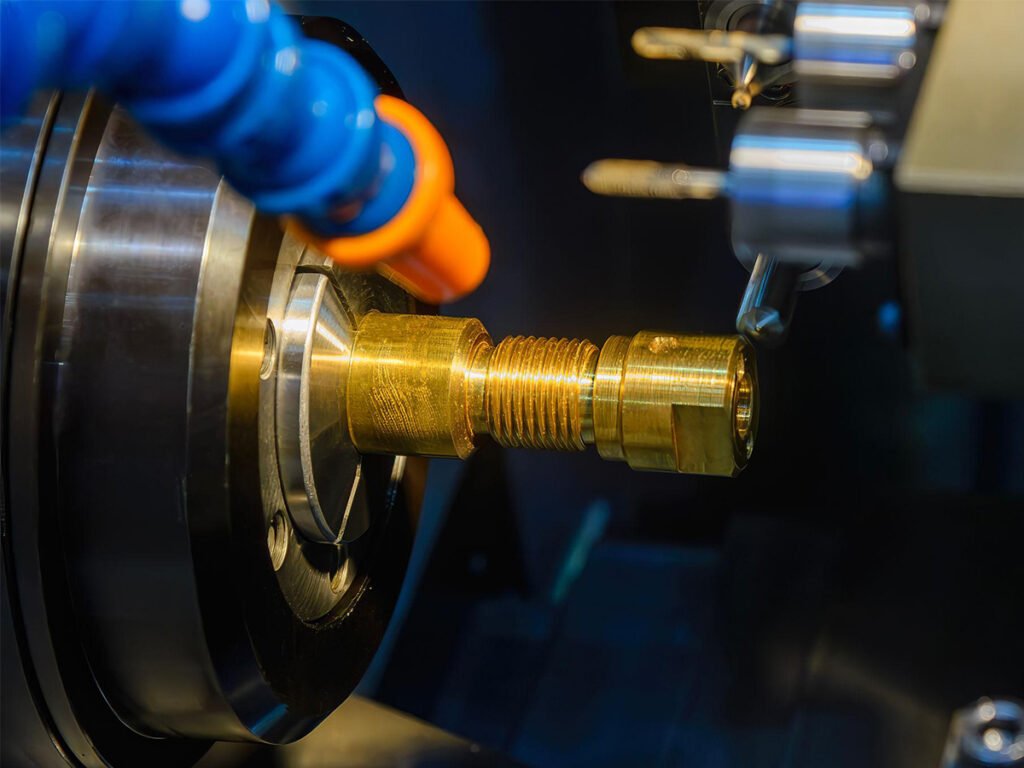
Brass is well suited to CNC machining because it cuts cleanly, holds tight tolerances, and can achieve a good surface finish without extensive secondary processing. This article covers common brass grades, cutting tools, and machining parameters for producing consistent, cost-effective parts.
Why Use Brass for CNC Machining
Brass earns its place on the machine floor for a handful of practical reasons. Each one shows up in the quote, on the shop floor, or in the finished part.
Excellent Machinability
Free-cutting brass such as C36000 sets the benchmark for machinability, with a machinability index of 100. Chips break into short, clean pieces that clear the cutting zone quickly, allowing lathes and mills to run at high spindle speeds with few interruptions.
Long Tool Life
Brass is relatively easy on cutting edges and generates little friction. Carbide and HSS tools wear slowly, meaning fewer tool changes, steadier dimensions across long production runs, and lower tooling costs per part.
Tight Tolerances and Fine Finishes
Low cutting stress and good thermal behavior help brass hold CNC tolerances of ±0.01 mm on turned and milled features. Surfaces often come off the machine bright and smooth, so many parts need little or no secondary polishing. Threads, sealing faces, and small bores come out crisp.
Corrosion Resistance and Reliable Performance
Brass resists water, humidity, and many common chemicals, making it a long-standing choice for valves, fittings, and connectors. It also conducts electricity and heat well, which suits terminals, contacts, and heat-transfer components.
Antimicrobial Surface
Copper-based alloys can reduce bacterial growth on their surface. Brass is a practical choice for door hardware, medical accessories, and food-contact fittings.
Common Brass Grades for CNC Machining
The grades below appear again and again in fittings, connectors, valve bodies, and marine hardware, making them a good starting point for any brass project.
C36000 (Free-Cutting Brass)
The default choice for CNC turning and milling. Its roughly 3% lead content gives it a machinability rating of 100, with short chips, fast cycle times, and good surface finishes. Typical parts include fittings, valve bodies, connectors, and threaded components.
C26000 (Cartridge Brass)
With 70% copper, it offers high ductility and a clean golden color. Its machinability rating is 30, so it suits parts that call for forming, drawing, or decorative finishes, with moderate CNC work on sleeves, ferrules, and terminals.
C46400 (Naval Brass)
A tin addition gives it strong resistance to seawater and dezincification. Its machinability rating is 30, so tooling and cutting speeds need care. Common in marine hardware, shafts, and fasteners exposed to saltwater.
C37700 (Forging Brass)
C37700 is hot-forged to near-net shape and then finished on CNC machines. Its machinability rating is around 80. It works well for complex valve bodies and fittings, where forging reduces material waste and machining time.
C69300 (Eco Brass, Lead-Free)
Silicon helps provide the chip control that lead provides in other grades. Designed for drinking-water and other regulated applications, it machines well with tuned tooling while maintaining strength and corrosion resistance close to leaded brass.
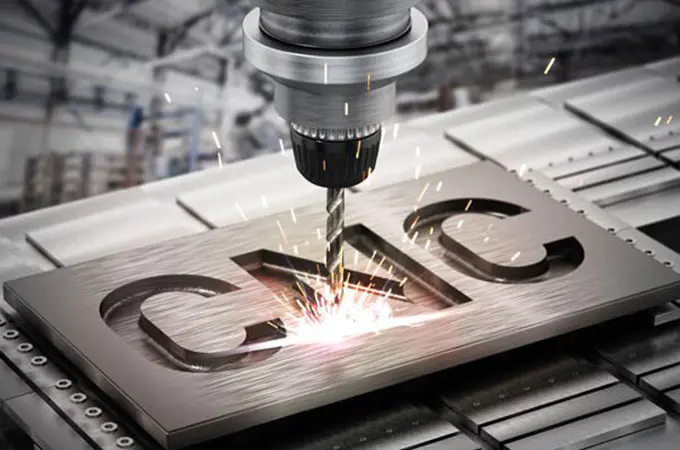
Key Parameters for Brass CNC Machining
Small adjustments to cutting speed, feed, and rake angle make a visible difference in brass surface finish and dimensional consistency.
- Cutting speed: 150–300 m/min (500–1000 SFM) for free-cutting C36000 with carbide tools. Softer, free-cutting grades can run faster, while tougher lead-free grades generally need lower speeds.
- Feed rate: 0.05–0.25 mm/rev for turning, adjusted to the required finish. Higher feeds help keep chips short and prevent rubbing.
- Depth of cut: 0.5–3 mm for roughing, 0.1–0.5 mm for finishing passes.
- Tool geometry: A sharp edge with a neutral or slightly positive rake generally works well. Excessive positive rake can make the cut unstable and affect dimensional control.
- Tool material: Uncoated or polished carbide is the standard choice. On brass, a sharp cutting edge often matters more than a specialized coating.
- Coolant: Flood coolant or mist helps clear chips and stabilize part temperature. Some shops machine C36000 dry with an air blast for cleaner chips and easier chip recycling.
- Spindle speed: Set from cutting speed and part diameter. Small-diameter parts often need 3,000–8,000 RPM or higher.
- Workholding: Light, even clamping pressure prevents distortion in thin-wall brass parts.
Operations for Brass CNC Machining
Most brass parts pass through several CNC machining processes in a single setup, and each one benefits from the alloy’s clean cutting behavior.
- Turning: The most common process for brass. Fittings, pins, bushings, and connectors are turned from bar stock with tight concentricity and clean threads.
- Milling: 3-axis and 5-axis mills cut flats, slots, pockets, and complex contours in brass blocks and bar stock. Sharp end mills with suitable helix angles keep edges clean and reduce burrs.
- Drilling: Brass drills quickly with minimal burrs. Peck cycles are rarely needed, and deep holes can stay straight when chips are cleared with coolant or air.
- Threading: Single-point threading and thread milling produce sharp, well-formed threads for fluid and gas connections. Free-cutting grades produce clean thread flanks that machine easily and consistently.
- Tapping: Brass taps easily with low torque, making it well suited to high-volume threaded holes. Spiral-flute or forming taps work well depending on hole depth and thread requirements.
- Knurling: Adds grip patterns to knobs, handles, and adjustment screws. Brass forms crisp, even knurls.
Surface Finish for CNC Brass Parts
A brass part can leave the machine as-is or take on a polished, blasted, or plated finish, depending on where it ends up.
As-Machined
Brass can leave the machine with a bright, smooth surface roughness, often around Ra 0.8–1.6 μm. For many fittings, connectors, and internal components, this finish is ready to use with no further processing.
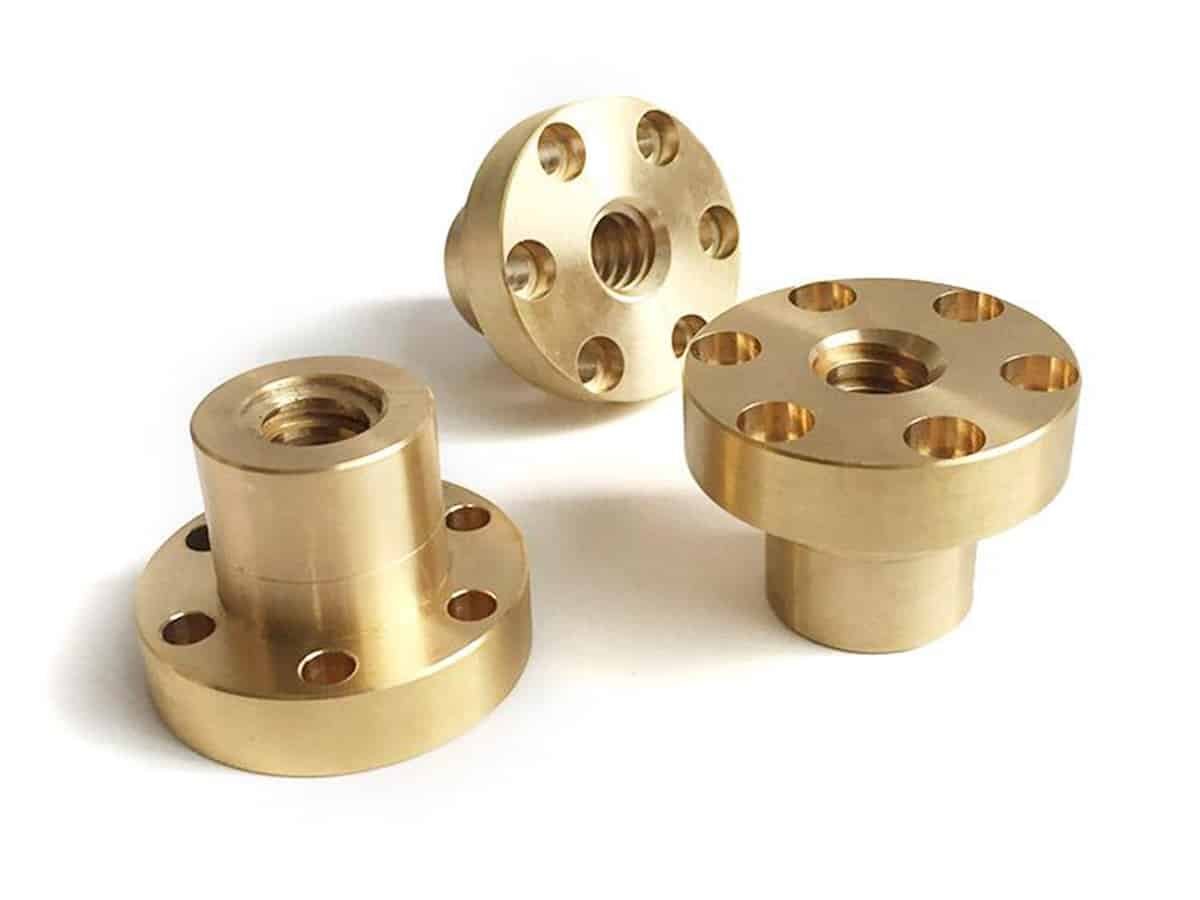
Polishing and Buffing
Mechanical polishing brings brass to a mirror-like shine for decorative hardware, nameplates, and visible parts. Buffing compounds add depth and gloss, while clear lacquer helps prevent tarnishing and preserves the finish.
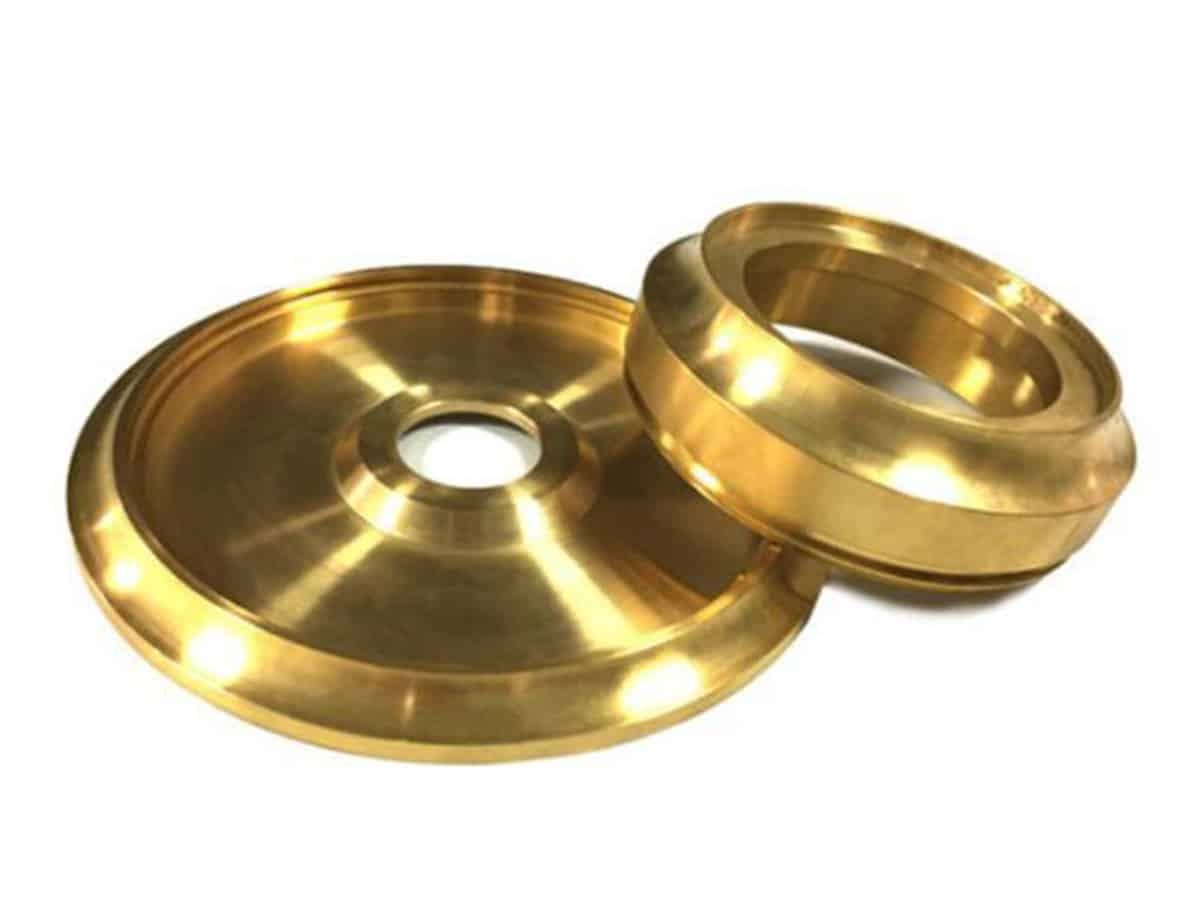
Tumbling and Vibratory Finishing
Batch finishing with ceramic or plastic media removes burrs and evens out tool marks across many parts at once. It suits small components such as pins, terminals, and threaded fittings.
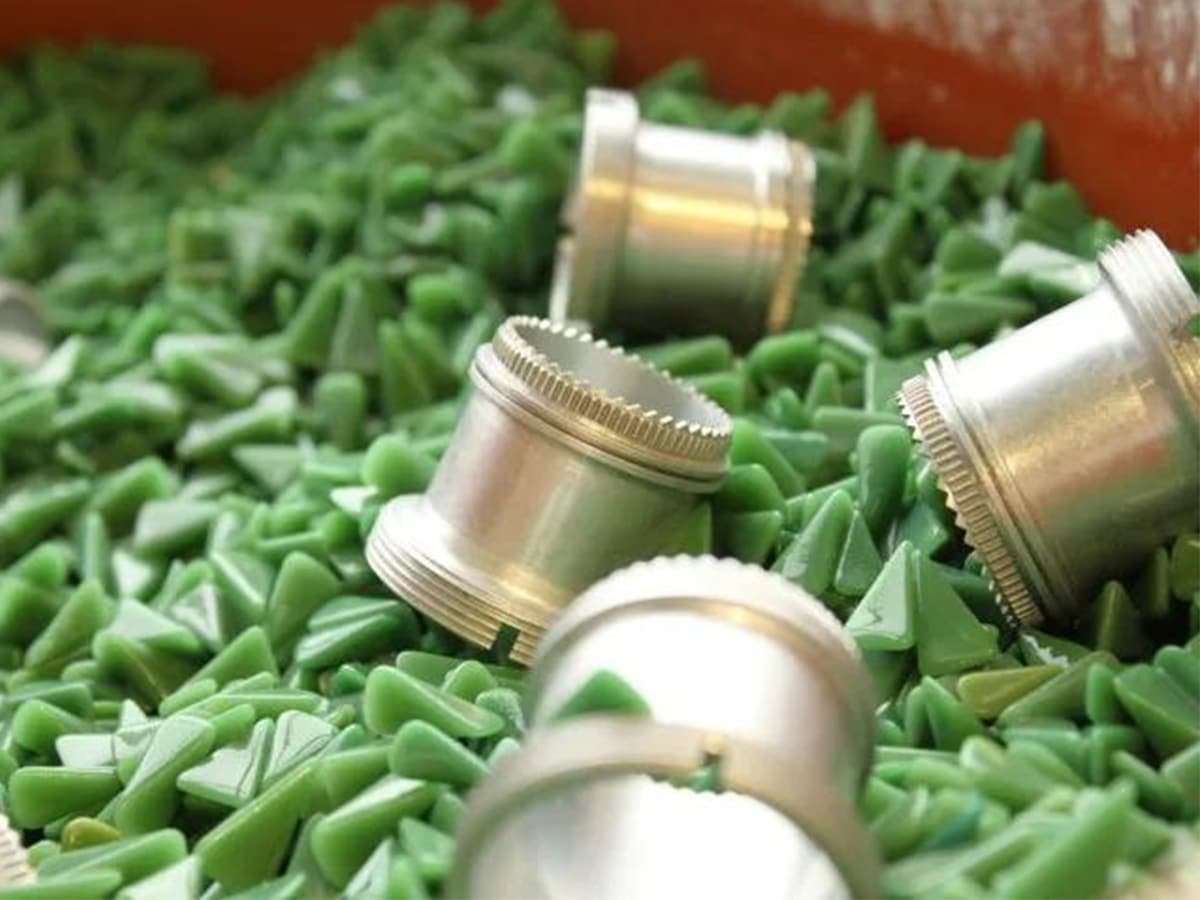
Tin Plating
Tin improves solderability and protects contact surfaces from oxidation. Electrical terminals, connectors, and busbar components commonly use it.
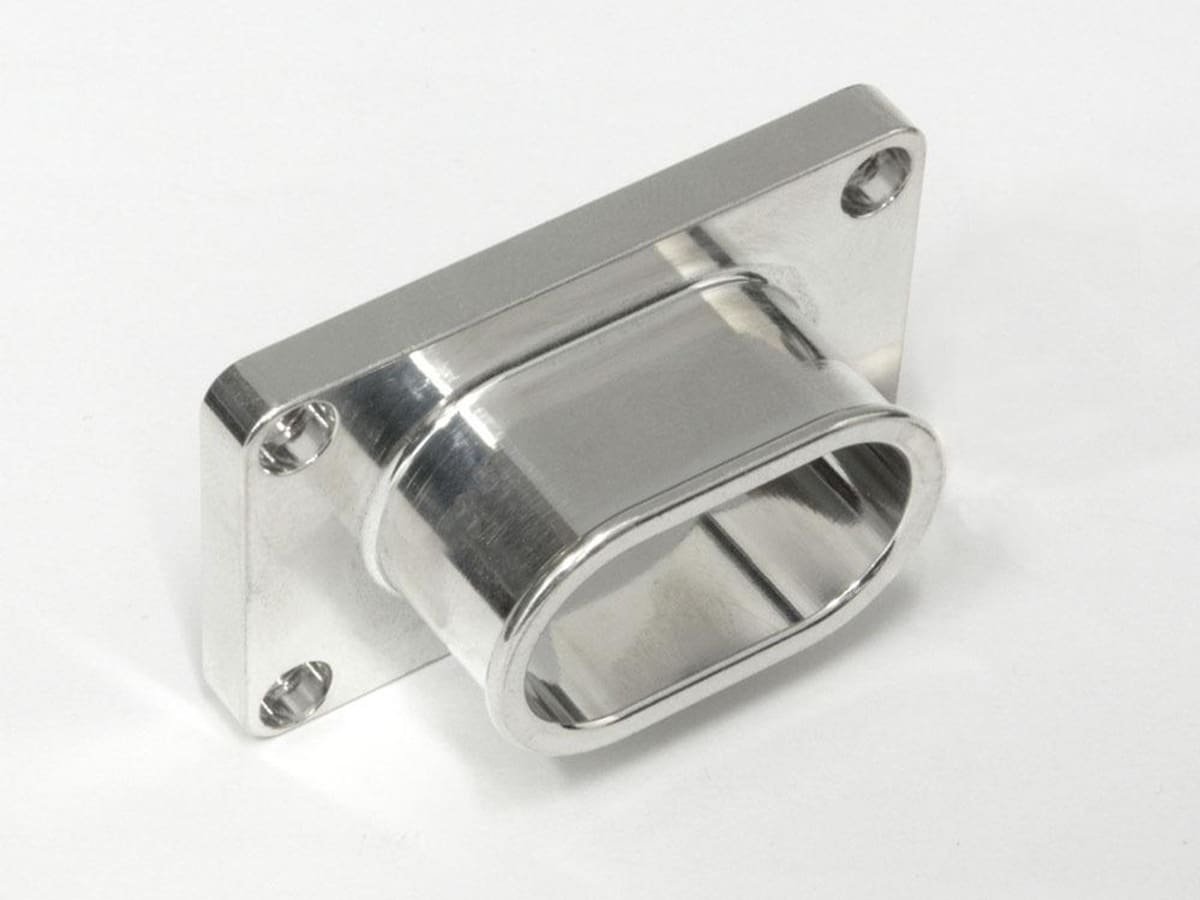
Nickel Plating
A nickel layer adds hardness, wear resistance, and a bright silver-white appearance. It is widely used on fittings, connectors, and faucet components exposed to frequent handling or moisture.
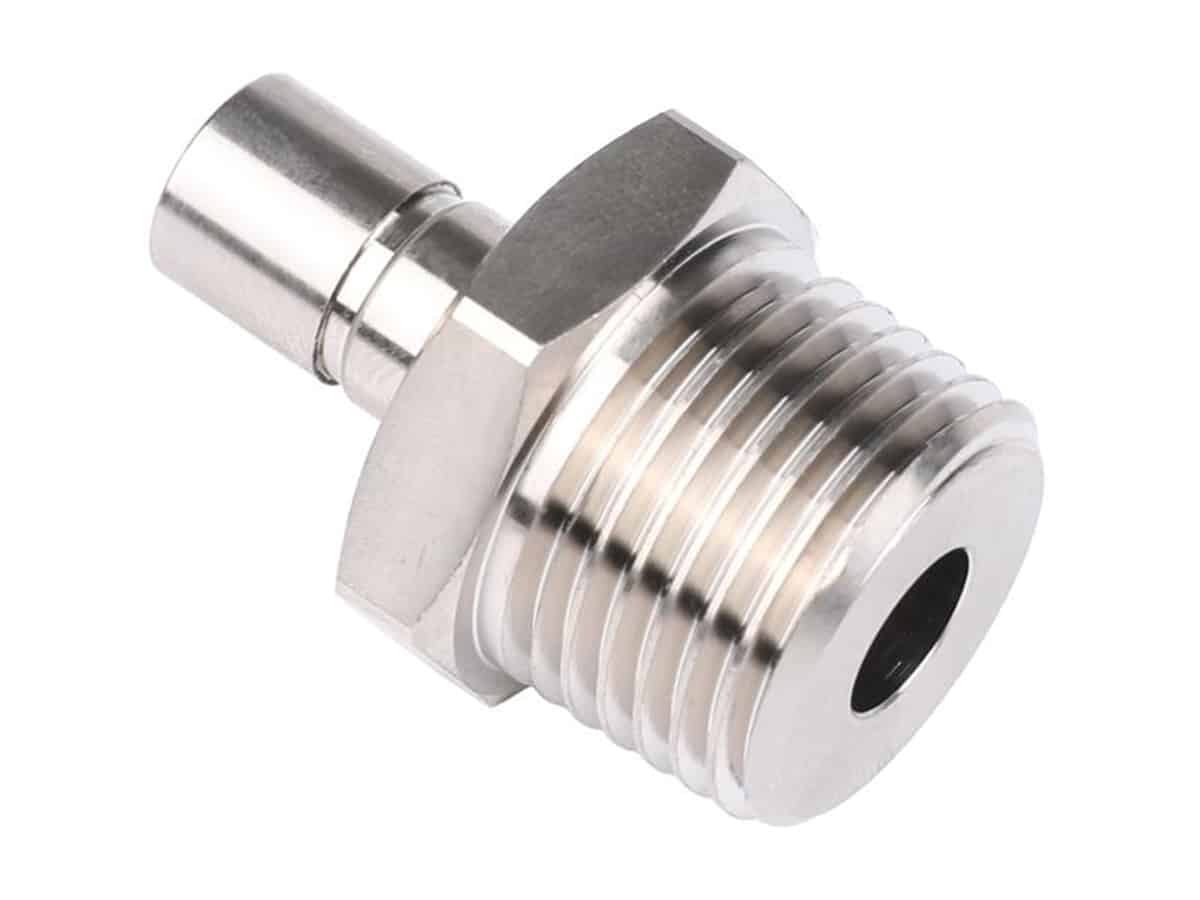
Challenges and Best Practices in CNC Brass Machining
Brass forgives a lot, though a few details on the shop floor still affect finish, accuracy, and scrap rate.
Burrs and Edge Quality
Brass forms fine burrs where holes intersect and at thread starts. Sharp tools, a light chamfer pass in the same setup, and a final tumbling or deburring step keep edges clean without manual rework.
Chatter and Tool Grabbing
Excessive rake, an unstable setup, or aggressive cutting can make the tool pull into the workpiece, causing chatter and dimensional drift. A sharp, polished edge with suitable rake geometry keeps cutting stable, especially at drilling breakthrough and on thin walls.
Thin-Wall Distortion
Brass parts with thin walls flex under clamping and cutting forces. Light, even workholding, soft jaws or collets matched to the part, and a separate finishing pass with a small depth of cut help hold roundness and size.
Built-Up Edge on Lead-Free Grades
Lead-free alloys such as C69300 can produce longer, stringier chips and higher cutting forces than C36000. Chip-breaker inserts, higher coolant pressure, and slightly reduced cutting speeds improve chip control.
Tarnishing and Surface Staining
Brass darkens with air, moisture, and fingerprints. Clean parts promptly after machining, remove coolant residue, and apply a clear coating or protective packaging for parts that ship long distances.
Applications of CNC Brass Parts
Here is where CNC brass parts end up, and what each application asks of the material.
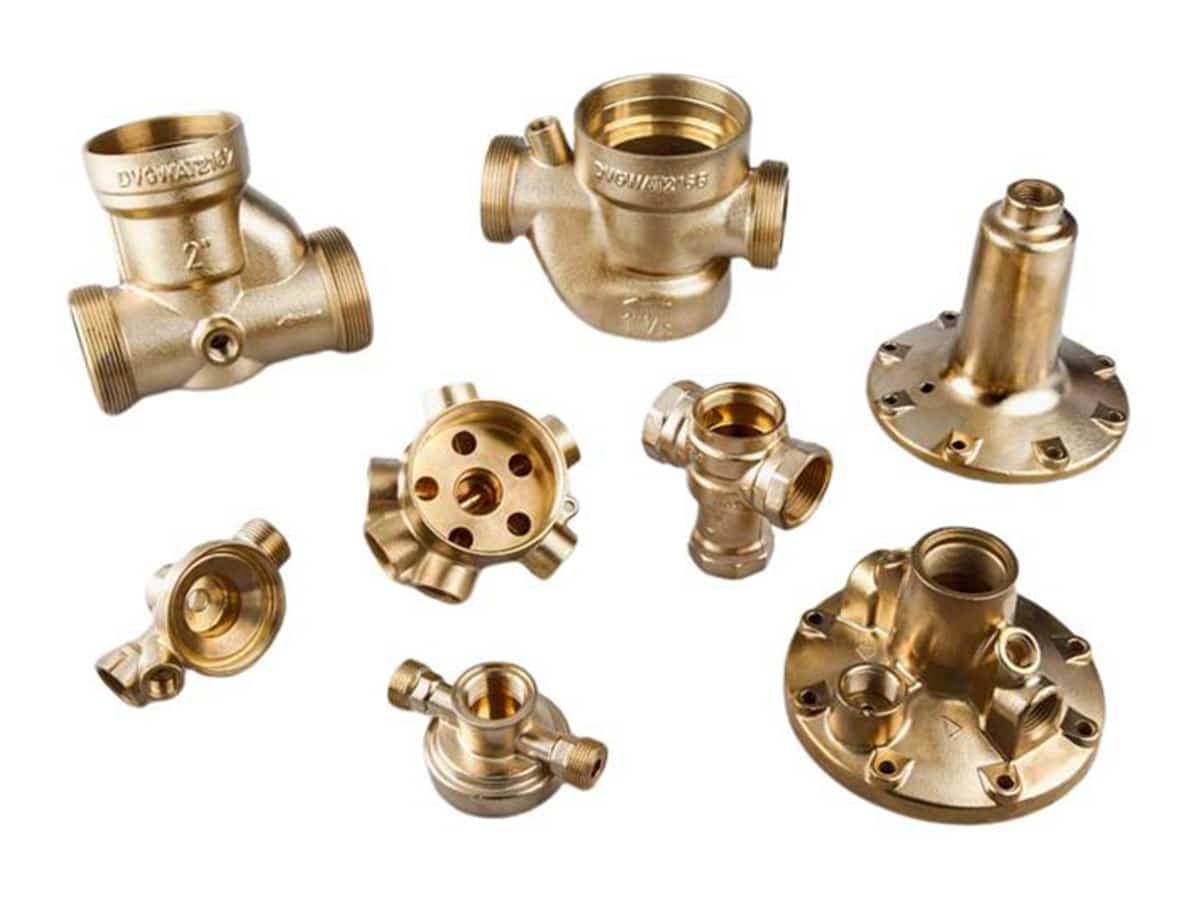
- Plumbing and Water Systems: Fittings, valve bodies, faucet components, and manifolds that need reliable threads and corrosion resistance.
- Electrical and Electronics: Terminals, connectors, contact pins, and grounding hardware that rely on good electrical conductivity.
- Automotive: Sensor housings, fuel system fittings, and brake and cooling line connectors.
- Marine: Shafts, hose fittings, and deck hardware in naval brass for seawater resistance.
- Hydraulics and Pneumatics: Couplings, adapters, and nozzles that must maintain pressure integrity and thread form over repeated cycles.
- Musical Instruments: Valves, mouthpieces, and tuning components where brass’s acoustic properties and fine tolerances both matter.
- Architectural and Decorative Hardware: Door handles, lighting fixtures, and trim with polished or patina finishes.
Conclusion
Good brass parts come from the right grade, sharp tooling, controlled parameters, and a finish matched to the job. Our CNC brass machining service covers turning, milling, drilling, threading, and finishing in-house. Send your CAD files or drawings for a quote and design-for-manufacturing feedback.