Heat treatment usually refers to controlled heating and cooling processes used to modify the properties of metals. However, some related thermal processes, such as annealing and stress relieving, are also applied to other materials, including plastics. This guide explains common heat treatment methods, their purposes, and their applications across different materials.
What Is Heat Treatment?
Heat treatment means heating a metal part to a specific temperature, holding it for a controlled period, and then cooling it under defined conditions. The metal is not melted or intentionally reshaped during the process. Instead, heat treatment changes its microstructure and internal stresses, which affect how the part performs.
Depending on the process, it can increase hardness, improve toughness, enhance machinability, or relieve stresses caused by casting, forging, or welding.
The Heat Treatment Process
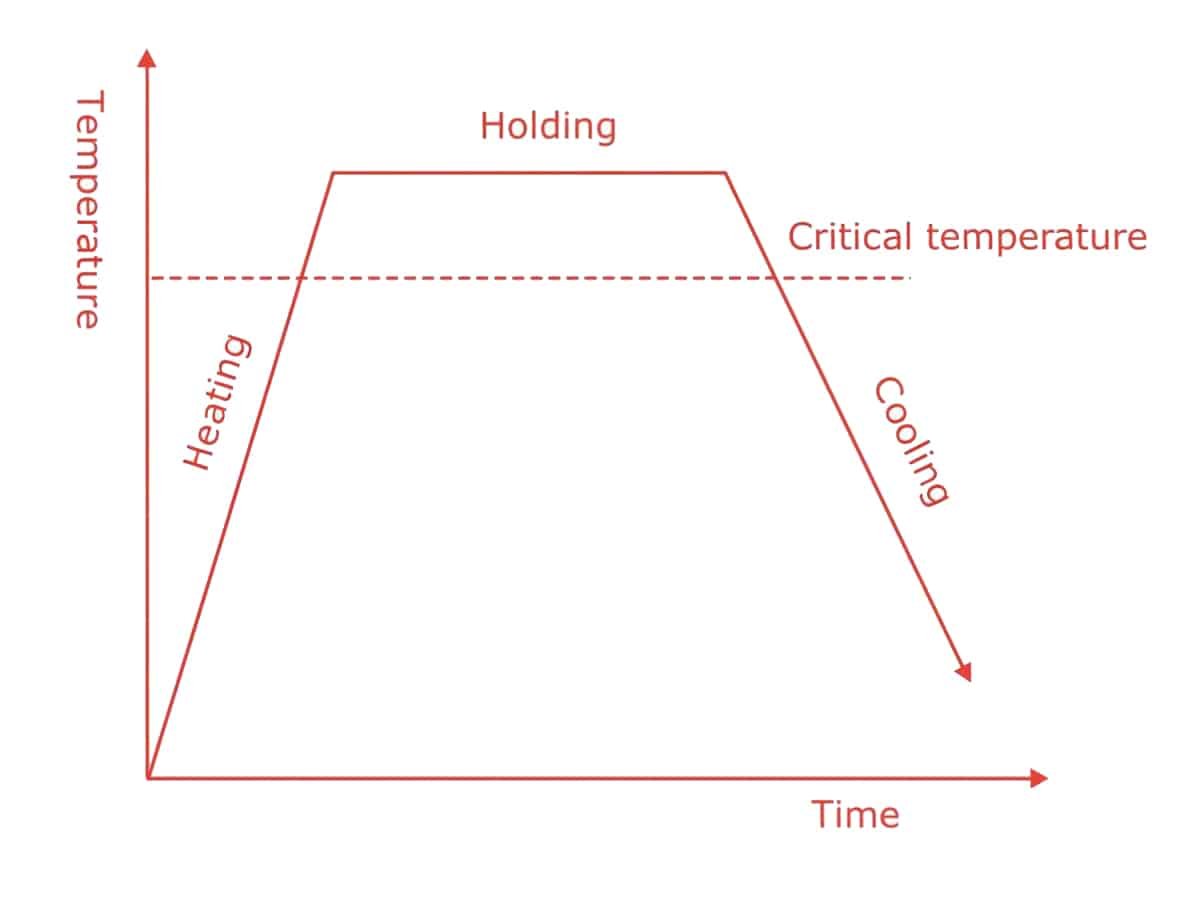
Most heat treatment follows the same three stages: heating, holding, and cooling. What changes between methods is the temperature, holding time, and cooling rate.
Heating
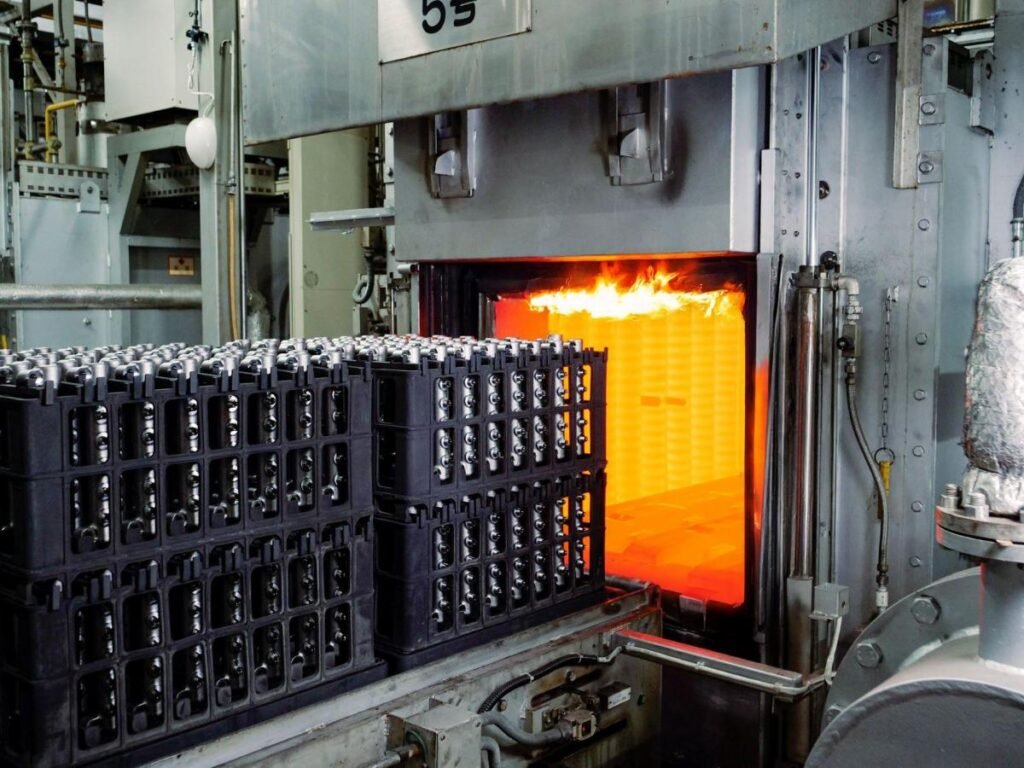
The part is placed in a furnace and heated to a target temperature at a controlled rate. Heating too quickly can create temperature differences between the surface and core, causing thermal stress, distortion, or cracking, especially in thick sections. Target temperatures vary by material. Many steels are heated around 800–900°C, while aluminum alloys are often treated around 500°C.
Holding (Soaking)
Once the target temperature is reached, the part is held for a set period. This allows heat to penetrate through the entire section so the microstructure can change uniformly. Holding time depends mainly on material, part thickness, and size. Too short a time can leave the core untreated, while excessive holding may cause grain growth and reduce properties.
Cooling
Cooling rate has a major influence on the final properties. Depending on the process, parts may be cooled rapidly in water or oil, moderately with forced air or polymer solutions, or slowly inside the furnace. For many steel alloys, faster cooling can increase hardness, while slower cooling generally produces a softer and more stable structure.
Benefits of Heat Treatment
Heat treatment changes how a metal part performs without changing its basic material composition. For buyers and engineers, the benefits appear in part performance, manufacturing efficiency, and service life.
Higher Strength and Hardness
Hardening treatments increase a metal’s resistance to wear, indentation, and heavy loads. Gears, shafts, bearings, and cutting tools rely on these properties to maintain performance over long service periods.
Better Toughness and Fatigue Life
In hardened steels, tempering restores toughness, allowing parts to withstand impact and repeated loading with a lower risk of cracking. This is important for automotive, machinery, and tooling components exposed to constant stress.
Relief of Internal Stress
Casting, forging, welding, and heavy machining can leave residual stress in metal parts. Heat treatment can reduce these stresses, limiting distortion during later machining and service while helping parts maintain dimensions and tolerances.
Improved Machinability and Formability
Softening treatments make hard or work-hardened metals easier to cut, drill, and form. This can reduce tool wear and improve machining efficiency.
Lower Material and Lifecycle Cost
A suitable alloy can sometimes be heat treated to achieve higher performance without selecting a more expensive material. Longer part life can also reduce replacement frequency and downtime.
Types of Heat Treatment
Several heat treatment processes are used to achieve specific properties, and many parts go through more than one treatment in sequence.
Annealing
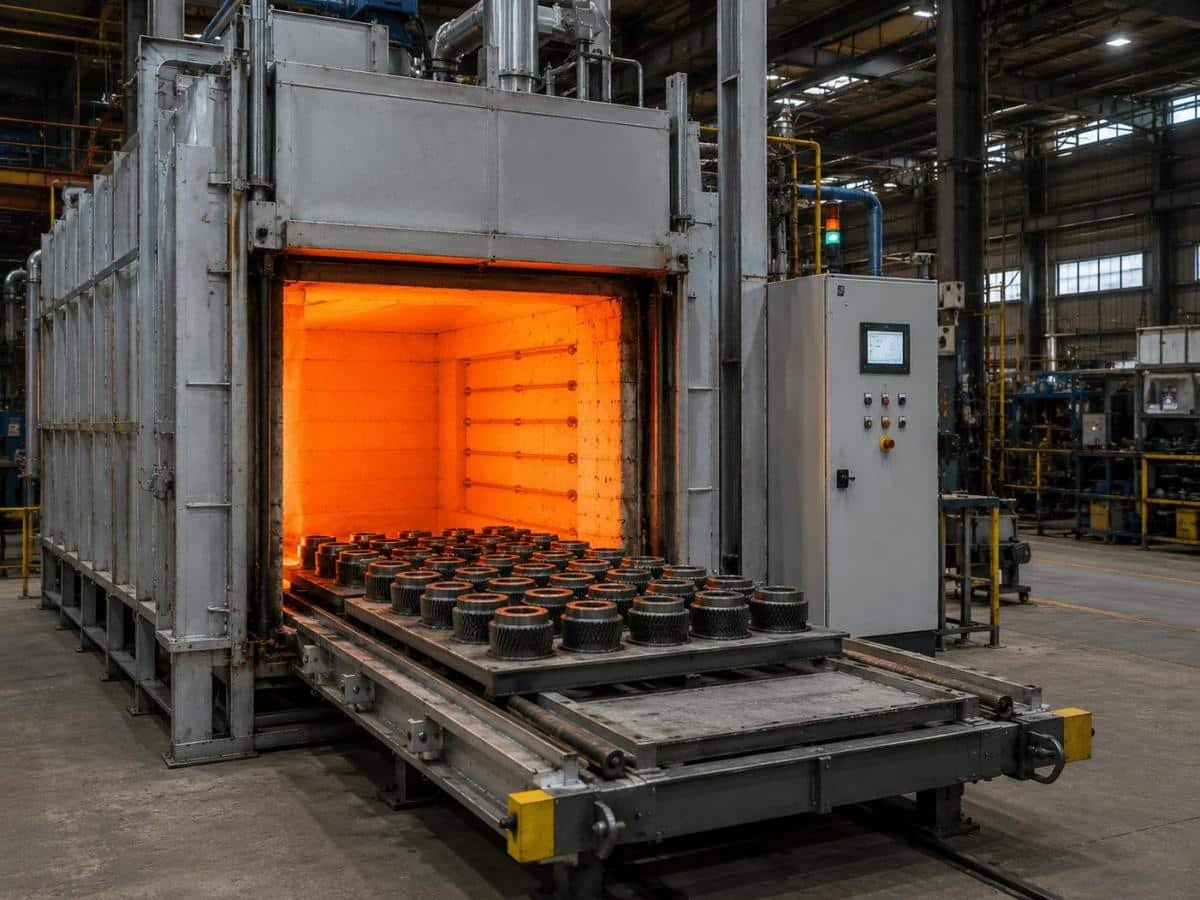
The metal is heated, held, and then cooled slowly, usually inside the furnace. This can soften the material, improve ductility, and relieve internal stress, making the part easier to machine or form.
Normalizing
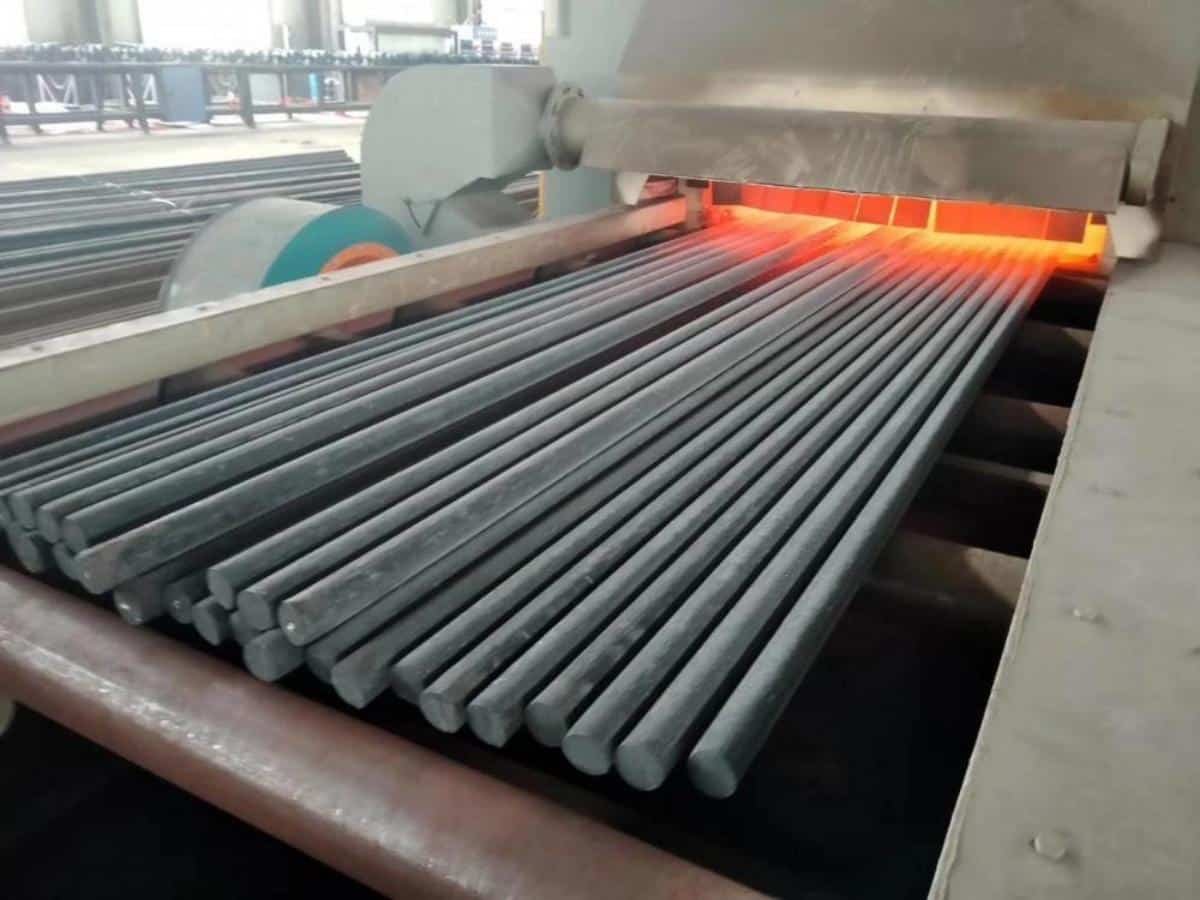
For steels, the part is heated above its critical temperature and cooled in still air. Cooling is faster than annealing, producing a finer and more uniform structure with moderate strength. It is commonly used for castings and forgings.
Hardening (Quenching)
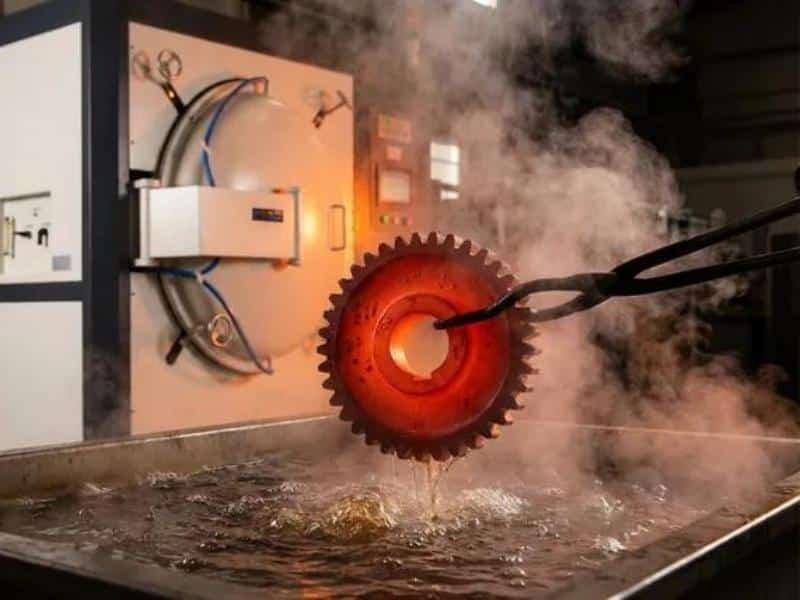
The part is heated and then cooled rapidly in water, oil, brine, or polymer solution. In many steels, this creates a very hard structure that improves strength and wear resistance. Learn more about metal hardness and how it is measured.
Tempering
A hardened part is reheated to a lower temperature, held, and then cooled. Some hardness is traded for a significant improvement in toughness. The tempering temperature determines the balance between hardness and toughness.
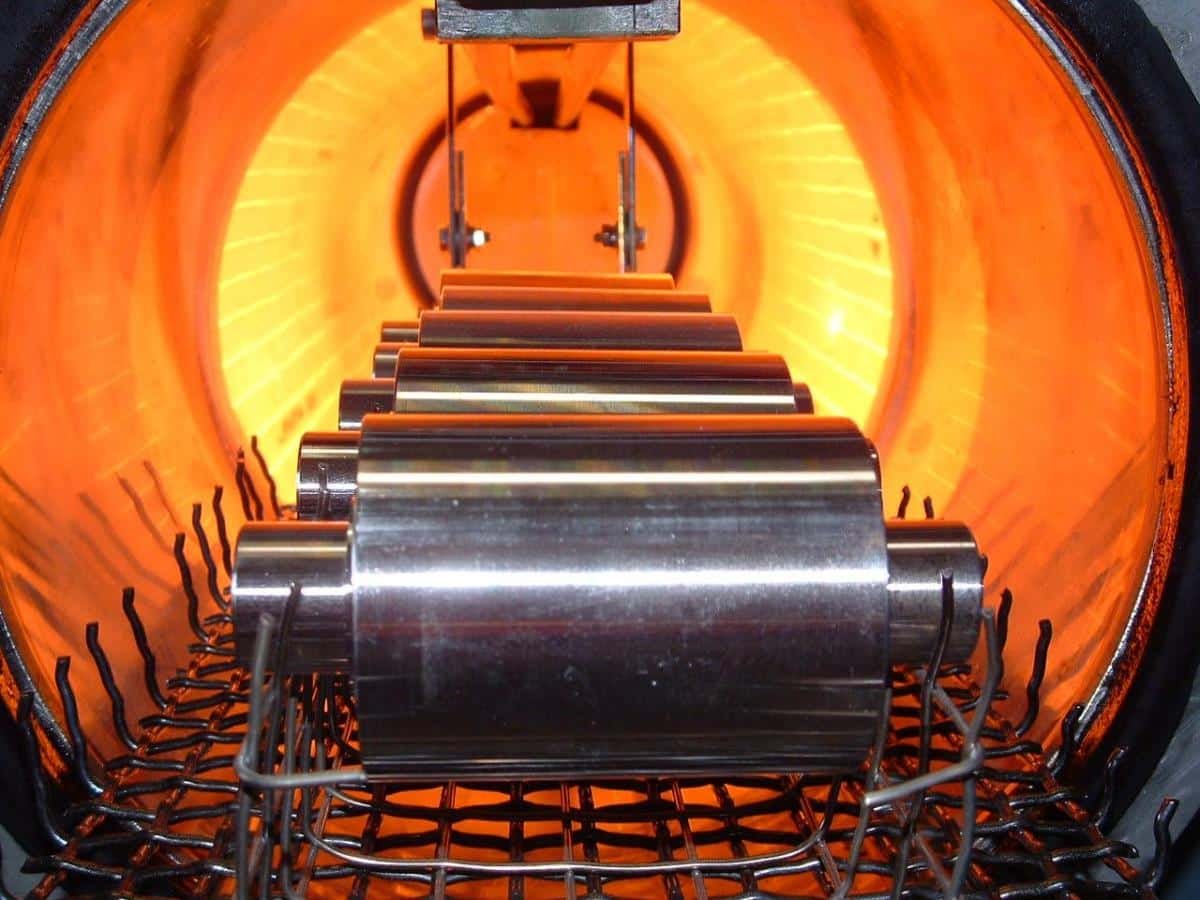
Stress Relieving
The part is heated to a moderate temperature below the point where its structure changes, held, and cooled slowly. This reduces residual stress while causing minimal changes to hardness and dimensions. It is often used after welding or heavy machining.
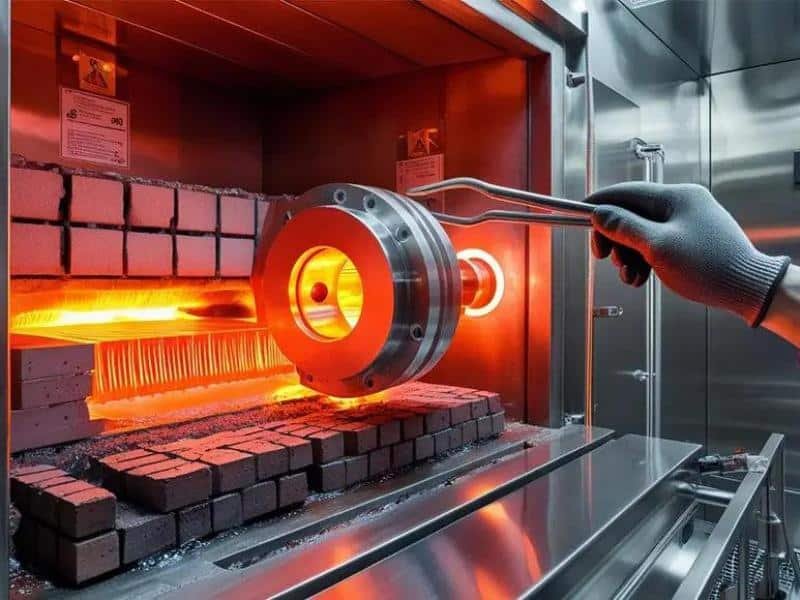
Case Hardening
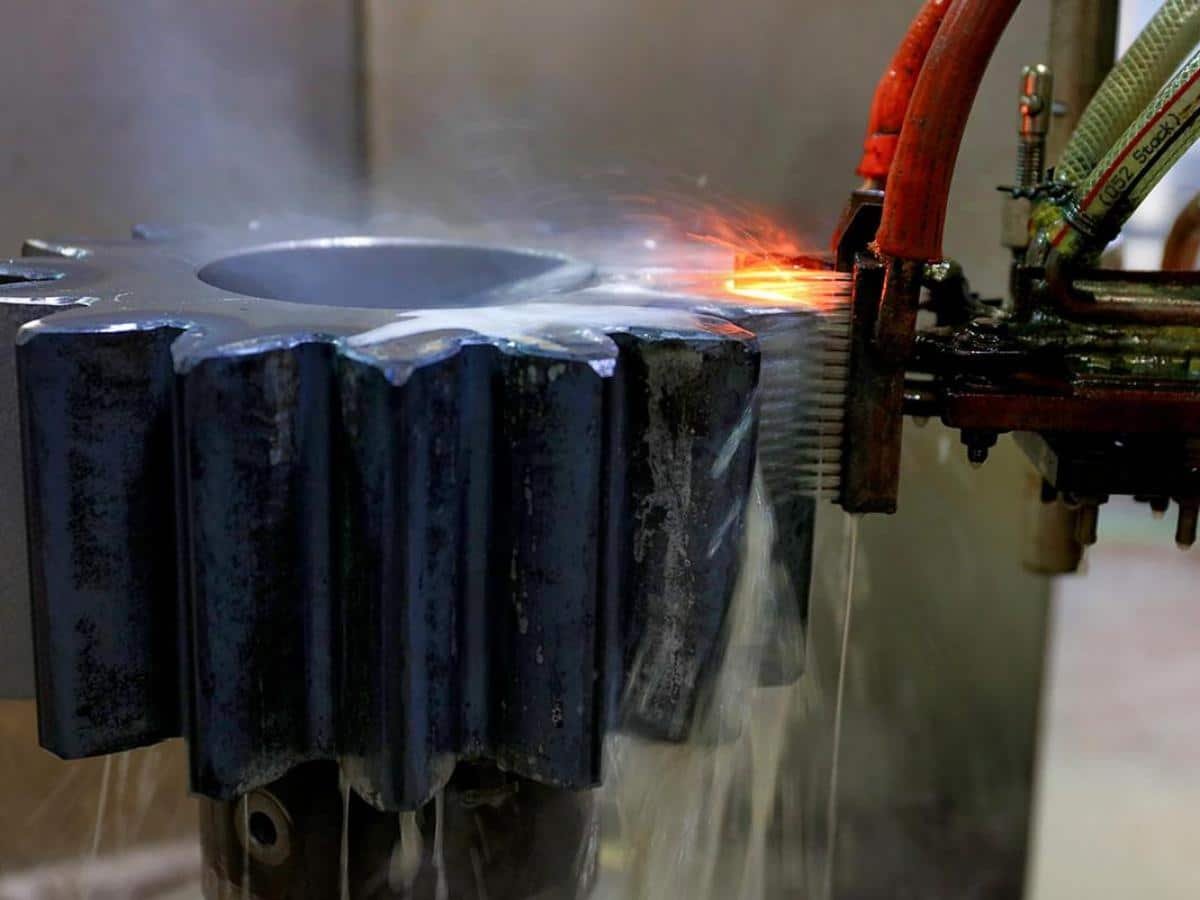
Only the surface is hardened by diffusing carbon or nitrogen into the material (carburizing, nitriding) or heating only the surface layer (induction hardening). The outside becomes hard and wear-resistant while the core remains tough. Gears and camshafts commonly use this approach.
Precipitation (Age) Hardening
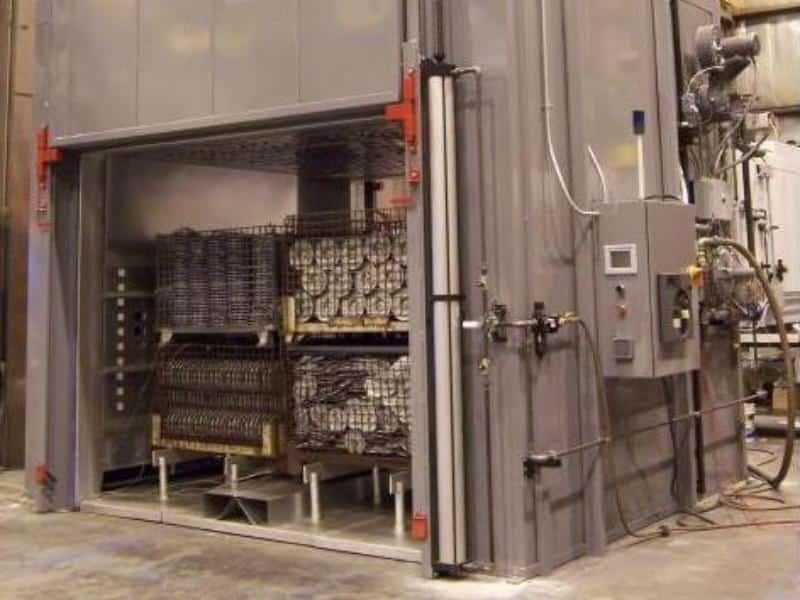
Used mainly for aluminum alloys and some stainless steels. After solution heat treatment and quenching, the part is aged at a moderate temperature, allowing fine particles to form inside the metal and increase strength. Aerospace and structural components often rely on this process.
Materials Suited to Heat Treatment
Not every material responds to heat treatment in the same way. Metals with suitable compositions can be heat treated to improve strength, hardness, toughness, or dimensional stability. Some plastics also benefit from related thermal treatments such as annealing.
- Steel: Carbon, alloy, and tool steels are widely heat treated through hardening, tempering, annealing, and case hardening to improve strength, hardness, toughness, or wear resistance.
- Stainless steel: Different grades use different treatments. Martensitic grades can be hardened, while austenitic and precipitation-hardening grades are typically treated for stress relief, corrosion resistance, or strength improvement.
- Cast iron: Heat treatment can adjust strength, wear resistance, and machinability, especially for ductile iron components used in machinery and automotive applications.
- Aluminum alloys: Heat-treatable grades such as 2xxx, 6xxx, and 7xxx series gain strength through solution treatment and aging.
- Copper alloys: Annealing restores ductility after cold working, while some alloys such as beryllium copper can be age hardened for higher strength.
- Plastics: Materials such as nylon, POM, and PEEK may undergo annealing or stress relieving to reduce residual stress and improve dimensional stability.
Conclusion
Heat treatment helps metal parts achieve the required balance of strength, hardness, toughness, and dimensional stability. Combined with precision machining, it ensures reliable performance in demanding applications. Zhongde Custom CNC Metal Parts are machined to your specifications with support for additional processes and finishing requirements.