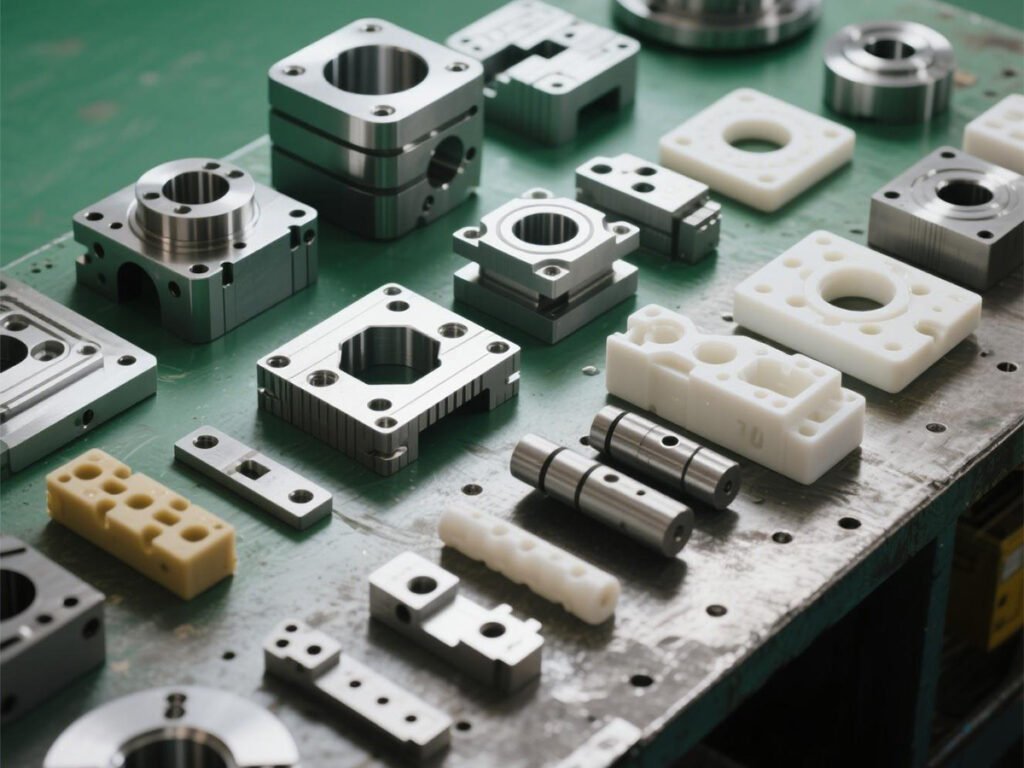
Aluminum machines quickly but can dent under high loads. Stainless steel withstands corrosion and harsh environments but increases tool wear and machining time. Delrin offers excellent dimensional stability for tight tolerances, yet improper cutting conditions can cause heat buildup, melting, or surface defects.
Every CNC material comes with trade-offs that affect your machining cost, lead time, and final part performance. This guide covers the materials we get asked about most — where each one performs best, where limitations appear, and how to choose the right material before machining begins.
Why Choosing the Right CNC Machining Material Matters
Material selection affects your CNC project before machining even begins. It influences your achievable tolerances, machining cost, and whether your design can be produced successfully.
It Sets the Ceiling on Tolerance
Some materials are harder to keep stable during machining. Internal stress, heat buildup, and thermal expansion can all cause dimensional changes.
Aluminum 6061 is widely used for precision CNC parts because it machines consistently and holds dimensions well. Cast acrylic can also achieve good accuracy, but it needs more control to prevent heat damage and stress cracking. If your drawing requires ±0.02 mm tolerance, the material must be able to support that accuracy first.
It Changes Your Cost Structure
Material price is only part of the machining cost. Cycle time, tool wear, cutting speed, and scrap rate can have a bigger impact.
Titanium is a good example. Its raw material cost may not seem extreme compared with other metals. However, its low machinability can make the same part take several times longer than aluminum.
It Limits Your Design Geometry
Material properties affect what features can be machined reliably. Thin walls, deep pockets, and fine threads all become more challenging when a material is too soft or too brittle.
PTFE, for example, can deflect under cutting forces. It may require slower cutting speeds or additional support during machining. Brittle materials like acrylic need careful design choices. Sharp corners, thin sections, and aggressive cutting conditions can increase the risk of cracking.
It Determines End-Use Performance
The machining process only creates the part. The material determines how that part performs in the real world.
UV exposure, chemicals, mechanical loads, and temperature changes all affect material selection. A bracket used in an engine bay needs different properties from one installed inside a control panel. The shape may be identical, but the material requirements are completely different.
Common CNC Metal Materials
Metals are widely used in CNC machining because they offer excellent strength, durability, and dimensional stability. Compared with most plastics, metals usually maintain their shape better under heat and mechanical stress. They are also suitable for tighter tolerances and load-bearing applications.
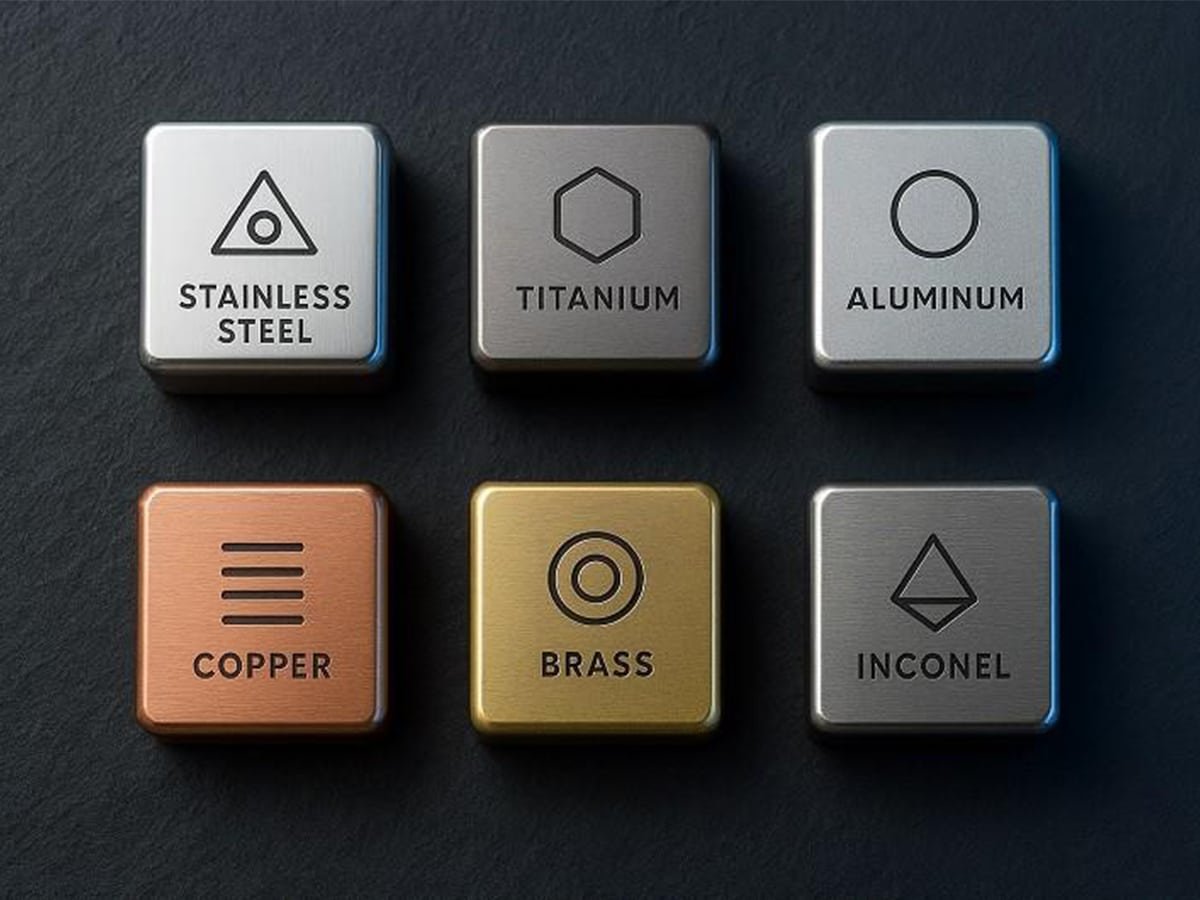
Aluminum (6061, 7075, 2024)
Aluminum is one of the most common CNC materials because it machines quickly and keeps production costs low.
6061 offers a good balance of strength, machinability, and corrosion resistance, making it suitable for general-purpose parts. 7075 provides a higher strength-to-weight ratio for aerospace and high-stress applications, but it costs more and requires more careful design for thin walls. 2024 is valued for its fatigue resistance when repeated loading is a concern. All three alloys machine faster and cause less tool wear than steel or titanium.
Stainless Steel (303, 304, 316)
Stainless steel is selected when strength and corrosion resistance are both important. 303 is the easiest grade to machine because its sulfur content improves chip formation and cutting performance. 304 offers better corrosion resistance and weldability, making it a common choice for industrial parts. 316 adds molybdenum for improved resistance to saltwater and chemicals, but it requires slower machining speeds and causes more tool wear.
Mild Steel & Carbon Steel
Steel provides high strength at a relatively low material cost.
It is commonly used for brackets, fixtures, shafts, and structural components. However, untreated steel can rust when exposed to moisture. Protective finishes such as powder coating, plating, or painting are often added when corrosion resistance is required.
Brass (C360)
C360 brass is popular for precision CNC parts because it machines easily and produces clean chips. Its excellent machinability helps reduce tool wear and supports efficient production. It also holds threads well in small-diameter features, making it suitable for fittings, valves, electrical connectors, and other detailed components.
Titanium (Grade 5)
Grade 5 titanium offers an outstanding strength-to-weight ratio and excellent corrosion resistance.
However, it is more challenging to machine because its low thermal conductivity keeps heat concentrated near the cutting edge. This increases tool wear and requires careful control of cutting speed, feed rate, and tooling. Titanium is usually chosen for aerospace and medical applications where performance justifies the higher machining cost.
For a deeper comparison of common metal options and their machining characteristics, see our guide to CNC metal parts materials.
Common CNC Plastic Materials
Plastics are widely used in CNC machining because they offer advantages that metals do not always provide. They are lightweight, electrically insulating, and resistant to many chemicals. For prototypes and low-load applications, they can be a more practical choice than metal.
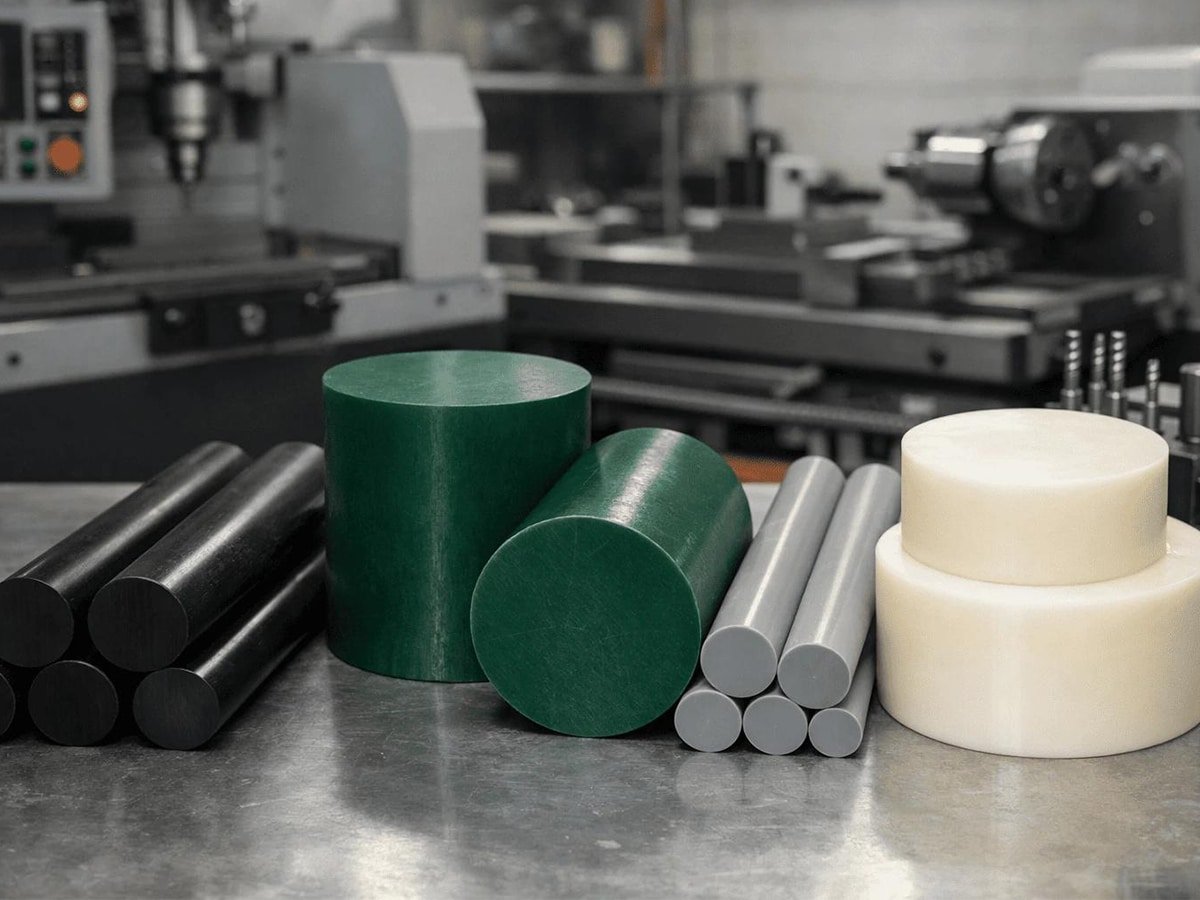
Delrin (Acetal, POM)
Delrin is one of the most metal-like engineering plastics for CNC machining. It offers low friction, good stiffness, and excellent dimensional stability. Unlike nylon, it absorbs very little moisture, which helps maintain tighter tolerances over time. It is commonly used for gears, bushings, and sliding components that require low maintenance.
Nylon (PA6, PA66)
Nylon combines good strength, impact resistance, and wear performance. However, it is hygroscopic, meaning it absorbs moisture from the environment. This can cause slight dimensional changes over time, especially in humid conditions. Nylon is commonly used for bushings, rollers, and structural parts exposed to repeated impact or friction.
ABS
ABS is an affordable plastic with good impact resistance and excellent machinability. It is often selected for prototypes, enclosures, and consumer product parts where cost and appearance are priorities. However, its dimensional stability and temperature resistance are lower than engineering plastics such as Delrin or PEEK, making it less suitable for high-precision mechanical parts.
PTFE (Teflon)
PTFE offers excellent chemical resistance and an extremely low coefficient of friction. These properties make it useful in applications where sliding performance or chemical exposure is a priority. However, its softness and low stiffness make it more difficult to machine accurately. PTFE parts often require slower cutting speeds, rigid fixturing, and careful process control. It is commonly used for seals, gaskets, liners, and chemical handling components.
PEEK
PEEK is a high-performance plastic designed for applications where standard plastics cannot meet the requirements. It maintains mechanical strength at elevated temperatures and provides excellent chemical resistance. However, its high material cost and demanding machining requirements make it a specialized option. It is typically used in aerospace, medical, and other high-performance applications.
If you are comparing engineering plastics for CNC applications, our guide to CNC plastic parts materials covers more material options, applications, and selection considerations.
Other CNC-Compatible Materials
Beyond standard metals and plastics, some materials are machined for more specialized reasons — flexibility, insulation, extreme strength-to-weight ratios, or simply rapid prototyping needs.
Rubber (Silicone, EPDM, Neoprene)
CNC machining rubber is a narrower discipline than machining rigid plastics. The material’s own flexibility works against the cutting tool, causing it to move or deform during cutting. To maintain accuracy, rubber may need to be temporarily stiffened through methods such as freezing, adhesive backing, or vacuum fixturing. Used for custom gaskets, seals, and low-volume prototype parts where injection molding tooling isn’t justified yet.
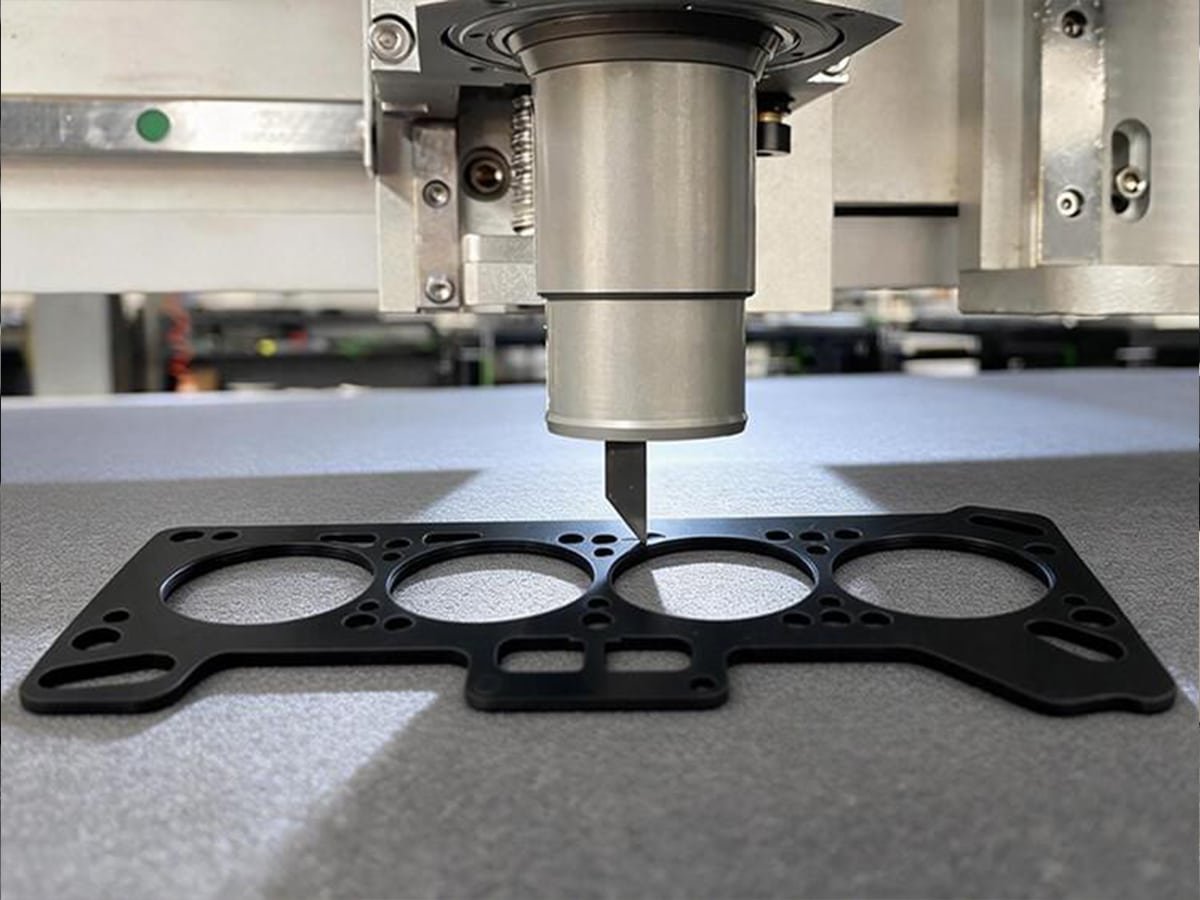
Carbon Fiber Composite
Carbon fiber composites combine low weight with high mechanical performance, but they require careful machining methods. The embedded fibers are abrasive and quickly wear standard cutting tools, so carbide or diamond-coated tools are often used. They are commonly machined for drone frames, motorsport components, and aerospace brackets where weight reduction is critical.
G10/FR4 Fiberglass
G10 and FR4 are fiberglass-reinforced composites known for their rigidity, low moisture absorption, and electrical insulation. Like carbon fiber, their glass fibers make them highly abrasive during machining, which increases tool wear and requires proper cutting parameters. They are widely used for PCB fixtures, electrical insulation parts, and industrial components.
Foam (Polyurethane, EPS)
Foam materials are mainly machined for prototypes, patterns, and tooling models rather than final production parts. Their low density allows fast material removal and large-scale machining. However, they cannot maintain the same level of strength, surface finish, or dimensional accuracy as engineering plastics.
How to Choose the Right CNC Machining Materials for Your Part
Knowing the available materials is only the first step. The real challenge is narrowing down the options before machining starts. In practice, the right choice usually comes down to five factors.
Start With the Functional Requirement
Start with the job the part needs to do. Load, temperature, chemical exposure, and electrical requirements usually eliminate most materials before machining even starts.
A part operating at 150°C, for example, removes standard plastics from consideration before machining even begins. High-temperature materials such as PEEK are usually where the discussion starts.
Match Tolerance Requirements to Material Behavior
Tight tolerances are not created by CNC accuracy alone. The material itself must remain stable during machining and throughout use.
Materials that absorb moisture, release internal stress, or deform easily can create expensive tolerance problems. This is why nylon and acrylic are often rejected for precision mechanical components, even when their cost and basic properties look attractive.
Weigh Machining Cost Against Material Cost
The cheapest material is not always the cheapest part. Raw material price is only one factor. Cycle time, tool wear, and scrap risk can completely change the final cost. Titanium is a typical example — the machining process often costs far more than the material itself.
Confirm Regulatory or Industry Requirements
Some industries do not leave material selection open. Medical, aerospace, and food-contact applications may require specific grades, certifications, or compliance standards.
Check these requirements early. There is no point optimizing cost around a material that cannot be approved for the final application.
Prototype Before You Commit to Volume
When material selection is uncertain, producing a prototype is often the safest approach. A test part can reveal issues such as tolerance changes, surface finish problems, or machining difficulties before they affect a larger production run.
Conclusion
Material selection shapes every downstream decision in a CNC project — tolerance, cost, tool life, and how the part performs once it’s in service. Get it wrong, and no amount of precision machining will fix a material mismatch.
Not sure which material fits your application? Zhongde’s engineering team can help evaluate your requirements, compare material trade-offs, and recommend a machining solution before production begins. Contact us for CNC machining support and a quote tailored to your part.