Threads are the ridges you see on screws, bolts, or any part that needs to be fastened or rotated together. They allow components to lock, hold, or transmit motion with precision. While simple threads can be made with basic tools, CNC threading provides a highly accurate and repeatable way to create threads on metal, plastic, or composite parts.
What Is CNC Threading?
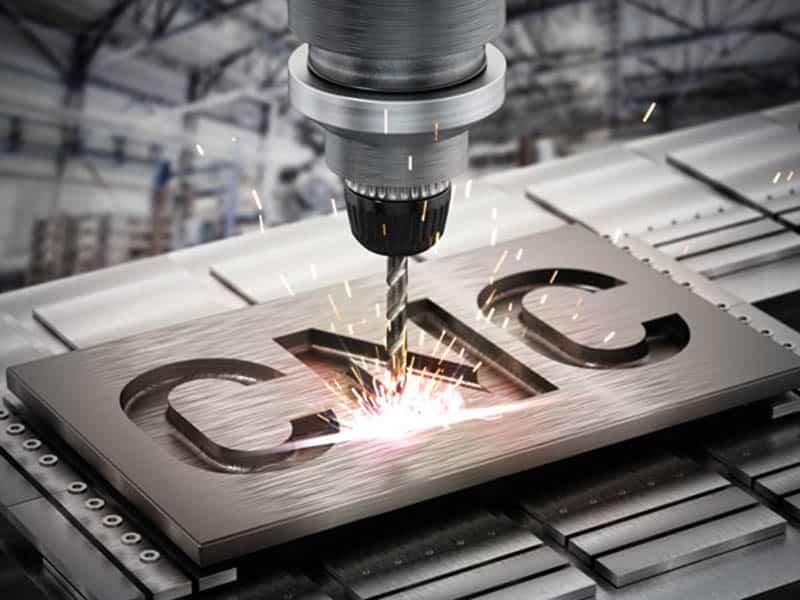
CNC threading is a precision process that creates spiral ridges, or threads, on a part so it can fasten, rotate, or mate with another component. Unlike manual threading, CNC (Computer Numerical Control) machines follow programmed paths to cut threads with high accuracy, repeatability, and consistency.
Because the process is digitally controlled, CNC threading can handle complex geometries, tight tolerances, and specialized thread profiles that may be difficult or impossible to achieve manually.
Types of Thread
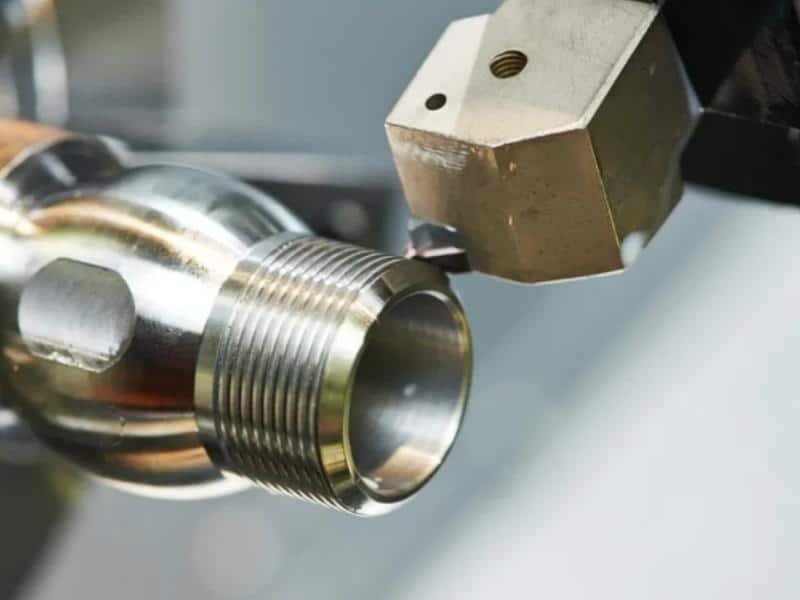
In CNC threading, the most fundamental distinction is between internal threads and external threads. Internal threads are formed inside a hole, creating a spiral groove that receives a matching component. External threads are formed on the outside surface of a shaft or rod, creating a raised spiral that engages with a corresponding internal feature. A simple way to think about them is that one works like a “socket,” while the other works like a “plug,” and together they form a secure mechanical connection.
Threads can also be classified along other dimensions, such as single-start versus multi-start, straight versus tapered, and right-hand versus left-hand. Each of these variations affects how components engage, distribute load, and behave under rotational forces, but the details of these distinctions are usually explored in specialized thread design guides.
Common CNC Threading Processes
When it comes to CNC threading, the method you choose has a direct impact on precision, surface finish, and production efficiency. Engineers need to understand the main threading processes to select the right approach for the material, part geometry, and intended use.
Milling
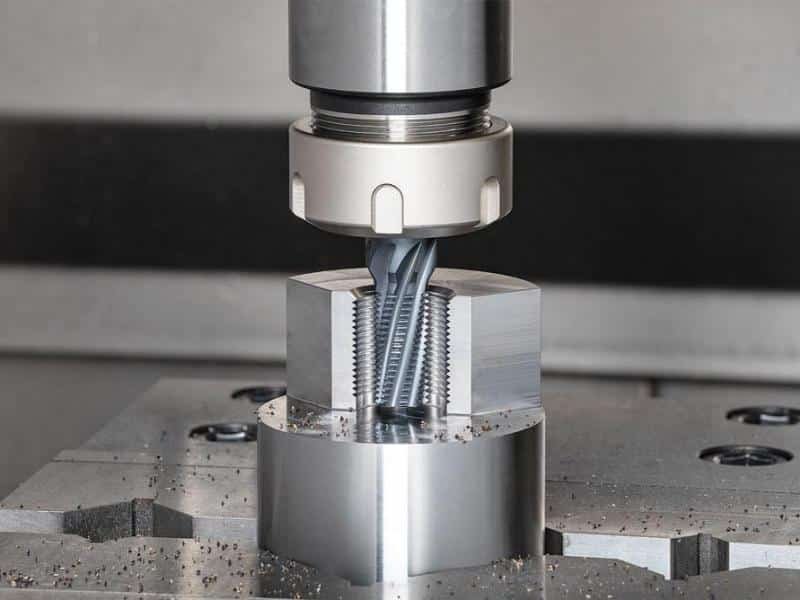
Imagine a tiny helical saw spiraling along the surface of a metal rod. Thread milling works similarly: a rotating cutting tool moves in a helical path to carve threads into the material. This method is versatile, capable of making threads on both holes and shafts, and can adjust for different pitches without changing the setup.
Tapping
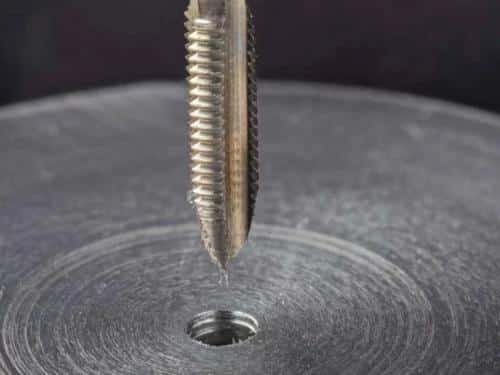
Tapping is like screwing a hollow, ridged cylinder into a prepared hole. As it turns, it carves the internal grooves of the thread. This method is efficient and widely used for standard threaded holes, producing consistent results across medium- to high-volume runs.
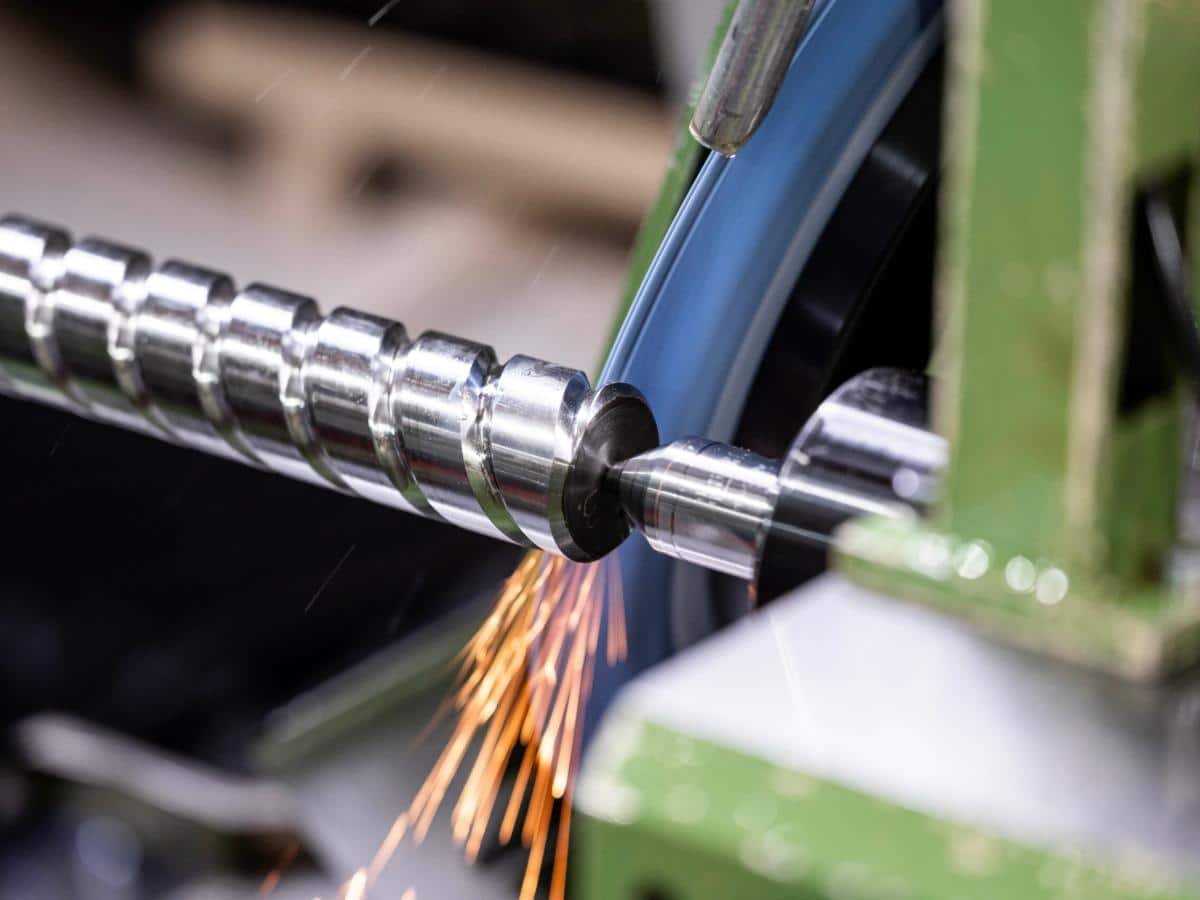
Thread Grinding
Thread grinding can be thought of as “polishing the thread into shape with extreme precision.” A grinding wheel shaped to the thread profile slowly removes material to achieve very tight tolerances and a smooth surface finish. It is typically used when accuracy and surface quality are more important than speed.
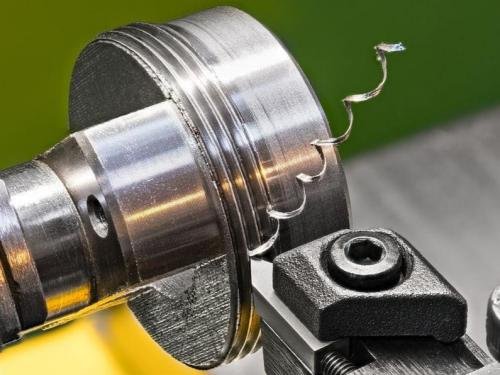
Single-Point Turning
Single-point turning creates threads by slowly feeding a cutting tool along a rotating workpiece, tracing the thread path step by step. It is flexible and does not rely on pre-made tooling shapes, making it suitable for custom threads or low-volume precision parts.
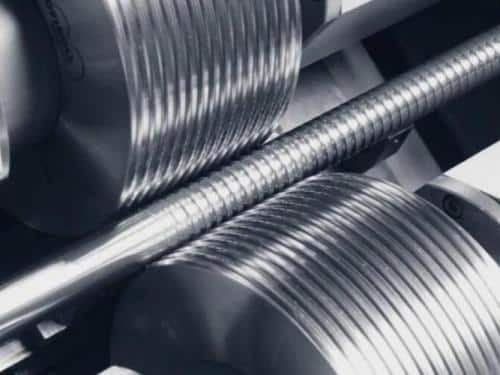
Thread Rolling
Thread rolling does not cut material—it reshapes it. Instead of removing metal, hardened dies press into the surface and “stamp” the thread into form by plastic deformation. This makes the thread denser and stronger, as the material grain is compressed rather than cut.
Design Considerations for CNC Threading
When moving from threading processes to actual part design, a few key decisions determine whether a threaded feature will perform reliably in real use. These considerations help ensure the thread is not only machinable, but also stable, durable, and suited to its working conditions.
Thread Tolerance and Fit
When designing a threaded feature, the tolerance determines how tightly or loosely the parts fit together. Too tight, and assembly may be difficult or damage the threads; too loose, and the connection may wobble or fail under load. CNC threading allows precise control, but designers still need to specify fit based on function—whether it’s a high-strength fastening point or a simple alignment feature.
Material and Hardness
The material of the part affects which threading method is most suitable. Hard metals like stainless steel may require thread grinding or rolling for accuracy and surface finish, while softer alloys can often be tapped or milled efficiently. For plastics or composites, thread design must account for creep and wear, ensuring the threads retain engagement after repeated use.
Thread Profile and Type
Different thread geometries behave differently under load. Standard profiles like ISO metric, unified, or trapezoidal threads each have their own advantages for strength, sealing, or motion. When combined with CNC threading, designers can choose the profile that balances mechanical requirements with manufacturability.
Thread Depth and Engagement
The depth of the thread affects load distribution and durability. Shallow threads may strip under stress, while overly deep threads increase cycle time and material use. CNC threading offers consistent depth control, but designers must still determine the optimal engagement length for reliable performance.
Surface Finish
Surface finish impacts friction, wear, and fatigue life. Rolling and grinding tend to produce smoother, more uniform threads, while milling or tapping may leave minor tool marks. Depending on the application—high-speed motion, fluid sealing, or load-bearing—designers may specify post-processing or surface treatments to improve performance.
Accessibility and Tool Path
CNC threading requires adequate tool access. Complex internal threads, angled holes, or deep cavities may limit tool choices or require specialized operations. Early-stage design should consider how the thread will be machined, ensuring tool clearance and avoiding collisions during production.