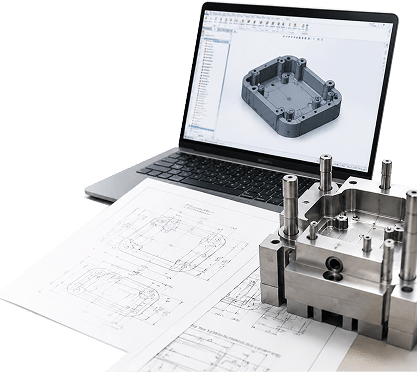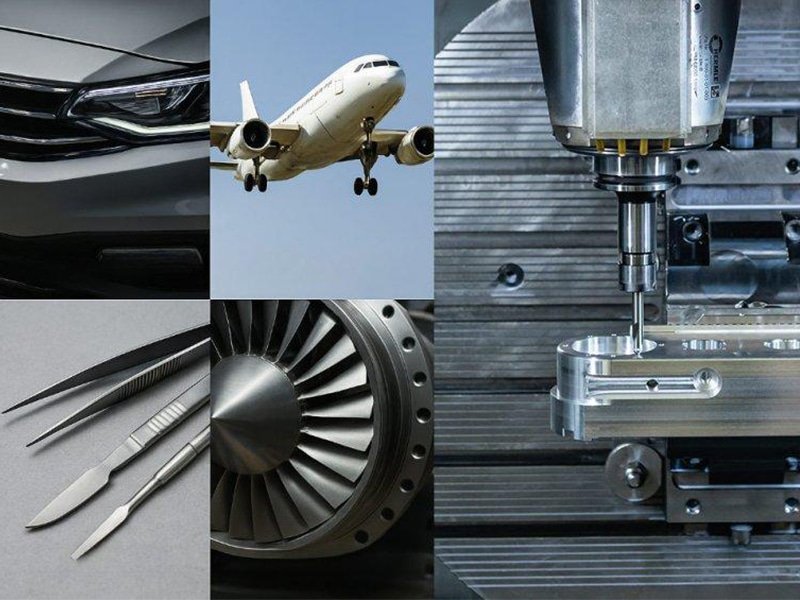
Walk through enough factories and you start noticing something odd: similar CNC machines are cutting jet engine parts in one building and bottle-cap molds in the next. That is the interesting thing about CNC machining — it is a versatile technology that supports industries ranging from aerospace to everyday consumer products. Whenever a part requires tight tolerances, complex geometries, or consistent quality, CNC machining often becomes part of the solution.
What Is CNC Machining?
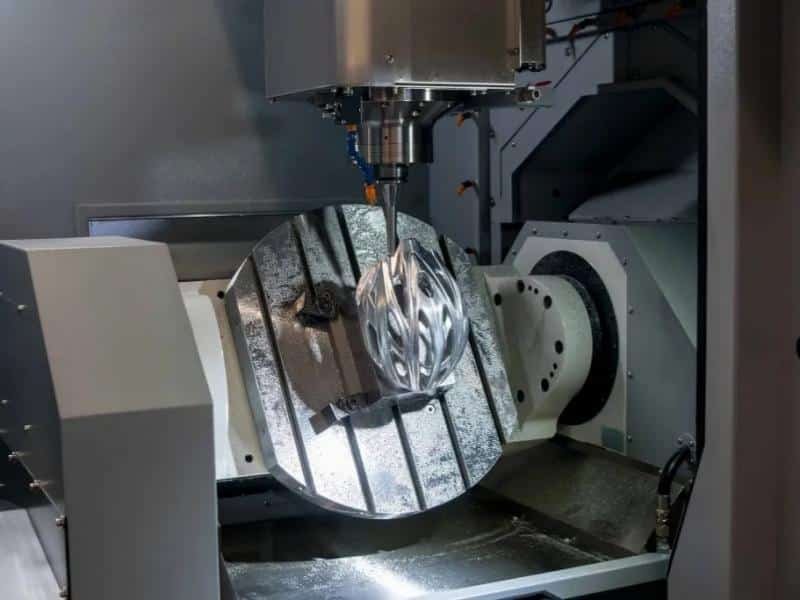
CNC stands for computer numerical control, and the idea behind it is almost deceptively simple: instead of a machinist manually controlling every movement, a computer guides the machine through a precise set of programmed instructions, and the cutting tool follows them exactly — every time, down to a fraction of a human hair. Feed it the same file twice, and it produces the same part twice, whether it’s the first unit or the ten-thousandth.
CNC Applications Across Key Industries
What’s easy to miss is that CNC isn’t a single machining method — it covers milling, turning, drilling, and a range of other operations. Because the same underlying technology can be pushed toward wildly different goals — a tiny precision feature or a part the size of a car door — CNC applications can look completely different from one industry to the next.
Aerospace & Aviation
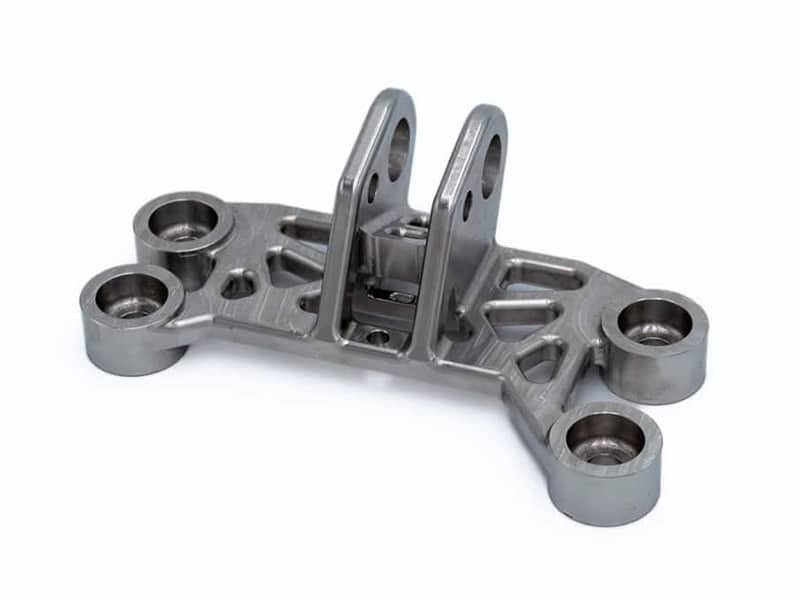
A single aerospace bracket might weigh a few hundred grams less than a conventional alternative while still handling extreme flight loads — something made possible by aerospace CNC machining‘s ability to produce complex, lightweight designs with tight tolerances.
What’s less obvious is how much material goes into making that part: many aerospace components start as solid billets, with large portions removed during machining. In some cases, shops may cut away 90% of a billet to produce one finished component — a challenge measured by the “buy-to-fly” ratio, which directly impacts manufacturing costs.
Typical parts: structural brackets, landing gear components, engine components, actuator bodies.
Medical & Dental
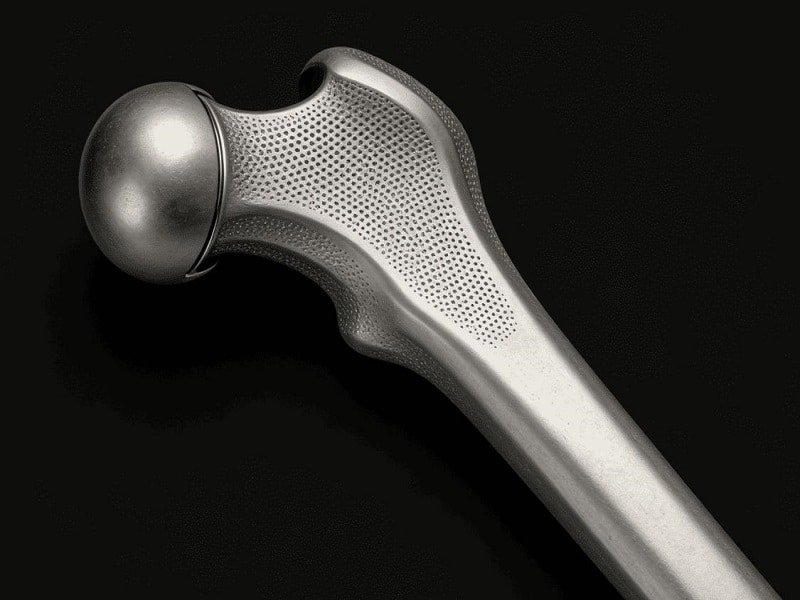
Patient-specific implants are essentially one-off parts produced with the consistency expected from mass production — every patient’s anatomy is slightly different, so dedicated tooling for injection molding or casting is often impractical at these volumes. CNC machining avoids the need for custom molds and goes directly from digital design to finished part. One quirky detail: some implant surfaces are deliberately roughened, not polished, because bone can bond more effectively to a textured surface.
Typical parts: orthopedic implants, surgical instruments, bone screws, dental abutments.
Automotive & Motorsport
This is really two different jobs wearing the same name tag. In mass production, automotive CNC machining often finishes and refines what casting or forging has already formed — optimized for speed, consistency, and high-volume output.
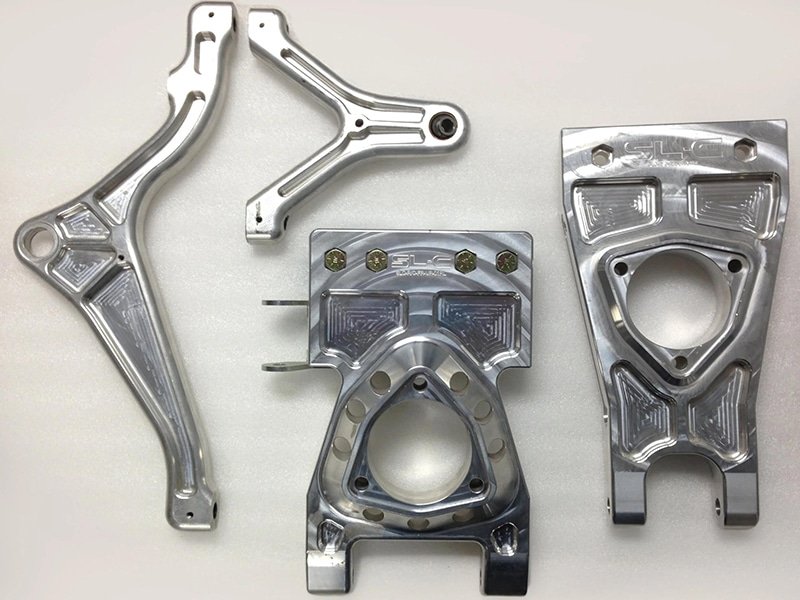
In racing, it’s the opposite: teams often machine entire components from solid billet because parts evolve too quickly to justify dedicated tooling. A Formula-style team might redesign and remachine a suspension component between one race weekend and the next — something traditional casting processes are not designed to handle.
Typical parts: engine and transmission components, suspension knuckles, brake calipers, EV battery enclosures.
Electronics & Semiconductor Equipment
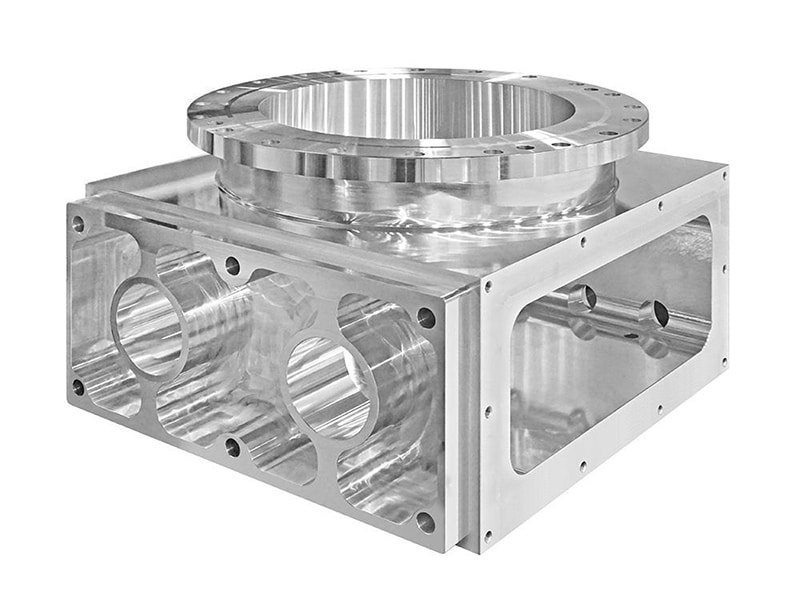
There’s a reason chipmaking leaves almost no room for error: a wafer chuck with even a few microns of flatness deviation can reduce yield across an entire production run. CNC machining is one of the key processes used to achieve the tight dimensional control required for semiconductor equipment, which is why many critical components are machined instead of relying solely on casting or stamping. Some of these parts never even touch a normal shop floor — they’re cut, cleaned, and inspected in controlled environments closer to a surgical suite than a traditional factory.
Typical parts: wafer chucks, RF connector housings, precision heat sinks, test equipment enclosures, waveguides.
Oil, Gas & Energy
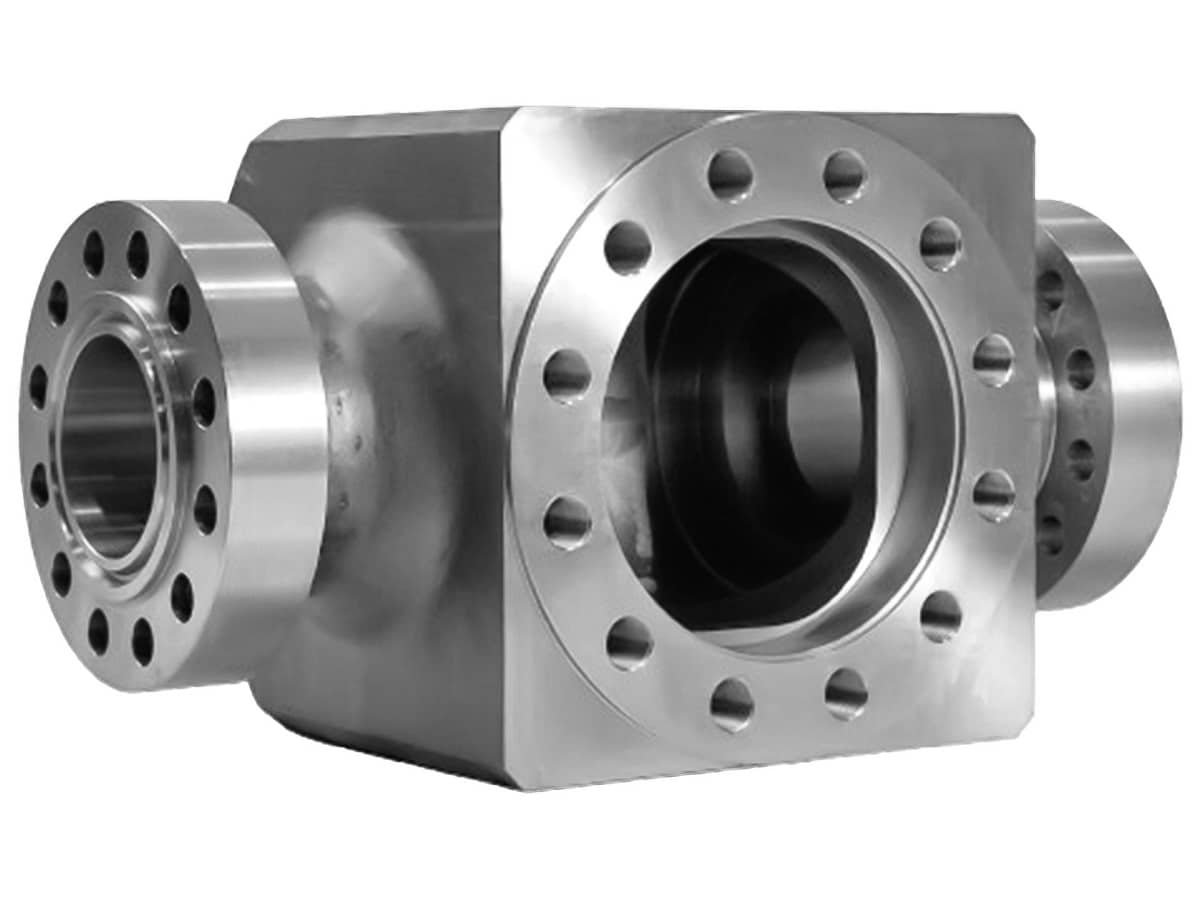
A valve that fails a thousand feet underwater isn’t something you get to fix easily, which is why oil and gas components are machined to meet demanding pressure-rated specifications with extremely tight requirements. This is where CNC’s repeatability really pays off.
The parts themselves can be surprisingly massive; some wellhead components weigh as much as a small car, requiring machining centers large enough to handle parts measured in meters. The materials aren’t forgiving either — duplex stainless steel and Inconel can wear down cutting tools far faster than ordinary steels.
Typical parts: wellhead components, valve bodies and manifolds, downhole tool housings, subsea connectors, compressor components.
Mold, Die & Tooling
Molds have an odd requirement: they often need extremely fine surface finishes because every detail in the cavity can be transferred to thousands of molded parts downstream. CNC machining is one of the key processes used to create complex, high-accuracy mold components from hardened steel, often working alongside EDM and polishing processes.
A mold shop’s real edge usually isn’t precision alone — it’s speed, since a delayed mold can hold up an entire product launch. That is why experienced suppliers often combine CNC machining with custom mold manufacturing to shorten tooling lead times and improve production readiness.
Typical parts: injection mold cores and cavities, die-cast tooling, stamping dies, mold bases, production fixtures.
Industrial Machinery & Robotics
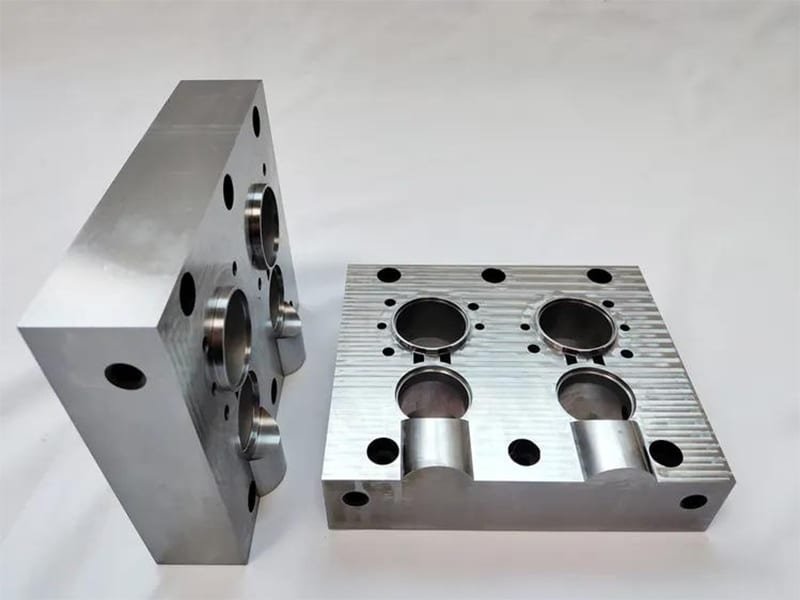
A robot can only move as predictably as its mechanical components allow, so consistency matters just as much as any individual tight tolerance. Every joint housing coming off the line needs to behave identically so the robot can maintain predictable motion after calibration. CNC machining suits this work because a design can often go from a screen update to a finished part within days, with no tooling to rebuild in between — a major advantage when automation systems are frequently revised as engineers optimize them in real-world applications.
Typical parts: gearbox housings, robotic arm joints, precision bearing seats, custom automation fixtures, drive components.
Conclusion
At this point, you’ve probably picked up on just how versatile — and practical — CNC machining really is. On one hand, it relies on a straightforward idea: a computer guides the tool through programmed movements with repeatable accuracy. On the other, that same idea supports some of the most demanding work in manufacturing, from aerospace components to medical devices and industrial systems.
Whether you need a prototype, a low-volume run, or custom CNC parts for a larger project, reach out to Zhongde. Our custom CNC machining service can help turn your design into accurate, production-ready components.