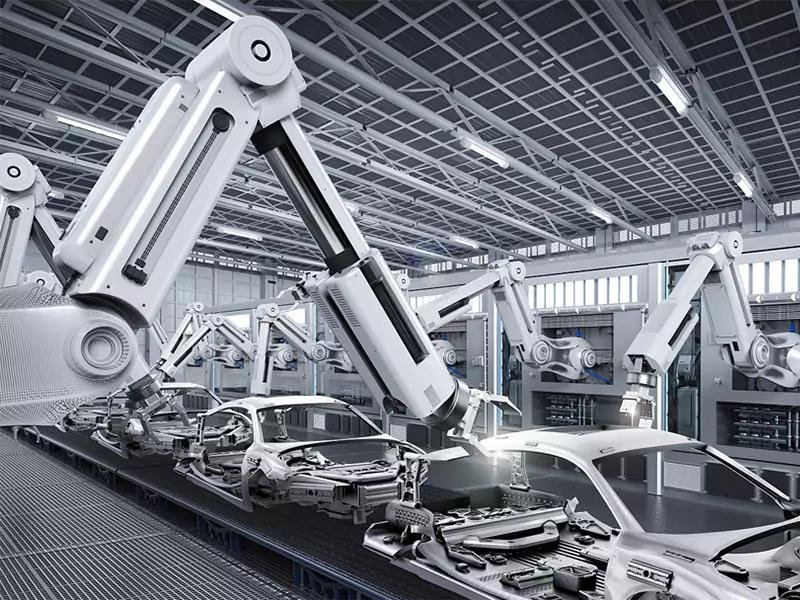
A modern automobile is assembled from tens of thousands of individual components, each manufactured separately before being brought together on the assembly line. For these parts to fit correctly and for the finished vehicle to operate reliably, every component must meet strict dimensional requirements.
This need for accuracy has made CNC machining indispensable in automotive manufacturing. By removing material with precise control, CNC machining allows automotive suppliers to produce both small and large components with minimal dimensional variation, ensuring consistent quality across thousands or even millions of parts.
What Is Automotive CNC Machining?
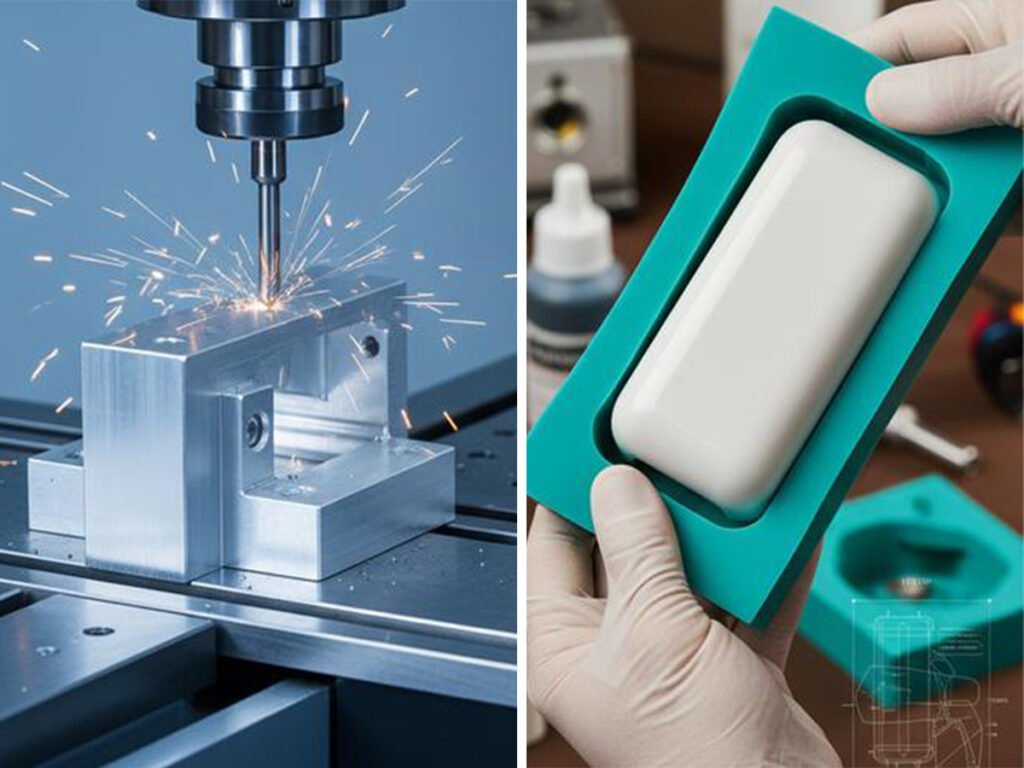
Automotive CNC machining is the process of shaping car parts with computer-controlled machine tools instead of manual equipment. A digital design is converted into machine instructions that control where the tool moves, how deep it cuts, and the machining path — allowing the same process to be repeated consistently, whether producing prototypes or production parts.
What makes it “automotive” is the level of precision and reliability these components require. Parts such as gears, valves, and engine components must withstand continuous heat, friction, and mechanical stress while maintaining tight dimensional tolerances. To achieve this, engineers select machining methods such as milling, turning, and drilling based on the part’s geometry, from simple brackets to complex components with internal features.
Why Use CNC Machining for Automotive Parts?
Beyond achieving tight tolerances, CNC machining offers practical advantages throughout vehicle development, production, and aftermarket support.
Speeding Up Vehicle Development Cycles
Before a new car model reaches production, engineers go through multiple rounds of design, testing, and revision. CNC machining allows them to produce functional prototype parts directly from CAD files within days, without waiting for stamping dies or injection molds to be built. This allows redesigned brackets, housings, or mechanical components to be tested on a physical vehicle early, helping teams identify design issues before committing to expensive production tooling.
Consistent Quality with Full Traceability
Automotive manufacturing is heavily regulated, and safety-critical parts often need to be traced back to the exact batch, machine, and production parameters used during manufacturing. CNC systems execute programmed instructions consistently, making it easier to record production data and demonstrate compliance with industry standards while reducing variations caused by manual operation.
Making Viable Low-Volume and Specialty Vehicles Viable
Not every vehicle is built by the millions. Motorsport teams, limited-edition models, and classic car restorations often need components in quantities too small to justify casting or injection molding. For these cases, CNC machining remains one of the few economically viable ways to produce accurate parts in batches of tens or hundreds rather than tens of thousands.
Reducing Waste and Rework
Because the cutting process is precise and repeatable, fewer parts are rejected for being out of specification. This helps reduce material waste and rework costs, especially when machining materials such as aluminum alloys, titanium, or high-grade steel.
Supporting Legacy and Aftermarket Parts
Older vehicle models eventually leave mass production, but demand for replacement parts often remains. When original tooling has been retired or is no longer available, CNC machining allows suppliers and repair specialists to reproduce components on demand using a digital model or scanned reference part, helping keep older vehicles in service long after their original production lines have ended.
Common Automotive Parts Made with CNC Machining
CNC machining is used across many vehicle systems, but certain component categories rely on it more heavily than others.
Engine Components
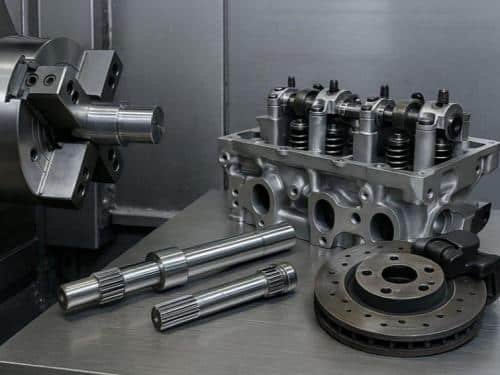
Cylinder heads, engine blocks, pistons, and camshafts often require CNC machining during their production process because they need precise internal geometry and critical mating surfaces to withstand combustion pressure and heat throughout the vehicle’s service life. CNC milling, boring, and drilling are commonly used to machine internal channels, ports, and mounting surfaces that typically require additional accuracy beyond the original casting process.
Transmission and Drivetrain Parts
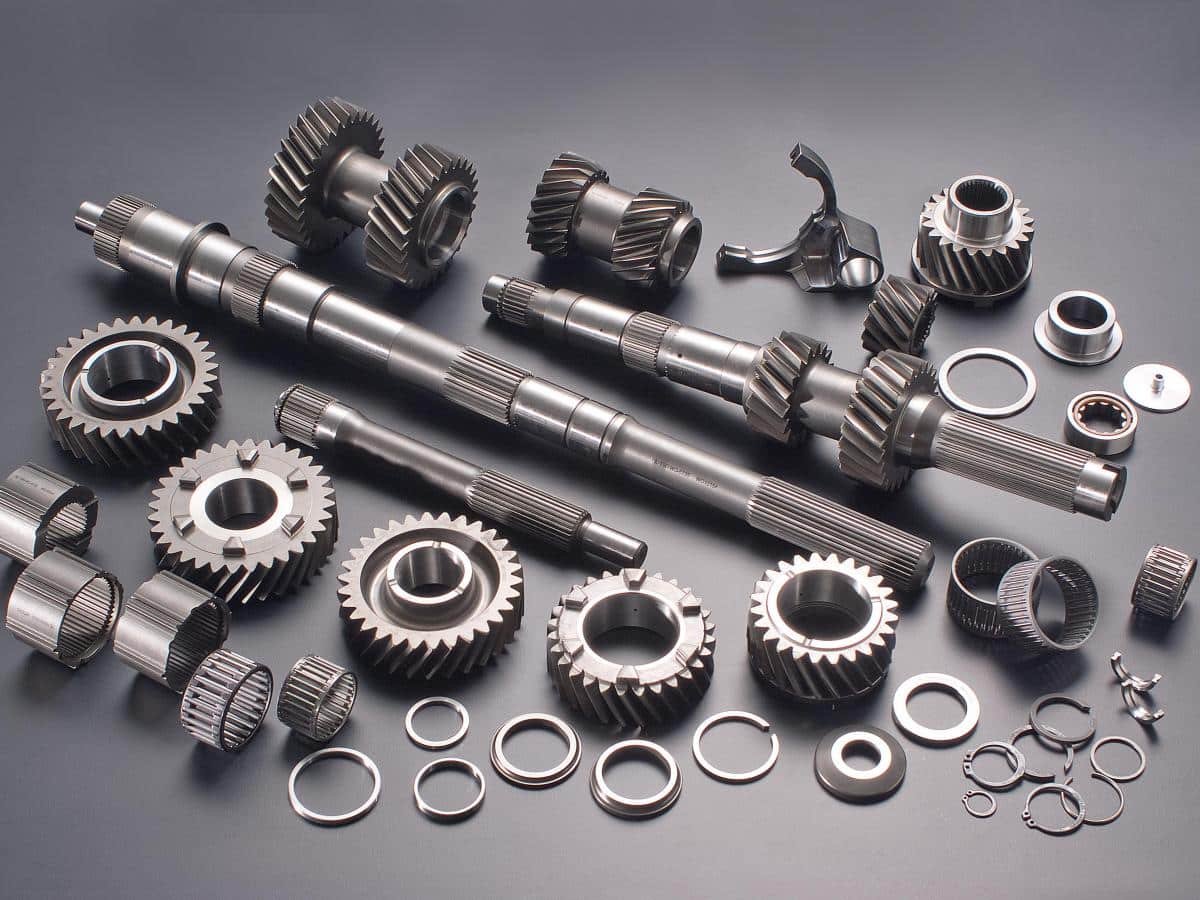
Gears, shafts, and housings within the transmission system rely on CNC turning and milling to achieve accurate tooth profiles, alignment, and surface finishes that help reduce friction, vibration, and noise during power transfer. Even small variations in gear geometry can lead to premature wear or audible whining, making machining precision especially important.
Suspension and Steering Parts
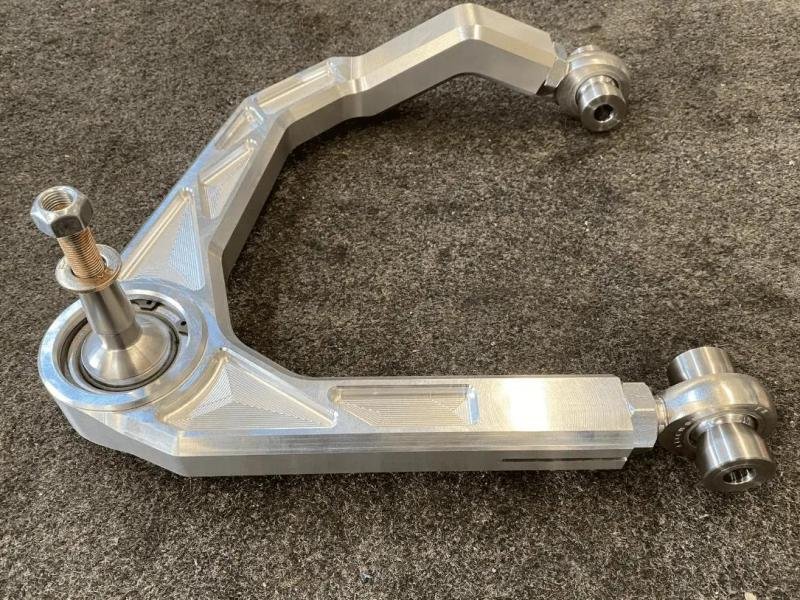
Control arms, steering knuckles, and suspension mounts are often made from aluminum or steel forgings, with CNC processes used to finish critical mounting points and bearing surfaces where precise alignment affects handling and ride quality.
Braking System Components
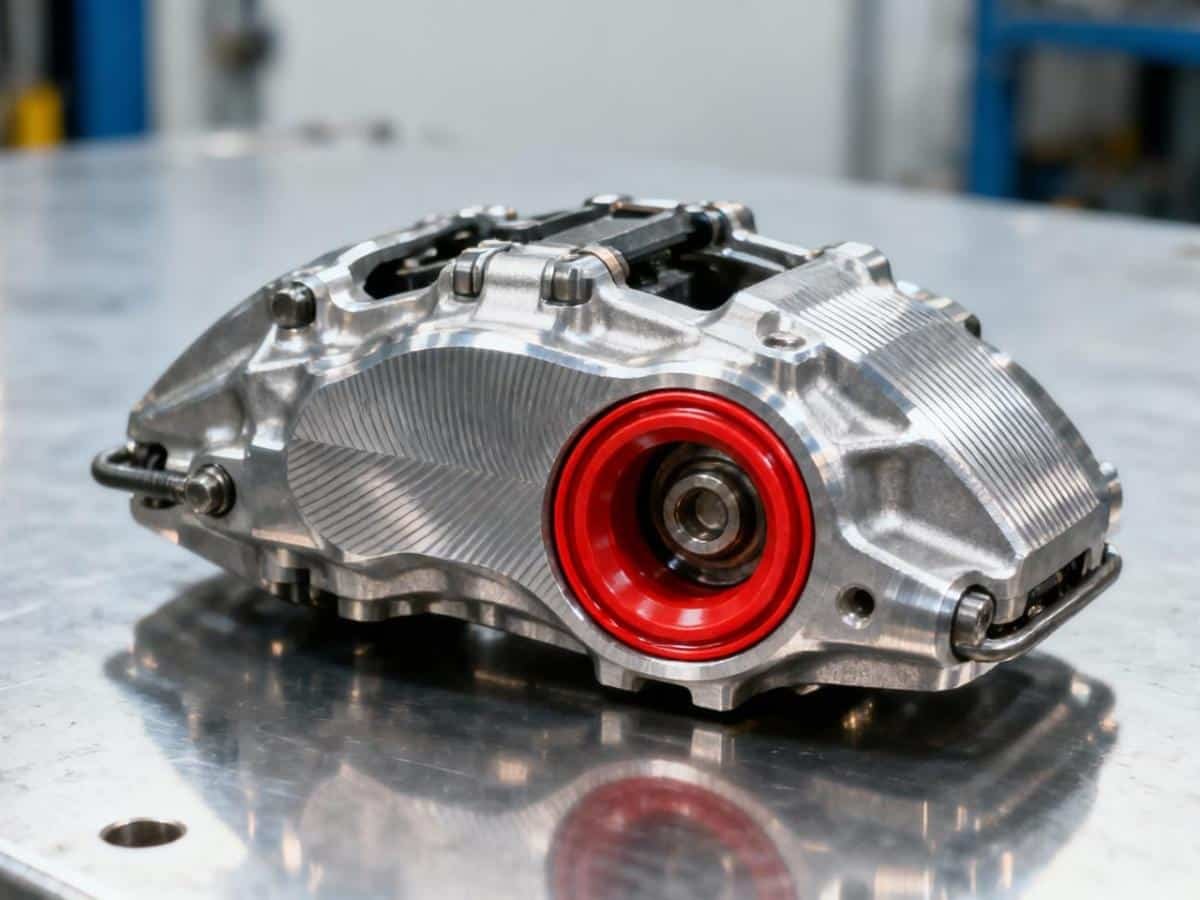
Brake calipers, rotors, and master cylinder housings often undergo CNC machining to achieve critical dimensions and surface requirements for reliable braking performance. Because these parts are directly tied to vehicle safety, they are often subject to additional inspection and testing after machining.
Interior and Exterior Trim Parts
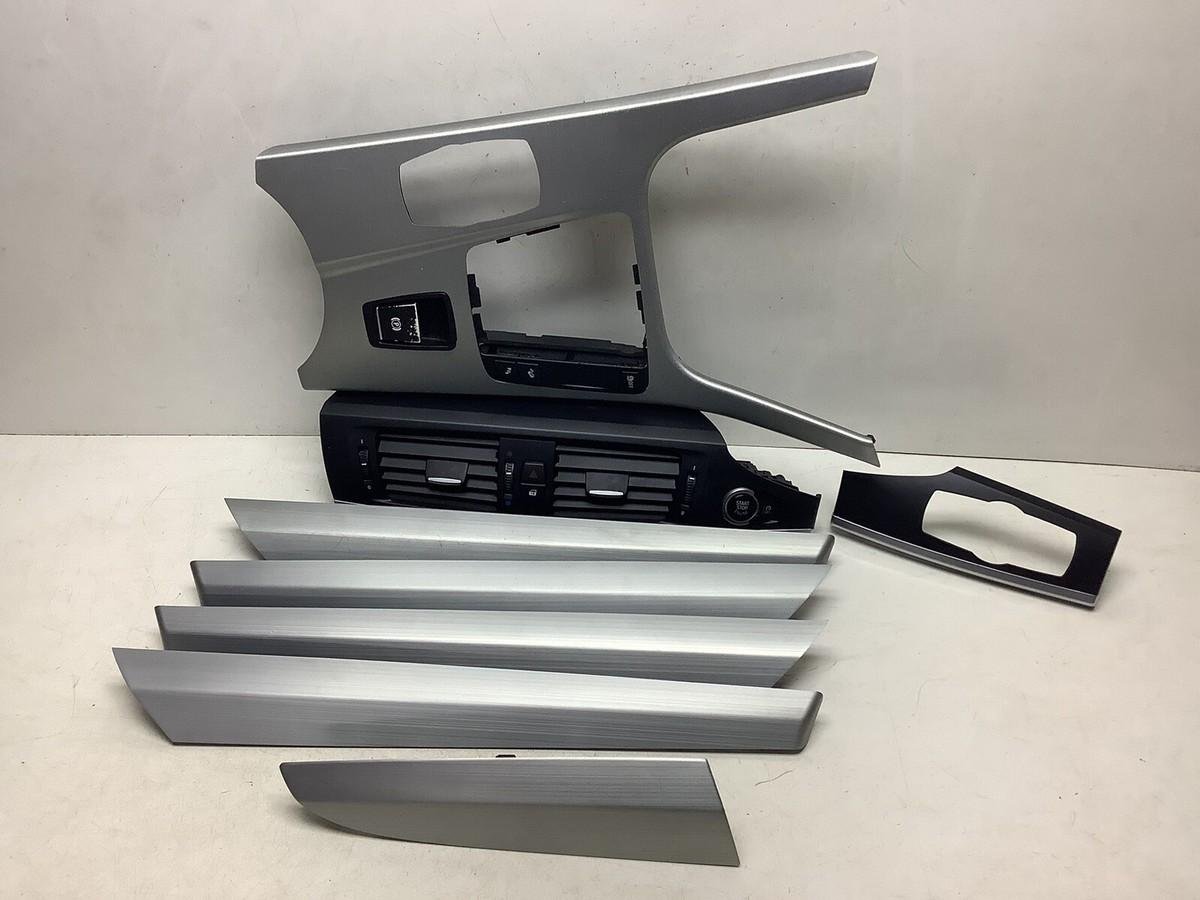
Beyond mechanical components, CNC machining is also used for smaller detail parts, such as prototype trim panels, interior control components, and decorative metal parts, particularly in premium or limited-edition vehicles where exact fit and finish matter for the final appearance.
Materials Used in Automotive CNC Machining
The choice of material for a machined automotive part is rarely about performance alone — it’s a balance between how the part needs to behave on the road and how efficiently it can actually be cut, drilled, or turned on a CNC machine.
Aluminum Alloys
Aluminum, especially grades like 6061 and 7075, is widely used for lightweight automotive parts such as suspension components, engine components, and EV structural parts. Its low density helps improve fuel efficiency and driving range, while its excellent machinability allows high-speed cutting with less heat buildup. This makes it suitable for complex parts such as motor housings, transmission components, and cooling channels.
Steel and Alloy Steel
Steel is commonly selected for high-stress components such as gears, shafts, and crankshafts. Alloy steels can be heat-treated to improve hardness and fatigue resistance, making them suitable for drivetrain applications. However, hardened steel is more difficult to machine, requiring rigid tooling, slower cutting speeds, and wear-resistant tools such as carbide inserts.
Stainless Steel
Stainless steel is used for components exposed to corrosion or high temperatures, including exhaust parts, brackets, and specialized fasteners. However, its toughness and tendency to work-harden make it more difficult to machine than standard steel, requiring careful tool selection and cutting parameters to maintain accuracy.
Titanium Alloys
Titanium is mainly found in high-performance and motorsport applications, such as valves and connecting rods, where its high strength-to-weight ratio provides an advantage. However, its poor thermal conductivity causes heat to concentrate at the cutting edge, requiring specialized tooling and slower machining speeds to prevent tool damage.
Engineering Plastics and Composites
Engineering plastics such as acetal (POM, commonly known as Delrin) and reinforced composites are used for interior parts, connector housings, and prototype or low-volume EV components. They are easier to machine than metals but can deform under heat or clamping pressure, making proper fixturing and machining control important for achieving tight tolerances.
How to Choose a Quality Automotive CNC Machining Manufacturer
Selecting the right machining partner matters as much as the machining process itself. Even advanced CNC equipment cannot compensate for weak quality systems or inconsistent processes. Before choosing a supplier, evaluate the following areas.
Industry-Specific Certifications
Automotive parts are subject to strict quality requirements, so certifications can reveal whether a supplier has the systems needed to support automotive projects. IATF 16949 is the automotive quality management standard, indicating that a supplier follows structured processes for traceability, defect prevention, and continuous improvement beyond a general ISO 9001 system.
Equipment and Process Capability
A supplier’s equipment should match the complexity of the parts being produced. Multi-axis CNC machines, including 4-axis and 5-axis systems, are often preferred for complex geometries, while simpler brackets or fixtures may only require 3-axis machining. Reviewing their equipment list and whether key processes are completed in-house helps confirm their actual capabilities.
Quality Control and Inspection Capabilities
Tight tolerances only matter when they can be verified. Reliable suppliers should have inspection equipment such as coordinate measuring machines (CMMs), along with documented procedures for handling non-conforming parts. Asking about inspection reports and certificates of conformance helps reveal how quality is measured and maintained.
Production Capacity and Scalability
A manufacturer suited for prototyping a handful of parts isn’t necessarily equipped to scale into mass production, and vice versa. It’s worth asking directly about their machine capacity, typical lead times at different order volumes, and whether they can support your project from early samples through full-scale manufacturing without requiring a switch to a different supplier midway.
Communication and Engineering Support
For complex custom parts, suppliers that review CAD files and provide design-for-manufacturability (DFM) feedback can help identify machining challenges before production begins. Early suggestions on difficult features or unnecessary tolerances can reduce delays, rework, and unexpected costs.
Conclusion
CNC machining combines precision, flexibility, and repeatability, making it an essential manufacturing process for many automotive applications. However, achieving reliable results depends not only on the machining technology itself but also on the supplier’s process capability, quality systems, and engineering support.
If you need precision components for automotive applications, explore our custom CNC machining service to learn how we can support your project from prototype development to production.