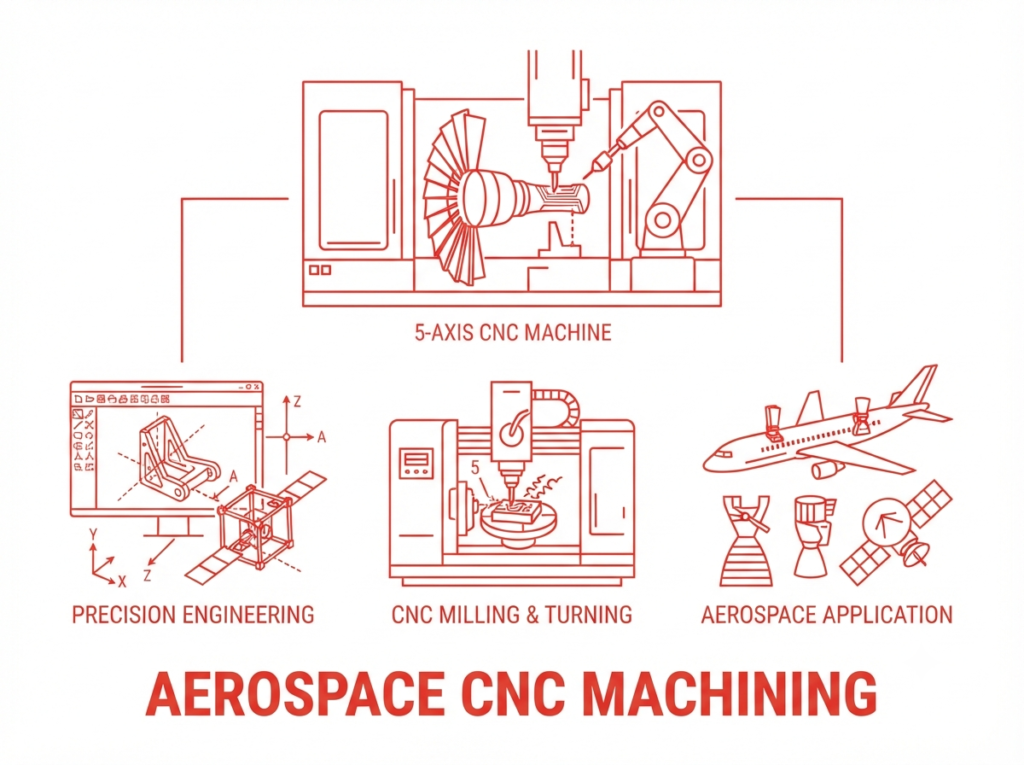
The aerospace industry demands components with exceptional precision, strength, and reliability. These requirements align well with the advantages of CNC machining, which can produce complex parts with high accuracy and repeatability.
However, meeting strict aerospace standards requires more than conventional machining processes. Aerospace machining involves specialized materials, optimized techniques, and careful quality control to achieve the performance and consistency required for aerospace applications. This article will explore the key aspects of aerospace machining, including its importance, materials, processes, challenges, and applications.
What Is Aerospace Machining?
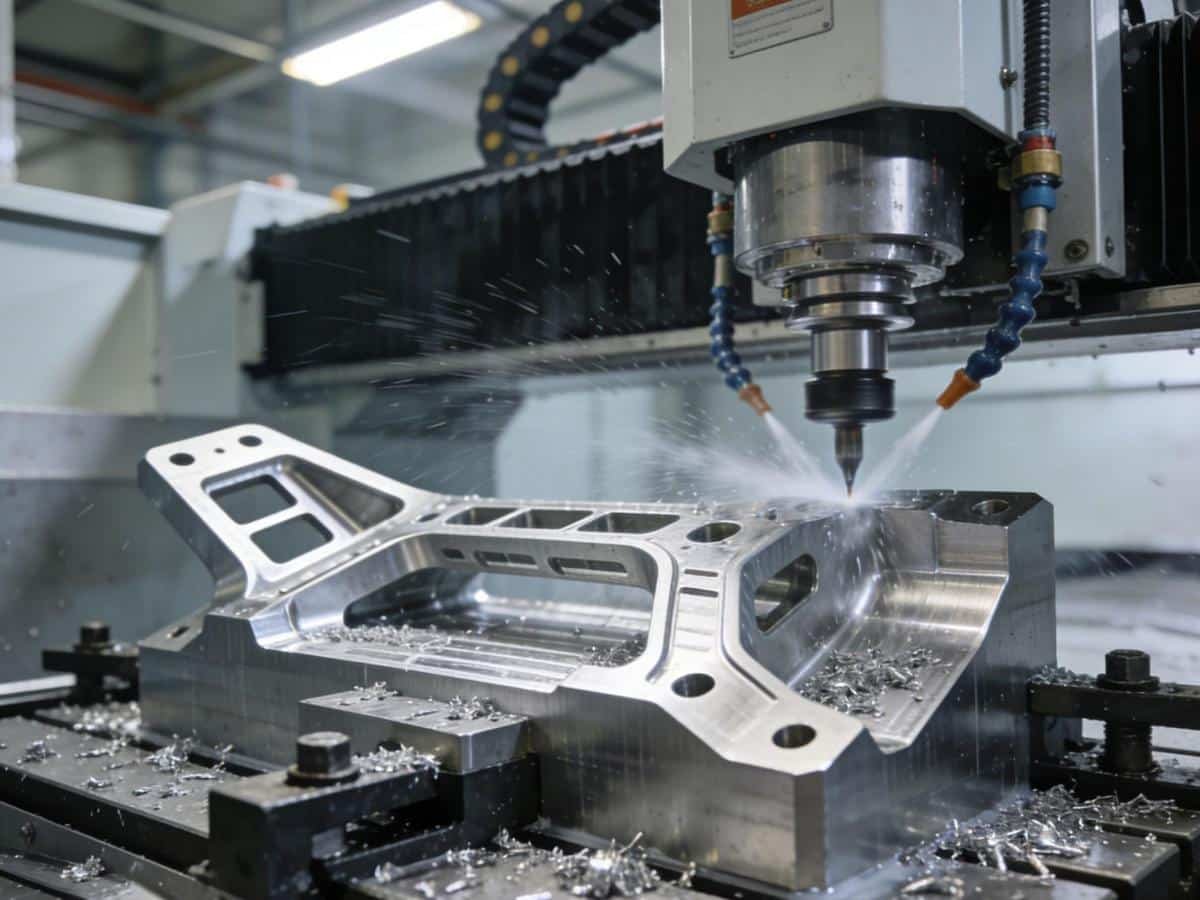
Aerospace machining refers to the use of machining technologies to produce components and parts for aircraft, spacecraft, and other aerospace systems. It mainly relies on subtractive manufacturing processes, where material is removed from a workpiece to achieve the desired shape, dimensions, and surface characteristics. Common machining methods include CNC milling, CNC turning, 5-axis machining, and electrical discharge machining (EDM).
Unlike general-purpose machining, aerospace machining covers a wide range of components with different functions and geometries, from structural brackets and housings to engine components and precision fittings. Depending on the application, these parts may require different machining strategies, material choices, and finishing processes to meet their specific operating conditions.
Why Is Aerospace Machining Important?
The value of aerospace CNC machining does not come from CNC technology alone, but from how it addresses the specific challenges of aerospace manufacturing. While CNC machining is widely used across industries, aerospace applications demand higher levels of precision, material capability, consistency, and traceability. These requirements define why CNC machining has become an essential process for modern aerospace production.
Enabling Complex Aerospace Geometries
Aerospace components often require complex features such as compound curves, thin walls, and internal structures that are difficult to produce with traditional methods. Five-axis CNC machining enables these geometries to be machined directly from solid billets with fewer setups, improving accuracy and reducing positioning errors.
Ensuring Long-Term Production Consistency
Aircraft programs require parts with consistent dimensions and performance throughout their service life. CNC machining uses programmed tool paths and controlled parameters to achieve high repeatability, ensuring replacement parts remain interchangeable across long-term production cycles.
Machining High-Performance Aerospace Alloys
Materials such as titanium alloys and nickel-based superalloys provide excellent strength-to-weight ratios and heat resistance but are challenging to machine due to their hardness and thermal properties. CNC machining allows precise control of cutting conditions to manage tool wear, heat generation, and surface quality.
Improving Material Utilization
Many aerospace parts are machined from large metal billets, making material efficiency an important consideration. Optimized CNC toolpaths help reduce unnecessary material removal, shorten machining time, and improve the buy-to-fly ratio.
Supporting Digital Traceability
CNC machining integrates CAD/CAM data with production and inspection records, creating a digital connection between design and manufacturing. This supports aerospace quality requirements by improving traceability, documentation, and process control.
Shortening Design Iteration Cycles
Because CNC toolpaths can be quickly updated based on revised CAD models without new molds or major tooling changes, CNC machining allows faster transition from design modifications to physical prototypes. This is especially valuable during aerospace testing and certification, where design adjustments are often required.
Common Materials in Aerospace Machining
In aerospace CNC machining, the challenge is not only choosing materials with the right performance, but also machining them effectively. Different aerospace materials have unique properties that directly influence tool selection, cutting parameters, and machining strategies.
Titanium Alloys
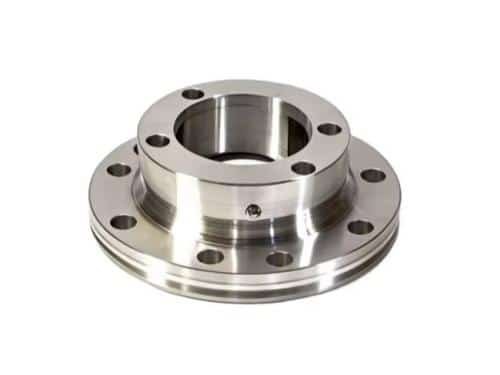
Titanium alloys, especially Ti-6Al-4V (Grade 5), are widely used in aerospace structural and engine components due to their high strength-to-weight ratio, corrosion resistance, and high-temperature performance. However, titanium is difficult to machine because of its low thermal conductivity and tendency to generate heat at the cutting zone, accelerating tool wear. CNC machining of titanium typically requires optimized cutting speeds, high-pressure coolant, and rigid tooling to maintain tool life, dimensional accuracy, and surface quality.
Nickel-Based Superalloys
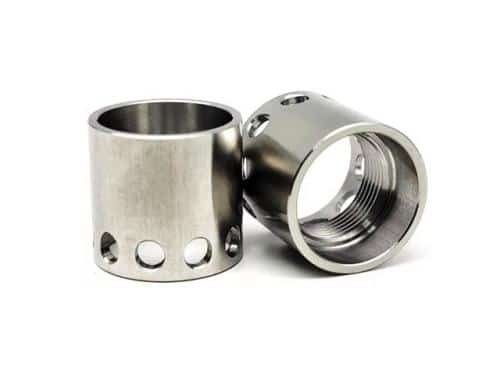
Nickel-based superalloys such as Inconel 718 and Inconel 625 are commonly used in high-temperature engine components, including turbine disks, casings, and combustor parts. These materials maintain high strength under extreme temperatures but are difficult to machine due to their work-hardening behavior and poor machinability. CNC machining strategies for nickel alloys usually involve rigid setups, wear-resistant carbide tooling, controlled cutting parameters, and optimized toolpaths to reduce tool wear and maintain surface integrity.
Aluminum Alloys
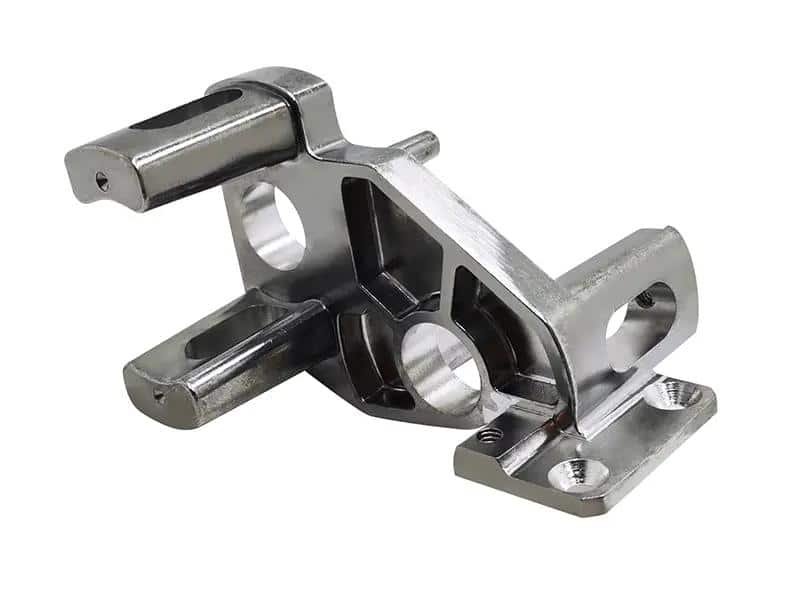
Aluminum alloys, particularly 7075 and 2024, remain widely used in airframe structures such as wing skins, fuselage panels, and ribs where weight reduction is critical. Compared with titanium and nickel alloys, aluminum offers higher machinability and faster material removal rates. However, aerospace aluminum components often feature thin-walled structures that require careful control of cutting forces and fixturing to prevent deformation and vibration during machining.
High-Strength and Stainless Steels
High-strength steels such as 300M and stainless steels such as 15-5PH are used in landing gear, fasteners, and structural fittings where high strength and fatigue resistance are required. Many aerospace steel components are machined after heat treatment, requiring rigid tooling and vibration control to handle high cutting forces while maintaining tight tolerances.
Composite Materials
Composite materials such as carbon fiber reinforced polymer (CFRP) are widely used in lightweight aerospace structures, including fuselage panels and wing components. Unlike metals, composites are typically processed through trimming, drilling, and edge finishing rather than conventional chip-based machining. CNC machining of composites requires specialized tooling, such as diamond-coated or PCD tools, along with dust extraction systems to control fiber damage, delamination, and edge quality.
Common CNC Processes in Aerospace Machining
Aerospace components vary widely in geometry, material, and performance requirements, which means no single CNC process can meet every manufacturing challenge. Different machining approaches are selected based on factors such as part complexity, material properties, and required accuracy.
Five-Axis CNC Machining
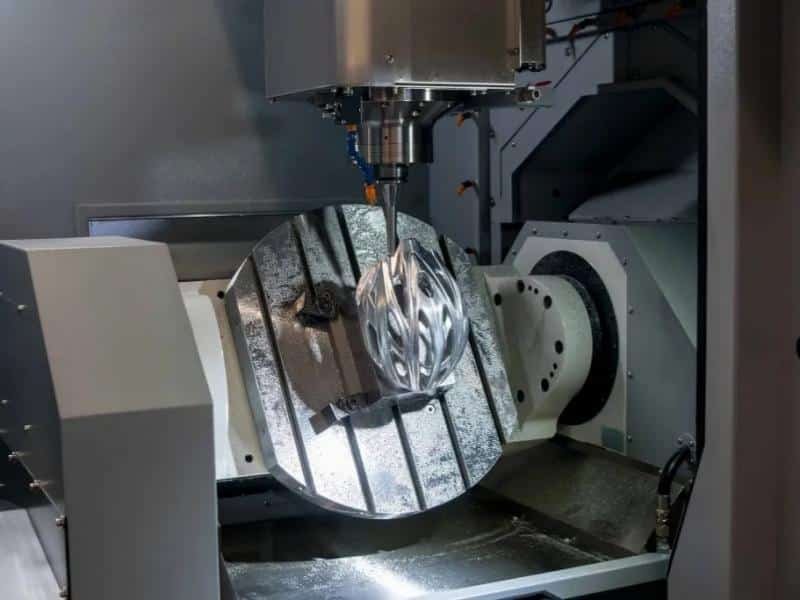
Five-axis machining combines three linear axes (X, Y, and Z) with two rotational axes to provide greater tool accessibility for complex aerospace components. It is widely used for parts such as turbine blades, impellers, and structural components with curved or angled features, allowing multiple surfaces to be machined in a single setup while reducing positioning errors.
High-Speed Machining (HSM)
High-speed machining uses higher spindle speeds and optimized cutting strategies to improve material removal efficiency while controlling cutting forces. It is particularly useful for thin-walled aerospace components, where excessive cutting forces can cause deformation or vibration. Advanced toolpaths help maintain consistent cutting conditions and improve surface quality.
CNC Turning and Mill-Turn Machining
Mill-turn machining combines turning and milling operations in a single setup, making it suitable for rotational aerospace components such as shafts, disks, and flanges. By reducing the need to transfer parts between different machines, this process improves alignment accuracy and helps maintain tight concentricity requirements.
Deep Hole Drilling
Aerospace components such as hydraulic manifolds, landing gear parts, and engine shafts often require deep, straight holes with high depth-to-diameter ratios. Specialized processes such as gun drilling and BTA drilling use optimized tooling and internal coolant delivery to achieve accurate hole geometry and reliable surface quality.
Key Challenges in Aerospace Machining
Aerospace machining is challenging not because of a single technical limitation, but because multiple requirements must be achieved simultaneously. Complex geometries, difficult materials, lightweight structures, and strict quality standards all create additional demands on the machining process.
Low-Volume, High-Mix Production
Unlike automotive manufacturing, aerospace production typically involves low volumes but highly complex parts. The limited production quantity makes it difficult to distribute tooling, programming, and setup costs across large batches, while long machining cycles and strict requirements reduce the efficiency advantages of mass production.
Certification and Process Qualification Requirements
Aerospace machining processes are subject to strict certification and traceability requirements. Changes to cutting parameters, tooling, or machining strategies may require additional validation, first article inspection (FAI), or customer approval, making process improvements slower and more controlled than in less regulated industries.
Fixture Challenges for Thin-Walled Components
Many aerospace structural parts are designed with thin walls to reduce weight, but their rigidity decreases as material is removed during machining. Without proper fixturing and workholding strategies, these parts can experience deformation, vibration, or dimensional errors during finishing operations.
Thermal Drift During Long Machining Cycles
Large aerospace components machined from solid billets often require extended machining times, sometimes lasting many hours. During these long cycles, heat generated by the machine tool and changes in the environment can cause thermal expansion and dimensional drift, making thermal compensation and process monitoring essential.
Applications of CNC Machining in Aerospace
CNC machining supports aerospace manufacturing across a wide range of components, from high-temperature engine parts to lightweight structural assemblies. Each application presents different requirements in terms of geometry, material performance, and dimensional accuracy, making CNC machining a flexible solution for modern aerospace production.
Turbine Engine Components
CNC machining is widely used to produce critical engine components such as turbine blades, blisks, compressor disks, and combustor casings. These parts often require complex geometries, tight tolerances, and high-quality surface finishes to maintain aerodynamic performance and withstand extreme thermal and mechanical loads.
Structural Airframe Components
Large CNC machining centers are commonly used to produce wing ribs, spars, fuselage frames, and bulkheads from aluminum or titanium billets. These components often feature lightweight thin-walled structures with machined pockets that remove unnecessary material while maintaining required structural strength.
Landing Gear Components
Landing gear parts such as struts, trunnions, and actuator housings are typically machined from high-strength steels or titanium alloys. CNC machining enables precise manufacturing of critical features such as bearing bores, threaded connections, and load-bearing surfaces required for reliable operation under repeated stress.
Hydraulic and Fuel System Components
Aircraft hydraulic and fuel systems use CNC-machined manifold blocks with complex internal channels to control fluid flow between system components. Precision machining and deep-hole drilling are essential for achieving accurate passages, reliable sealing, and consistent system performance.
Satellite and Spacecraft Components
CNC machining is also used for satellite structures, optical benches, and instrument mounts where dimensional stability and precision are critical. Materials such as aluminum and Invar are often selected for their lightweight properties and thermal stability, while machining accuracy helps maintain the alignment of sensitive onboard systems.
Conclusion
Aerospace CNC machining requires more than basic machining capability. The combination of complex geometries, difficult materials, strict quality requirements, and low-volume production makes process expertise essential for reliable aerospace manufacturing.
With experience in CNC machining, material selection, and precision manufacturing, Zhongde supports customers in producing custom aerospace components with reliable quality and consistent performance. Learn more about our CNC machining services to explore available machining capabilities and solutions.