Tapped holes and threaded holes are often mentioned together, which can make people think they refer to two different types of holes. However, they are not two separate categories. A tapped hole is actually a specific type of threaded hole created by using a tap to cut internal threads. In other words, all tapped holes are threaded holes, but not all threaded holes are tapped holes. This article will explain the relationship between them, their differences, and when each term is used in engineering and manufacturing.
What is a Threaded Hole?
A threaded hole is a hole with internal threads cut or formed along its inner surface, allowing a screw, bolt, or other threaded fastener to be securely installed. These internal threads create a mechanical connection by matching the external threads on a fastener.
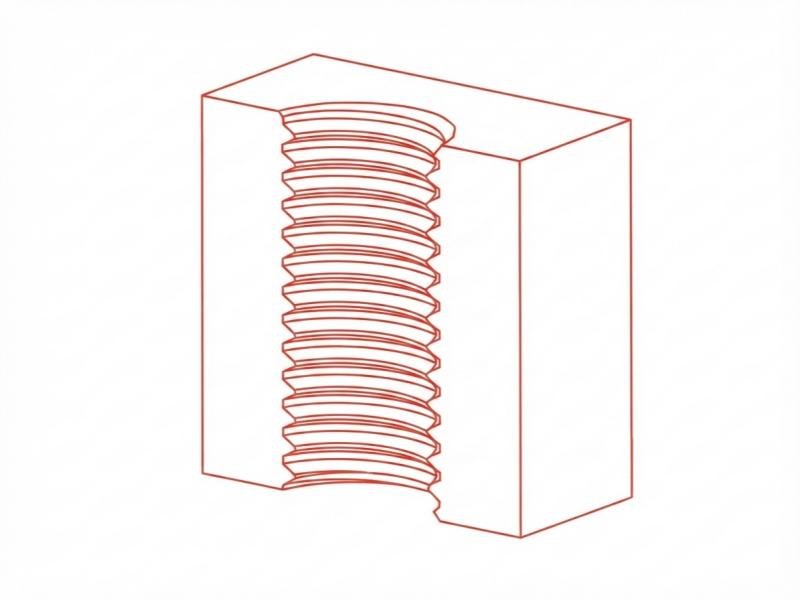
Threaded holes are widely used in mechanical assemblies because they allow parts to be joined without using additional nuts. They are commonly found in metal parts, plastic components, molds, and machinery where reliable fastening and repeated assembly are required.
Depending on the material, design requirements, and manufacturing process, threaded holes can be created in different ways. For example, they may be produced by tapping a drilled hole, molded directly into a plastic part, or created by installing a threaded insert. Although these methods produce the same basic feature — an internally threaded hole — the manufacturing process behind them can be different.
What Is a Tapped Hole?
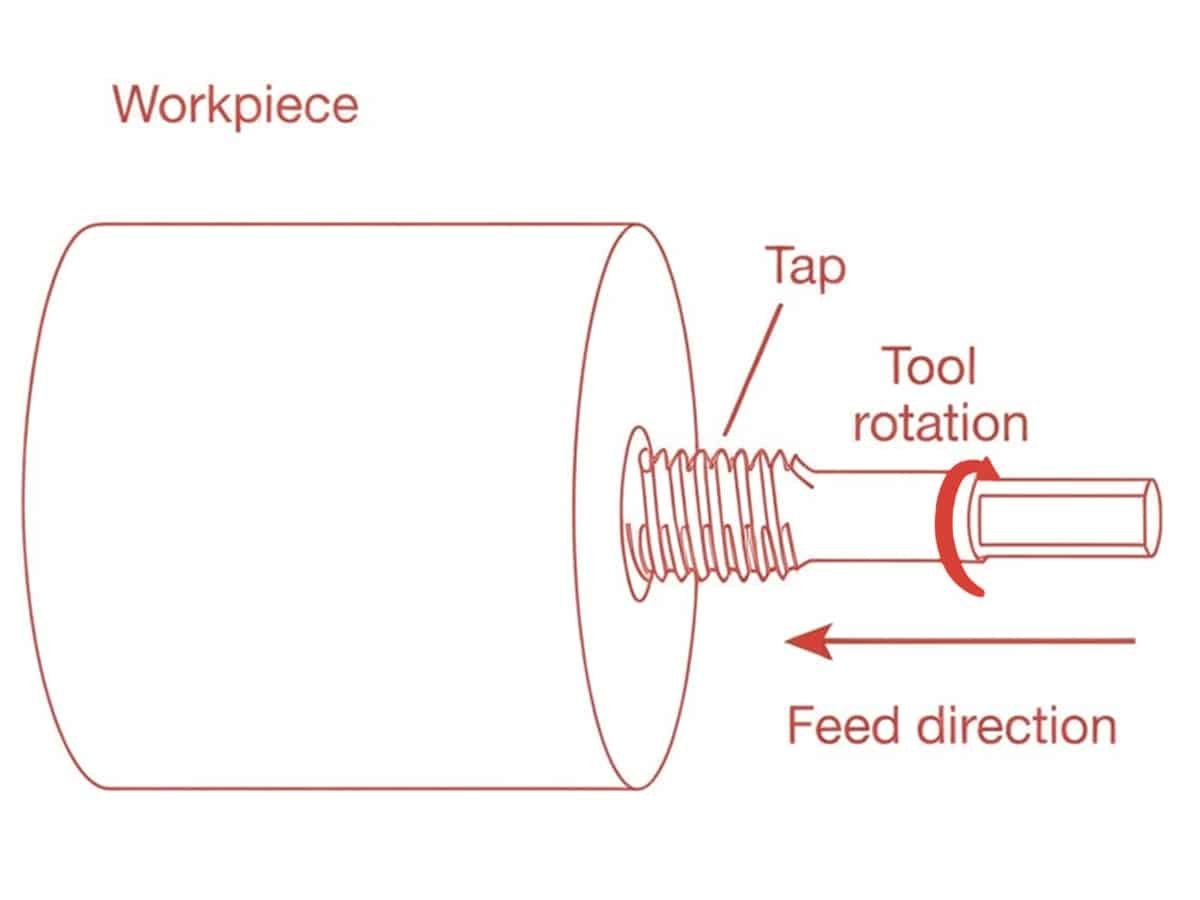
A tapped hole is a type of threaded hole created by cutting internal threads into a pre-drilled hole using a tool called a tap. The tapping process removes material from the inner wall of the hole and forms a precise thread profile that matches a specific screw or bolt.
It is important to note that a tapped hole is not a separate category from a threaded hole. Instead, it is one specific method of creating a threaded hole. While all tapped holes are threaded holes, some threaded holes may be produced through other methods, such as molding threads directly into plastic parts or installing threaded inserts.
How Is a Tapped Hole Made?
A tapped hole is created through a two-step machining process: drilling a hole first and then cutting internal threads with a tap.
Drill a Hole
The first step is to drill a hole into the workpiece with the correct diameter. This initial hole is known as the tap drill hole, and its size is determined by the required thread specification.
The drilled hole provides enough space for the tap to enter and form the internal threads. Choosing the correct hole size is important because a hole that is too small may cause tap breakage, while a hole that is too large may result in weak or inaccurate threads.
Cut Threads with a Tap
After drilling, a tap is inserted into the hole and rotated to cut threads along the inner surface. The cutting edges of the tap remove material and create a thread profile that matches the external threads of a screw or bolt.
During this process, cutting fluid is often applied to reduce friction, control heat, and help remove chips from the hole. Once tapping is complete, the hole becomes a tapped hole that allows a fastener to be installed directly without using a nut.
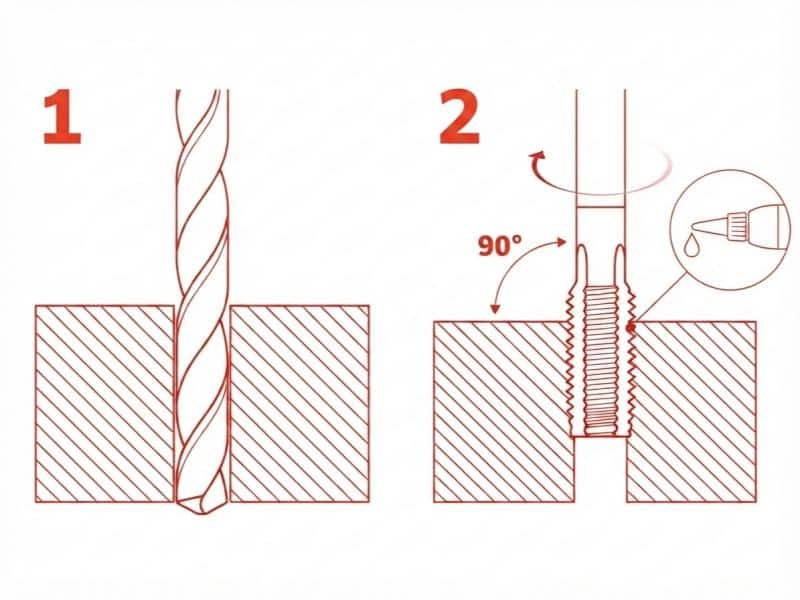
Tapping is one of the most common ways to create internal threads in CNC machining. For a deeper understanding of thread creation methods, including external and internal threading processes, see our guide to CNC threading.
Why Are Tapped Holes and Threaded Holes Often Compared?
Although a tapped hole is a type of threaded hole, the two terms are often treated as if they describe different features. This confusion mainly comes from the fact that engineers and manufacturers often use these terms from different perspectives.
A threaded hole describes the final feature of a part — a hole with internal threads that can accept a screw or bolt. A tapped hole, on the other hand, describes how that feature is created — by cutting threads with a tap tool.
In many traditional machining processes, tapping is one of the most common ways to create internal threads. Because of this, the terms “tapped hole” and “threaded hole” are frequently used interchangeably in engineering drawings and daily communication. When someone says “make a threaded hole,” they may actually mean “tap this hole,” especially in CNC machining applications.
In simple terms, threaded hole tells you what the hole is, while tapped hole tells you how the hole was made.
Other Ways to Create Threaded Holes
While tapping is one of the most common methods for creating internal threads, it is not the only option. Depending on the material, production volume, and design requirements, threaded holes can also be produced through other manufacturing methods.
Molded Threads
For plastic parts produced through injection molding, threads can sometimes be formed directly during the molding process. The mold cavity creates the thread profile, eliminating the need for secondary machining.
Molded threads are often used for high-volume plastic components, especially when reducing production time and cost is important. However, they require careful mold design because factors such as shrinkage, draft angles, and part ejection can affect thread accuracy.
Thread Inserts
Thread inserts are another common solution, especially for plastic parts that require stronger or more durable threads. A metal insert with internal threads is installed into a molded or machined hole, providing a more wear-resistant connection.
This method is useful when a plastic component needs to be assembled and disassembled repeatedly, as the metal threads can withstand more cycles than threads formed directly in plastic.
Thread Forming
Unlike tapping, which cuts away material to create threads, thread forming uses pressure to reshape material and create internal threads. Because no material is removed, thread forming can provide stronger threads in some metals due to improved material strength around the thread profile.
The manufacturing method is only one factor that affects a threaded hole. The thread type and standard also play an important role in determining compatibility, strength, and application requirements. Common thread types include metric threads, UNC/UNF threads, and pipe threads. Learn more about different thread forms and their applications in our guide to Types of Threads.
Conclusion
Understanding the difference between tapped holes and threaded holes helps you choose the right design and manufacturing approach. A tapped hole is simply one type of threaded hole, created by cutting internal threads with a tap, while other threaded holes can be produced through methods such as molding or using threaded inserts.
The right solution depends on factors such as material, production volume, thread requirements, and assembly needs. If your part requires accurate threaded features or other precision details, Zhongde can support you with our custom CNC machining service from prototyping to production.