Polystyrene (PS) can be CNC machined as solid plastic or foam. Foam is more common in CNC applications and is often what people mean by Styrofoam CNC, including EPS and XPS. This guide focuses on foam machining, covering material selection, tooling, and surface finish.
What Is Polystyrene (PS)?
Polystyrene is a thermoplastic polymer made by polymerizing styrene. It is lightweight, rigid, and easy to process, making it common in packaging, product housings, and architectural models. It softens when heated and solidifies on cooling, allowing it to be molded, extruded, and machined.
PS comes in two main forms:
- Solid PS: General-purpose polystyrene (GPPS) is typically clear and brittle, while high-impact polystyrene (HIPS) is usually opaque and tougher. Both have a density of around 1.05 g/cm³.
- Foam PS: Expanded polystyrene (EPS) consists of fused beads and typically has a density of 15–30 kg/m³. Extruded polystyrene (XPS) has a more uniform closed-cell structure and typically has a density of 30–45 kg/m³.
Why CNC Machining Suits Foam Polystyrene
Foam PS has low density and low cutting resistance, making it well suited to CNC machining. Its cellular structure also supports lightweight parts and large-scale shapes.
Low Cutting Resistance
Foam PS is soft and lightweight, allowing cutters to remove material with little force. High feed rates are possible, while low cutting loads help minimize deformation during machining.
Complex Geometry from CAD
3D contours, smooth curves, and deep cavities can be machined directly from CAD models. Multi-axis machines handle compound surfaces and some undercuts that are difficult to produce with hot-wire cutting or manual shaping.
Large Part Capability
Foam blocks are light enough to handle at sizes that would be impractical in metal. Large-format CNC routers can machine blocks several meters in size, while oversized parts can be machined in sections and bonded together.
Consistent Cell Structure
XPS has a relatively uniform closed-cell structure, while EPS consists of fused beads. With suitable density and bead fusion, both can deliver consistent machining results, though edge quality and dimensional stability vary with material grade and cutting conditions.
Low Material Cost
Foam PS is generally inexpensive compared with many engineering foams. Combined with short machining times and no dedicated mold required, it can keep costs low for prototypes, patterns, and large decorative parts.
Other factors affecting CNC machining cost include machining time, material usage, and setup requirements.
Foam Polystyrene CNC Processes
Foam PS can be shaped using several CNC-controlled processes. The best choice depends on part geometry, size, and required surface quality.
3-Axis CNC Milling
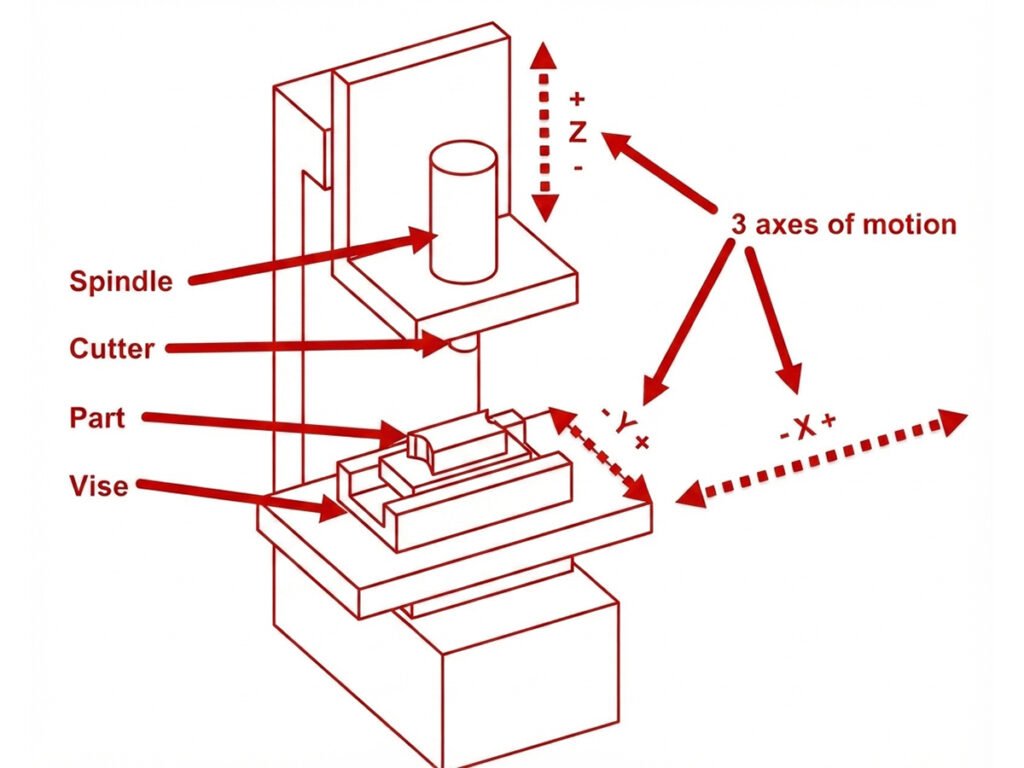
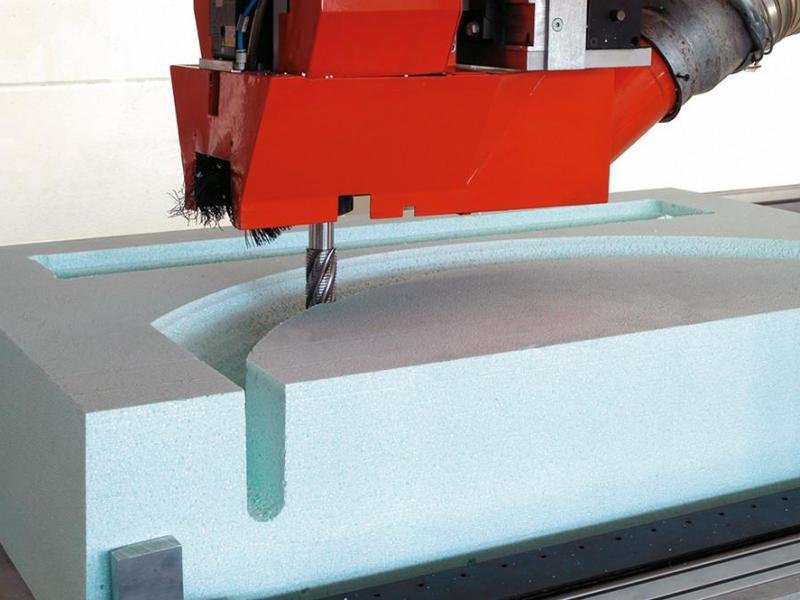
The cutter moves along X, Y, and Z while the foam block remains fixed. This process suits relief carvings, signage, flat patterns, and shallow cavities. It is widely used for foam PS parts with accessible surfaces and relatively straightforward toolpaths.
5-Axis CNC Machining
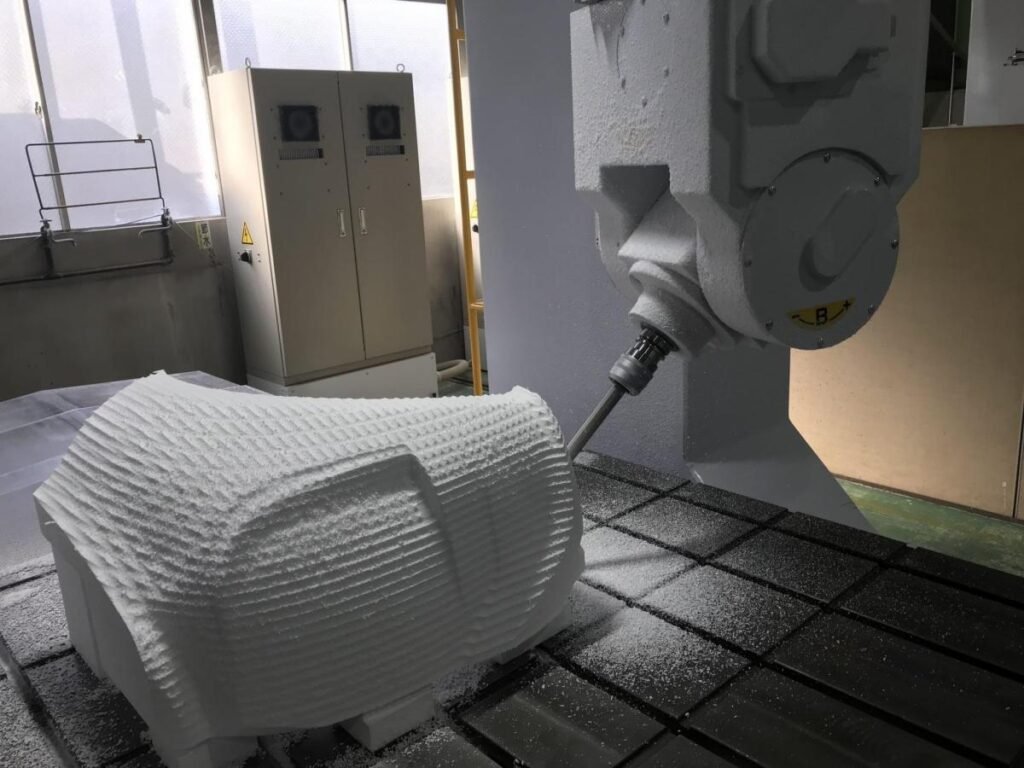
Two rotary axes let the tool approach the part from different angles. This enables complex contours and some undercuts with fewer setups, reducing repositioning errors. It is useful for large sculptural parts, automotive buck models, and aerospace patterns with compound surfaces.
CNC Hot Wire Cutting
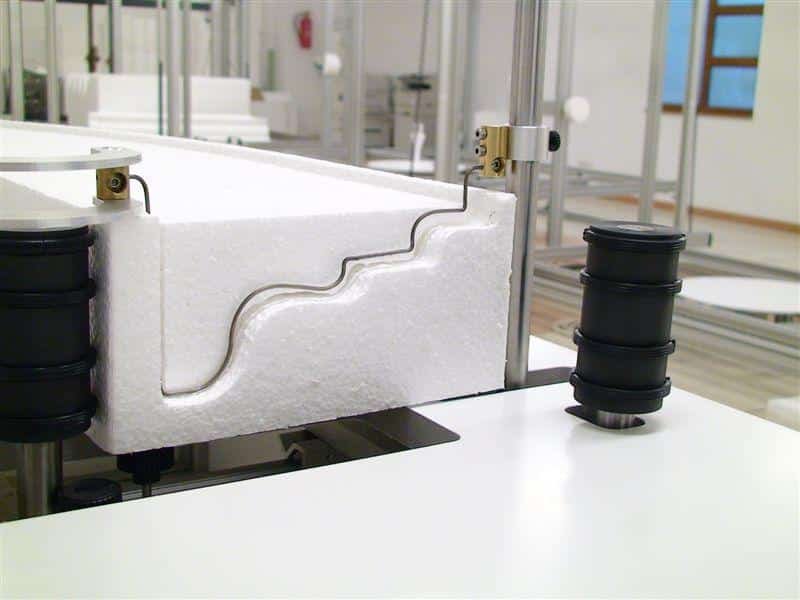
A heated wire melts its way through the foam. It works well for straight cuts and ruled surfaces, such as wing profiles, architectural panels, and shaped blocks. It cannot produce conventional pockets or detailed freeform surfaces, so it may be used for rough shaping before CNC milling.
Laser Cutting
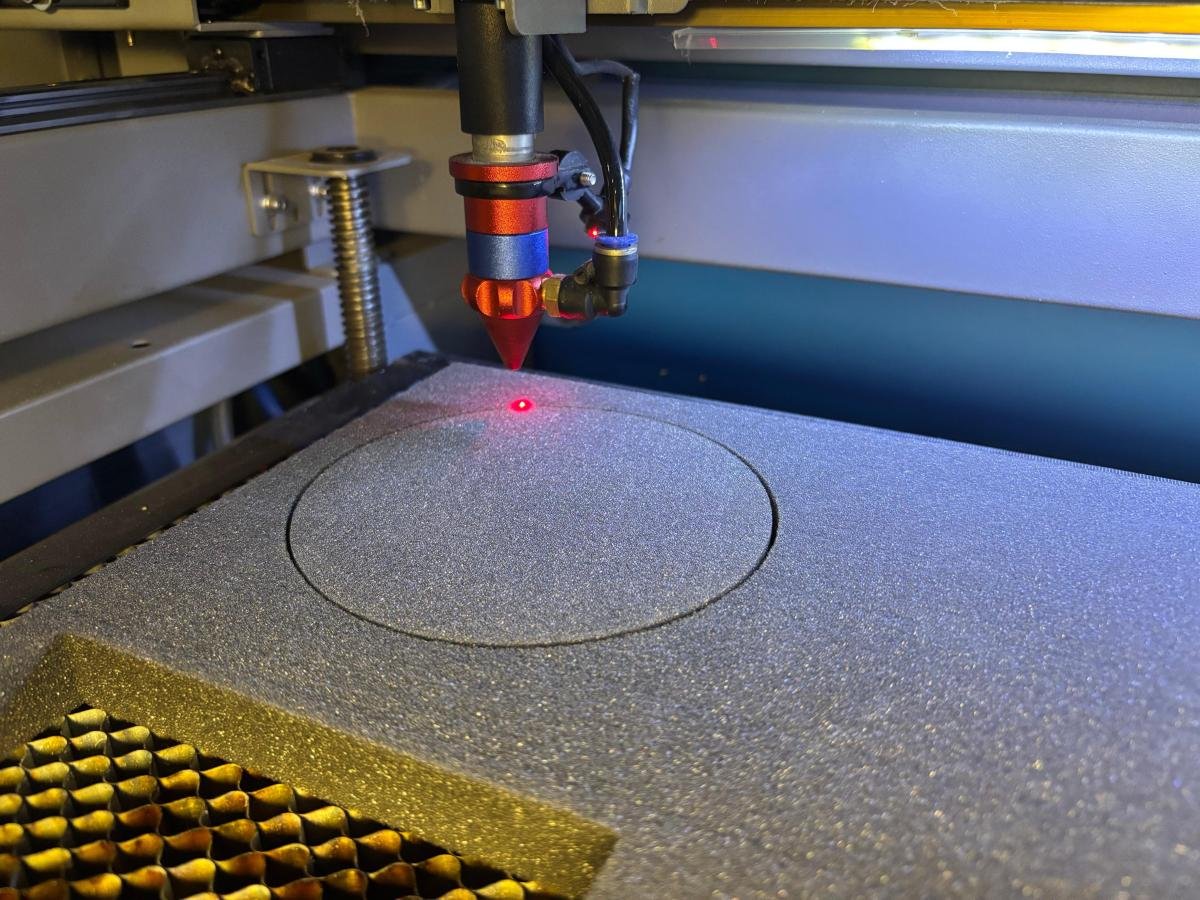
A CO₂ laser can cut thin PS foam sheets into detailed flat shapes and engravings. However, heat can melt or distort the edges, and fumes require appropriate extraction. Material thickness and foam composition limit its suitability, so testing is advisable before production.
CNC Routing and Engraving
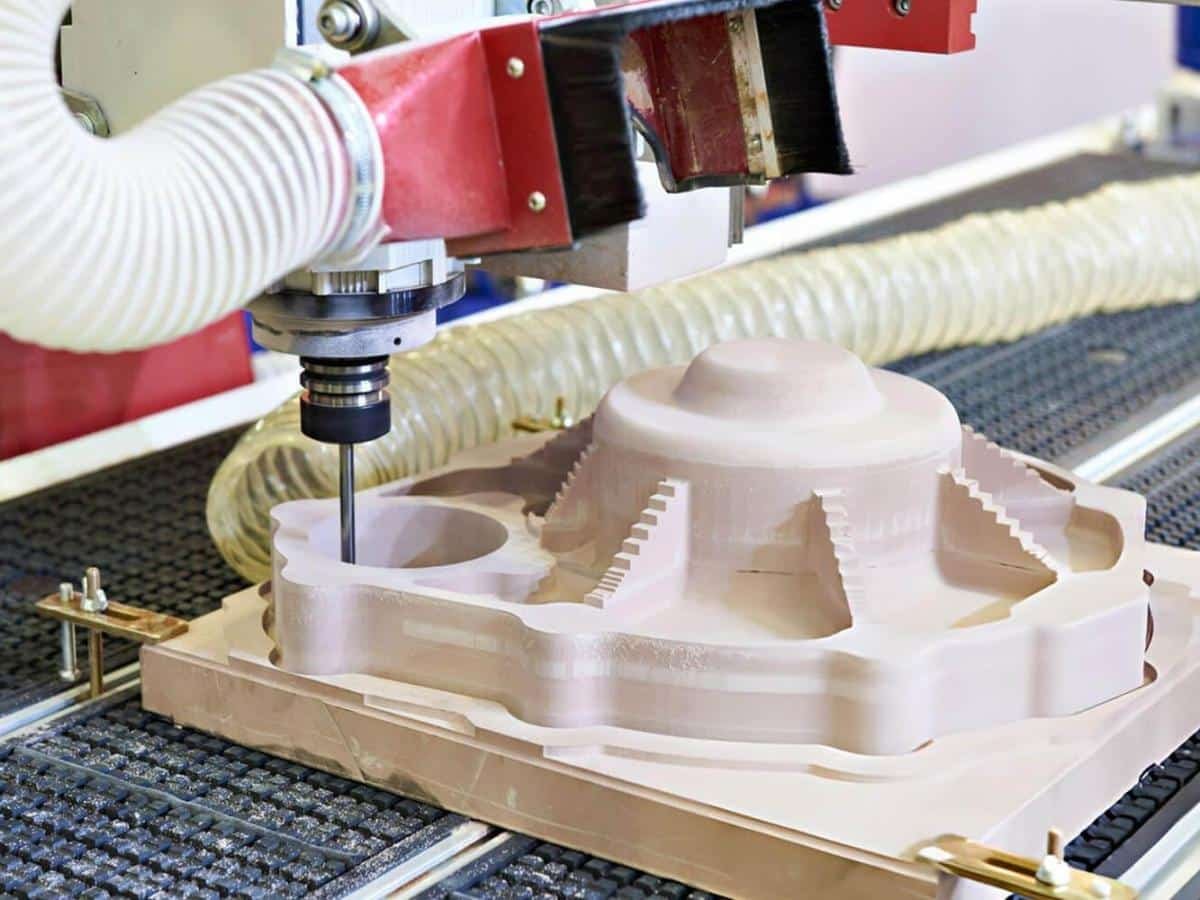
CNC routers use rotating cutters for shallow engraving and surface detailing, including lettering, textures, logos, and panel lines on models and display pieces. Detail resolution depends on foam density, cell structure, and tool size. XPS often provides more uniform fine details than EPS.
Post-Processing
Machined parts may be sanded, sealed, primed, or coated. Options include compatible hard coatings, polyurea or epoxy coatings, and primer with paint. These treatments can improve surface durability and provide a smoother finish, but compatibility with polystyrene foam must be verified.
Considerations for Foam Polystyrene CNC Machining
Surface quality when machining foam PS depends on tool sharpness, cutting parameters, toolpath strategy, and workholding.
Tool Selection
Use sharp cutters with ample flute space and a low flute count. Single-flute and O-flute end mills help clear chips and reduce material buildup. Dull tools can tear foam cells and damage the surface, making tool condition important for clean edges.
Cutting Parameters
Foam PS generally supports high feed rates, but the optimal combination of feed rate and spindle speed depends on foam density, cutter geometry, and machine capability. Excessive spindle speed combined with slow feed can increase frictional heat, softening the PS and causing melted edges or material buildup on the tool.
Workholding
Foam crushes easily, so clamping pressure must remain low. Vacuum tables, double-sided tape, and distributed hold-downs can secure the part without leaving dents. Tall or thin sections may need additional support to reduce vibration and prevent deformation during cutting.
Toolpath Strategy
A light finishing pass with a suitable stepover improves surface quality. The required finish also depends on material structure and cutting conditions; see our guide to CNC surface roughness for more details.
Material Compatibility
Many solvents, adhesives, and paints can attack polystyrene foam. Test bonding agents and coatings on a scrap piece before applying them to the finished part.
Applications of Foam Polystyrene CNC Machining
Foam PS is used for product models, casting patterns, composite tooling, and large decorative parts.
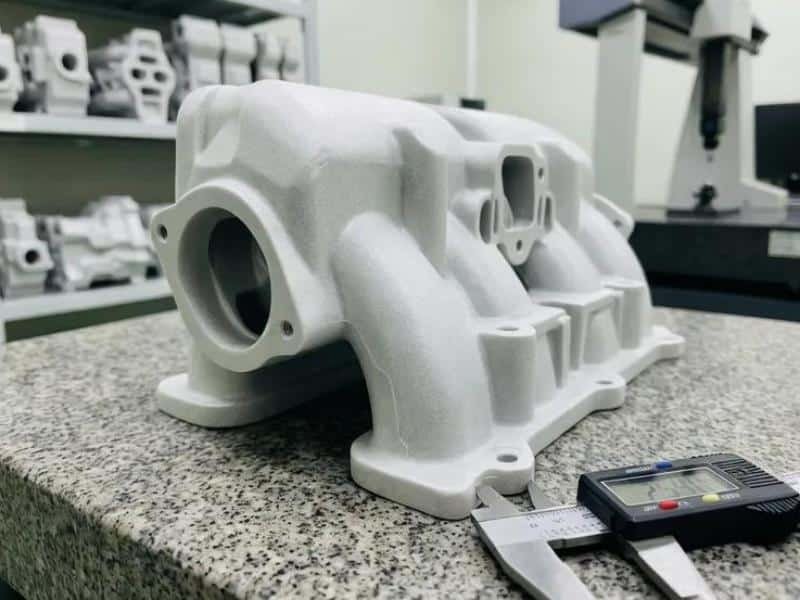
- Casting Patterns: Foam patterns for sand casting and lost foam casting, including engine blocks and machine bases. In lost foam casting, the pattern vaporizes during metal pouring, transferring its shape to the casting.
- Mold Plugs and Composite Tooling: Machined foam plugs serve as masters for composite molds or receive hard coatings for use as tooling. Applications include boat hulls, wind turbine blade sections, and body panels.
- Architectural Models and Facade Elements: Scale models, cornices, columns, and decorative moldings, often coated for added durability or outdoor exposure.
- Signage and 3D Lettering: Dimensional letters, logos, and shaped signs for retail stores, trade shows, and corporate interiors.
- Packaging Inserts: Custom-cut cavities that protect fragile or irregular products, including electronics, medical devices, and precision instruments during shipping.
- Automotive and Aerospace Prototypes: Full-size styling bucks, concept models, and fit-check mockups for vehicle interiors, exterior panels, and aircraft components.
Conclusion
Polystyrene can be CNC machined in both solid and foam forms, but the material structure determines the suitable machining method and application. Solid PS is suitable for custom plastic parts that require specific shapes and dimensions.
For custom solid PS components, explore our CNC Plastic Parts Machining service to discuss your part drawings, material requirements, and machining needs.