Terms like “3-axis” or “5-axis” CNC can sound cryptic at first glance—but they simply describe how many directions a machine can cut from. Yet that simple definition carries real weight: understanding these differences can lead to smarter part design, tighter tolerances, and more informed CNC sourcing decisions.
What Is an “Axis” on a CNC Machine?
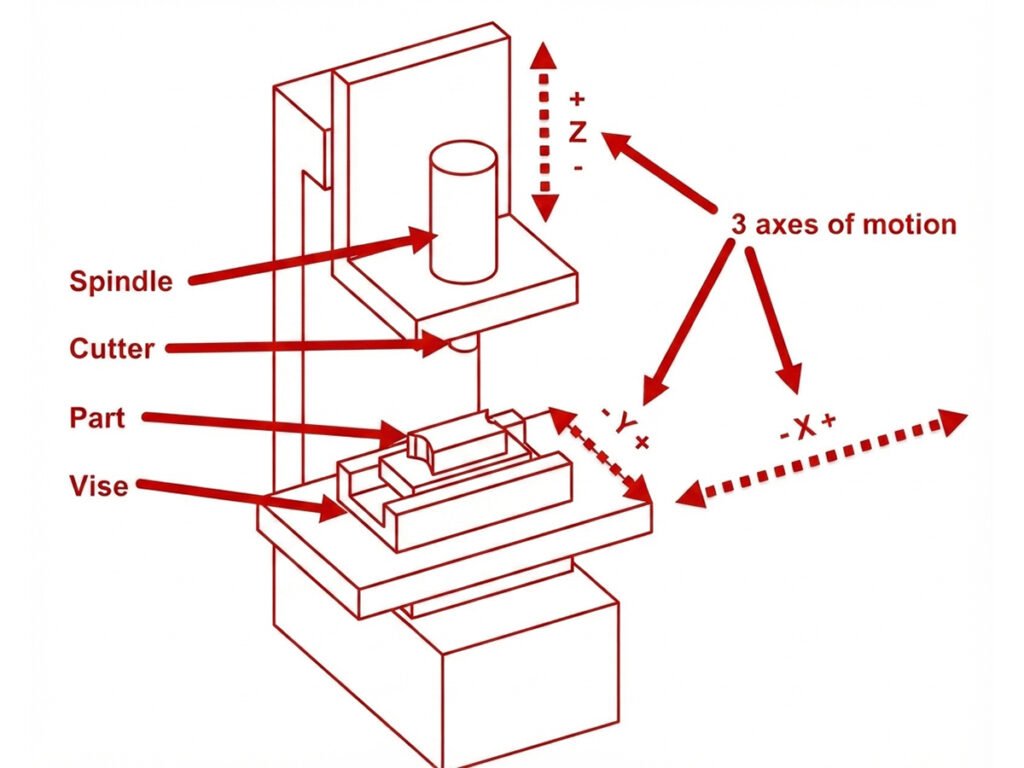
In CNC machining, an axis refers to a direction in which the cutting tool or workpiece can move during machining. Think of each axis as one controlled direction of movement—either a straight-line motion or a rotation. The CNC system controls these movements precisely according to the programmed toolpath.
The three foundational linear axes are:
- X-axis — horizontal, left-to-right movement
- Y-axis — horizontal, front-to-back movement
- Z-axis — vertical, up-and-down movement, typically along the spindle
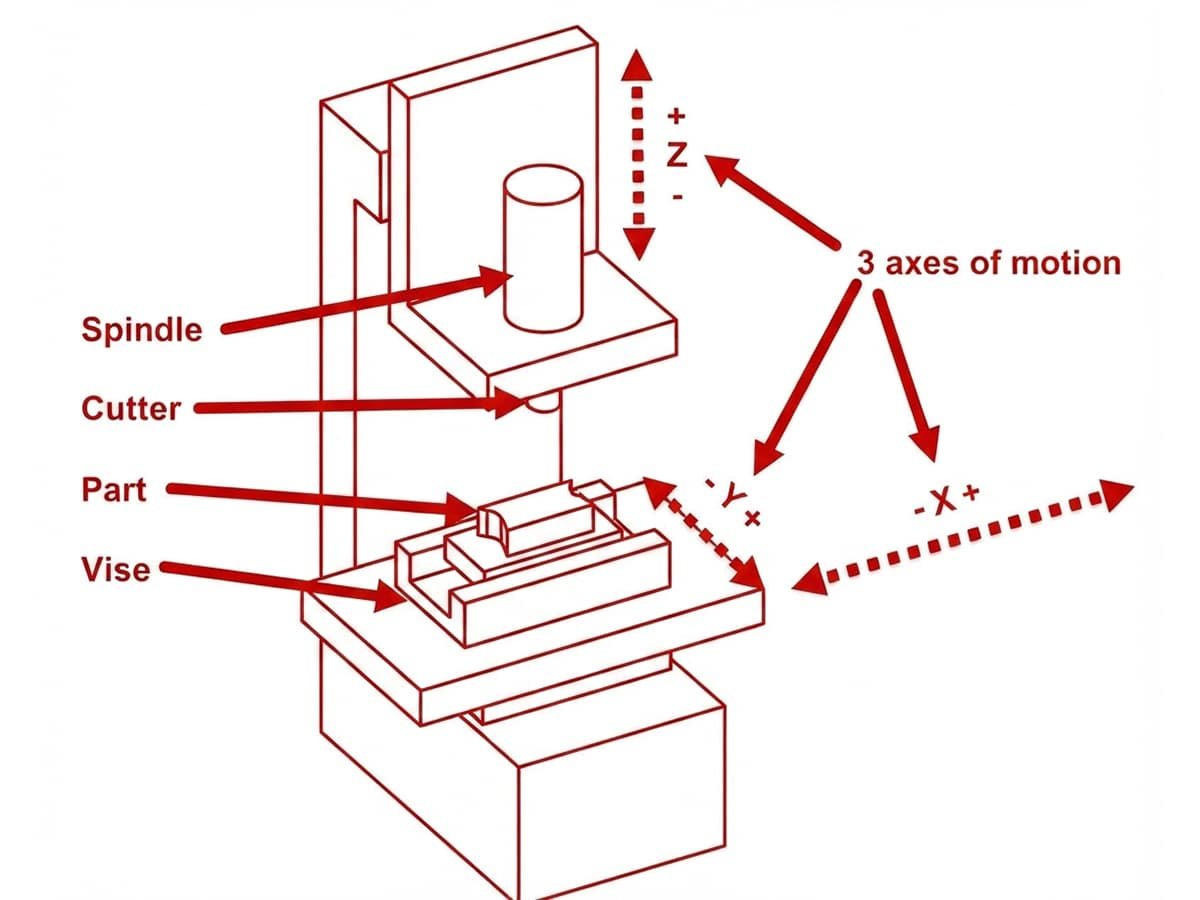
A 3-axis machine can move along X, Y, and Z simultaneously, but these movements remain linear. Additional axes are usually rotational: A rotates around the X-axis, B around the Y-axis, and C around the Z-axis.
These rotational movements allow the machine to tilt the tool or workpiece and access surfaces that a purely 3-axis setup cannot reach. That’s the basic logic behind 4-axis and 5-axis CNC machining configurations.
What Is 3-Axis CNC Machining?
3-axis CNC machining is the most fundamental and widely used CNC configuration. The cutting tool moves along three linear axes—X, Y, and Z—while the workpiece remains fixed on the machine table.
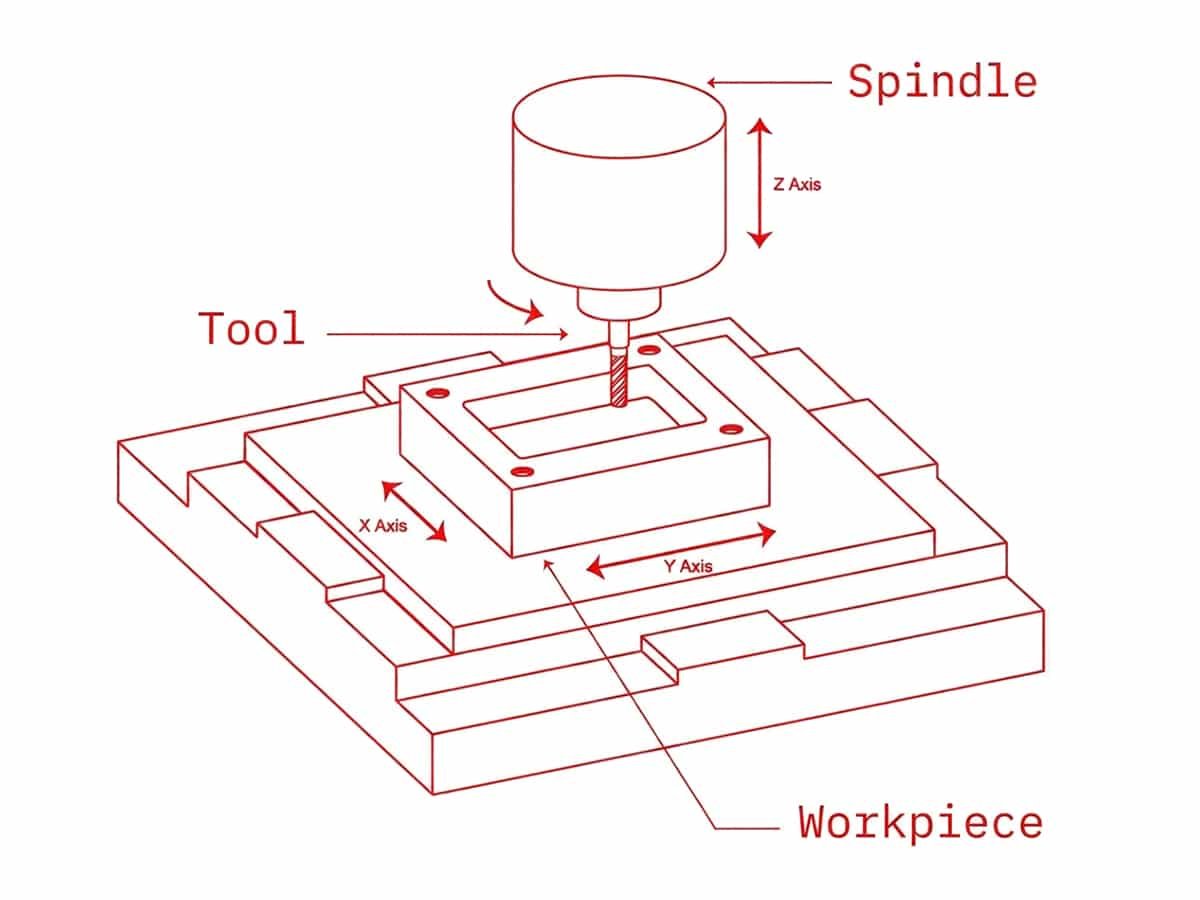
In practice, the tool approaches the workpiece from a fixed orientation, allowing it to machine flat or contoured features that are accessible from that direction. To machine a different side, the operator must stop the job, manually reposition or re-fixture the workpiece, and restart. Each additional setup adds machining time and creates another opportunity for positioning errors or slight misalignment between features.
Typical applications:
- Flat or relatively simple parts, such as brackets, plates, and housings
- Parts with features accessible from a single setup, such as slots, holes, or pockets
- Prototypes and lower-complexity production runs
3-axis machining remains the workhorse for a large share of custom plastic and rubber components and tooling, particularly when the part geometry is relatively simple and cost efficiency is a priority. It provides a practical baseline for understanding what additional 4-axis and 5-axis capabilities can offer.
What Is 4-Axis CNC Machining?
4-axis CNC machining adds a rotational axis to the standard X, Y, and Z linear movements. This fourth axis — typically labeled the A-axis — rotates the workpiece around the X-axis, allowing the tool to access additional sides of a part without manually changing its orientation between every operation.
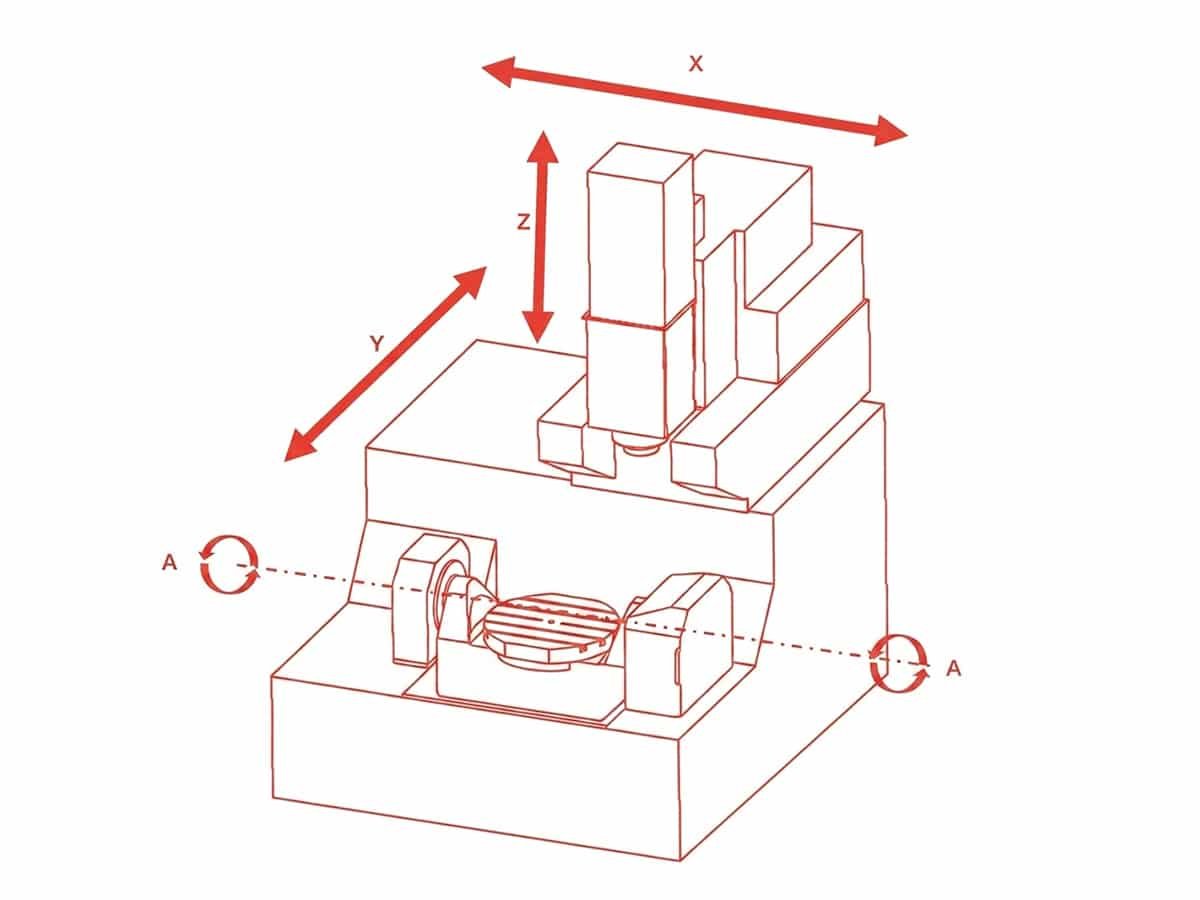
In practice, the table or a rotary attachment can rotate the workpiece to a new angle as part of the programmed machining sequence. On some machines, the A-axis is used for indexing, rotating the workpiece to fixed positions before each operation. Others support continuous rotation, allowing the tool to cut while the workpiece is turning. This is useful for cylindrical or wraparound features such as grooves, angled holes, and engraving around curved surfaces.
Typical applications:
- Cylindrical or rounded parts requiring features around multiple sides, such as rollers, shafts, and sleeves
- Parts with holes, slots, or engravings distributed around a curved surface
- Molds and components with wraparound features, including certain rubber and plastic sealing components
4-axis machining is a practical step up from 3-axis machining. It works well when features are distributed around multiple sides or a curved surface. Fewer setups can reduce machining time and improve positional consistency. It also avoids some of the programming and machine complexity associated with 5-axis machining.
What Is 5-Axis CNC Machining?
5-axis CNC machining is a form of multi-axis CNC machining that adds a second rotational axis on top of the three linear axes and one rotational axis found in 4-axis setups. This means the tool head and/or workpiece can move and tilt across five axes — X, Y, Z, plus two rotational axes.
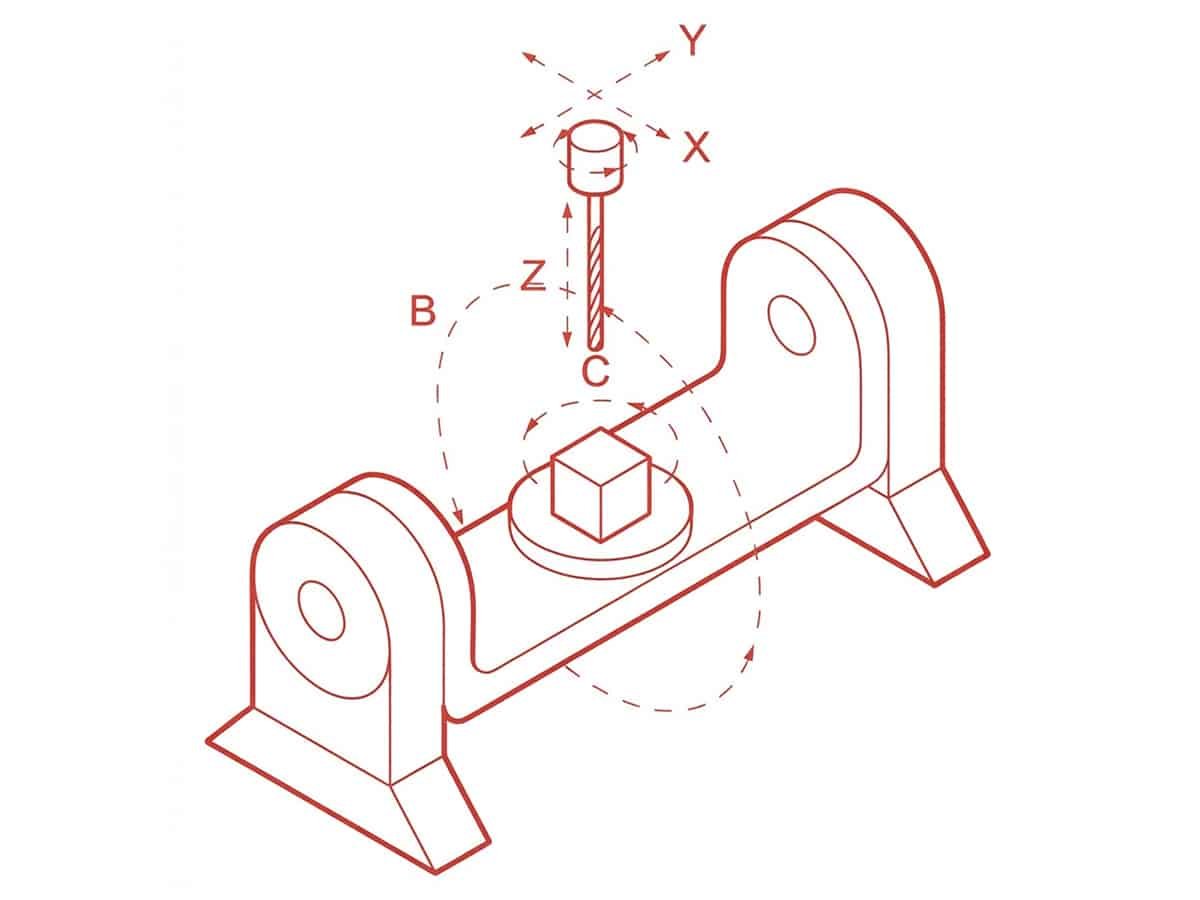
This lets the cutting tool approach the workpiece from a wide range of angles without repositioning it. In true 5-axis (simultaneous) machining, all five axes can move at once. This allows the tool to maintain an optimal cutting angle as it traces complex, curved, or undercut geometries.
Typical applications:
- Complex freeform surfaces (turbine blades, medical implants, aerospace components)
- Parts with deep pockets, undercuts, or steep angled walls
- Molds and tooling requiring intricate, high-precision contours in a single setup
5-axis machining is the top tier for parts where geometric complexity and precision genuinely justify the added cost. But it’s not the default choice for every job.
What Is 3+2 Axis Machining?
3+2 axis machining (also called “positional 5-axis”) is a hybrid approach that uses a 5-axis machine but doesn’t move all five axes simultaneously during cutting. Instead, the two rotational axes are used to tilt and lock the workpiece into a fixed angular position. The actual cutting then happens using only the three linear axes — X, Y, and Z.
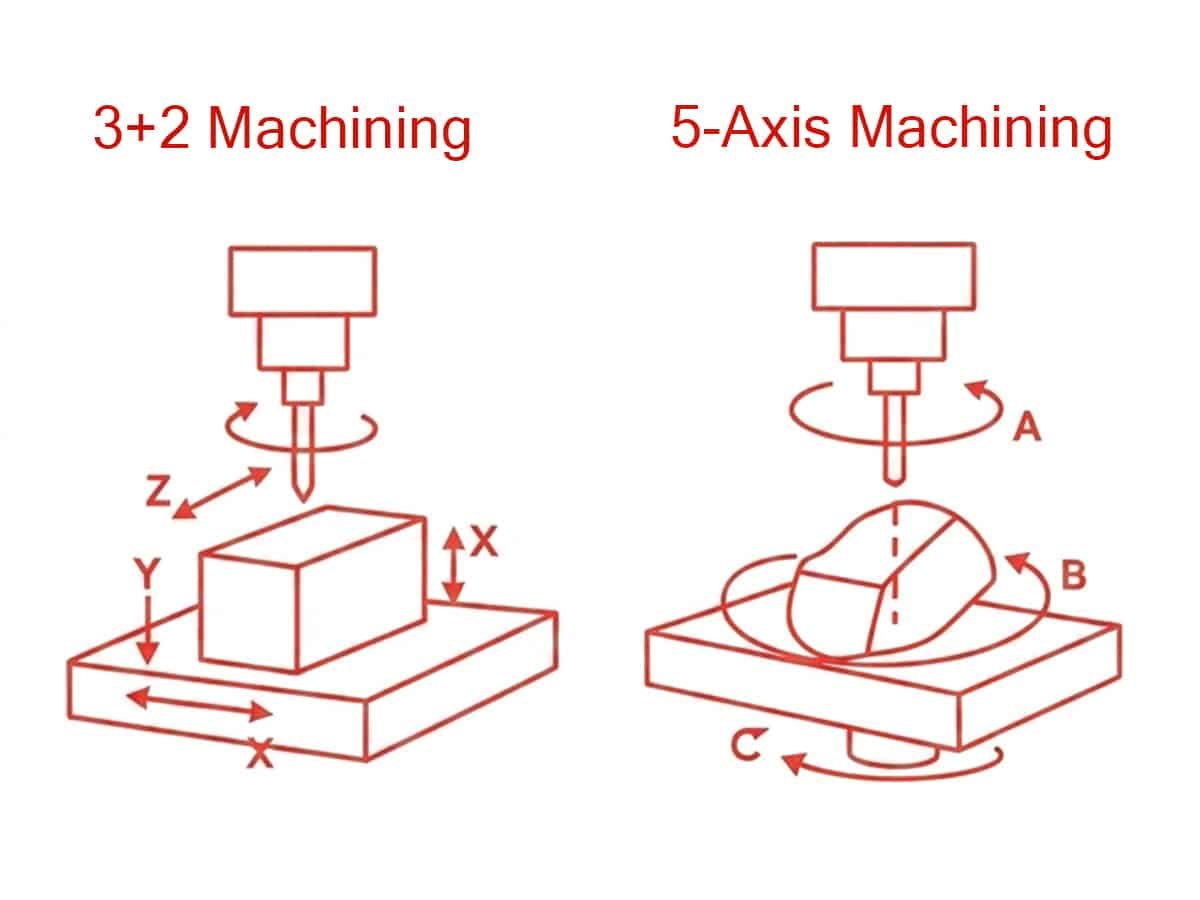
In other words, the machine has full 5-axis hardware, but it’s operated more like a 3-axis machine that can reposition itself between operations. The part gets rotated to face 1, cut, rotated to face 2, cut again, and so on. This happens without physically unclamping and re-fixturing the workpiece.
3+2 machining offers a middle path between 4-axis and full 5-axis capability. It’s well suited to parts that are angularly complex but not geometrically continuous. It also avoids the highest level of programming complexity associated with simultaneous 5-axis machining.
How to Choose: 3-Axis vs 4-Axis vs 5-Axis CNC
Picking the right configuration comes down to matching machine capability to what the part actually needs — not defaulting to the most advanced option available. A few practical factors tend to drive the decision:
Part geometry
If a part is flat or has features on a single face, 3-axis is usually sufficient. Paying for more axes wouldn’t add much value. Parts with features on multiple sides — but nothing curved or compound — usually point to 4-axis or 3+2. Continuously curved, freeform, or undercut geometries are where true simultaneous 5-axis earns its cost.
Tolerance requirements
Every manual refixturing step introduces a small chance of positioning error. For parts where tight tolerances must hold across multiple faces or angles, reducing the number of setups often matters more than the raw axis count. This can be achieved with 4-axis, 3+2, or full 5-axis machining, depending on the part.
Production volume
For high-volume runs of simple parts, 3-axis machines often remain the more economical choice. Their lower equipment and programming costs can be spread across many units. For lower-volume, higher-complexity parts, the setup-time savings from 4-axis or 5-axis machining can offset the higher hourly machine cost. Fewer manual interventions are needed per part.
Surface finish expectations
Parts requiring a smooth, continuous finish on curved surfaces — with minimal or no secondary polishing — can benefit from simultaneous 5-axis tool paths. Flatter geometries typically won’t see much finish improvement from the extra axes.
Budget and lead time
3-axis equipment and programming are generally the most accessible and can be faster to quote and run. 4-axis and 3+2 sit in the middle. Full 5-axis machining commands a premium in both machine time and specialized programming. It’s worth confirming that the part’s complexity actually calls for it before committing.
Conclusion
The right CNC configuration depends on the geometry, access requirements, and production needs of your part. If you’re unsure which setup fits your design, our team can review the part and recommend a practical machining approach based on its features and tolerances.
For custom CNC machining support, explore our CNC machining services and send us your drawings or 3D files for review.