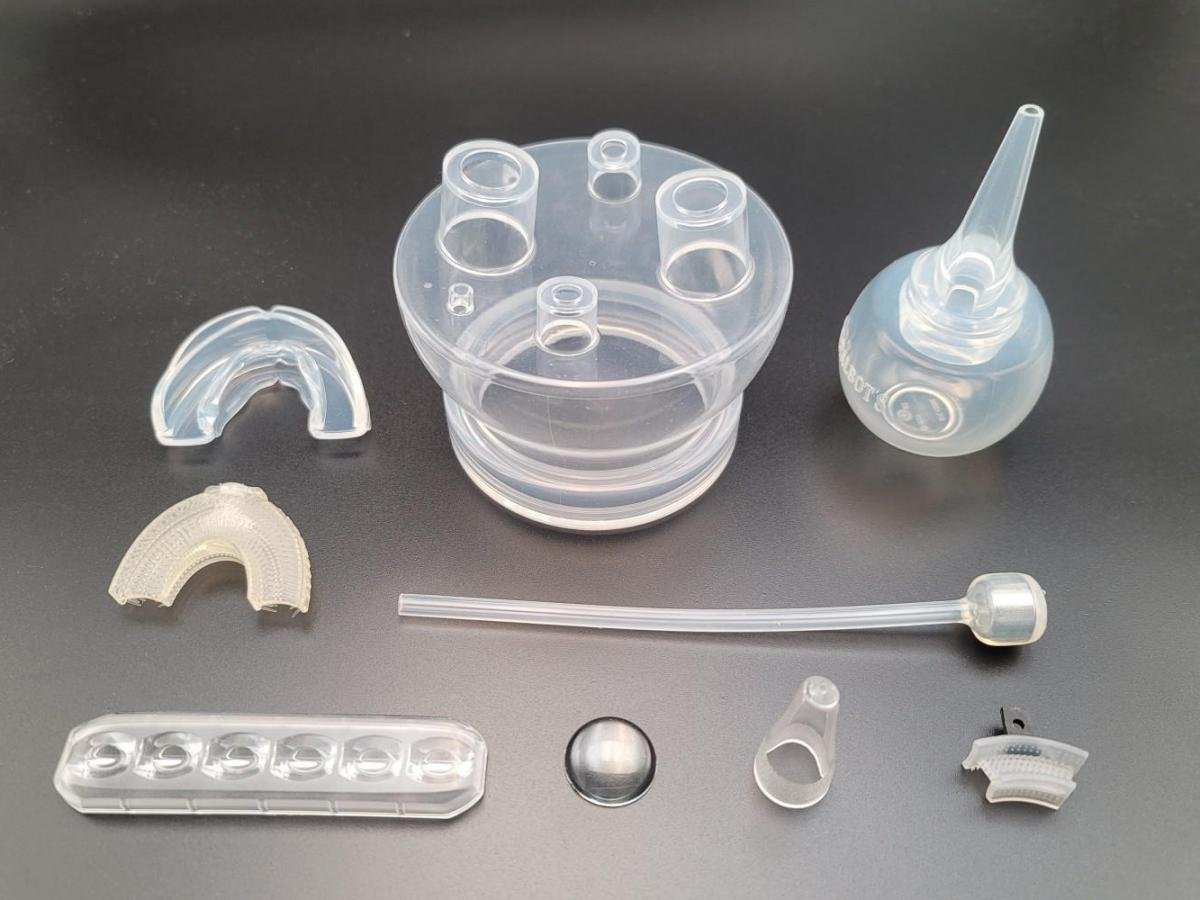
Among silicone molding methods, LSR injection is well suited for thin walls, fine features, and consistent batches. Its closed, automated process produces clean parts, repeatable dimensions, and high-purity surfaces. Understanding it early helps you define part geometry, plan tooling, and compare supplier quotes.
What Is Liquid Silicone Molding?
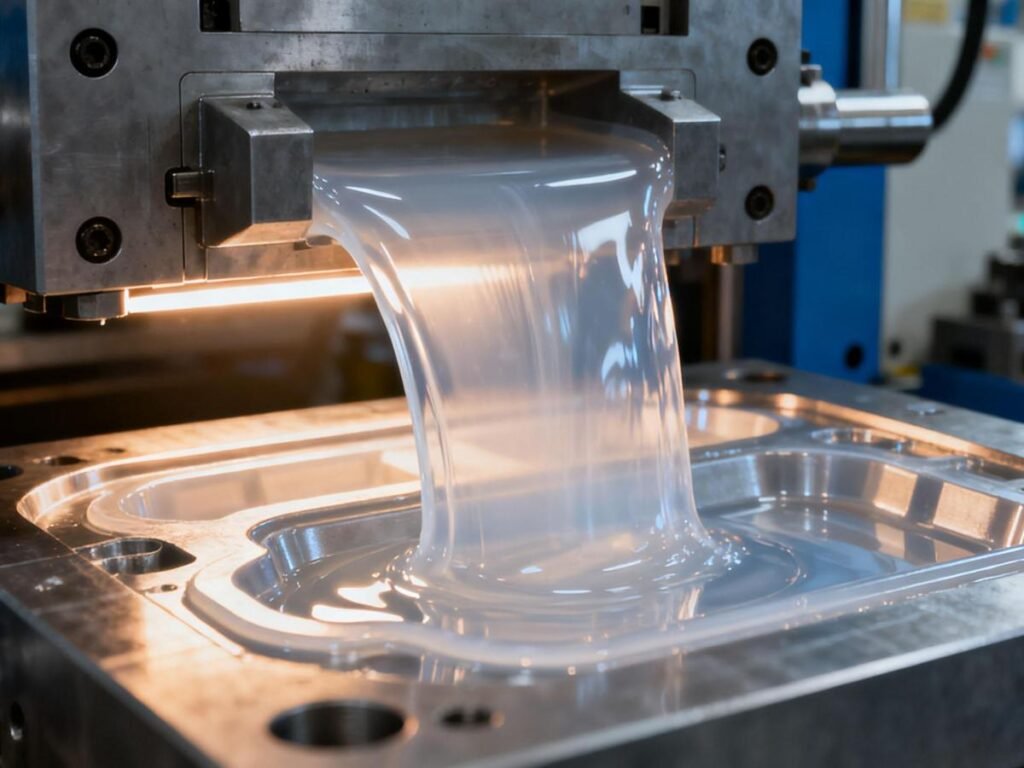
Liquid silicone molding, also called LSR injection molding, produces silicone rubber parts from liquid silicone rubber (LSR). LSR is a two-component, platinum-cured material with low viscosity, allowing it to fill fine mold details and produce thin walls, micro features, and complex geometries with high repeatability.
It is one of three main ways to form silicone, alongside silicone compression molding and HCR injection.
Key Properties of Silicone
Silicone’s properties make it suitable for demanding applications:
- Wide temperature range: Parts stay flexible at about -60°C (-76°F) and remain stable at 200°C (392°F) and above.
- Lasting elasticity: Low compression set helps seals and gaskets retain their shape and sealing force through repeated use.
- High purity and biocompatibility: Platinum-cured LSR produces no curing byproducts and has little odor or taste, making it suitable for medical devices, baby products, and food-contact items.
- Chemical and weather resistance: It resists UV, ozone, moisture, and many cleaning agents.
- Electrical insulation: Stable dielectric performance across temperature changes makes it useful for connectors and sensor seals.
- Color and clarity: Natural LSR can be highly transparent and readily accepts pigments for color matching and optical parts.
The Liquid Silicone Molding Process
Traditional injection molding melts solid pellets and cools them into shape. LSR molding starts with liquid silicone and cures it with heat.
Material Feeding
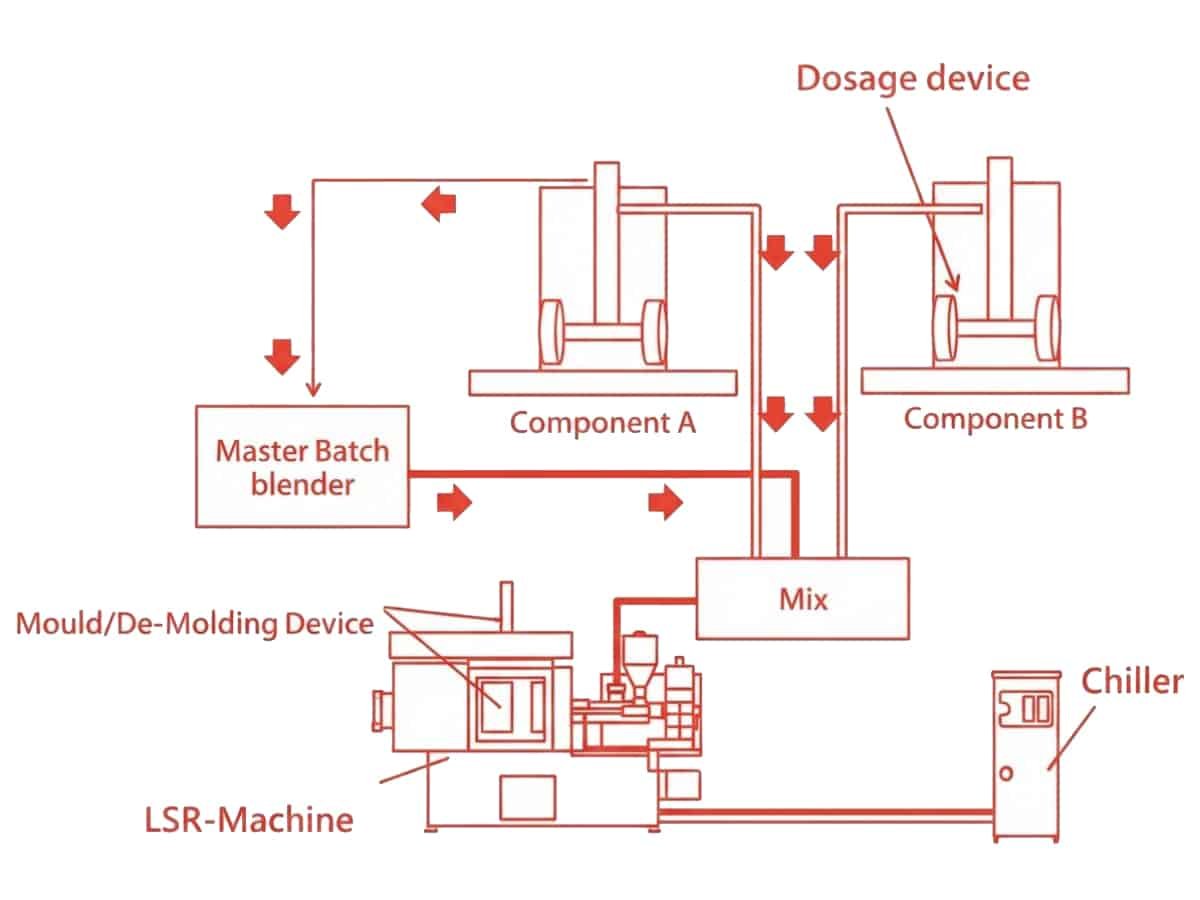
Component A contains the platinum catalyst, and Component B contains the crosslinker. Both are supplied in sealed drums or pails, and each sits on its own dosing device. The two components are drawn separately to prevent premature curing.
Metering and Mixing
The dosing devices deliver Component A and Component B at a precise 1:1 ratio to the mixer. A masterbatch blender adds colorants or additives to the same line. The mixed silicone then travels through a cooled path, typically held at 20–25°C, to keep it liquid before injection.
Injection
The mixed silicone enters the mold on the LSR machine through a cold runner system. A chiller keeps the runner cool, so the silicone does not cure inside it. This minimizes material waste and supports high-volume production.
Curing
The mold is typically heated to about 170–200°C, starting the vulcanization reaction when the silicone enters the cavity. Thin parts may cure in a few seconds, while thicker sections can take around a minute.
Demolding
After curing, the mold opens and the part is removed by the de-molding device, using a robot, air blow-off, or ejector pins. Silicone’s flexibility allows parts with moderate undercuts to be removed directly from the mold.
Design Guidelines for LSR Molding Parts
LSR flows easily, cures with heat, and stretches during demolding. Account for these properties when designing the part and mold.
Uniform Wall Thickness
Heat enters through the mold surface, so uneven wall thickness can cause inconsistent curing. Keep walls uniform and taper transitions between thick and thin sections. LSR can reliably fill sections as thin as 0.3 mm.
Draft and Release Geometry
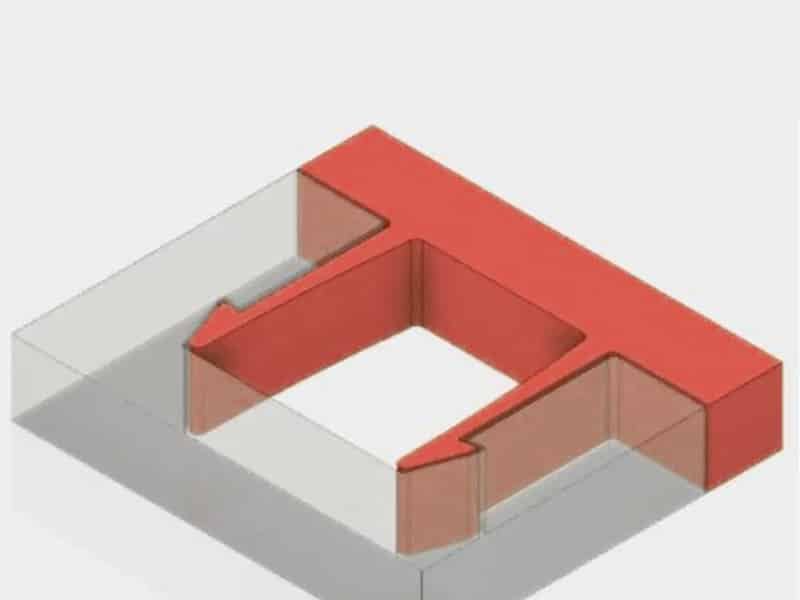
Silicone’s elasticity allows moderate undercuts to release without side actions. Add 1–2° of draft to deep features and maintain a consistent surface finish for easier ejection.
Micro-Vent Planning
Liquid silicone can seep into gaps of just a few microns. Vents are therefore much shallower than those in plastic tooling, typically around 0.005–0.01 mm. Deep or thin features may require vacuum venting to prevent trapped air and short fills.
Gate Vestige Control
Cold-runner gates, usually pin-point or sub-gates, leave small marks. Place gates near the thickest section and away from sealing surfaces. This directs flow toward thin areas and vents.
Shrinkage Allowance
LSR shrinks about 2–3% after curing, with additional shrinkage possible after post-curing. Account for this in cavity dimensions and confirm the post-cure process with your supplier.
Tolerance Planning
Small LSR parts commonly hold ±0.1–0.2 mm, with softer grades tending toward the looser end. Reserve tight tolerances for functional features to control costs.
Overmold Bonding
For silicone overmolding over plastic or metal, specify a self-adhesive LSR grade compatible with the substrate, such as PC, PA, PBT, or aluminum. Add surface texture or mechanical interlocks to improve bonding.
How to Calculate Liquid Silicone Molding Cost
The cost of an LSR part comes from four main items: tooling, material, machine time, and secondary operations.
Tooling Cost
LSR molds require tight fits, precise venting, and cold runner systems, so they often cost more than comparable thermoplastic molds. Cost depends on cavity count, part complexity, and steel grade. Tooling is a one-time cost, so its cost per part decreases as volume increases.
Tooling cost per part = Total tooling cost ÷ Expected lifetime volume
Material Cost
Material cost depends on part weight, grade, and hardness. Medical, food-grade, and self-adhesive grades generally cost more. Cold runners keep scrap low, so most of the material becomes part of the finished product.
Material cost per part = Part weight (kg) × LSR price per kg
Machine Time Cost
Machine cost depends mainly on cycle time, which is largely determined by curing. Thin-walled parts cure in seconds, while thicker sections take longer. Multi-cavity molds divide each cycle across more parts, reducing the cost per part.
Machine cost per part = (Cycle time × Machine hourly rate) ÷ (3,600 × Number of cavities)
(Cycle time in seconds; hourly rate in USD per hour.)
Post-Processing and Inspection
Post-curing, deflashing, inspection, cleanroom packaging, printing, and assembly add to the part cost. Medical and food-contact projects often have higher inspection and packaging costs.
Putting It Together: A Worked Example
The figures below are illustrative. Actual injection molding quotes vary by region, material grade, and supplier.
| Item | Assumption | Cost per Part |
|---|---|---|
| Tooling | $20,000 tool, 500,000 pcs lifetime | $0.040 |
| Material | 5 g part at $14/kg | $0.070 |
| Machine time | 30 s cycle, 8 cavities, $40/hr | $0.042 |
| Secondary operations | Deflashing, inspection, packaging | $0.030 |
| Total | ≈ $0.182 |
Adding overhead and margin gives the final unit price quoted by the supplier.
Applications of Liquid Silicone Molding
LSR’s temperature resistance, biocompatibility, and soft feel make it suitable for a wide range of parts:
- Medical and Healthcare: Catheter components, syringe plungers, respiratory masks, surgical instrument grips, hearing aid tips, infusion set valves
- Baby and Child Care: Pacifiers, bottle nipples, teethers, breast pump valves, sippy cup spouts, feeding spoon tips
- Food and Beverage: Baking molds, bottle and container seals, coffee machine gaskets, valve diaphragms, beverage dispensing valves, ice cube trays
- Automotive: Connector seals, sensor boots, spark plug boots, diaphragms, gaskets, O-rings, waterproof wire seals
- Electronics and Wearables: Keypads, smartwatch bands, earbud tips, waterproof gaskets, connector seals, button covers
- Consumer Products: Kitchen utensils, grips and handles, phone case components, shower heads, personal care device covers
- Industrial and Aerospace: High-temperature seals, vibration dampers, bellows, valve components, cable glands
Conclusion
Liquid silicone molding brings together fine detail, consistent quality, and efficient high-volume output. Understanding the material, the process, and the cost drivers helps you make better design and sourcing decisions.
If your project involves silicone or other elastomers, our rubber injection molding service is ready to review your drawings and provide a quotation with design feedback.