High-speed machining might sound like a casual way of saying “CNC machining, but faster.” In practice, though, it refers to a specific approach — cutting parameters, tooling, and machine dynamics tuned for particular speed ranges. Here’s what actually distinguishes it and where it delivers real value.
What Does HSM Stand For?
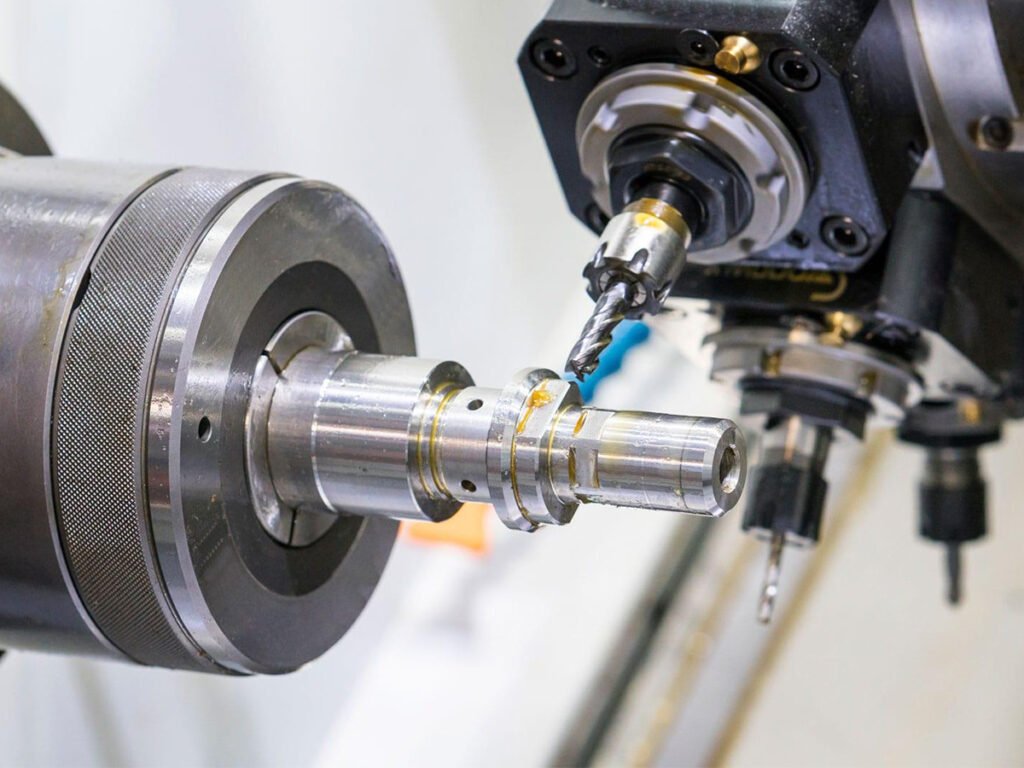
High-speed machining (HSM) is most closely associated with milling, especially aluminum, where spindle speeds can reach tens of thousands of RPM. But HSM isn’t defined by a fixed RPM threshold — what counts as “high-speed” depends on the materials used in CNC machining, tool diameter, and the specific operation.
As cutting speed rises, material removal rates can increase and cutting forces may decrease. But push speed too far, and tool life falls sharply as heat and wear outpace the tool’s limits. HSM is about finding the speed range that balances material removal and surface finish before tool wear becomes the limiting factor.
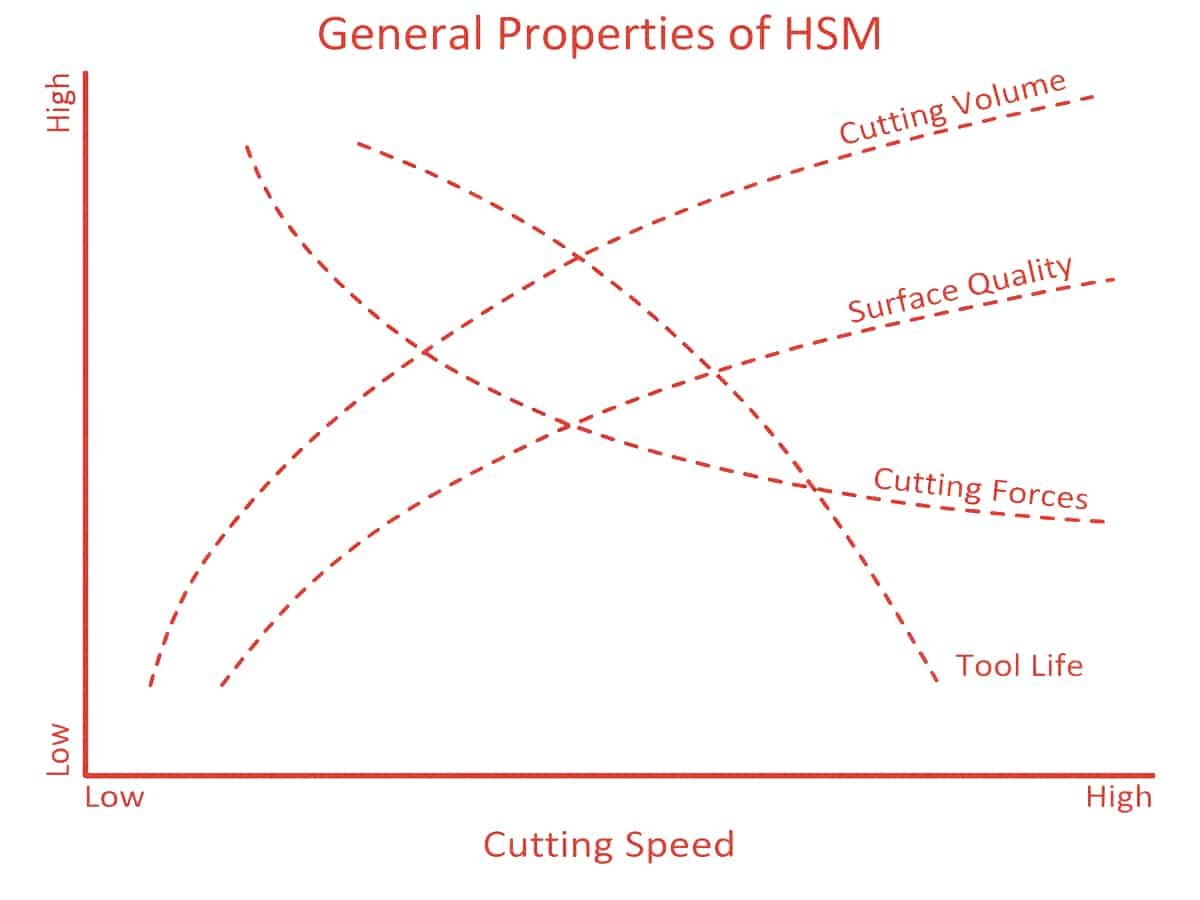
That’s why HSM isn’t simply “running a machine faster.” It requires enough rigidity, spindle stability, and control precision to stay within that productive range — not every CNC setup is built for it.
When to Use High-Speed Machining
HSM isn’t the right approach for every job. It tends to deliver the most value in a few situations:
Complex, Contoured Geometries
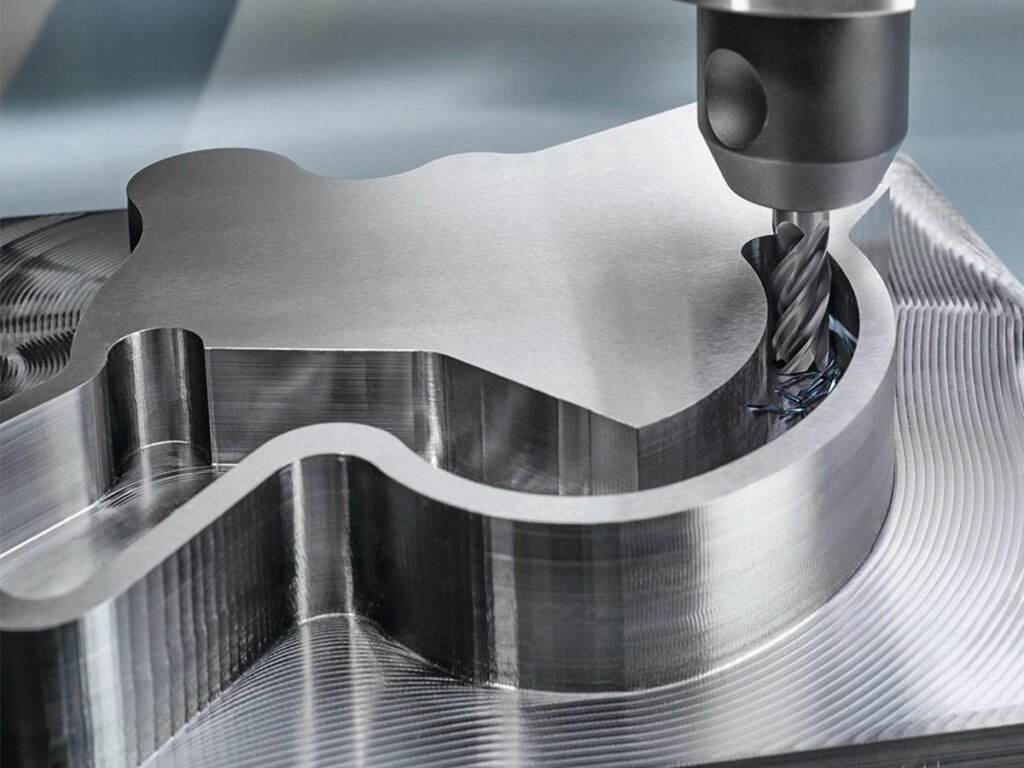
Curved surfaces, thin walls, and intricate 3D features — such as mold cavities and aerospace components — benefit from smoother toolpaths that reduce tool deflection and produce more consistent surfaces.
Long Production Runs
The added CAM programming and toolpath optimization are easier to justify when the same part is machined repeatedly, spreading CNC machining costs across more cycles.
Work-Hardening Materials
Materials like stainless steel and titanium can harden under excessive heat and cutting pressure. Lighter, faster passes help control heat and reduce the resulting tool wear.
Mold and Die Work
HSM can produce fine surface finishes directly on mold and die surfaces, reducing the amount of manual polishing required afterward.
Equipment Requirements for High-Speed Machining
HSM places specific demands on the machine and its supporting components — not just software settings, but physical hardware capable of keeping up with the process.
High-RPM Spindles
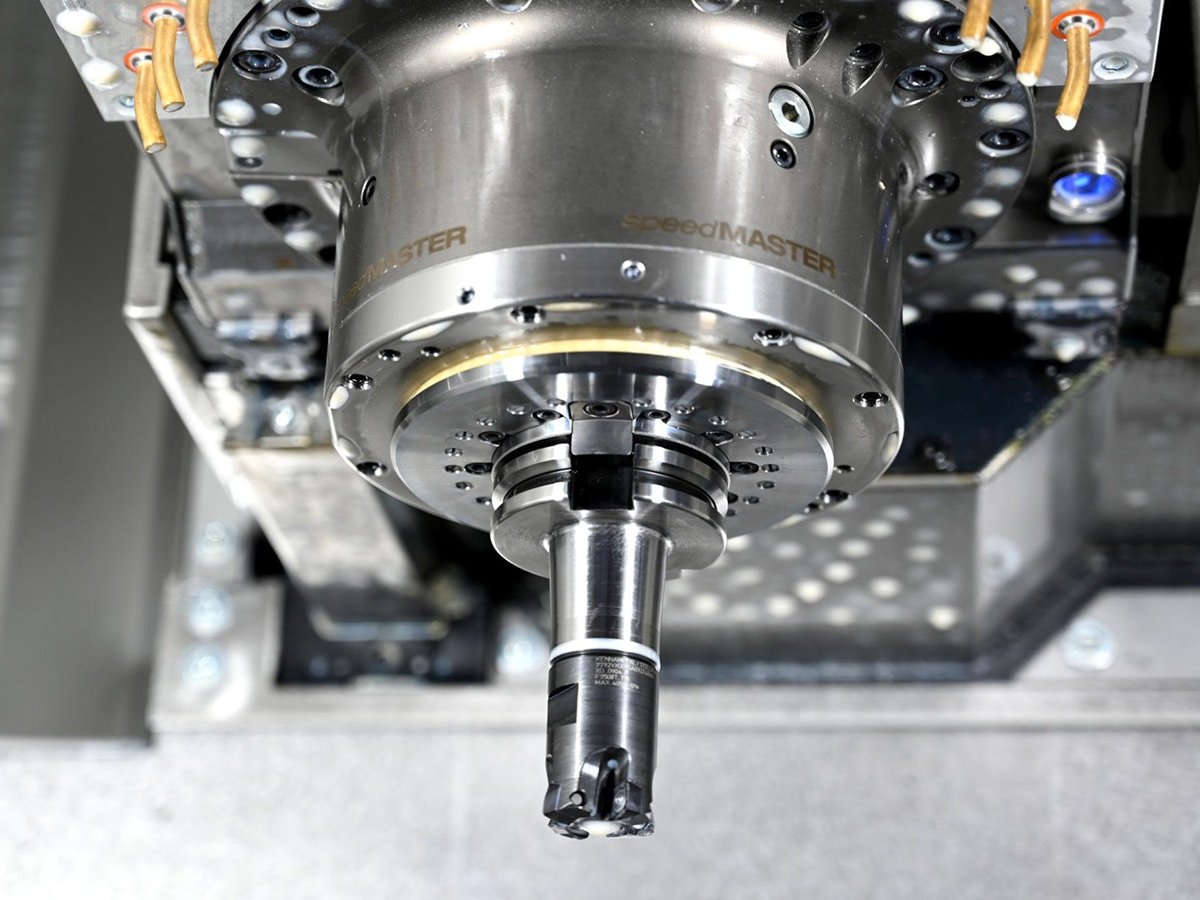
A spindle capable of high rotational speeds is the most obvious requirement, often reaching tens of thousands of RPM when using smaller-diameter tooling. Just as important is spindle quality, including precision bearings and proper balancing to minimize runout at high speed.
Rigid Machine Construction
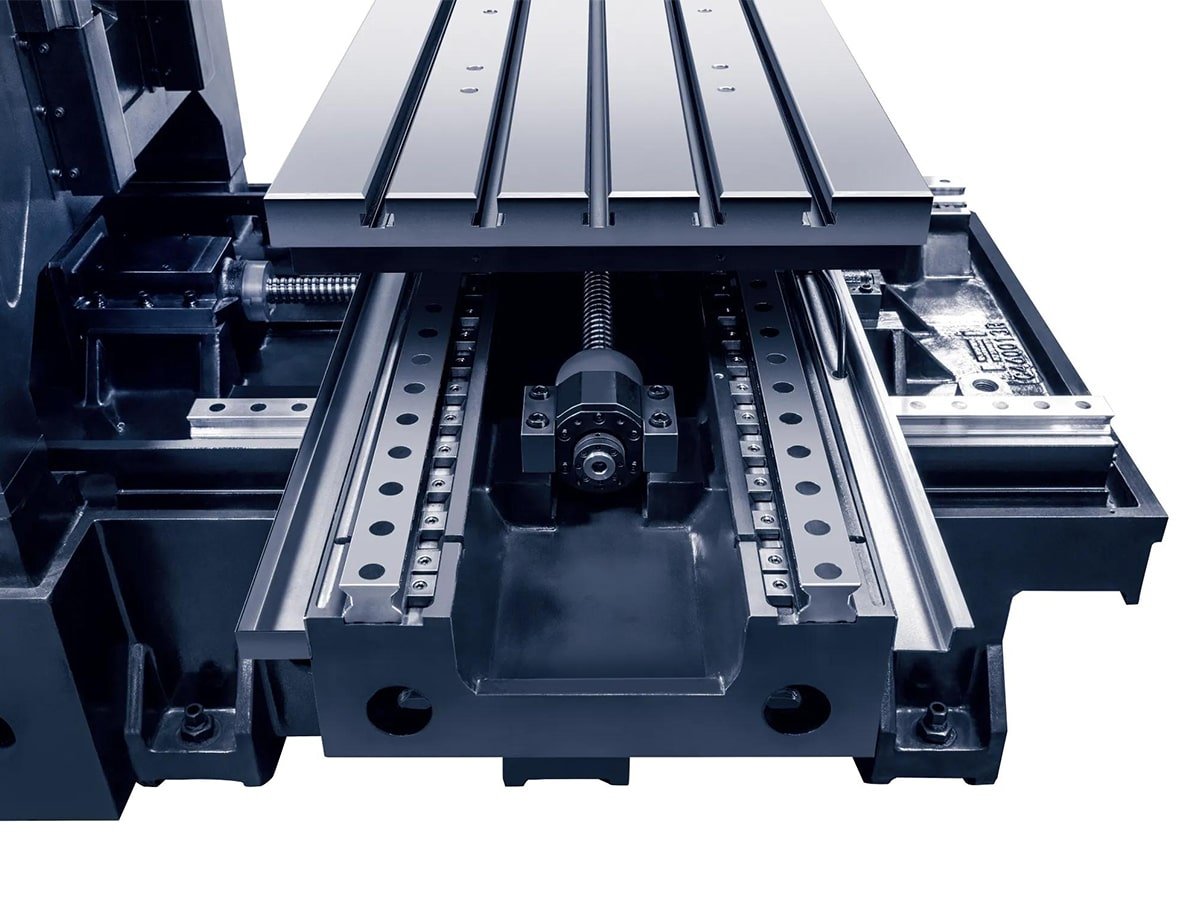
The machine frame and axes need sufficient rigidity to handle rapid directional changes without excessive vibration. A machine that flexes or chatters under fast toolpaths can undermine the surface finish and tool life that HSM is intended to deliver.
High-Speed Tooling and Coatings
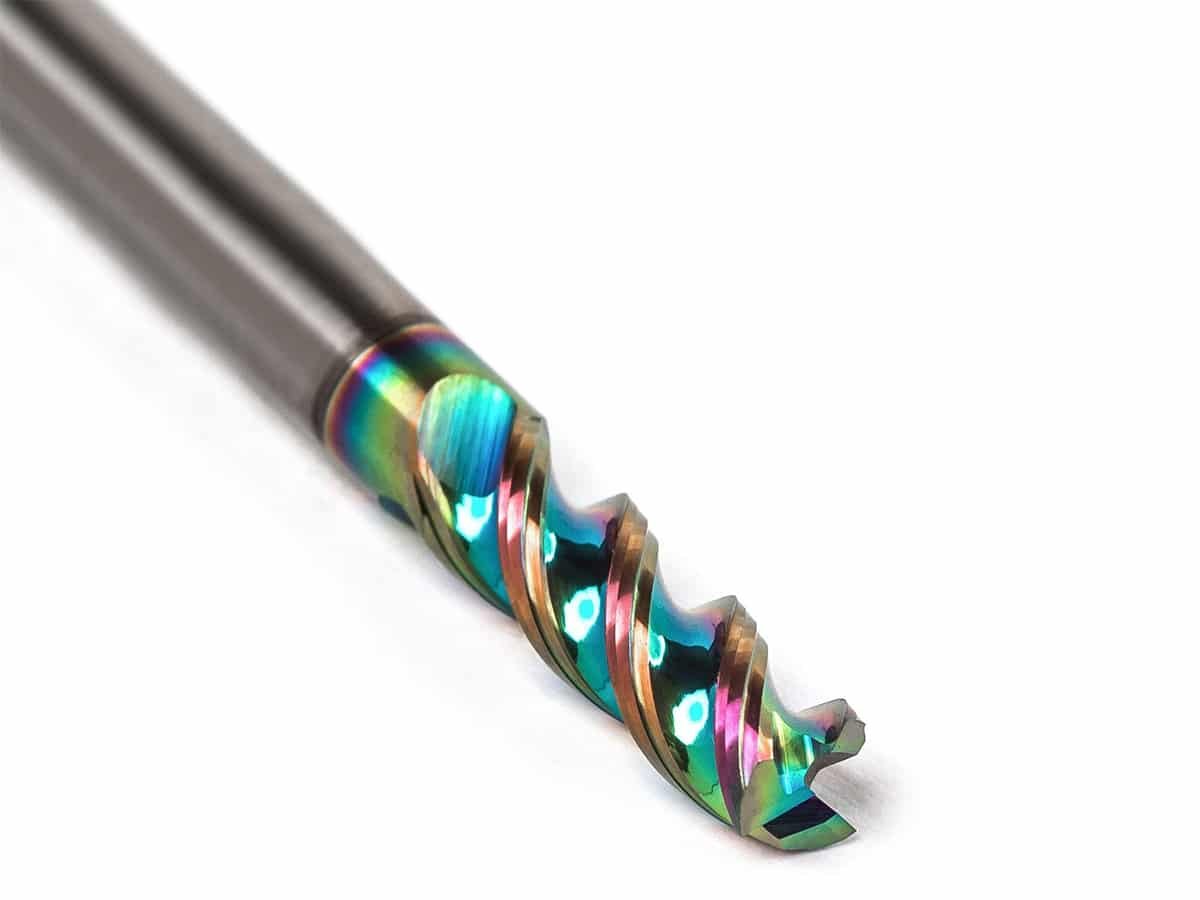
Tool coatings such as AlTiN and diamond-like carbon (DLC) help tools withstand the heat and cutting conditions associated with high-speed machining. They can extend tool life and support more aggressive parameters without compromising surface finish.
Linear Motors and Direct-Drive Axes
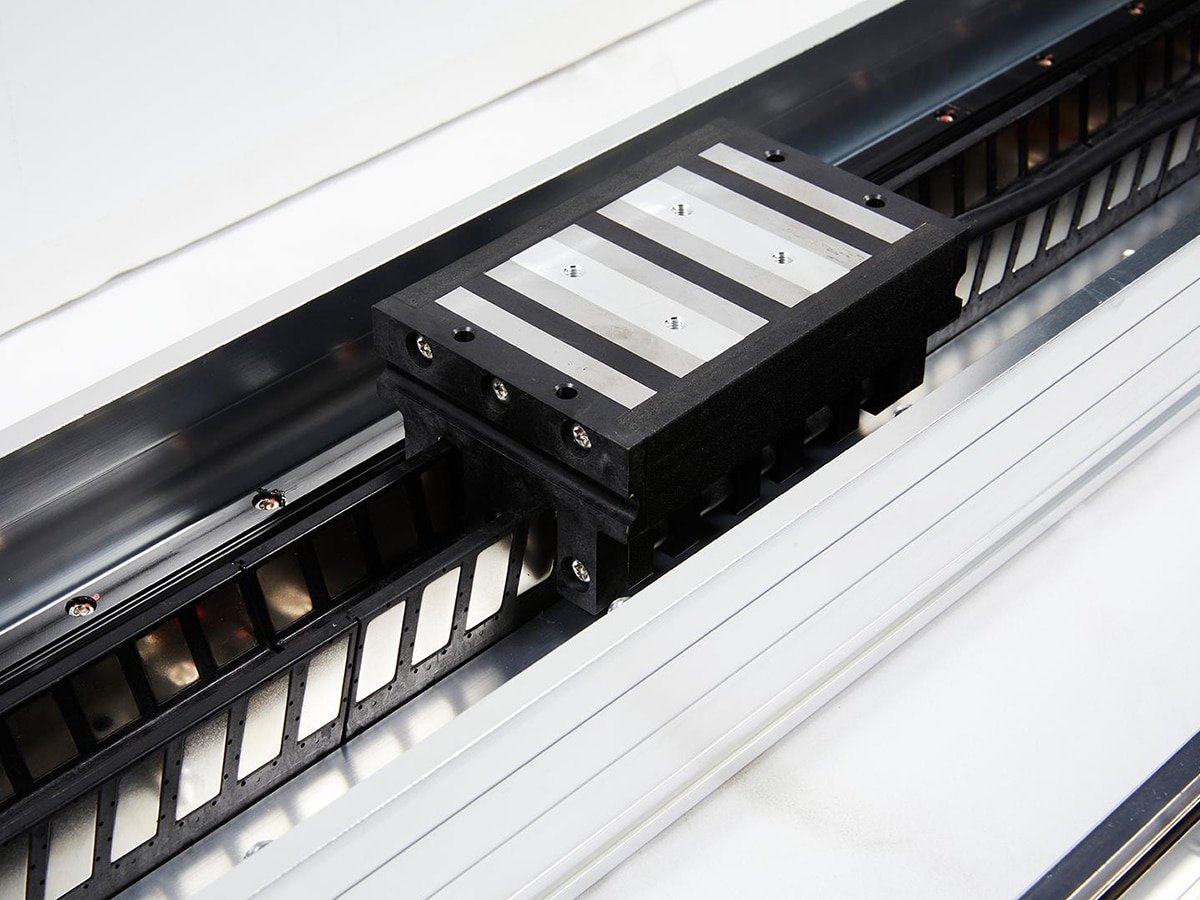
Some high-end HSM machines use linear motors instead of traditional ball-screw drives, allowing faster and smoother axis movement with less mechanical backlash. Direct-drive rotary axes can provide similar benefits by reducing transmission components between the motor and the moving axis.
Through-Spindle Coolant Delivery
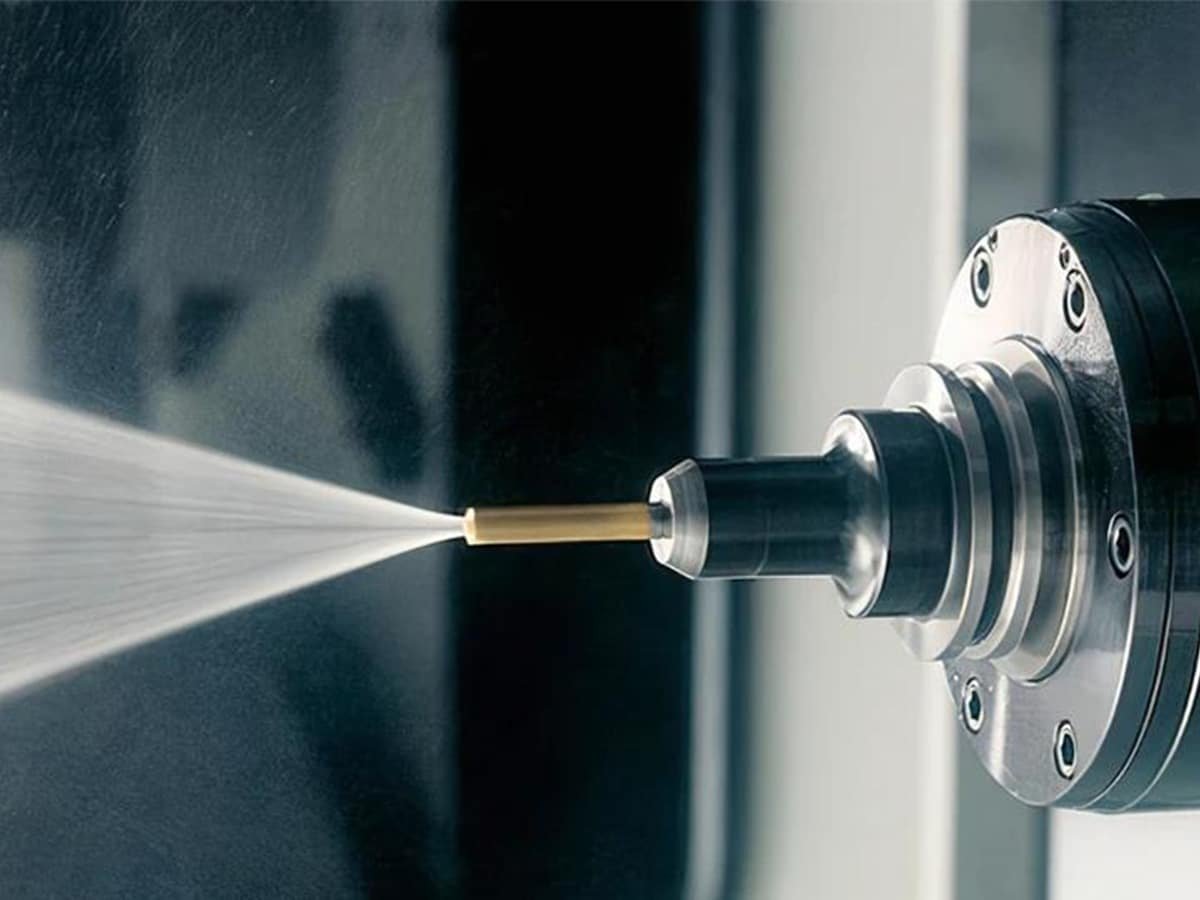
Many HSM setups use through-spindle coolant systems, which deliver coolant through the center of the rotating tool rather than relying solely on external nozzles. This helps direct coolant closer to the cutting zone, particularly when deep cavities or high-speed cutting make external coolant delivery less effective.
Advanced Technologies Used in High-Speed Machining
Beyond the physical equipment, HSM depends on a range of high speed machining techniques and technologies that make high-speed operation viable and controlled.
High-Speed CNC Controllers
Conventional controllers can become a bottleneck at high feed rates. Effective HSM requires controllers with fast look-ahead processing that can process large numbers of toolpath blocks without introducing lag or motion errors.
Trochoidal and Adaptive Toolpaths
Rather than plunging directly into material, modern CAM software can generate curved, looping paths that maintain a controlled chip load throughout the cut. This keeps tool engagement more predictable as the geometry changes.
Vibration and Chatter Monitoring
Some HSM setups incorporate sensors and control logic to detect chatter or resonance during machining, allowing spindle speed or feed adjustments to avoid unstable cutting conditions that could damage the tool or part.
Thermal Compensation
Sustained high-speed operation generates heat that can affect machine accuracy. Thermal compensation systems track temperature changes in the spindle and machine structure, adjusting positioning to maintain dimensional accuracy as thermal conditions change.