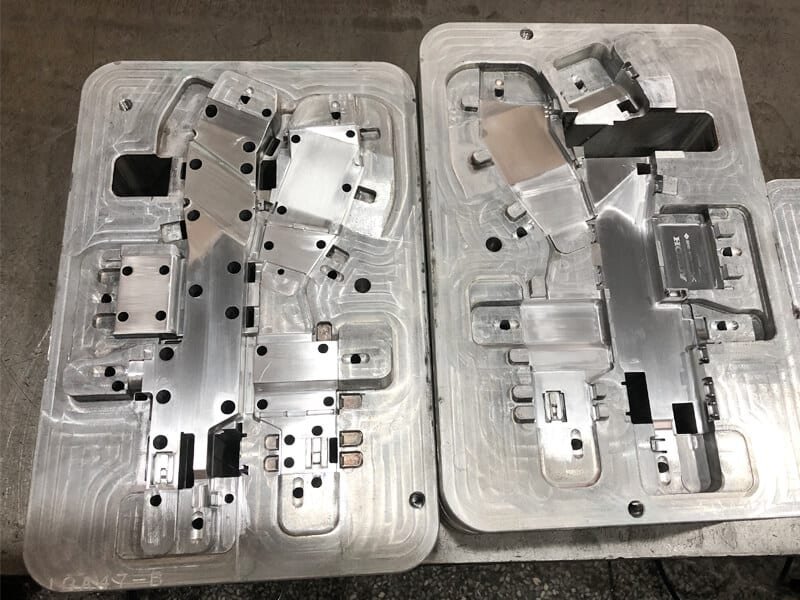
Aluminum molds offer several practical advantages, including faster machining, lower tooling costs, and efficient heat transfer. However, they are generally less wear-resistant than steel molds. Understanding these benefits and limitations helps determine which material is more suitable for a specific molding project.
What Is an Aluminum Mold?
An aluminum mold is a mold whose primary cavity and core components are made from aluminum alloy rather than tool steel. Its relatively low hardness, high thermal conductivity, and good machinability distinguish it from a conventional steel mold used in injection molding.

Aluminum Mold vs. Steel Mold: Key Differences
Although both mold types produce plastic parts, their material properties affect manufacturing time, cost, cooling performance, and durability. Here is how aluminum molds compare with steel molds.
| Comparison Factor | Aluminum Mold | Steel Mold |
|---|---|---|
| Machinability | Generally easier and faster to machine | Generally requires more machining time |
| Initial Tooling Cost | Usually lower | Usually higher |
| Wear Resistance | Lower; more susceptible to wear and damage | Higher, depending on steel grade and heat treatment |
| Mold Service Life | Generally shorter | Generally longer |
| Production Volume | Often suitable for prototypes and low-volume runs | Often preferred for medium- to high-volume production |
| Repair and Modification | Often easier to machine and modify | Can require more time and specialized processes |
Material selection is one factor in tooling strategy. Learn more about the differences between soft tooling and hard tooling in terms of cost, durability, and production requirements.
Types of Aluminum Mold Materials
Several aluminum alloys can be used to make molds, but they are not interchangeable. Each grade offers a different combination of strength, machinability, and durability, making material selection an important part of mold manufacturing.
6061 Aluminum
6061 aluminum offers a good balance of strength, machinability, corrosion resistance, and thermal conductivity. It is suitable for mold bases, support components, and certain prototype injection molds where moderate strength is sufficient.
7075 Aluminum
7075 aluminum provides higher strength and hardness than 6061, making it suitable for mold components that require greater mechanical strength. However, it generally costs more and has lower thermal conductivity than 6061.
2024 Aluminum
2024 aluminum offers high strength and good fatigue resistance. It can be considered for specialized tooling components requiring these properties, although its relatively poor corrosion resistance may require additional protection.
QC-7 / QC-10 Aluminum
QC-7 and QC-10 are proprietary high-performance aluminum tooling materials designed for mold-making applications. They offer combinations of strength, machinability, and thermal conductivity suited to prototype and low-volume injection molds.
When Should You Use an Aluminum Mold?
Aluminum molds are suitable for specific production conditions, particularly those involving prototypes, limited output, and frequent tooling modifications.
- Prototype Development: You need to test part geometry, assembly fit, or material performance before investing in production tooling.
- Low-Volume Production: Your project requires hundreds to several thousand plastic parts, depending on part geometry, resin, and mold design.
- Shorter Tooling Lead Times: You need a mold quickly because aluminum is generally faster to machine than tool steel.
- Frequent Design Changes: The mold design may need revisions during product development, making easier machining and modification beneficial.
- Cost-Constrained Projects: Your budget does not justify the higher initial cost of a steel mold for the expected production volume.
Limitations of Aluminum Molds
Despite their lower cost and faster machining, aluminum molds have several limitations:
- Lower Wear Resistance: Aluminum is softer than tool steel and more susceptible to wear and surface damage.
- Shorter Mold Life: Aluminum molds generally withstand fewer production cycles, especially when molding abrasive materials. If reducing tooling lead time is a priority, learn more about rapid tooling and how it supports prototype development and early-stage production.
- Lower Stiffness: Aluminum is more prone to deformation under high injection and clamping forces, requiring careful mold design.
- Limited Corrosion Resistance: Certain resins and processing conditions can accelerate mold degradation.
- Less Suitable for High-Volume Production: Frequent maintenance or mold replacement may offset the initial tooling cost savings.
Design Considerations for Aluminum Molds
Because aluminum has different mechanical and thermal properties than steel, mold design should account for its strength, heat transfer, and wear resistance.
Mold Wall Thickness and Support
Aluminum has lower stiffness than tool steel, so mold walls and support structures must withstand injection pressure and clamping forces without excessive deformation. Reinforce areas around cavities and cores where necessary.
Cooling Channel Layout
Aluminum’s thermal conductivity can improve heat transfer, but cooling performance also depends on channel layout and coolant flow. Learn more about the injection molding cooling system and its impact on cycle time and part quality.
Cavity and Core Design
Avoid unnecessarily thin sections and weak features in cavity and core components. Adequate material thickness around deep cavities, narrow cores, and small inserts helps reduce the risk of damage during molding.
Cavity and core geometry affects part dimensions, ejection, and mold durability. Learn more about the core and cavity in injection molding and their roles in shaping plastic parts.
Plastic Material Selection
Consider the resin’s processing temperature, abrasiveness, and corrosiveness. Glass-fiber-reinforced and corrosive materials can accelerate mold wear or degradation, so alloy selection and surface protection may require additional attention.
Conclusion
Aluminum molds can reduce initial tooling costs and shorten machining lead times, but their shorter service life may limit their suitability for demanding production runs. Evaluating these trade-offs early helps you select the right tooling material. Contact Zhongde for custom mold tooling services tailored to your part design and production needs.