In manufacturing, “tooling” refers to the molds, dies, jigs, and fixtures used to shape materials during production. When people think of a “mold,” they often picture hard tooling—but soft tooling also has an important role in manufacturing. This article compares their respective strengths, weaknesses, and ideal applications.
Soft Tooling
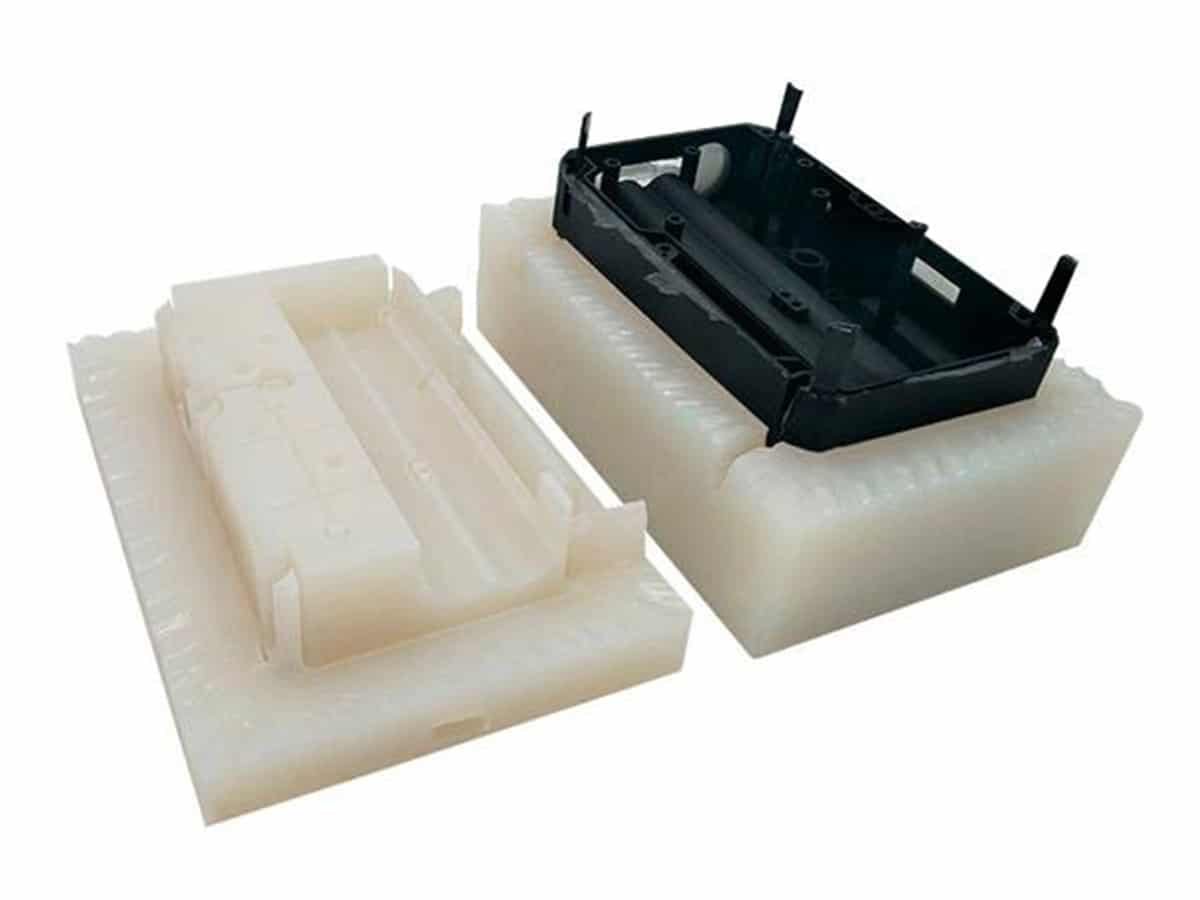
Soft tooling refers to temporary, low-cost molds or dies used for short production runs, prototyping, or bridge production before committing to permanent tooling.
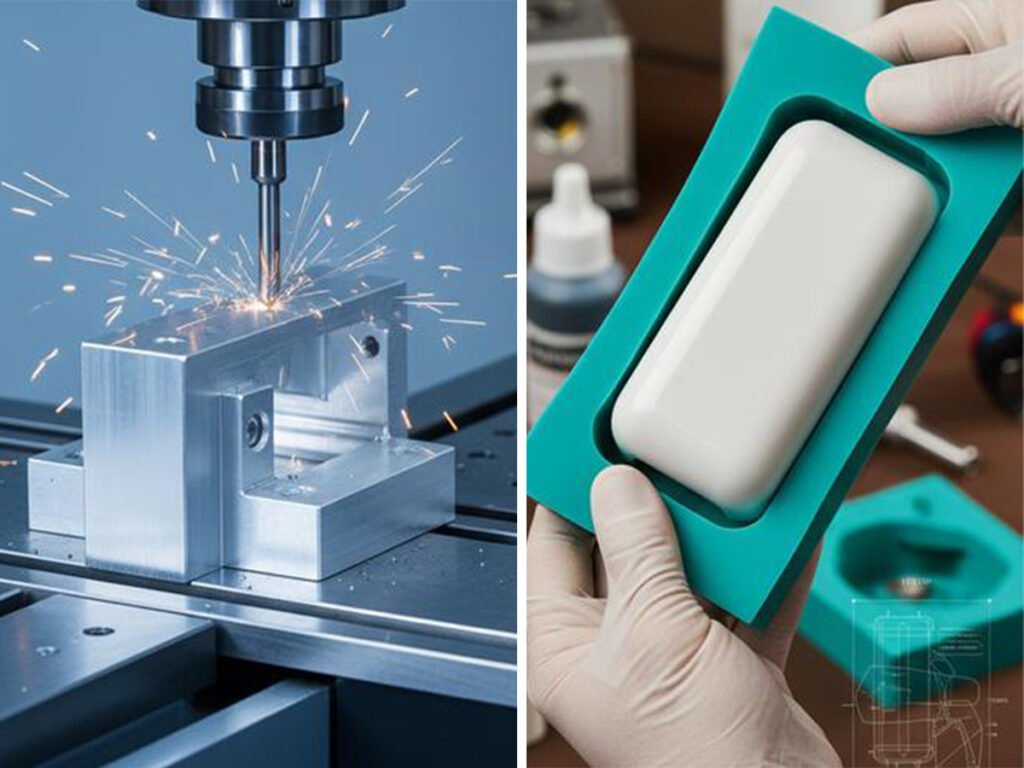
Unlike hard tooling, it typically uses flexible, castable, or composite materials rather than machined metal tooling. These molds are commonly used with processes such as vacuum casting. Because soft tooling is designed for limited use—typically anywhere from a few dozen to a few hundred cycles—it prioritizes speed and flexibility over durability.
Materials
Soft tooling is typically made from non-metal materials that are relatively easy to cast and process at room or low temperature, such as:
- Silicone rubber (RTV)
- Epoxy resins
- Urethane-based tooling materials
These materials allow for rapid mold fabrication with limited machining, but they generally degrade faster under repeated casting cycles and are not suited to the heat and pressure of conventional injection molding.
Advantages of Soft Tooling
- Lower upfront cost: Requires significantly less investment than hard tooling, making it practical for startups or low-volume projects.
- Faster turnaround: Can often be produced in days rather than weeks or months.
- Design flexibility: Easier and cheaper to modify or replace when design changes are needed during development.
Disadvantages of Soft Tooling
- Limited lifespan: Wears out quickly, making it unsuitable for high-volume production.
- Lower dimensional precision: May not maintain tight tolerances as consistently as rigid metal tooling.
- Higher long-term cost per unit: If production scales up, replacing soft molds repeatedly can become less economical than using hard tooling.
Applications
Soft tooling is commonly used in:
- Prototyping: Validating form, fit, and function before finalizing a design.
- Vacuum casting: Producing small batches of parts that closely resemble production-grade plastics without using an injection molding machine.
- Design iteration: Quickly testing multiple design variations at relatively low cost.
- Pre-production sampling: Creating a small number of representative parts for client review or market testing before investing in metal tooling.
Soft tooling is one approach to shortening tooling lead times, but it should not be confused with rapid tooling, which focuses on accelerating the tooling fabrication process.
Hard Tooling
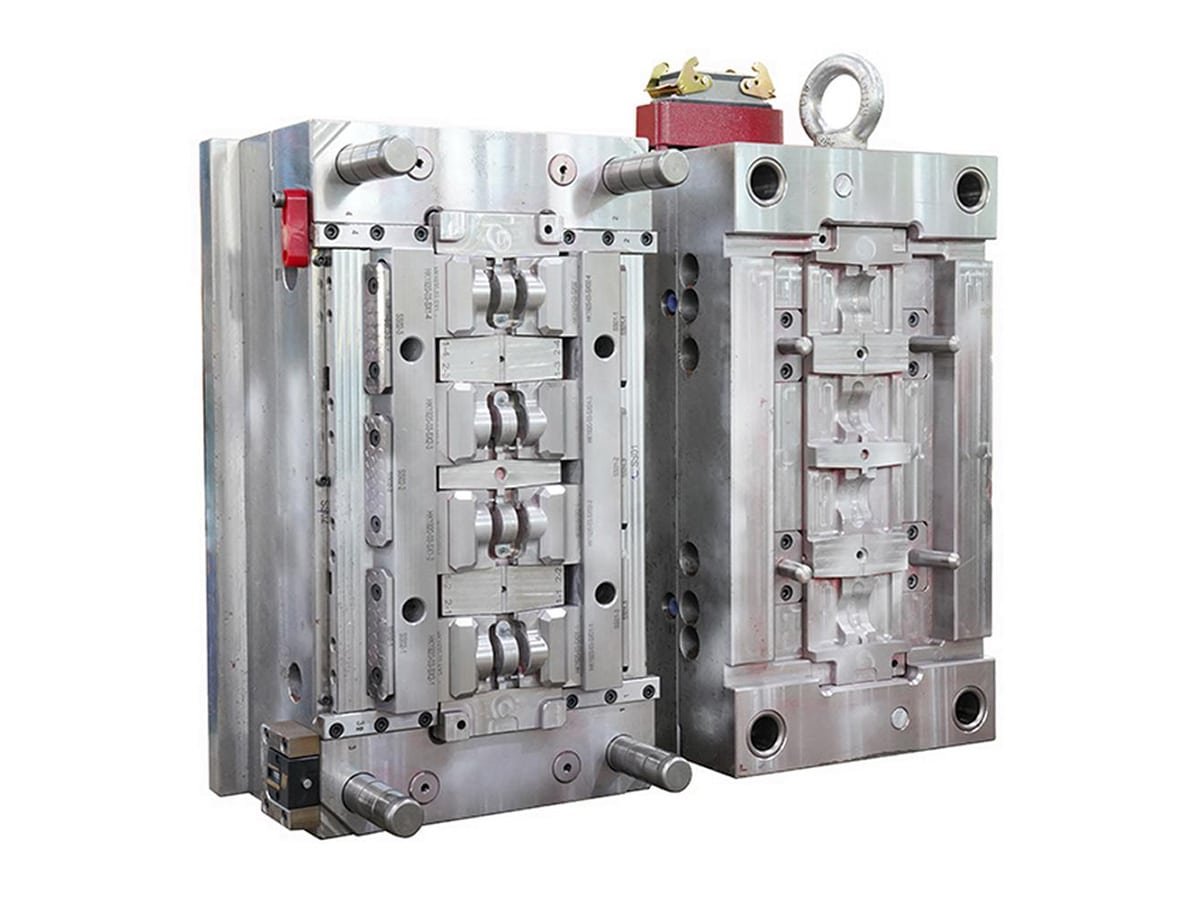
Hard tooling refers to durable, precision-engineered molds, dies, and other production tooling—typically made of metal—designed for repeated use in production.
Because it is built to withstand hundreds of thousands or even millions of cycles, hard tooling requires a larger upfront investment but delivers consistent part quality, long service life, and lower tooling cost per part at higher volumes.
Materials
Hard tooling is typically made from durable metals capable of withstanding repeated production cycles, such as:
- P20 steel (pre-hardened, cost-effective for medium-volume runs)
- H13 steel (hardened, suited for high-volume production and abrasive materials)
- Stainless steel (corrosion-resistant, useful for medical, food-contact, and demanding environments)
- Aluminum alloys (lighter and faster to machine, often used where lower tooling weight and faster fabrication are priorities)
Advantages of Hard Tooling
- Long Mold lifespan: Can support high-volume production, often reaching 500,000 to over 1 million cycles depending on the material, design, and operating conditions.
- High dimensional precision: Maintains tight tolerances and repeatability across large production batches.
- Lower cost per unit at scale: Though expensive upfront, the tooling cost per part drops significantly as production volume increases.
- Production-material compatibility: Supports a broad range of production-grade molding materials, allowing parts to meet final mechanical and aesthetic requirements.
Disadvantages of Hard Tooling
- High upfront cost: Tooling design and fabrication can require substantial capital investment, often tens of thousands of dollars or more.
- Longer lead times: Typically takes several weeks to a few months to design and manufacture.
- Reduced flexibility: Design changes after tooling is built can be costly and time-consuming, sometimes requiring major tooling modifications or a new mold.
Applications
Hard tooling is commonly used in:
- Mass production: Manufacturing large volumes of parts with consistent quality, such as automotive or consumer electronics components.
- Final production runs: Producing parts that require production-grade materials and finishes for market release.
- Long-term manufacturing programs: Supporting products with sustained production demand over months or years.
- Precision-critical parts: Applications where tight tolerances and repeatability are essential, such as medical devices or functional assemblies.
Hard tooling can also be classified by mold grade, cavity configuration, and other design characteristics. See our guide to injection mold classification and types for a broader breakdown.