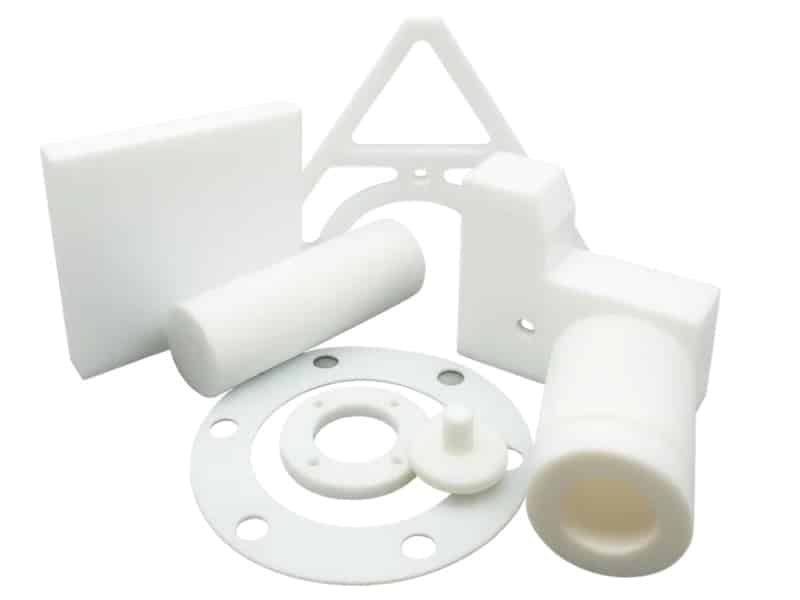
Polytetrafluoroethylene (PTFE), better known as Teflon, is a special type of engineering plastic that can handle heat, chemicals, and wear better than many other materials. You may see it in everything from kitchenware to industrial parts.
When it comes to shaping PTFE into precise components, CNC machining is one of the most reliable methods. But working with Teflon is not exactly the same as other plastics—its unique properties mean you need to pay attention to certain tips and tricks.
In this guide, we’ll walk you through the basics of PTFE CNC machining, including its advantages, limitations, important considerations, and practical skills to get the best results.
What Is PTFE?
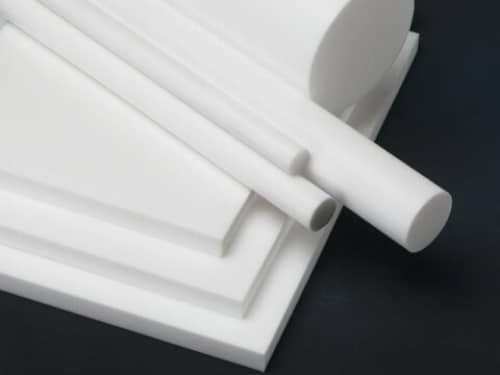
Polytetrafluoroethylene (PTFE), commonly known as Teflon, is a synthetic fluoropolymer characterized by exceptional chemical resistance, low friction, and high thermal stability. PTFE material has a high melting point of approximately 327°C. Its density is about 2.2 g/cm³. It appears as a white, non-toxic, odorless solid with outstanding properties such as excellent electrical insulation, remarkable resistance to nearly all acids and bases, and the ability to operate continuously within a temperature range of approximately -250°C to 260°C. PTFE’s unique molecular structure, with tightly bonded fluorine atoms surrounding carbon chains, grants it superb non-stick surface characteristics and durability against harsh environments.
Common PTFE Grades
PTFE grades vary based on additives that enhance properties for PTFE CNC applications. Common grades include:
- Virgin PTFE: Unfilled, offering maximum chemical resistance for seals and insulators in Teflon PTFE machining.
- Glass-filled PTFE: Contains 15-25% glass fiber, improving wear resistance and reducing creep, used in bearings and gaskets during CNC PTFE processes.
- Carbon-filled PTFE: Adds carbon or graphite for better strength and thermal conductivity, suited for valves in PTFE CNC machining.
- Bronze-filled PTFE: Incorporates bronze powder for enhanced hardness and conductivity, ideal for bushings in Teflon CNC.
- PEEK-filled PTFE: Combines PTFE with PEEK for superior mechanical strength, used in high-load components.
Advantages of CNC Machining PTFE
CNC machining is especially well-suited for PTFE (Teflon) because it respects the material’s unique properties while creating precise parts. Here’s why this method works so well for Teflon components:
- High Precision and Repeatability: PTFE is soft and slippery, which can make manual cutting tricky. CNC machines use computer control to make extremely accurate cuts, ensuring complex shapes can be repeated consistently without human error.
- Ability to Produce Complex Shapes: Thanks to multi-axis CNC machines, even intricate contours, thin walls, or unusual geometries can be machined directly from PTFE. Shapes that would be very hard or impossible to mold can be produced reliably.
- Preserves Thermal and Chemical Properties: PTFE’s strength lies in its heat resistance and chemical inertness. CNC machining removes material mechanically rather than melting it, so these properties remain intact in the finished part.
- Minimal Risk of Defects: Since PTFE is not exposed to high melting temperatures during CNC machining, there’s little chance of thermal degradation, warping, or off-gassing. The result is clean, high-quality parts with smooth surfaces.
- Rapid Prototyping and Small Batch Production: CNC teflon processes offer quick turnaround times for prototypes and production runs without the time-consuming mold creation required by other manufacturing methods.
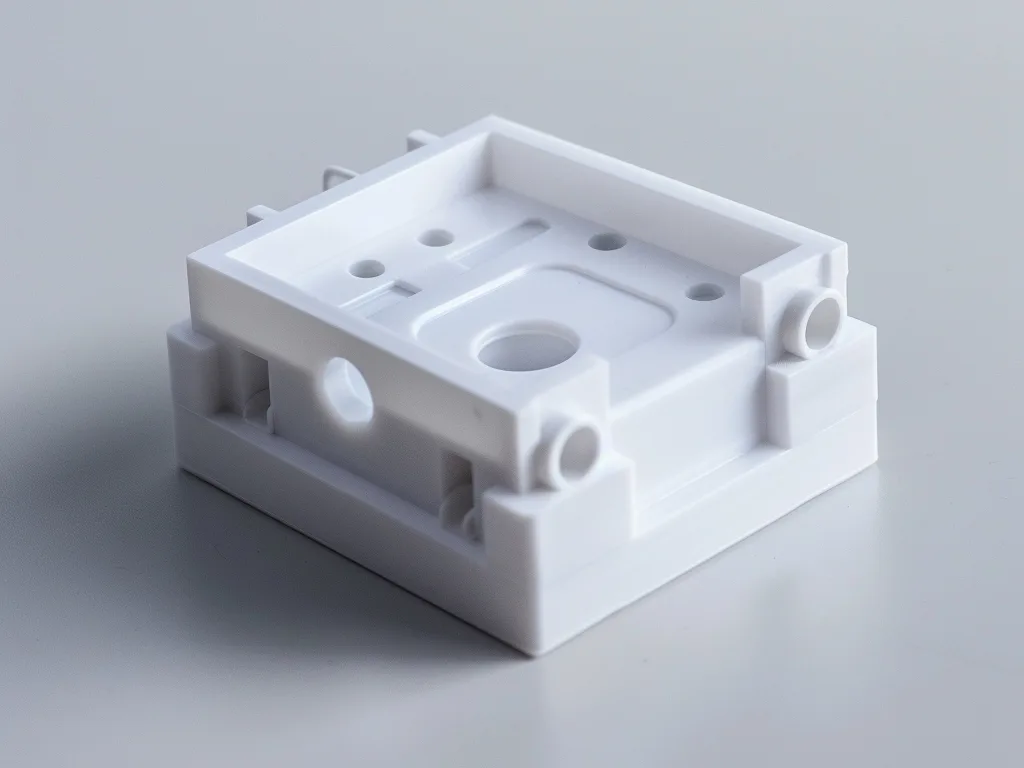
Limitations of CNC Machining PTFE
Despite these benefits, CNC teflon machining faces some limitations inherent to the material’s properties:
- Softness and Flexibility: PTFE’s relatively low rigidity can cause chatter during machining, leading to surface imperfections unless tool paths and machine parameters are meticulously controlled.
- Thermal Sensitivity: Although PTFE is heat-resistant, excessive heat generated during machining without sufficient cooling can cause warping or surface deformation.
- Dimensional Instability: PTFE has a high coefficient of thermal expansion and is prone to stress relaxation, making it challenging to maintain the extremely tight tolerances required by some applications.
- Chip Evacuation Challenges: PTFE produces long, stringy chips during machining that must be efficiently removed to prevent tool clogging and maintain cutting precision.
- Cost Considerations: CNC machining tends to be more costly for very high volume runs compared to methods like compression molding or extrusion.
Common CNC Machining Processes for PTFE
Several CNC methods are employed depending on the part geometry and functional requirements. If you are not familiar with CNC machining, you can learn more in our article on what is CNC machining and how does it work.
CNC Milling

CNC Milling

Teflon CNC milling involves rotating cutting tools moving along multiple axes to selectively remove material, shaping PTFE blocks into complex parts. Milling produces high-precision surfaces suitable for parts with rough edges or intricate details.
CNC Turning
cnc Turning

In CNC turning, a lathe rotates the PTFE workpiece while a cutting tool removes material to create cylindrical or conical shapes. This method is used for producing PTFE components like bushings, bearings, seals, and insulators.
CNC Drilling
CNC Drilling
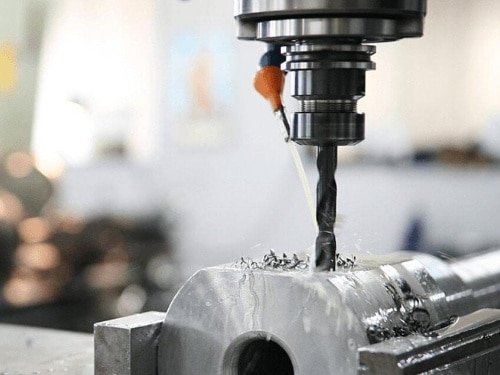
CNC drilling creates holes in PTFE workpieces using rotating drill bits. It is used for PTFE components requiring mounting holes or fluid passages, such as in chemical processing equipment.
CNC Turn-Mill (Mill-Turn) Machining
This advanced hybrid machining combines turning and milling in a single setup, enabling complex PTFE parts, such as hollow parts with a rough bottom surface, to be produced more efficiently without multiple setups.
How to CNC Machine PTFE?
Machining PTFE is a bit different from other plastics because it is soft, slippery, and sensitive to heat. The workflow generally follows these steps:
Material Selection and Setup
Choose the right PTFE grade based on heat, chemical resistance, and mechanical needs. Because PTFE is soft and can move easily, secure it carefully using double-sided tape or plastic clamps to prevent slipping during machining.
CNC Programming and Parameters
Set up the CNC machine with cutting paths, depths, speeds, and feeds optimized for PTFE. The goal is to minimize heat buildup and vibration, which can deform the part or create rough edges.
Rough Cutting
Start with rough cuts to remove large amounts of material. Keep step-downs small to reduce tool pressure and avoid melting or tearing the surface. Always watch the chips and temperature—they are good indicators of how the material is reacting.
Precision Finishing
Switch to finer milling for accurate dimensions and smooth surfaces. Adjust feed rates carefully to avoid chatter and maintain the PTFE’s natural slip-resistant surface.
Drilling or Turning (if Needed)
For holes, cylindrical parts, or hollow features, use CNC drilling or turning. Make sure tools are perpendicular and positioned precisely, because PTFE can deform if pushed too hard.
Deburring and Cleaning
PTFE edges can be soft and sticky. Use PTFE-compatible tools or fine abrasives to remove burrs without damaging the surface. This ensures parts fit correctly in assemblies.
Final Inspection
Check dimensions and surface quality with precise measurement tools. Confirm that tolerances and specifications are met, and that the part maintains its clarity, smoothness, and mechanical properties.
Key Considerations and Machining Tips for PTFE CNC Machining
To optimize CNC teflon machining quality and efficiency, consider the following:
- Use sharp cutting tools to reduce friction and heat generation, essential for clean surfaces on this non-stick material.
- Implement an effective cooling system (compressed air, water-soluble coolant, or chemically inert sprays) to mitigate thermal expansion and prevent warping.
- Set conservative cutting speeds and step-downs; typical spindle speeds range from moderate RPMs with step increments between 0.3 to 1.5 mm, based on tooling and part complexity.
- Securely mount PTFE sheets with double-sided foam tape supplemented by clamps if needed. Loose material causes vibration and inaccuracies.
- Remove chips frequently to avoid clogging, especially during milling, where long PTFE chips accumulate readily.
- Perform thorough deburring to eliminate sharp edges that can cause assembly issues or early part failure.
- Always consider PTFE’s thermal expansion in tolerance calculations, typically maintaining ±0.001 inch per inch tolerance as a practical guide.
Typical Applications of CNC Machined PTFE Parts
Due to its unique properties and superb machinability via CNC, PTFE parts are widely used across diverse industries:
- Aerospace Industry: Fuel hoses, electrical insulation, sliding bearings, and protective coatings.
- Medical Industry: Biocompatible valves, implants, and tubing.
- Automotive Industry: Lightweight gears, seals, and valve components.
- Food Processing Industry: Conveyor belts, chutes, liners, seals, gaskets, custom fittings.
- Chemical Processing: Corrosion-resistant seals, washers, fittings, and laboratory instrument components.
- Electrical and Electronics: Insulating spacers, housings, cable jackets, connectors, components for high-frequency applications.
Alternatives to PTFE in CNC Machining
Here are some alternatives to PTFE for specific applications:
ECTFE (Ethylene Chlorotrifluoroethylene): ECTFE offers improved chemical and corrosion resistance over PTFE. This material is optimal for harsh chemical environments.
PCTFE (Polychlorotrifluoroethylene): PCTFE is known for extremely low moisture permeability. It can improve sealing effectiveness.
PFA (Perfluoroalkoxy): PFA has similar chemical properties but is softer and less abrasion-resistant than PTFE. However, it is less preferred for structural uses.
Zhongde for Reliable PTFE CNC Machining Services
Zhongde is combining advanced CNC equipment with deep expertise to deliver precision Teflon components. Our capabilities include CNC milling, CNC turning, multi-axis machining, and rigorous quality controls, specifically tailored for PTFE and specialty fluoropolymer materials. Contact Zhongde for PTFE machining requirements or to explore custom CNC service for your next project.