Choosing between part weight and structural strength often involves a trade-off. Structural foam molding reduces material density while maintaining the stiffness and strength needed for many larger or thicker plastic parts. This article explains how the process works, where it is most useful, and when it may be a practical choice for your design.
What Is Structural Foam Molding?
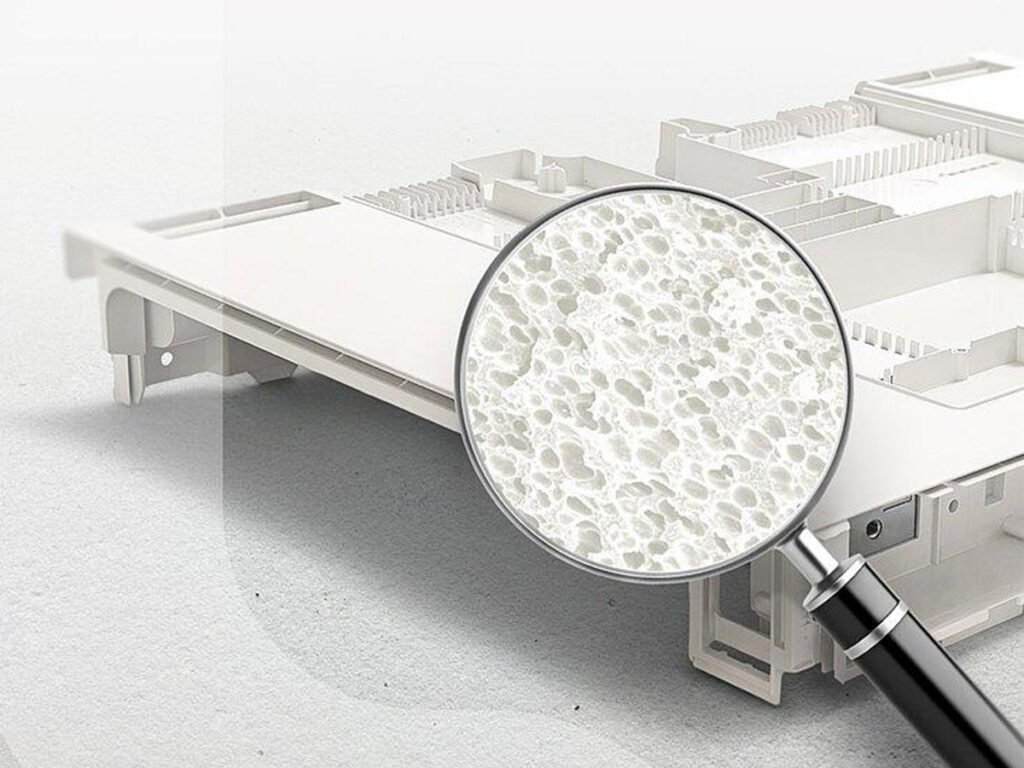
Structural foam molding is an injection molding variant that introduces a chemical or physical blowing agent into the polymer melt, creating a cellular core surrounded by a solid outer skin. Despite the word “foam,” these parts can provide substantial stiffness while using less material than comparable solid parts.
How the Foaming Process Works
As the gas-infused melt enters the mold cavity, the blowing agent expands within the cavity, reducing the need for high packing pressure. The melt cools against the mold walls first, forming a dense skin, while the core expands and solidifies into a cellular structure.
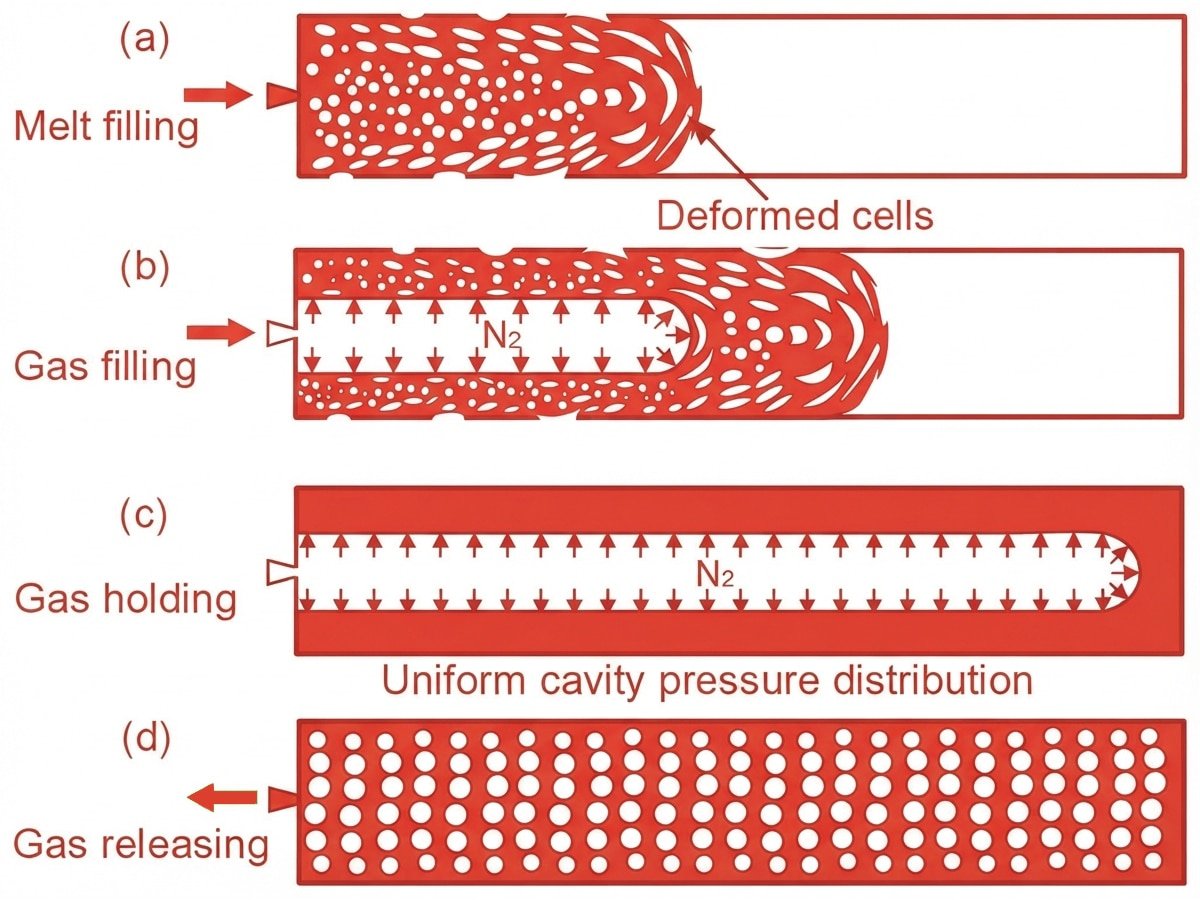
The strength comes partly from how the material is distributed, not simply how much is used. In bending, the outer layers carry much of the load while the center contributes less—the same principle behind an I-beam or corrugated cardboard. By concentrating material near the skin and reducing material in the lower-stress core, structural foam molding can achieve a favorable stiffness-to-weight ratio.
The Structural Foam Molding Process
The foam injection molding process builds on conventional injection molding, but several key steps set it apart:
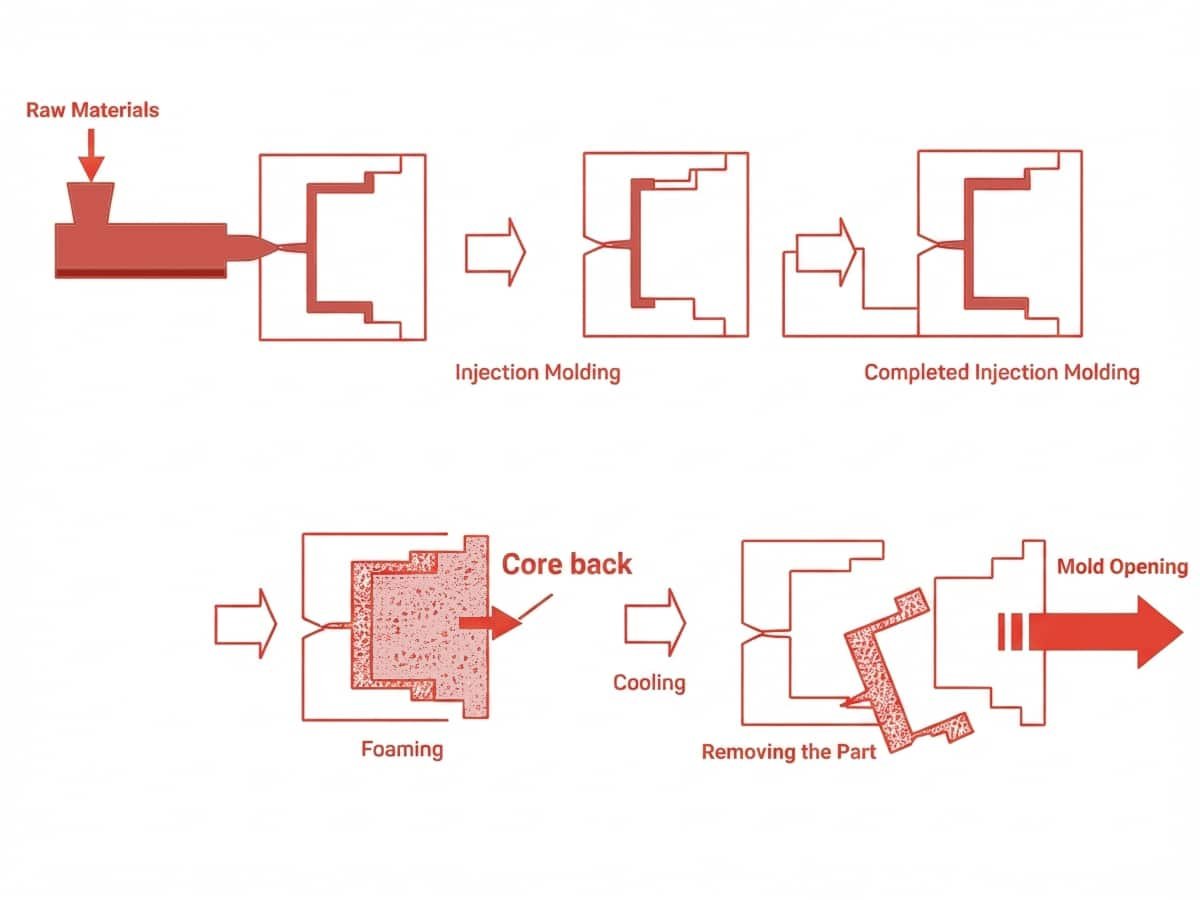
- Material preparation — Pellets are combined with a blowing agent, either a chemical additive that releases gas when heated or a physical gas such as nitrogen introduced during processing.
- Melting and mixing — The polymer is heated and mixed in the barrel until the blowing agent is evenly dispersed through the melt.
- Low-pressure injection — The gas-charged melt is injected into the mold cavity at lower pressure than conventional injection molding, allowing the material to expand and fill the cavity.
- Skin formation — As the melt contacts the cooler mold walls, the outer layer cools and solidifies, forming a dense skin around the expanding core.
- Core expansion — The warmer core continues to expand as the blowing agent releases gas, forming a cellular structure within the solidifying skin.
- Cooling and ejection — The part cools until the skin and core have solidified, then is ejected from the mold for any required secondary finishing.
Advantages of Structural Foam Molding
Beyond the strength-to-weight benefits already discussed, this process offers several practical advantages for certain applications.
Design Freedom for Large Parts
The process is well suited to thick sections and large surface areas, making it practical for bulky components such as enclosures, panels, and structural housings while reducing material use. Learn more about large-part injection molding for other approaches to producing oversized plastic parts.
Reduced Material Costs
Because the foamed core displaces material that would otherwise be solid polymer, parts require less resin per unit volume, which can reduce material costs for large or thick-walled components.
Lower Residual Stress
The lower-pressure filling process can reduce internal stress compared with conventional injection molding, helping improve dimensional stability and reduce warpage in large or flat sections.
Lower Mold Stress
Because the mold is not subjected to the same high packing pressures as conventional injection molding, lower mold clamping forces may be sufficient for some parts, potentially reducing equipment and tooling requirements.
Our guide to injection molding pressures explains how pressure affects mold filling and part quality.
Materials Used in Structural Foam Molding
Not every polymer is well suited to structural foam molding. The material needs sufficient melt strength to support gas expansion and form a stable cellular structure, which makes several thermoplastics the most practical choices:
- High-density polyethylene (HDPE) — Foams well while retaining good chemical resistance and stiffness, making it suitable for tanks, industrial containers, and other large parts.
- Polypropylene (PP) — Combines low density with good stiffness and fatigue resistance, making it a strong choice for enclosures, panels, and automotive components.
- ABS — Provides good impact strength and a relatively smooth surface, making it suitable when appearance matters alongside structural performance.
- Polycarbonate (PC) and PC blends — Provide higher heat resistance and impact strength, making them suitable for electronics housings and other demanding enclosures.
- Polystyrene (PS) — Foams easily and economically, but its lower structural and thermal performance limits it to less demanding applications.
Structural Foam Molding vs. Gas-Assisted Injection Molding
The two processes are often confused because both use gas during molding, but the mechanism and resulting structure are different:
Where the Gas Goes
In structural foam molding, the blowing agent is dispersed throughout the polymer melt, creating a cellular structure within the part’s core. In gas-assisted injection molding, nitrogen is introduced into a partially filled cavity or through the melt, creating hollow channels rather than a distributed foam structure.
What the Part Looks Like Inside
Structural foam parts generally have a solid outer skin and cellular core. Gas-assisted parts remain mostly solid, with hollow channels forming where the gas enters the melt—often along ribs or thicker sections to reduce sink marks and material use.
Surface Finish and Tooling
Structural foam parts can show a textured or swirled surface due to the foaming action near the skin. Gas-assisted parts can provide smoother surfaces while requiring additional equipment and tooling features to control gas penetration and channel placement.
Typical Applications
Structural foam molding is commonly used for larger parts where low weight, stiffness, and dimensional stability are important, such as equipment housings, machine components, and automotive parts. Gas-assisted injection molding is often used for parts with thick sections or long ribs where hollow channels can reduce weight, sink marks, and warpage.
Where Structural Foam Molding Is Used
The combination of large-part capability and structural rigidity has made this process a practical choice across several industries.
Material Handling Equipment
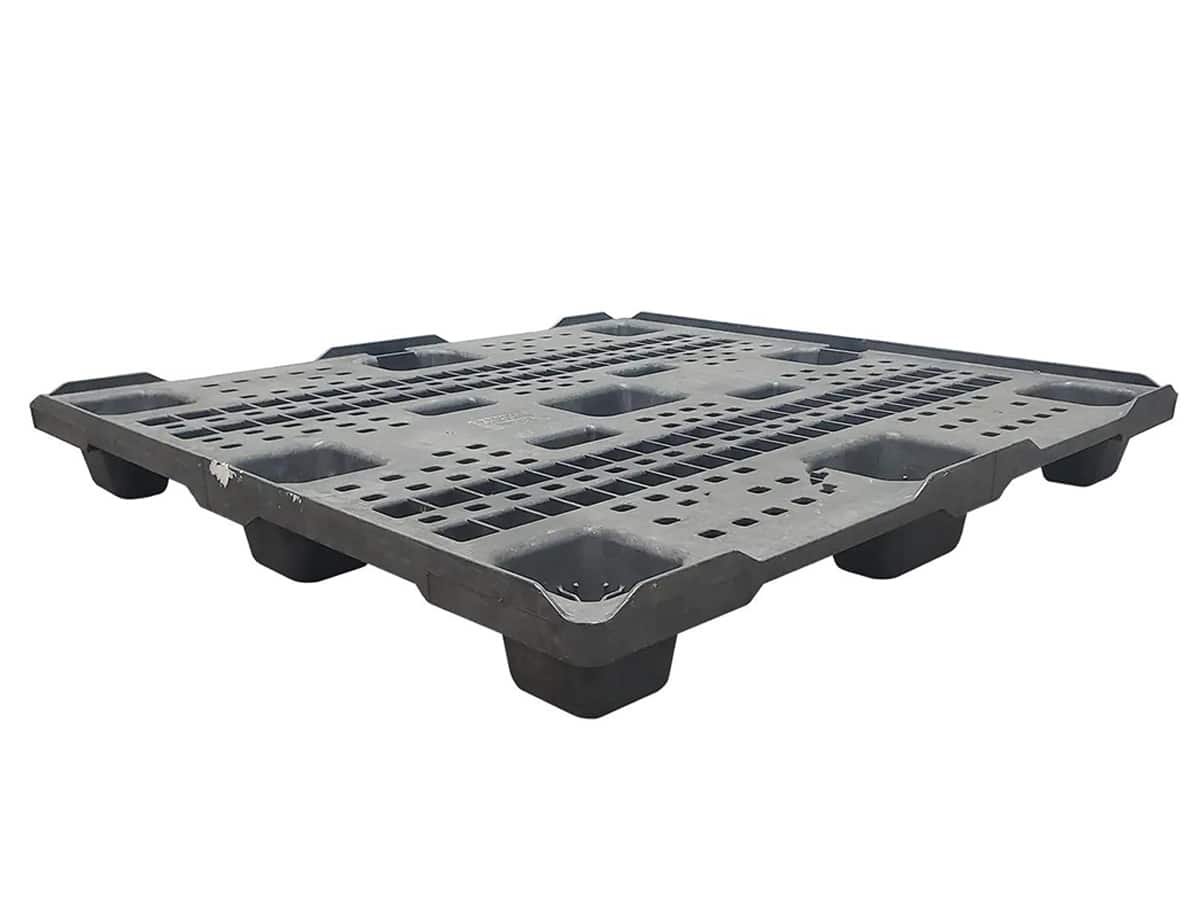
Pallets, dunnage trays, and shipping containers benefit from the process’s ability to produce large, load-bearing parts that withstand repeated stacking and handling without excessive weight.
Medical and Laboratory Equipment
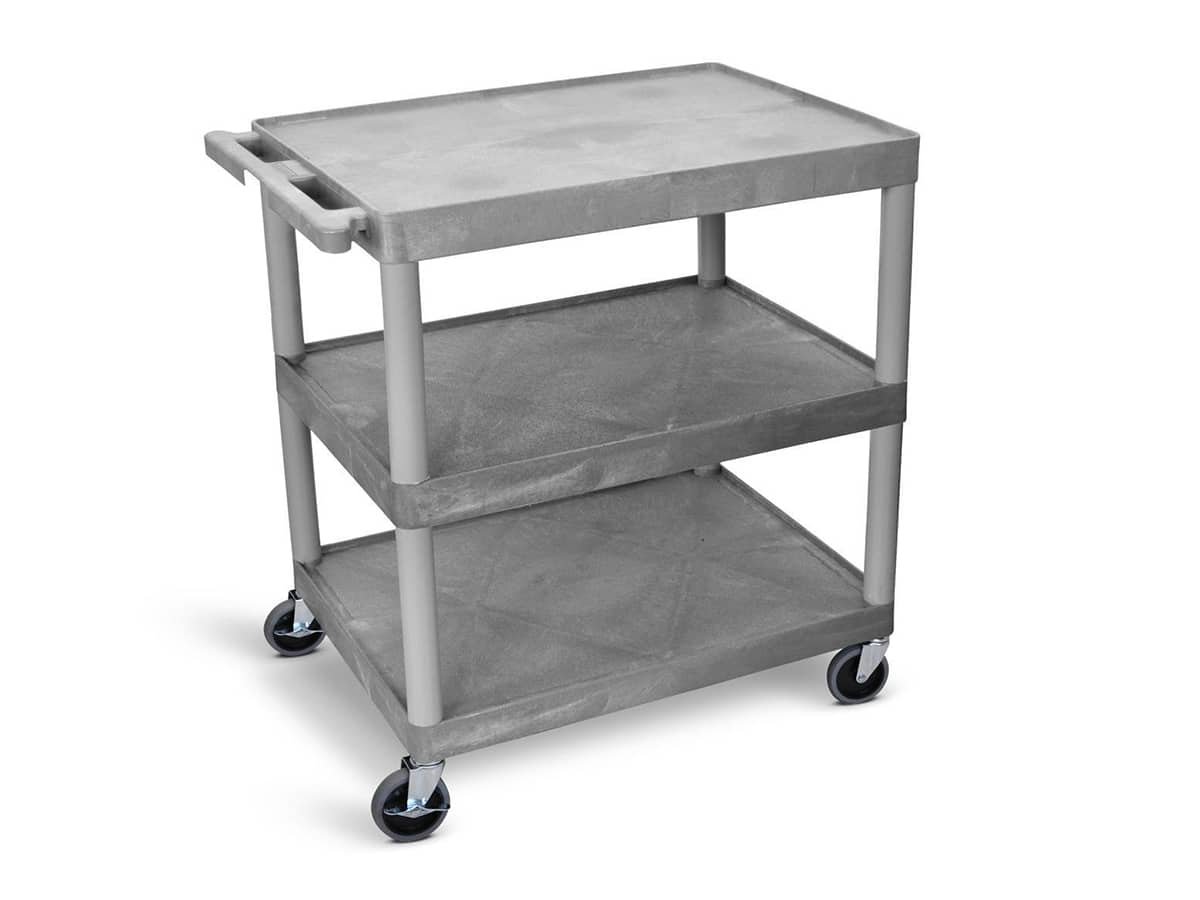
Carts, equipment housings, and mobile stands rely on the process for parts that need to support heavy instruments while remaining light enough to move easily.
Recreational and Marine Products
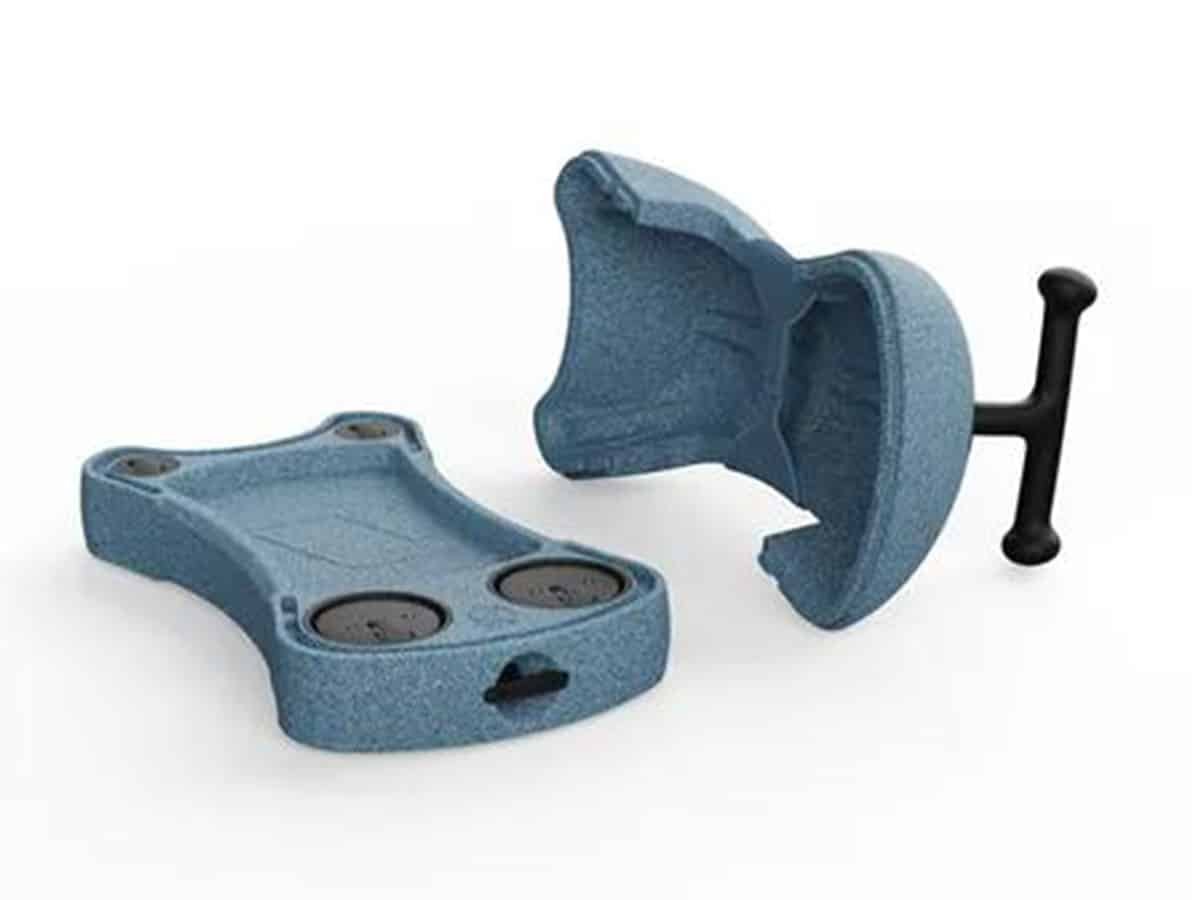
Playground components, marine equipment housings, and other outdoor products take advantage of the process’s resistance to warping and its ability to produce large, rigid structures that withstand repeated use.
Signage and Display Structures
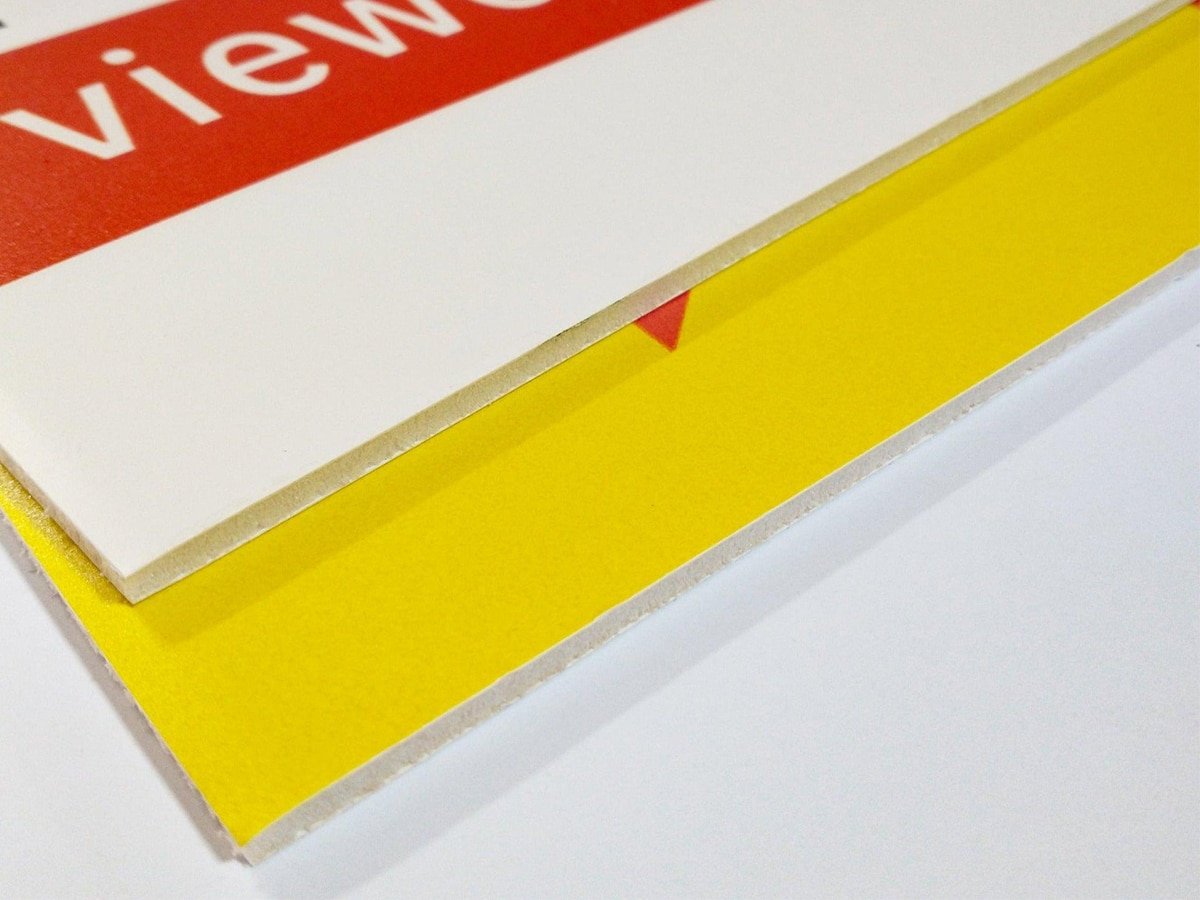
Large-format signs and display structures use structural foam to achieve rigidity across large spans without the material volume required by comparable solid parts.
Conclusion
Structural foam molding offers a practical way to reduce part weight and material use while maintaining the rigidity needed for large or thick-walled parts. If you’re evaluating whether this process fits your next project, our plastic injection molding team can help assess material options, tooling requirements, and part design based on your specifications.