When plastic parts need to be joined securely, heat staking offers an alternative to screws, adhesives, and snap fits. The process reshapes molded plastic features to hold components together while reducing the need for additional hardware. This article examines its benefits, limitations, and alternatives.
What Is Heat Staking?
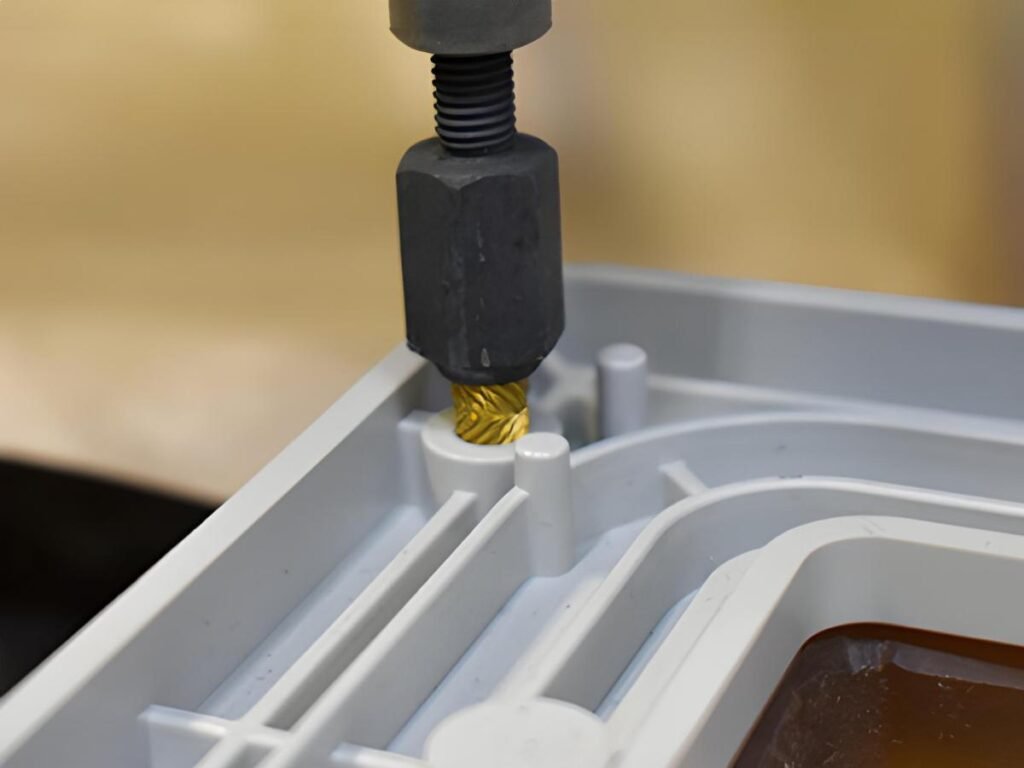
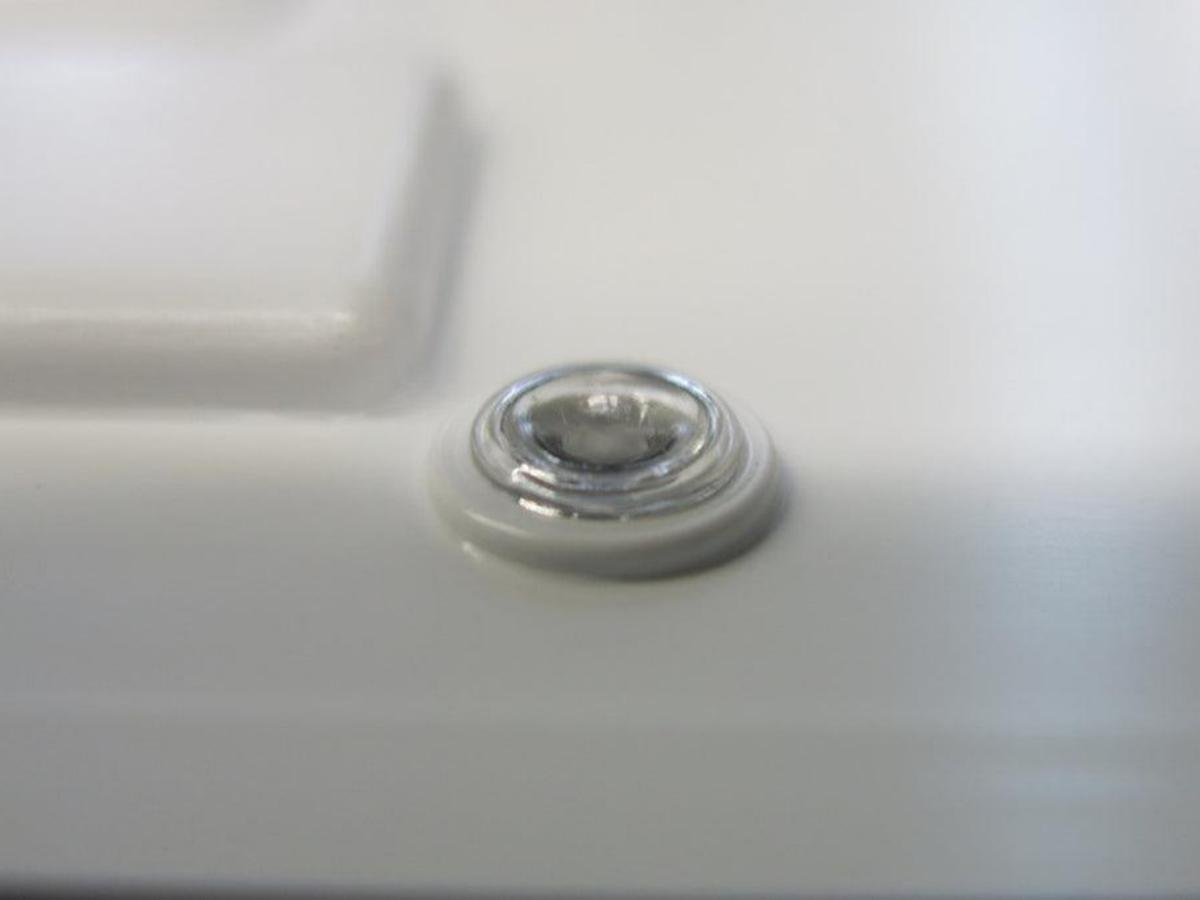
Heat staking is a thermoplastic joining process that uses heat and pressure to permanently secure one component to another. During the process, a plastic post or boss is heated until it softens, then pressed into a predetermined shape to form a retaining head that holds the mating component in place.
Heat Staking Process
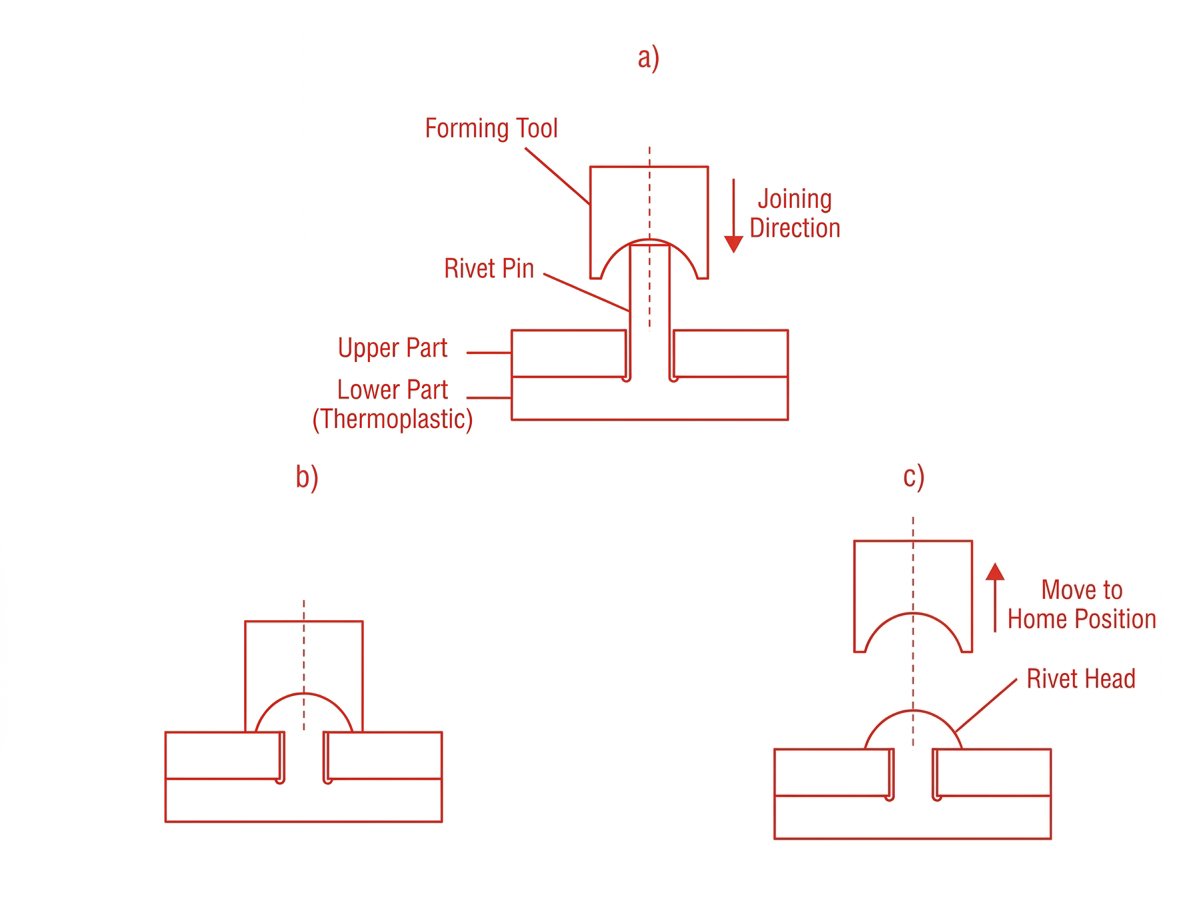
The heat staking process combines thermal energy, mechanical pressure, and controlled cooling. Each stage affects the consistency and strength of the finished joint.
- Loading: Position the plastic component and mating part in a dedicated fixture.
- Heating: Bring the staking tip into contact with the plastic boss to soften its exposed section.
- Forming: Apply a predetermined force and displacement to create the retaining head.
- Cooling: Allow the reshaped plastic to solidify while maintaining its formed geometry.
- Verification: Check the finished head dimensions, surface condition, and retention performance.
Benefits of Heat Staking
Heat stake offers several advantages for assembling thermoplastic components, particularly in products that require permanent mechanical fastening without additional hardware.
No Additional Fasteners
Thermal staking uses molded plastic features to secure components, reducing the need for separate screws, nuts, rivets, or other fastening hardware.
Permanent Mechanical Joints
The formed plastic head creates a mechanical interlock that helps prevent component separation during normal operation.
Short Assembly Cycles
Automated heat staking equipment can perform heating and forming in a controlled sequence, supporting efficient and repeatable assembly.
Suitable for Dissimilar Materials
The process can join thermoplastic components with metal inserts, brackets, electronic components, and other materials without requiring them to share the same bonding properties.
Heat Staking Design Guide
The dimensions of the plastic boss, mating component, and surrounding structures determine how effectively the softened plastic can form a retaining head. Consider the following design guidelines when preparing parts for heat staking.
Plastic Post Diameter and Height
The plastic post must contain enough material to form the retaining head without excessive deformation at its base. Its diameter and protruding height should be matched to the mating component thickness and required head profile.
- Post diameter: 2–5 mm
- Protrusion height: 1.5–2.0 × post diameter
- Draft angle: 0.5–1° per side
Boss Base Geometry
The boss base supports the post during forming and transfers mechanical loads into the surrounding plastic structure. Rounded transitions help reduce stress concentration, while a hollow or cored structure can prevent excessive material accumulation and sink marks.
Our guide to injection molded boss design provides further details on post geometry, wall thickness, root radii, and other structural considerations.
- Boss base diameter: 2–3 × post diameter
- Root radius: 0.4 mm minimum
- Avoid abrupt wall-thickness transitions.
Mating Hole Clearance
The mating component needs sufficient clearance for the plastic post to pass through without interference. However, an oversized hole may reduce the overlap between the formed head and the surrounding surface, weakening mechanical retention.
- Hole diameter: 1.10–1.25 × post diameter
- Add a small chamfer to guide component alignment.
- Check hole tolerances against post diameter variations.
Spacing and Assembly Clearance
Multiple staking points need sufficient separation to prevent overlapping heat-affected areas and interference between forming tools. The assembly fixture must also provide enough access for the staking head to reach each post.
- Edge distance: approximately 2 × post diameter minimum.
- Keep adjacent staking points sufficiently separated.
- Reserve clearance for the heating tip and fixture.
Formed Head Geometry
The final head profile determines how the plastic overlaps and retains the mating component. Dome, flat, flush, and rosette configurations serve different assembly and appearance requirements. The selected profile should also provide enough contact area without requiring excessive plastic deformation.
- Dome head: General-purpose mechanical retention.
- Flat head: Low-profile assembly surfaces.
- Flush head: Assemblies requiring a level surface.
- Rosette head: Applications requiring a wider formed profile.
Heat Staking vs. Other Plastic Joining Methods
Hot staking is not the only option for assembling plastic parts. Comparing it with welding, mechanical fastening, and adhesive bonding helps determine which method best suits a particular product structure and production requirement.
| Joining Method | Joining Principle | Disassemblable | Main Advantage | Main Limitation |
|---|---|---|---|---|
| Heat Staking | Heat and reshape plastic posts | No | No separate fasteners | Requires molded posts |
| Ultrasonic Welding | High-frequency vibration | No | Fast joining cycle | Requires compatible joint design |
| Hot Plate Welding | Heated surfaces pressed together | No | Strong, continuous joints | Requires accessible joining surfaces |
| Screw Fastening | Threaded mechanical engagement | Yes | Easy maintenance | Additional hardware |
| Adhesive Bonding | Chemical adhesion | Usually no | Joins dissimilar materials | Curing and surface preparation |
| Riveting | Mechanical deformation of rivets | Usually no | Reliable mechanical retention | Requires separate rivets |
Conclusion
Heat staking provides a practical way to secure plastic components without additional mechanical fasteners. However, joint quality depends on proper boss geometry, material selection, and forming conditions. Zhongde provides custom plastic injection molding services to produce components with application-specific assembly features. Send us your drawings for a manufacturing assessment.