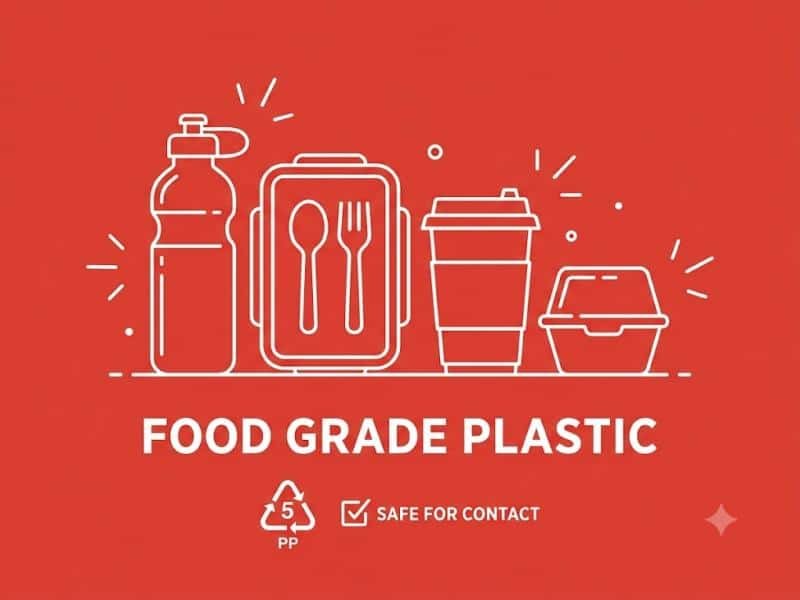
If you pick up a plastic lunch box, a water bottle, or even a disposable spoon, you will often see the phrase “food grade” printed somewhere on it. It sounds reassuring—but it also raises a simple question: what exactly makes a plastic “food grade”? Is it a special type of plastic, or just a safety label?
What Kinds of Plastic Materials Can Be Described as Food Grade Plastic?
“Food grade plastic” is not a specific material. It is more like a permission label than a material name. It tells you that a plastic is considered safe for food contact under certain conditions, based on testing and regulatory standards, rather than what it is chemically made of.
That means the same type of plastic can be food grade in one form, but not in another. For example, what matters is not just the base polymer, but also how it is formulated, processed, and whether any additives could migrate into food. A material that works perfectly for a cold drink bottle might not be suitable for microwave heating or oily food contact.
So instead of thinking of food grade plastic as a single material, it is more accurate to think of it as a status—a result of testing, compliance, and real-world performance in contact with food.
What Are the Common Food Grade Plastics?
In practice, most food grade plastics come from a small group of well-established materials that have been widely tested in packaging, storage, and kitchen applications. These materials are chosen because their behavior is predictable, stable, and easier to certify under food contact regulations.
Polyethylene (PE)
Polyethylene is one of the most common food grade plastics, often found in plastic bags, squeeze bottles, and food containers. It is chemically stable and resistant to moisture, which makes it suitable for both packaging and storage.
Depending on density (LDPE or HDPE), it can be flexible or relatively rigid, but in all cases it remains lightweight and easy to process.
Polypropylene (PP)
Polypropylene is probably the most recognizable food grade plastic in daily life. It is commonly used in microwave-safe containers, yogurt cups, and reusable food boxes.
Its main advantage is heat resistance compared to many other common plastics. This makes it suitable for applications that involve hot filling or reheating, as long as the design stays within its temperature limits.
Polyethylene Terephthalate (PET)
PET is most commonly found in beverage bottles and food packaging. It offers good clarity, strength, and gas barrier properties, which help preserve freshness and extend shelf life.
Because of its transparency and lightweight nature, it is often used in single-use or semi-reusable food packaging.
Polystyrene (PS)
Polystyrene is often used in disposable cups, trays, and takeaway food packaging. It is lightweight and cost-effective, making it suitable for single-use applications.
However, its heat resistance is relatively limited, so it is generally not used for high-temperature food contact.
Polyvinyl Chloride (PVC)
Certain grades of PVC can be used in food packaging applications such as cling films and sealed containers. It provides good flexibility and transparency, but its use is more controlled due to formulation and additive considerations.
Food-grade compliance depends heavily on the specific formulation used.
Polyamide (PA / Nylon)
Certain grades of nylon are used in food processing equipment and mechanical parts that may come into indirect contact with food. It offers good wear resistance and mechanical strength, making it suitable for functional components rather than packaging.
How to Choose the Right Food Grade Plastic for Your Application?
Choosing a food grade plastic is not just about picking a material that is “safe for food contact.” In real applications, different environments, temperatures, and usage patterns can lead to very different performance requirements. That means the right choice always depends on how and where the plastic will actually be used.
Start with the Temperature Environment
Temperature is often the first and most important factor. If the product will be used in cold storage or room temperature conditions, materials like PET or PE may be sufficient. However, if it needs to withstand hot water, microwaving, or sterilization, PP or certain engineering plastics like PEEK are more suitable.
In short, higher temperature usually requires higher thermal stability.
Understand Food Contact Type
Not all food contact situations are the same. Some plastics are in direct contact with food, such as containers and cutlery, while others are only used in packaging layers or equipment housings.
Direct-contact applications usually require stricter material selection and certification, while indirect-contact parts may have more flexibility in material choice.
Consider Chemical Resistance and Cleaning Methods
Food-related products often need to withstand oils, acids, detergents, or repeated washing cycles. In industrial food processing environments, chemical resistance becomes even more important.
Materials such as PP and HDPE generally perform well in these conditions, while some plastics may degrade over time when exposed to harsh cleaning agents.
Balance Mechanical Strength and Flexibility
If the product is designed for repeated use, such as reusable containers or kitchen tools, mechanical strength becomes important. Materials like PP, nylon (PA), or certain reinforced plastics offer better durability compared to single-use options.
For disposable products, materials like PET or PS may be more cost-effective.
Check Compliance and Regulatory Requirements
Even if a material performs well technically, it must still meet relevant food safety standards such as FDA or EU regulations.
Different regions may have different compliance requirements, and additives or processing conditions can also affect certification. This is why material selection often needs to be aligned with target market regulations from the beginning.
Conclusion
Food grade plastics are not defined by a single material, but by how a material performs under real food contact conditions. Temperature resistance, food type, durability, and regulatory compliance all work together to determine whether a plastic is suitable for a specific application. If you want to go deeper into selection logic, our plastic material selection guide provides a more detailed breakdown of how to compare different engineering plastics.
For projects that require custom parts or food-related components, our plastic materials service can support material selection, prototyping, and production based on your requirements. At Zhongde, we focus on helping you turn application needs into reliable, manufacturable plastic solutions.
Start A New Project Right Now!