Anyone who has spent time at a lathe has probably experienced the frustration of thread cutting: a thread that refuses to fit correctly, a tap that snaps halfway through a cut, or a part returned because the thread engagement is not quite right. Single-point threading can seem challenging—even intimidating—for machinists used to quicker and more forgiving methods. But with a solid understanding of the cutting principles involved, it becomes one of the most dependable techniques for producing accurate threads, especially when standard taps and dies cannot meet the required specifications.
What Is Single Point Threading?
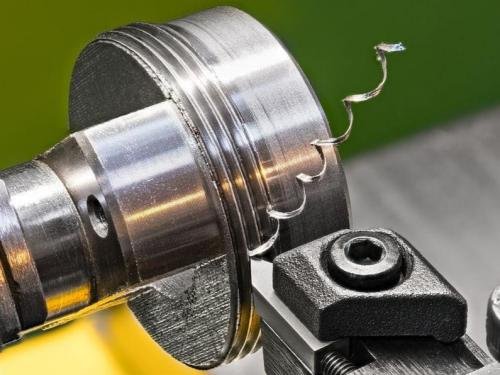
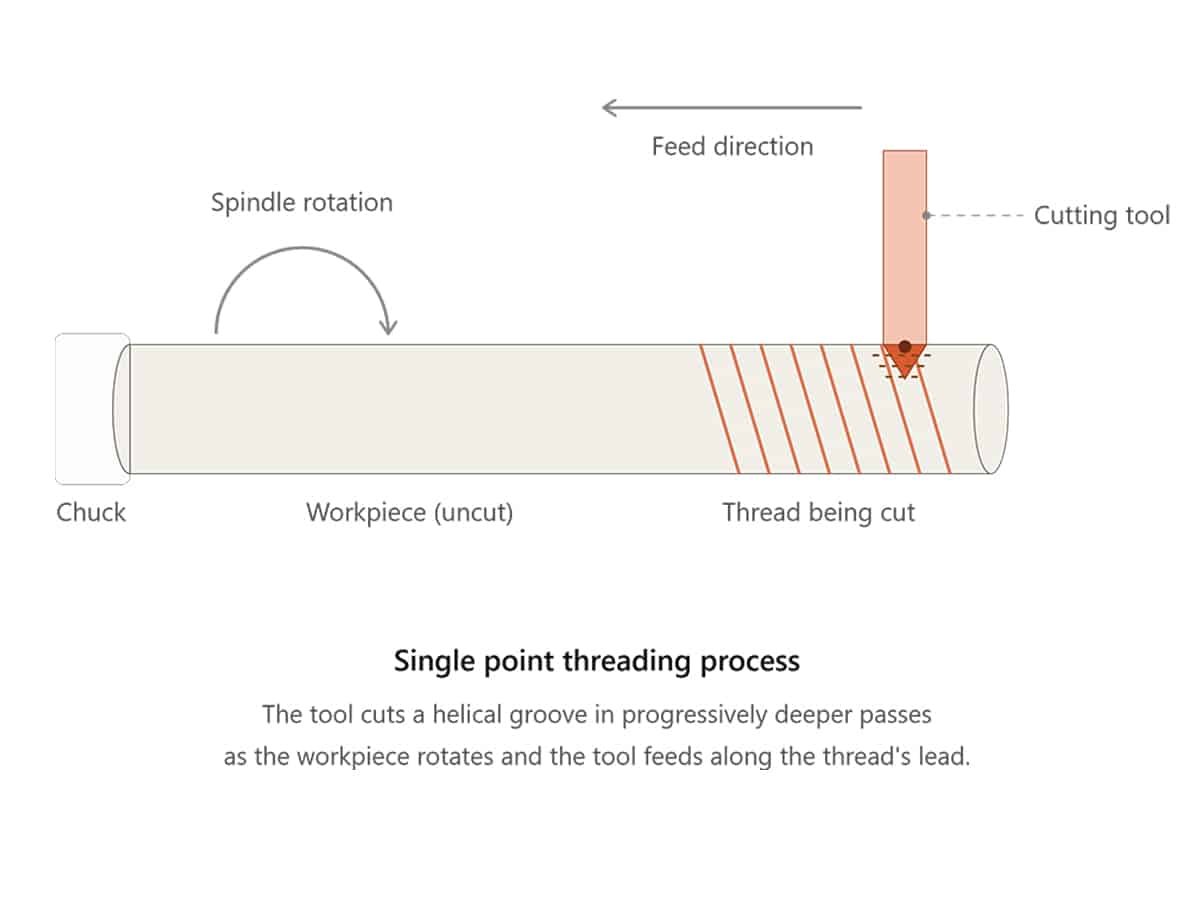
Single point threading is a machining process in which a single-point cutting tool, typically fitted with a threading insert, cuts a helical groove into a workpiece through multiple passes. With each pass, the tool removes a small amount of material, gradually forming the thread until it reaches the final depth and profile.
Unlike tapping or die cutting, which rely on pre-formed cutting tools to create a specific thread geometry, single point threading builds the thread step by step. During the process, the lathe spindle and cutting tool move in precise synchronization, allowing the tool to advance a controlled distance along the workpiece with each revolution and produce accurate internal or external threads.
Why Use Single Point Threading?
Given that taps and dies can cut threads faster and require less setup, why would a machinist choose the more demanding single point method? The answer comes down to precision, flexibility, and control—qualities that become increasingly important when a job moves beyond standard, off-the-shelf fasteners.
Custom and Non-Standard Threads
Not every application calls for a standard UNC or UNF thread. Aerospace components, replacement parts for vintage machinery, and specialized industrial equipment often require thread pitches, diameters, or profiles that are not available in standard catalogs.
Types of threads can vary significantly depending on the application, from standard V-threads to Acme, buttress, and other specialized profiles. Single point threading allows machinists to produce a wide range of thread specifications by adjusting the tool geometry and feed rate, reducing the need for dedicated taps or dies.
Tighter Tolerances
Because each cutting pass is controlled independently, single point threading provides precise control over thread depth, fit, and final dimensions. This is especially important in applications where thread engagement, backlash, or sealing performance is critical, such as hydraulic fittings, precision instruments, and mating components that must assemble smoothly with minimal clearance.
Large or Unusual Diameters
Taps and dies are practical only within certain size ranges. Beyond that point, they can become expensive, difficult to source, or unavailable. Single point threading is not limited by the same tooling constraints, allowing a lathe to produce threads on components ranging from small precision parts to large-diameter fittings using the same basic process.
Repairing Damaged Threads
When an existing thread is worn, stripped, or slightly out of specification, single point threading allows a machinist to restore or re-cut the thread to a usable condition. Unlike fixed-profile taps or dies, the cutting tool can be adjusted to match the actual condition of the part.
Better Surface Finish and Thread Quality
Because the cutting action is gradual and the final passes can be performed with very light cuts, single point threading provides excellent control over thread accuracy and surface finish. This is particularly useful when machining tougher materials where tapping may increase the risk of tool wear, material tearing, or galling.
Step-by-Step: How Single Point Threading Works
The following steps outline a typical workflow used by machinists, from initial thread planning to final inspection. While specific parameters vary depending on the thread specification, material, and equipment used, following a consistent process helps achieve accurate and repeatable results.
Determine the Thread Specifications
Before machining begins, the required thread parameters are defined, including pitch (or threads per inch), major diameter, minor diameter, thread angle, and tolerance requirements. These specifications determine the lathe settings and tool selection.
Set Up the Lathe and Select the Cutting Tool
The lathe is configured according to the required thread pitch. On manual lathes, this may involve adjusting change gears or the quick-change gearbox, while CNC lathes use programmed threading cycles. A suitable threading tool or insert is then selected based on the required thread profile and mounted accurately at the correct center height.
Make a Test Cut and Begin Thread Cutting
A light test pass is often used to confirm that the pitch and setup are correct before deeper cuts are made. Once verified, the threading cycle begins. On manual lathes, the half-nut engages the leadscrew to maintain synchronization between spindle rotation and tool movement.
Cut the Thread Through Multiple Passes
The cutting tool gradually advances deeper with each pass, removing a small amount of material until the thread reaches its final depth and profile. Early passes remove more material, while later passes use lighter cuts to refine the thread form and improve surface finish.
Inspect and Fine-Tune the Thread
During machining, the thread is checked using thread gauges or measurement tools to ensure it is approaching the required dimensions. Adjustments can be made before the final passes to avoid over-cutting or under-cutting.
Perform Final Pass and Verify the Finished Thread
A final light finishing pass improves the thread surface and removes minor imperfections. The completed thread is then inspected for proper fit, depth, and profile before moving to assembly or further machining.
Single Point Threading for Custom CNC Machined Parts
While the fundamentals of single point threading remain the same whether performed manually or on a CNC lathe, CNC threading provides greater consistency, repeatability, and process control, making it especially suitable for custom parts production.
Programmed Precision
On a CNC lathe, thread pitch, depth, angle, and cutting sequence are defined directly in the machining program rather than adjusted manually. This reduces variation caused by manual setup and allows the machine to follow the same controlled cutting path for every pass and every part. Whether producing a single prototype or a batch of custom com
Ideal for Low-Volume and Prototype Work
Custom parts often involve small batches, replacement components, or first-article prototypes—applications where creating a dedicated tap or die may not be practical. CNC single point threading can produce specialized thread specifications using a suitable threading tool and programmed toolpath, making it a flexible option for low-volume production.
Consistency Across Complex Geometries
Many custom CNC parts combine threads with other features, such as tapers, shoulders, grooves, or multiple diameters, within the same component. CNC threading cycles can be integrated into the overall machining program, helping maintain accurate relationships between the thread and other critical features while reducing additional setups.
Repeatable Quality Control
Because threading parameters are controlled through the machining program, CNC single point threading is easier to document, repeat, and verify compared with processes that rely heavily on manual adjustments. This is especially valuable for applications where consistent specifications and traceable quality control are required.
Handling Unusual Materials and Thread Forms
Custom components may require threads in materials such as stainless steel, titanium, engineering plastics, or other specialized materials, as well as thread forms that are not available from standard tooling catalogs. CNC single point threading allows cutting parameters such as speed, feed rate, and pass depth to be adjusted for the specific material and thread design, providing greater flexibility than fixed-profile tooling.
Conclusion
Single point threading requires careful setup, precise control, and a thorough understanding of the machining process. However, this additional effort provides advantages in precision, flexibility, and repeatability, especially for custom thread requirements and applications where standard tooling may not be suitable.
At Zhongde, we provide custom CNC machining services for prototypes and production parts with specialized thread requirements, complex geometries, and tight tolerances. Whether you need a single custom component or a small batch of precision-machined parts, our team can help transform your design specifications into reliable finished parts.