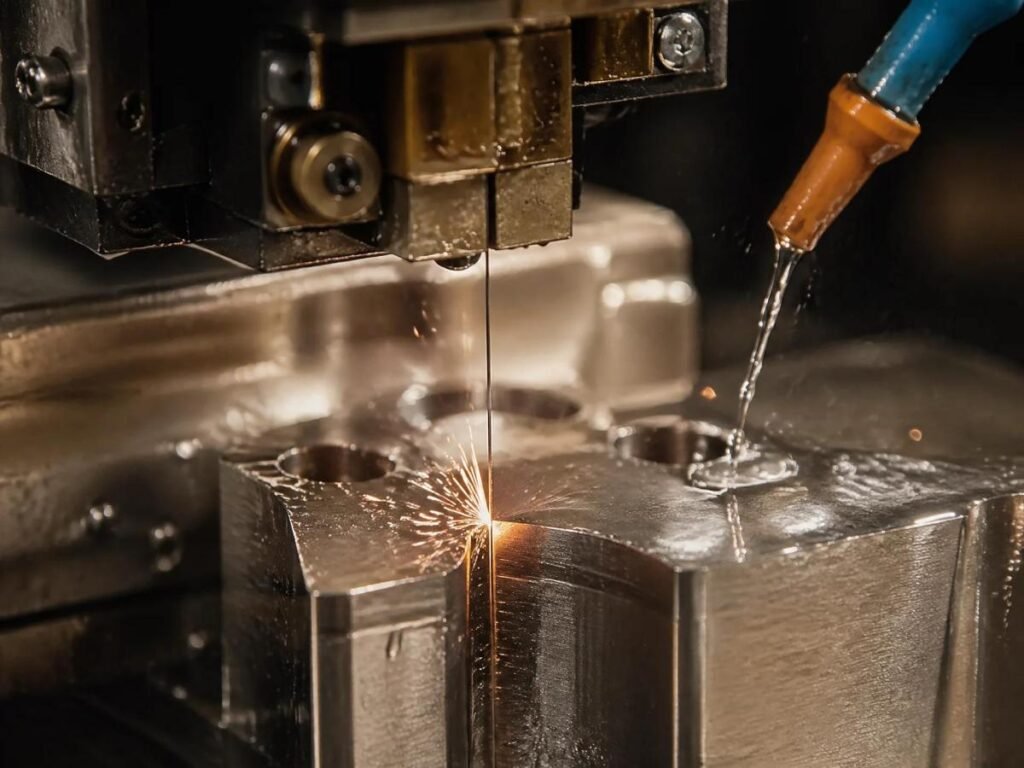
Designers sometimes need features that conventional cutters cannot reach, such as thin slots, deep cavities, and tiny radii. Electrical discharge machining (EDM) removes material using electrical discharges, making these features possible. Learn how the process works and how to plan your next order.
What Is Electrical Discharge Machining?
Electrical discharge machining (EDM) is a thermal process that removes material from electrically conductive workpieces using controlled electrical discharges. The tool electrode does not contact the workpiece. Each spark removes a small amount of material, gradually forming precise cavities, slots, and profiles.
Electrical Discharge Machining Process
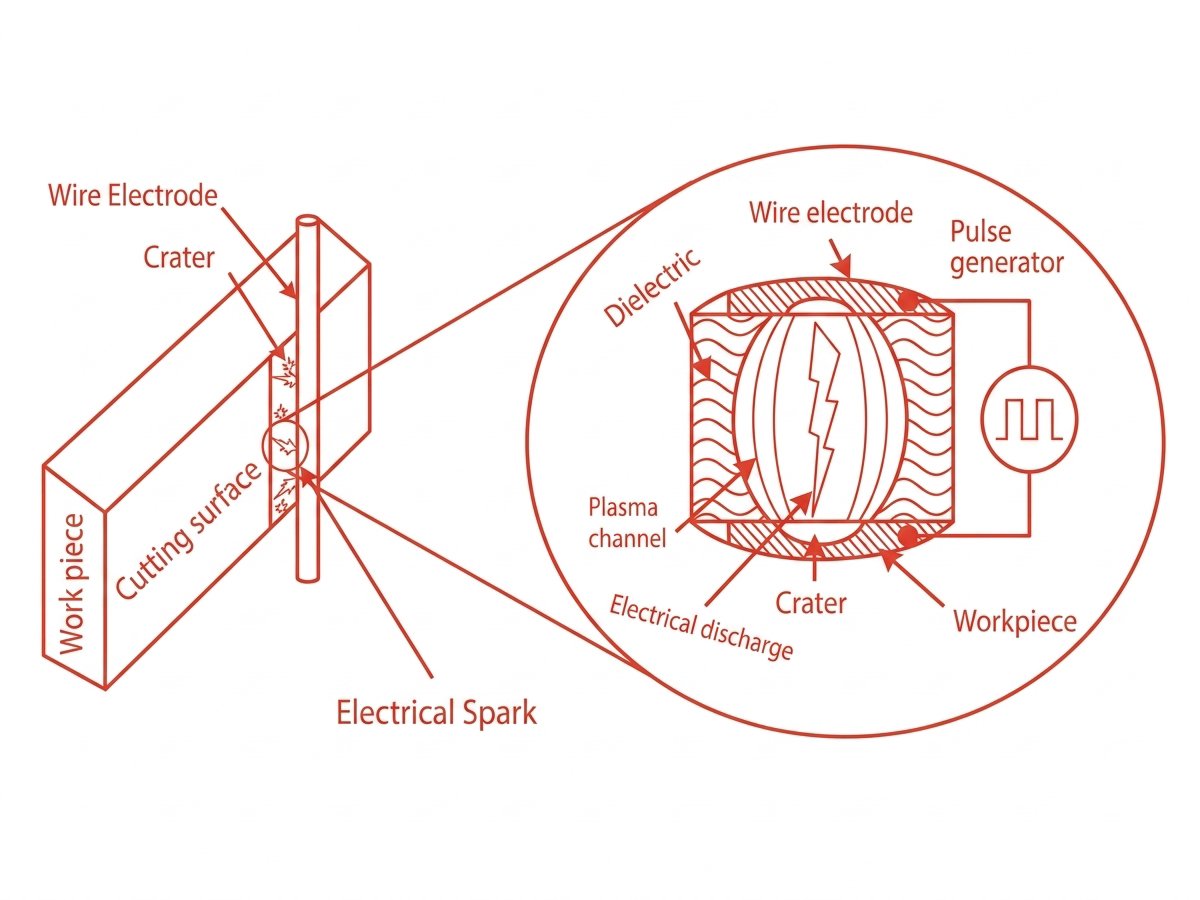
EDM removes material through repeated electrical discharges across a small gap, typically around 0.01–0.5 mm. A dielectric fluid fills the gap between the electrode (the wire electrode shown above) and the workpiece. It insulates the gap, cools the machining area, and flushes away debris. Each cycle follows five steps:
- Voltage is applied. The pulse generator applies voltage across the gap while the servo system positions the wire to maintain the required clearance.
- A discharge forms. The dielectric breaks down, forming a plasma channel between the wire and workpiece and generating an electrical spark.
- Material is removed. The spark generates intense localized heat, melting and partly vaporizing a small amount of workpiece material.
- The pulse stops. The plasma channel collapses. The dielectric cools the area and flushes away debris, leaving a small crater on the workpiece surface.
- The cycle repeats. Thousands of discharges occur in rapid succession as the wire follows the programmed path and the servo system maintains the discharge gap.
Main Components of an EDM Machine
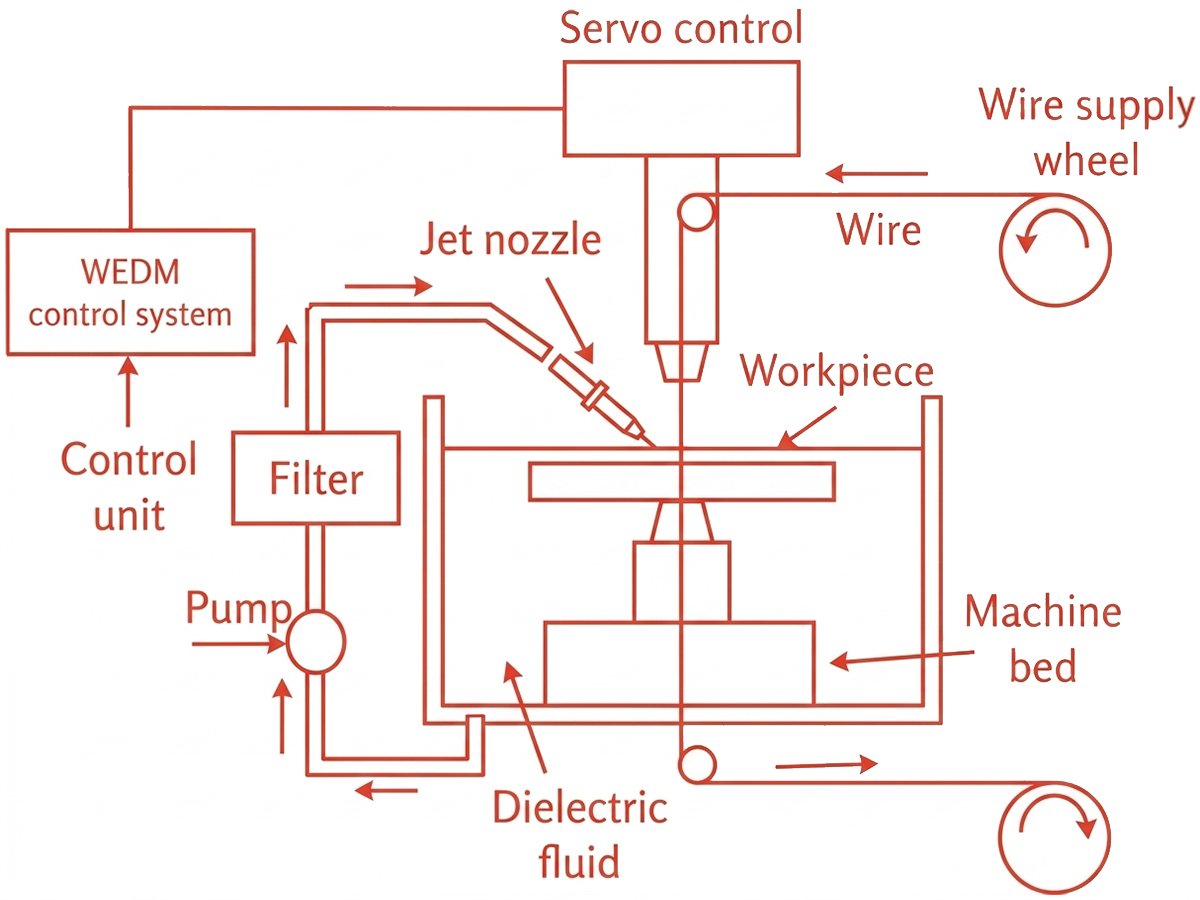
EDM machines share several core systems that control electrical discharges, remove debris, and maintain machining accuracy.
- Pulse generator (power supply). Controls pulse voltage, current, and duration, which set the material removal rate and surface finish.
- Electrode. Carries the electrical discharge to the workpiece. Sinker EDM commonly uses graphite or copper electrodes, and wire EDM uses a thin conductive wire, often brass.
- Wire feed system. In wire EDM, a supply wheel feeds fresh wire through the cut while a take-up wheel collects the used wire, so the cutting edge stays consistent.
- Dielectric system. Includes a tank, pump, and filter. Wire EDM typically uses deionized water, and sinker EDM uses hydrocarbon oil. The fluid insulates the gap, cools the machining area, and removes debris. A jet nozzle directs the flow to the cutting zone.
- Servo and CNC control. The servo control maintains the discharge gap, and the control system moves the wire along the programmed path.
- Machine bed and workholding. Secure and accurately position the workpiece inside the tank, helping maintain dimensional accuracy.
Types of Electrical Discharge Machining
EDM has three main types, each suited to different features and machining requirements.
Sinker EDM
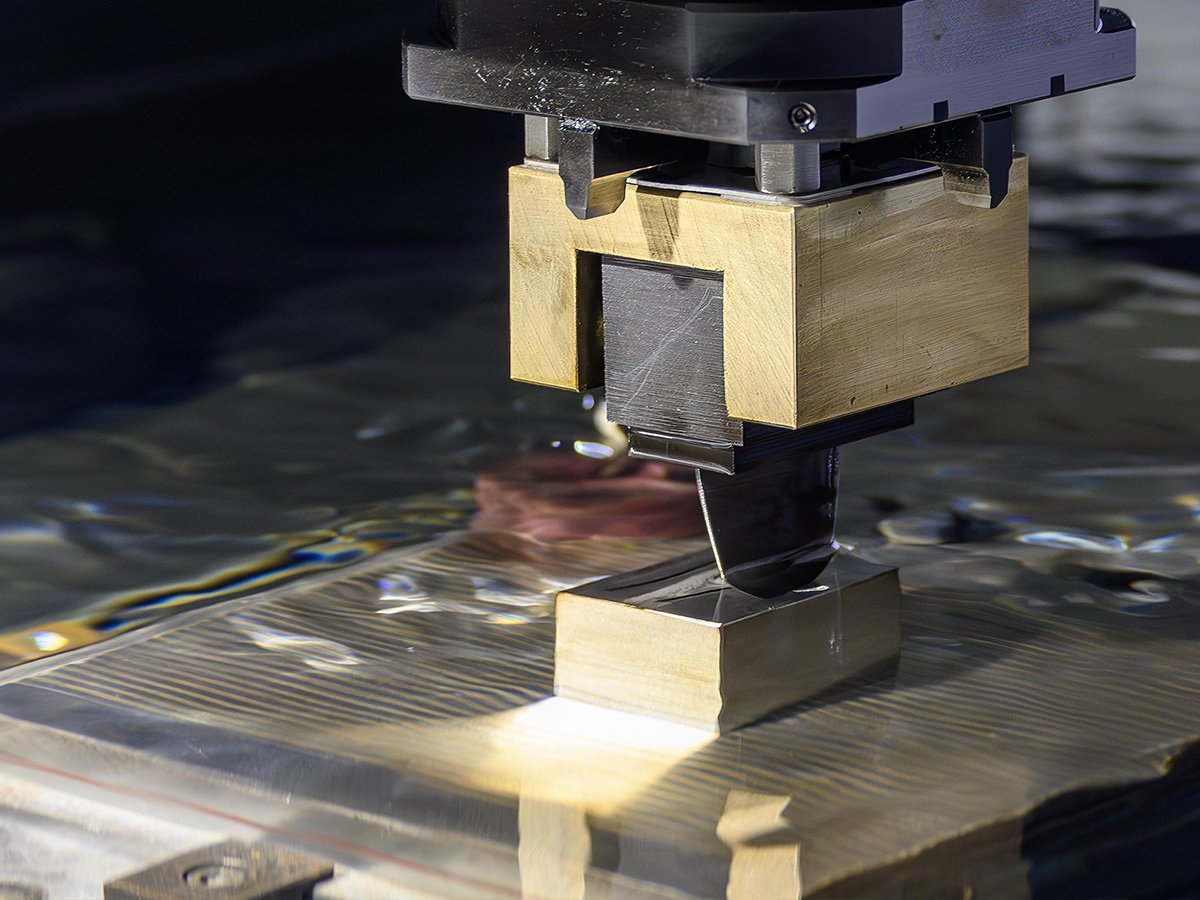
Sinker EDM, also called ram or die-sinking EDM, uses a shaped graphite or copper electrode to form a matching cavity in the workpiece, typically in an oil dielectric. It is commonly used for injection mold cavities, forging dies, and blind features with sharp internal corners.
Wire EDM
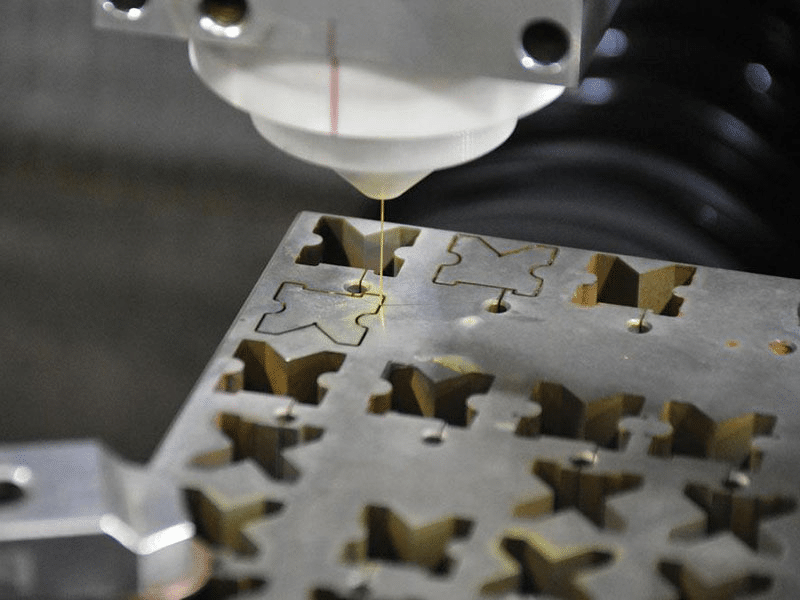
Wire EDM uses a continuously fed wire, typically 0.1–0.3 mm in diameter, to cut the workpiece along a programmed path. Deionized water serves as the dielectric. It is suitable for punches, dies, precision inserts, and tapered profiles.
Hole-Drilling EDM
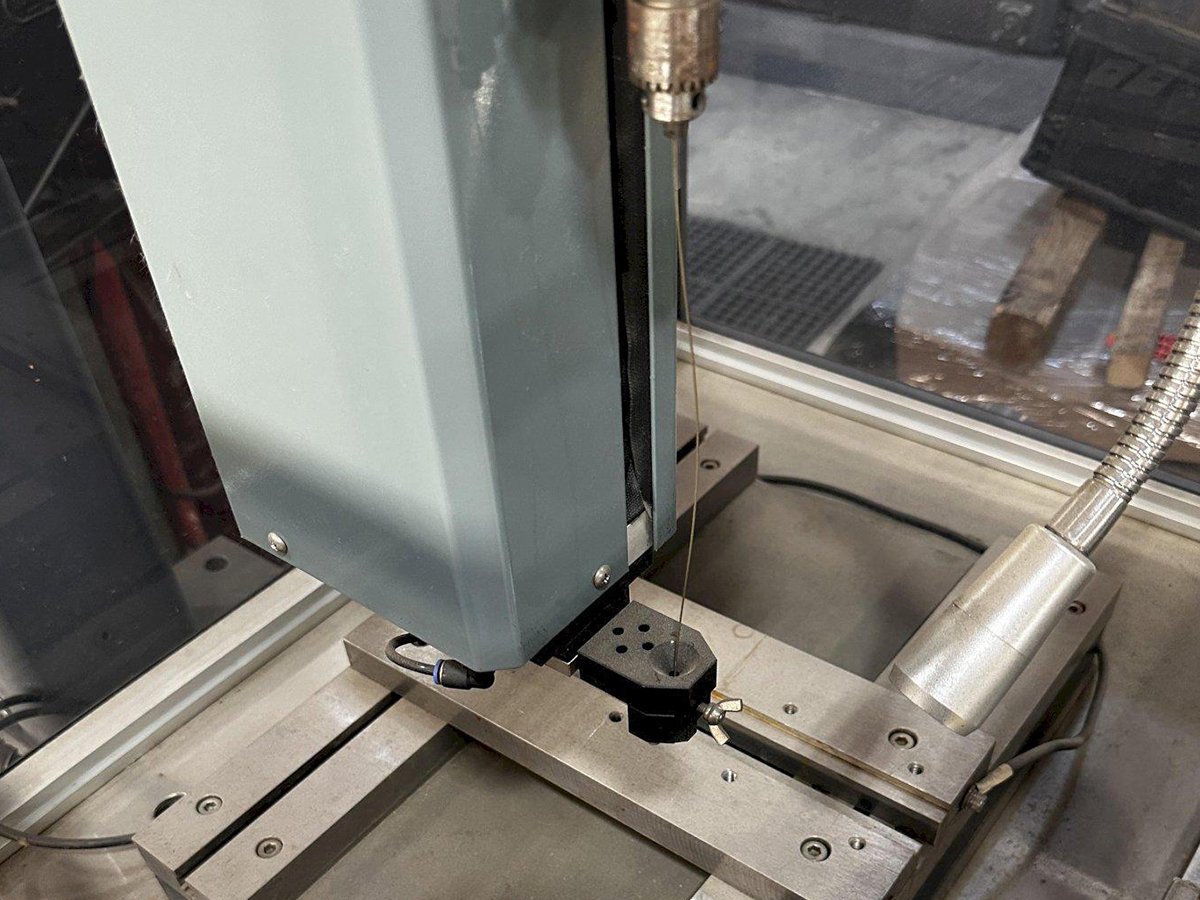
Hole-drilling EDM, also called fast-hole or small-hole EDM, uses a rotating tubular electrode with dielectric fluid flowing through its center. It produces small, deep holes in hardened metals and can machine angled or curved surfaces. Typical applications include wire EDM start holes and cooling holes in turbine components.
Benefits of Electrical Discharge Machining
EDM discharge machining is useful when conventional cutting struggles with material hardness, delicate features, or complex geometries. Its main benefits include:
Machines Hard Materials
EDM can machine electrically conductive materials regardless of hardness, including tool steel, carbide, titanium, and Inconel. It can also machine parts after heat treatment, reducing the risk of distortion during subsequent hardening.
No Cutting Forces
The electrode does not contact the workpiece, eliminating conventional cutting forces. This helps protect thin walls, delicate ribs, and fragile features from tool pressure and deflection.
Complex Geometries
EDM can produce narrow slots, deep cavities, sharp internal corners, and fine details that are difficult to reach with conventional cutting tools.
Tight Tolerances
Wire EDM can achieve tolerances around ±0.005 mm (±0.0002 in) under suitable conditions. Its accuracy makes it suitable for precision inserts, gauges, and mold components.
Fine Surface Finish
Low-energy finishing passes can achieve surface roughness below Ra 0.4 µm (16 µin), depending on the material and machining conditions. Some mold surfaces require little additional polishing.
Limitations of EDM
Consider these limitations when deciding whether EDM suits your part.
- Conductive Materials Only: EDM requires electrically conductive materials. Plastics, rubber, ceramics, and most composites cannot be machined directly using this process.
- Slower Material Removal: Each spark removes a small amount of material, making EDM inefficient for bulk stock removal. Conventional CNC machining processes may be more efficient for accessible features and bulk material removal.
- Electrode Cost and Wear: Sinker EDM requires a shaped electrode for each cavity design. Electrode manufacturing and wear add to tooling costs and lead times. Understanding CNC machining costs can also help when comparing alternative processes for a part.
- Recast Layer and Heat-Affected Zone: EDM can leave a hardened recast layer and heat-affected zone on the surface. Fatigue-critical parts may require finishing passes or polishing to reduce these effects.
Design Considerations for EDM
A few design choices can reduce machining time, simplify inspection, and control EDM costs.
Plan Inside Corner Radii
Wire EDM leaves a small radius at inside corners, determined by the wire radius and spark gap. A 0.25 mm (0.010 in) wire produces a minimum corner radius slightly larger than 0.125 mm. Sinker EDM can create sharper corners, depending on electrode geometry and accuracy.
Match Slot Width to the Wire
The minimum slot width depends on the wire diameter and spark gap on both sides. Designing slots around standard wire sizes can reduce machining time and cost.
Mind the Depth-to-Width Ratio
Deep, narrow features make dielectric flushing more difficult and can increase machining time. Avoid excessive depth-to-width ratios where the design allows.
Add Flushing and Access Holes
Flushing holes can improve debris removal in deep sinker EDM cavities. Wire EDM requires a starting hole for each enclosed internal profile, so include suitable access where needed.
Allow for Surface Finishing
EDM can leave a recast layer that may require additional finishing on fatigue-critical or sealing surfaces. Specify surface requirements early so the machining plan can account for any finishing allowance.
Applications of EDM in Manufacturing
EDM is widely used for precision tooling and components with complex features or high material hardness.
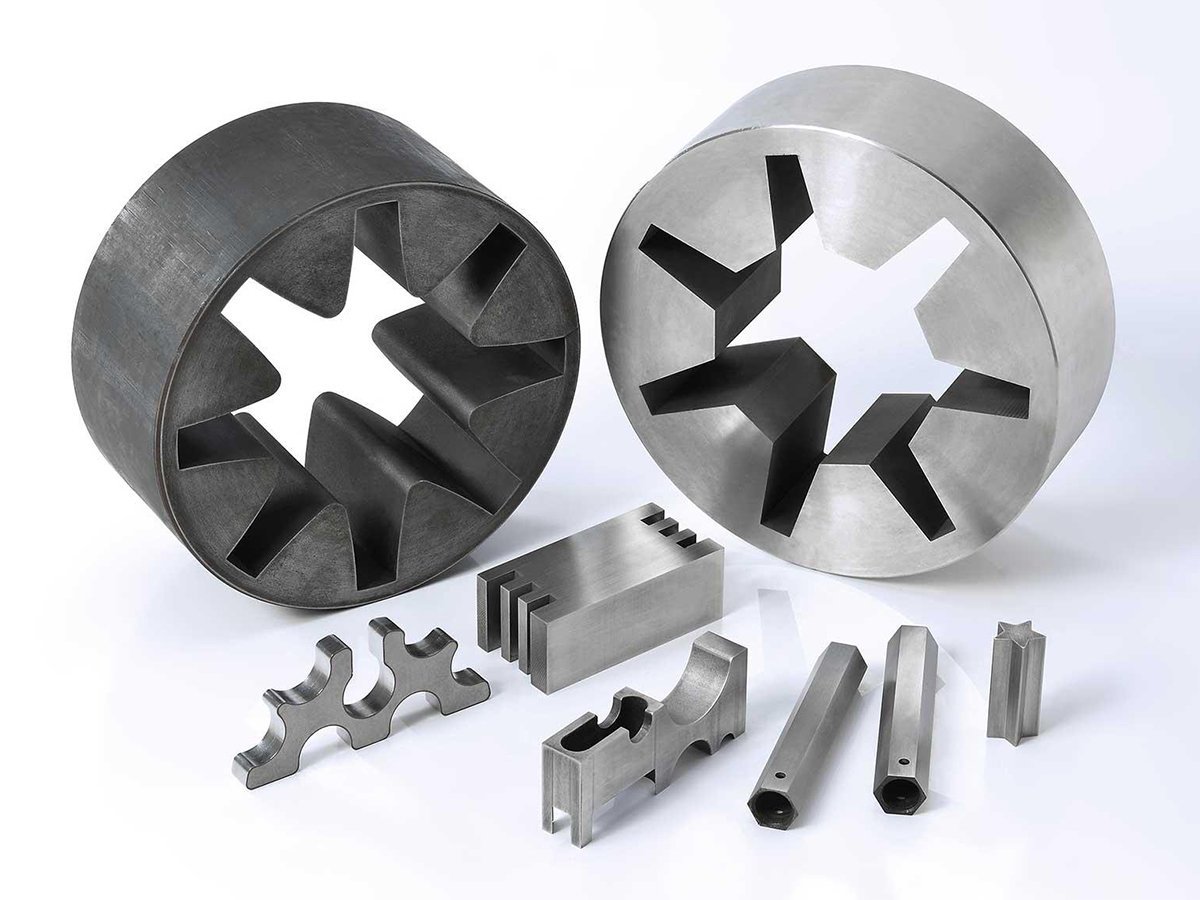
- Injection Molds and Die-Casting Dies: Machine cavities, cores, ribs, and fine details in hardened tool steel.
- Stamping and Extrusion Dies: Produce punches, die openings, and extrusion profiles with tight clearances, often after heat treatment.
- Aerospace Components: Create cooling holes, fuel nozzles, and precision features in titanium and nickel-based superalloys.
- Medical Devices: Machine surgical instruments, orthopedic implants, and small precision components from stainless steel and titanium.
- Automotive Parts: Produce fuel injection components, transmission parts, and precision production tooling.
- Electronics and Connectors: Machine fine terminals, lead frames, and connector mold features.
Conclusion
EDM is a practical choice for machining hard conductive materials, narrow slots, deep cavities, and other features that conventional cutting tools struggle to produce. Understanding its capabilities and limitations helps you optimize part designs and plan machining requirements.
For complex metal parts that require tight tolerances, explore our CNC Machining Services to discuss your drawings, material specifications, and machining requirements.