Best Practices for Copper CNC Machining
Copper’s machining behavior varies by grade, tool material, and component geometry. Optimizing cutting speed, feed rate, and lubrication helps balance material removal rate, tool life, and finished-part quality.
Choose Sharp Cutting Tools
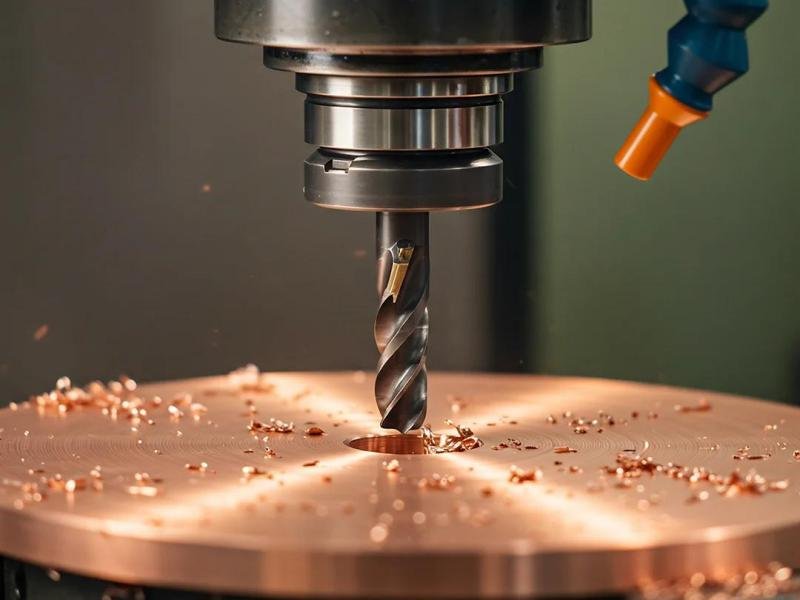
Use sharp carbide tools with polished cutting edges to reduce friction, built-up edges, and burr formation. High-positive-rake geometries are often suitable for copper because they promote clean cutting.
Optimize Cutting Parameters
Adjust cutting speed, feed rate, and depth of cut according to the copper grade, tool geometry, and part design. Avoid rubbing caused by excessively low feed rates, which can worsen surface finish and tool adhesion.
Control Chip Formation
Copper can produce long, ductile chips that wrap around tools or scratch finished surfaces. Choose suitable tool geometry and cutting conditions to improve chip breaking, and remove accumulated chips regularly.
Apply Suitable Coolant or Lubrication
Use an appropriate cutting fluid to reduce friction, limit tool adhesion, and improve surface finish. Ensure coolant reaches the cutting zone and is compatible with the copper grade and subsequent finishing processes.
Secure the Workpiece Carefully
Copper is relatively soft and can deform under excessive clamping pressure. Use stable fixtures and distribute clamping forces evenly, particularly for thin walls, small components, and parts with tight tolerances.
Common Surface Treatments for Copper CNC Parts
Surface finish requirements should be defined according to the part’s function and appearance. For specifications based on Ra values, see our guide to CNC surface roughness and the factors that affect the machined surface.
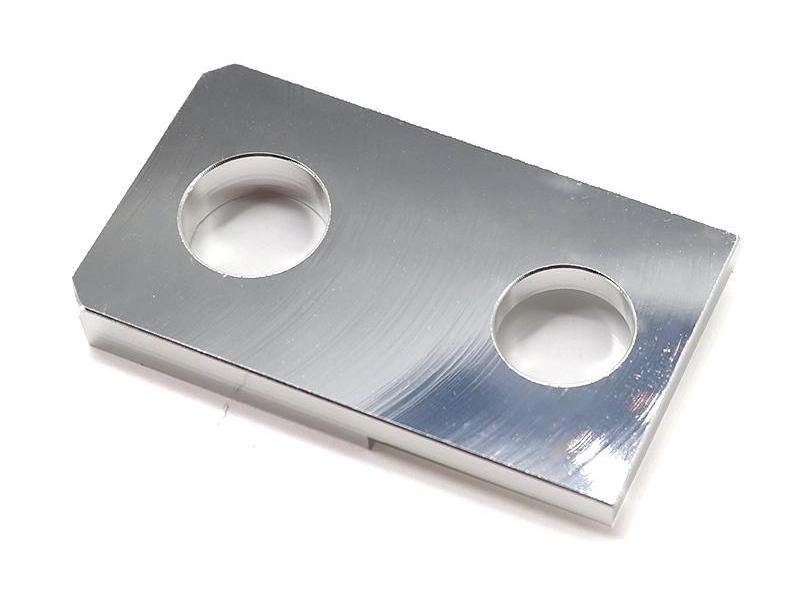
Mechanical Polishing
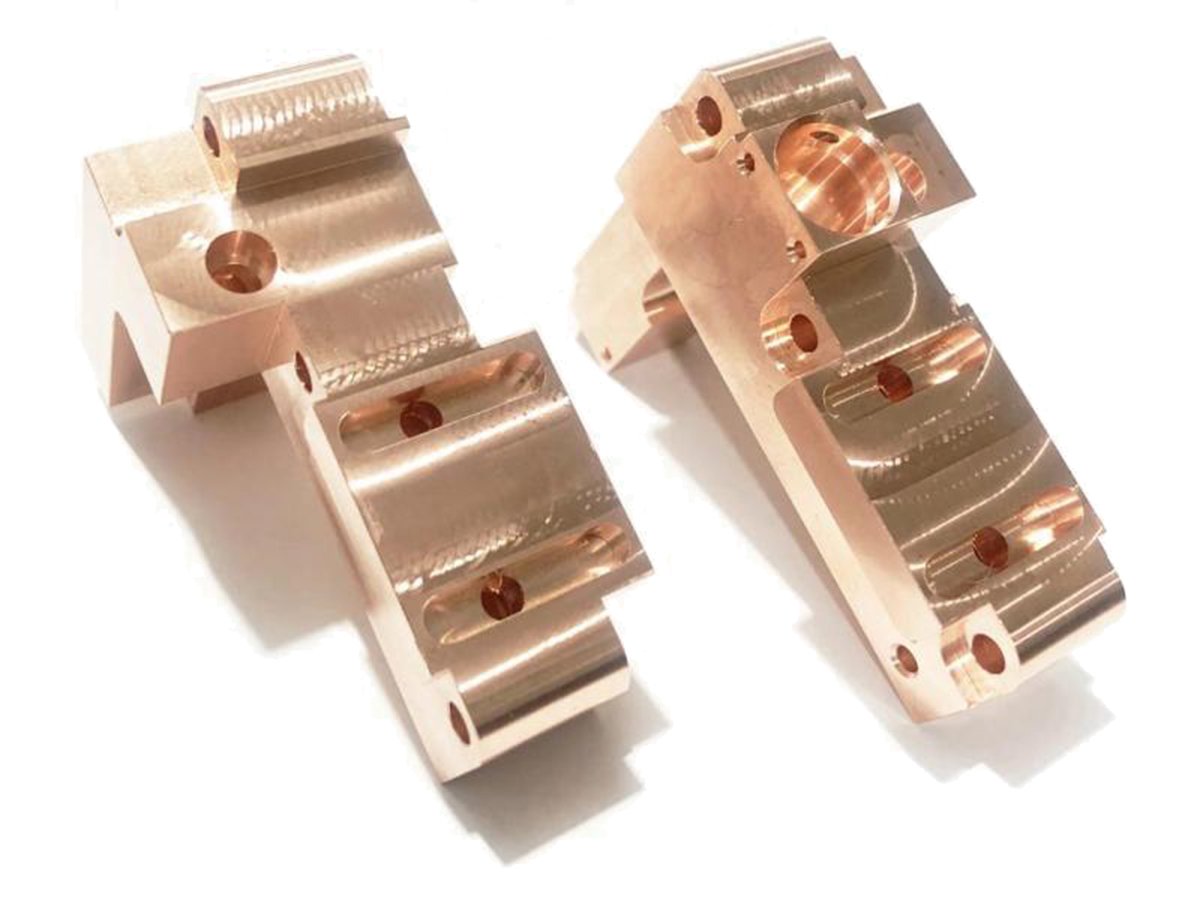
Removes minor surface marks and improves smoothness and reflectivity. Suitable for decorative copper parts and components requiring smooth contact surfaces.
Electroplating
Applies a metal coating, such as nickel, tin, silver, or gold, to improve specific properties.
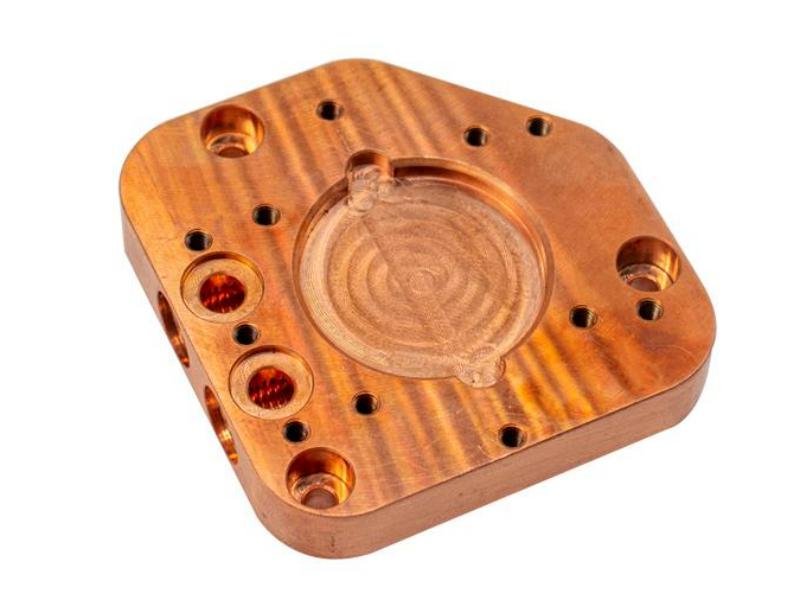
Clear Protective Coating
Applies a transparent protective layer to slow oxidation and preserve the copper’s appearance.
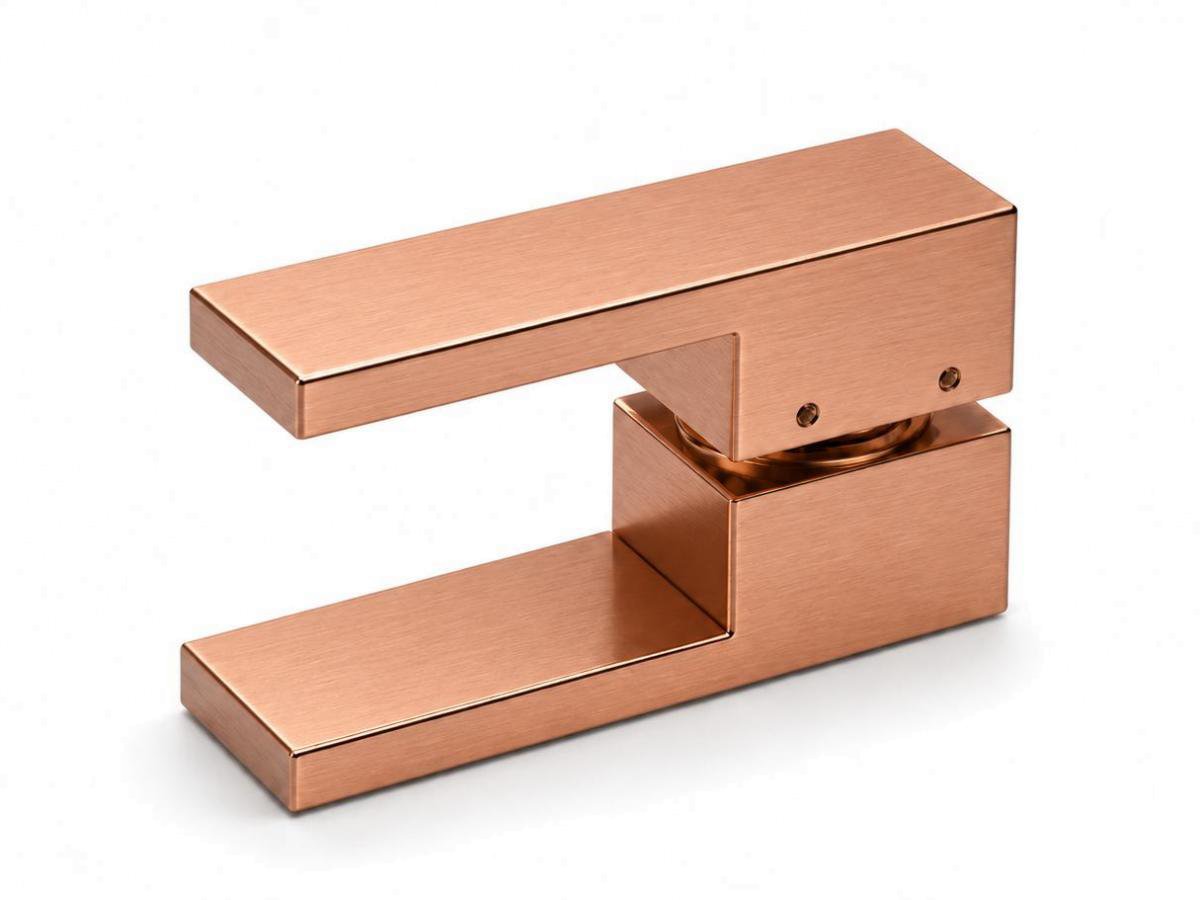
Brushing
Creates a uniform directional texture that reduces the visibility of minor machining marks. It is mainly used for decorative components where a consistent surface appearance is preferred.
Comparing Copper with Common CNC Materials
Choosing between copper and other CNC metals involves balancing conductivity, weight, strength, corrosion resistance, and machining cost. Each material has advantages that make it suitable for specific component designs and operating conditions.
Explore our guide to CNC machining metals to compare common materials and understand their machining characteristics.
| Property | Copper (C110) | Aluminum (6061-T6) | Brass (C36000) | Carbon Steel (1018) | Stainless Steel (304) |
|---|---|---|---|---|---|
| Electrical Conductivity | Excellent | Good | Moderate | Low | Very low |
| Thermal Conductivity | Excellent | Good | Moderate | Low | Low |
| Strength | Low–Moderate | Moderate–High | Moderate | Moderate | Moderate–High |
| Density (g/cm³) | 8.89 | 2.70 | 8.50 | 7.87 | 8.00 |
| Machinability | Fair | Good | Excellent | Good | Fair |
| Corrosion Resistance | Good | Good | Good | Poor without protection | Excellent |
| Relative Material Cost | High | Moderate | Moderate to high | Low | Moderate to high |
Material selection affects not only part performance but also production cost. Learn more about the factors that influence CNC machining costs, including material prices, machining time, part complexity, and finishing requirements.
Applications of Copper CNC Machining
CNC machined copper components are found in electrical equipment, cooling systems, power distribution assemblies, and industrial machinery.
- Electrical Connectors and Terminals: Conductive components used in power distribution systems, electrical panels, and electronic equipment.
- Busbars: Copper bars machined with mounting holes and connection features for switchgear, control cabinets, and power distribution assemblies.
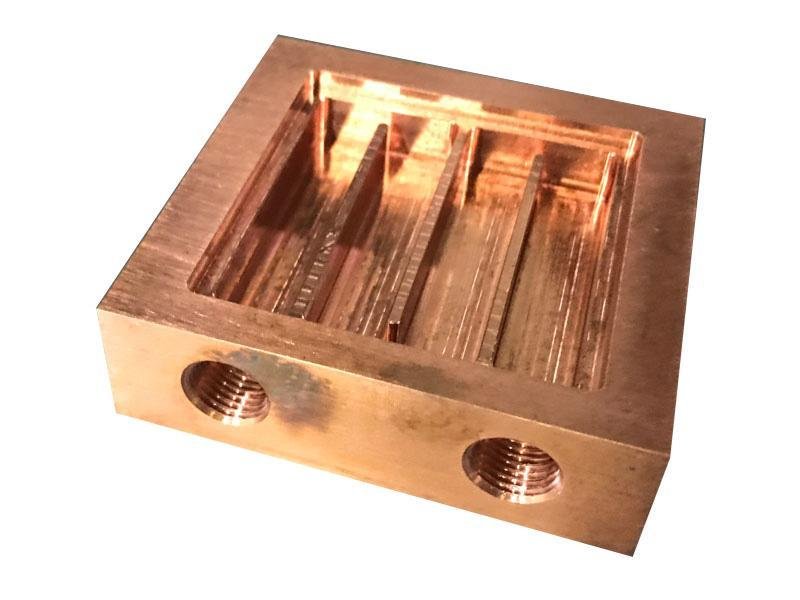
- Heat Sinks and Cooling Plates: Components that transfer heat away from electronic devices, power modules, and industrial equipment.
- RF and Microwave Components: Machined copper housings, waveguide parts, and conductive structures used in high-frequency electronic systems.
- Industrial Fittings and Valve Components: Custom copper parts used in fluid-handling equipment where the material is compatible with the operating medium and service conditions.
Conclusion
Choosing the right copper grade, machining parameters, and surface treatment helps achieve the required part quality. Zhongde provides custom CNC machining service for copper and other metals based on your drawings and specifications.