We all know UV radiation is harmful to humans, but did you know it can have a serious impact on plastic products? UV rays can cause plastics to fade, become brittle, and lose their strength over time. Outdoor equipment, automotive parts, packaging materials—any product exposed to UV radiation faces the risk of deterioration. Choosing uv resistant plastics helps maintain product quality and ensures longer-lasting performance, reducing the need for costly replacements and repairs.
What Is UV Radiation?
Ultraviolet (UV) radiation is a type of electromagnetic energy from sunlight. Although invisible to the human eye, UV rays can gradually break down the molecular structure of many plastics.
Among the different types of UV radiation, UV-A and UV-B are the main causes of plastic degradation. Long-term exposure to these rays can damage polymer chains, reducing the material’s physical strength and surface stability.
For plastic products used in outdoor environments, UV exposure is one of the main causes of material aging.
How UV Radiation Damages Plastic
UV radiation gradually breaks down the polymer structure of plastic, leading to visible and mechanical degradation over time.
The most common signs of UV damage are surface fading, yellowing, embrittlement, and cracking. As exposure continues, the material may lose impact resistance, flexibility, and dimensional stability, reducing its ability to perform reliably in outdoor environments.
The severity of these effects depends on the uv resistant plastic type, exposure conditions, and whether UV stabilizers are used.
Common UV Resistant Plastics
Not all plastics perform the same under sunlight. Some materials can maintain their strength and appearance outdoors for years, while others may fade or crack quickly. Choosing the right UV plastic depends on what matters most in your application—weather resistance, impact strength, transparency, or cost.
ASA
If your product needs to stay outdoors for long periods, ASA is one of the most dependable UV resistant plastics. It offers excellent weather resistance and keeps its color and strength even after prolonged sun exposure, making it a strong choice for parts that must remain stable outdoors.
Because of these advantages, ASA is often used in outdoor housings, automotive exterior trims, and electrical enclosures, where both durability and appearance matter.
Its main disadvantage is cost. ASA is usually more expensive than ABS, so it may not be the best option for indoor or low-cost products. However, for outdoor applications where long-term performance matters, the extra cost is often justified.
Acrylic (PMMA)
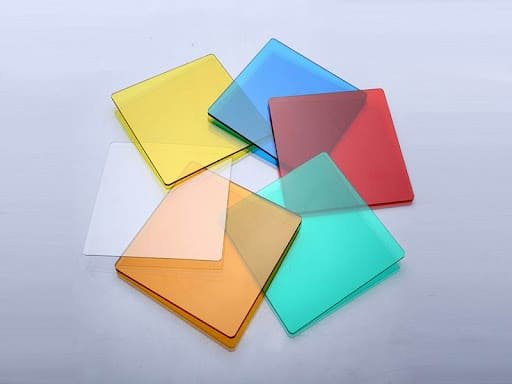
When transparency is important, acrylic is often a practical choice. It has strong UV resistance and can maintain good clarity even after long-term outdoor exposure, making it suitable for products that need both light transmission and weather resistance.
It is commonly found in outdoor light covers, display panels, and transparent protective parts, where optical performance is required.
The drawback is that acrylic is relatively brittle compared to other engineering plastics. It may crack under impact, so it is less suitable for applications that require toughness.
Polycarbonate (PC)
If your application requires high impact strength, polycarbonate is a strong candidate. It is much tougher than acrylic and performs well in demanding applications where both strength and durability are important.
This makes it useful for outdoor equipment housings, protective covers, and structural transparent parts.
The limitation is that standard polycarbonate is not naturally very UV resistant and may yellow over time under sunlight. UV-stabilized grades or uv resistant paint for plastic coatings are usually needed for outdoor use. Although this increases cost, it can still be the right solution when both toughness and weather resistance are required.
HDPE
For outdoor applications where cost efficiency matters, HDPE is often a reliable option with good plastic uv resistanance. It has good natural resistance to moisture and reasonable UV performance, especially when UV stabilizers or carbon black are added.
It is widely used in outdoor containers, piping systems, and uv resistant plastic pipe applications, where durability is needed but appearance is less critical.
Nylon (PA)
When a part needs higher mechanical strength, nylon is often considered. It offers excellent strength and wear resistance, making it suitable for outdoor components that must handle mechanical loads.
Typical applications include brackets, cable accessories, and industrial fittings, where structural performance is important.
Its weakness is that standard nylon has limited UV resistance and usually needs UV stabilizers for outdoor use. This increases material cost, but for parts that require strength as well as outdoor durability, stabilized nylon can be a worthwhile investment.
How to Improve Plastic UV Resistance
When standard plastic materials do not provide enough UV resistance, several methods can be used to improve outdoor durability.
One common approach is adding UV stabilizers during material formulation. These additives absorb or dissipate ultraviolet energy before it can damage the polymer structure, helping reduce discoloration, brittleness, and surface cracking over time.
Another method is using carbon black or pigments to enhance UV protection for plastic, which is widely applied in outdoor products such as uv resistant plastic sheeting and industrial components.
For applications with higher appearance requirements, UV-resistant surface coatings or uv resistant paint for plastic can also be applied. This method is often used for transparent or cosmetic parts where maintaining surface appearance is important.
The best solution depends on the application environment, expected service life, and material performance requirements. In some cases, modifying the material is enough; in others, selecting a naturally uv plastic may provide better long-term results.
Conclusion
Plastic uv resistance is not a one-size-fits-all decision. Each plastic behaves differently under sunlight, and the right choice depends on how and where the part will be used.
In many cases, both material selection and UV protection methods can be combined to achieve a better balance of performance and cost, as discussed in our guide on Plastic Material Selection Guide.
If you are evaluating uv plastic materials for a specific application, Zhongde can support you during material selection and development.