What Is Overmolding?
Overmolding is a manufacturing process in which one material is molded over another to form a single integrated part. If you are not familiar with the overall process, you can first refer to All You Need to Know About Overmolding.
In plastic overmolding, a secondary plastic material—often softer or functionally different—is applied over a rigid substrate such as plastic or metal. The goal is to enhance surface functionality, improve usability, or integrate multiple features into a single component.
The Plastic Overmolding Process
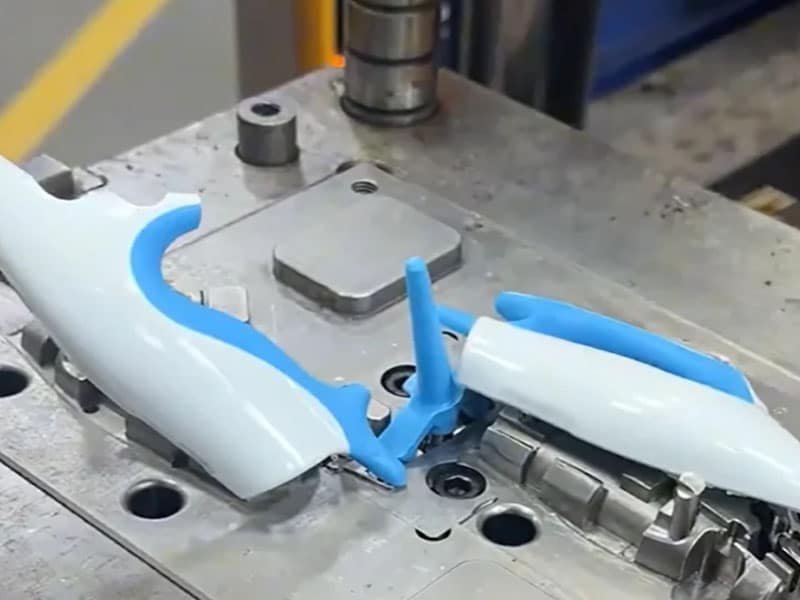
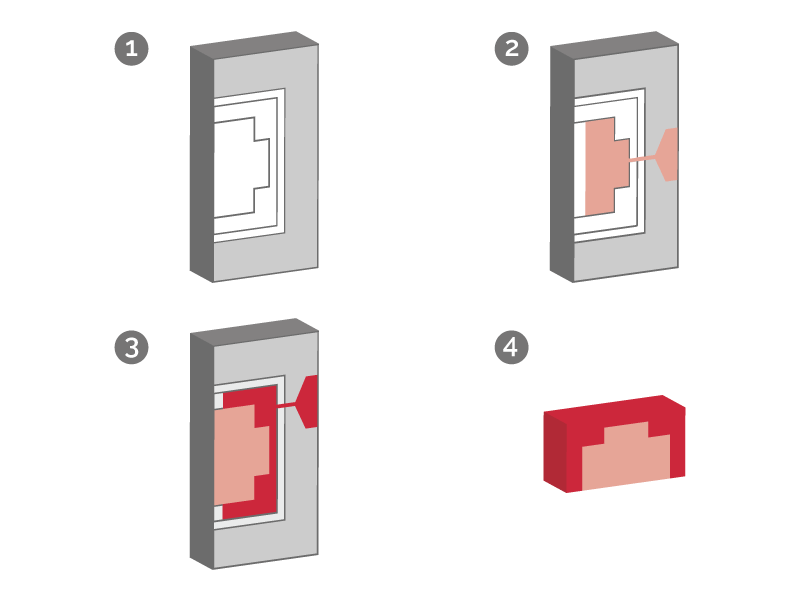
Plastic overmolding is easier to understand if you think of it as making a part first, and then adding another layer on top of it. First, a rigid plastic part is produced, usually by injection molding. This part acts as the base and provides the main shape and strength.
Next, this base part is placed into a mold again, either manually or by a machine, and fixed in position so it won’t move. Then, a second plastic material—often softer, like TPE—is injected over specific areas of the part. This new material flows over the surface, fills the designed areas, and bonds to the base part.
After that, the materials are allowed to cool and solidify together. Once the mold opens, you get a single finished part that combines both materials, with a hard inner structure and a softer outer layer where needed.
Common Plastic Overmolding Combinations
Plastic overmolding can involve different substrate and overmold material pairings depending on performance requirements.
Plastic over Plastic
This is the most common type. A soft thermoplastic (e.g., TPE, TPU) is molded over a rigid plastic such as ABS, PC, or PP. It is widely used for grips, seals, and ergonomic surfaces.
Plastic over Metal
A plastic layer is molded over a metal substrate such as steel or aluminum. Since chemical bonding is limited, the design usually relies on mechanical features like holes or undercuts for secure attachment.
Plastic over Engineering Plastics
In higher-performance applications, materials like nylon (PA) or PC/ABS blends are used as substrates, with functional layers added for wear resistance or improved handling.
Advantages of Plastic Overmolding
Plastic overmolding is widely used to improve both product performance and manufacturing efficiency.
- Improves grip and usability by adding soft or textured surfaces to rigid parts
- Allows multiple materials to be combined in a single component
- Eliminates secondary bonding or assembly steps
- Provides better alignment compared to assembled parts, reducing loosening or separation
- Enhances resistance to wear, impact, and vibration
- Improves product appearance with more design and color options
- Reduces labor and assembly costs
- Supports efficient production once tooling is established
Design Factors of Plastic Overmolding
Successful plastic overmolding depends on a few key design decisions that directly affect bonding quality and part stability.
Material compatibility
The substrate and overmold material must bond well. Some combinations naturally adhere, while others require modified materials or surface treatment. Poor compatibility often leads to delamination.
Bonding Interface design
The interface should provide enough contact area and, when needed, include features such as grooves or undercuts. This helps improve bonding strength, especially when chemical adhesion is limited.
Wall Thickness and Geometry
The overmold layer should be kept within a reasonable thickness range (typically 0.5–3 mm) and avoid sharp transitions. Consistent thickness and smooth radii help ensure proper material flow and reduce stress at the interface.
Mold Flow and Process Considerations
Gate location, venting, and material flow must be designed to ensure complete filling and avoid air traps. In addition, differences in material shrinkage should be considered to prevent warping or internal stress.
Materials Selection for Plastic Overmolding
Material selection in plastic overmolding focuses on combining structural strength with surface functionality.
Substrate Materials
ABS (Acrylonitrile Butadiene Styrene)
ABS is widely used as a substrate material due to its balanced strength, rigidity, and good processability. It is commonly applied in rigid housings such as power tool shells and electronic device enclosures, where a stable structural base is required before adding a soft overmold layer.
PC (Polycarbonate)
PC offers higher impact resistance and thermal stability compared to ABS, making it suitable for more demanding applications. It is often used in automotive interior components and protective covers that need to withstand mechanical stress and temperature variations.
PP (Polypropylene)
PP is lightweight and chemically resistant, which makes it suitable for cost-sensitive and industrial applications such as storage containers and chemical-resistant parts. However, due to its low surface energy, achieving strong bonding in overmolding often requires modified TPE grades or surface treatment.
PA (Nylon)
Nylon provides excellent mechanical strength and wear resistance. It is commonly used in automotive and mechanical components such as clips, gears, and structural brackets that must maintain performance under continuous load and friction.
Overmold Materials
TPE (Thermoplastic Elastomer)
TPE is the most commonly used overmold material due to its soft-touch feel and wide compatibility with many plastics. It is frequently applied to tool handles, toothbrush grips, and phone cases to improve comfort, grip, and user experience.
TPU (Thermoplastic Polyurethane)
TPU offers higher abrasion resistance and better durability compared to TPE. It is often used in applications such as wearable straps, protective covers, and industrial components where wear resistance is critical.
Soft PVC (in some cases)
Soft PVC is used in cost-sensitive applications where high mechanical performance is not the main requirement. It is commonly found in basic flexible grips or low-cost protective covers.
Applications for Plastic Overmolding
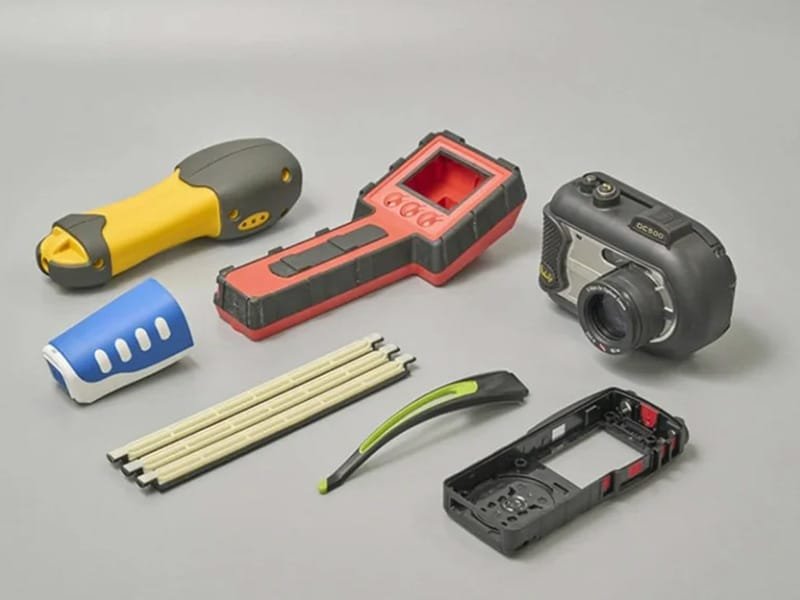
Plastic overmolding is widely used in products that require both rigid structure and improved surface functionality. It is especially valuable in applications where grip, protection, or user interaction needs to be enhanced.
Consumer Electronics
Plastic overmolding is commonly used in electronic products such as mobile phone cases, wearable devices, and remote controls. In these applications, a rigid plastic housing provides structure, while a soft overmold layer improves grip, shock resistance, and user comfort during daily use.
Hand Tools and Industrial Equipment
In tools such as screwdrivers, drills, and cutting tools, plastic overmolding is used to create ergonomic handles. The rigid core ensures strength, while the overmolded layer improves anti-slip performance and reduces hand fatigue during long-term operation.
Automotive Components
Plastic overmolding is widely applied in interior automotive parts such as knobs, switches, and control panels. It helps improve tactile feel, reduce vibration, and enhance durability in components that are frequently touched or operated.
Medical and Healthcare Products
In medical devices and equipment handles, plastic overmolding is used to improve hygiene, grip control, and user safety. The combination of rigid and soft materials allows for better handling precision in surgical or diagnostic tools.
Industrial and Functional Components
Plastic overmolding is also used in industrial parts such as protective housings, seals, and mechanical interfaces. These applications benefit from improved wear resistance, environmental protection, and longer service life under demanding operating conditions.
When to Use Plastic Overmolding
Plastic overmolding is suitable when a single material cannot meet both structural and functional requirements.
Use it when a rigid plastic part also needs a soft or functional outer layer, such as for grip, anti-slip, or protection.
It is also useful when you want to reduce assembly steps by integrating multiple components into one part.
In addition, it is a good option when surface performance directly affects user experience, such as grip comfort or impact protection.
If the product only requires structural strength without extra surface function, single-material injection molding is usually more cost-effective.
Conclusion
Plastic overmolding is widely used to integrate rigid substrates with functional surface materials, improving both product performance and user experience. A successful design depends on material compatibility, proper interface design, and stable process control. When correctly applied, it can reduce assembly complexity and improve manufacturing efficiency.
For projects involving flexible or rubber-like materials, you may also refer to Overmolding Rubber: Rubber Bonding Process for a deeper look at rubber-based overmolding technologies.
If you are developing plastic overmolded components, Zhongde can support you with material selection, mold design, and production solutions tailored to your project.