Clean room injection molding is a specialized manufacturing process designed to produce high-quality plastic components in controlled environments. Unlike conventional injection molding, this process is conducted under stringent contamination control standards, ensuring the production of precision plastic parts that meet the highest regulatory and industry requirements.
What is Clean Room Injection Molding?
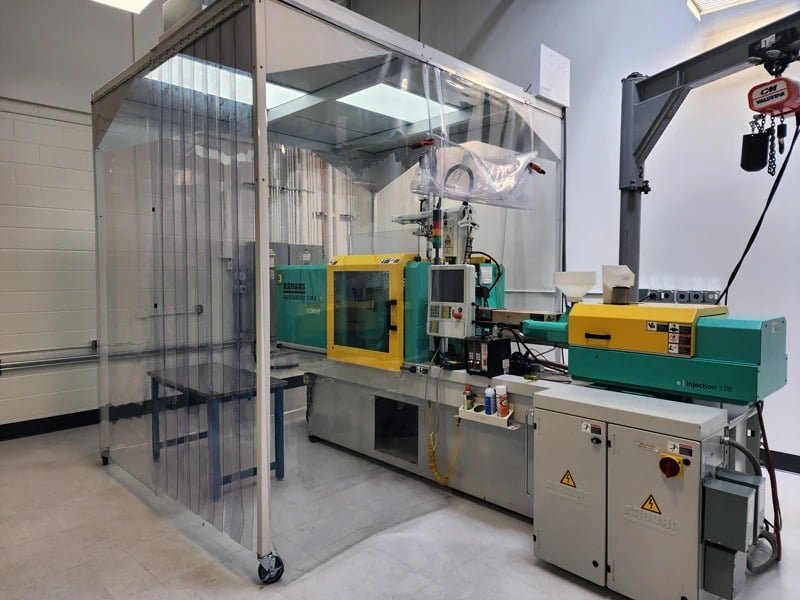
Clean room injection molding is the process of producing plastic components within a controlled environment where factors such as airborne particles, temperature, and humidity are strictly regulated. Clean room injection molding involves specialized facilities with air filtration systems, clean surfaces, and controlled personnel movement. The goal is to minimize contamination that could compromise the performance, safety, or reliability of precision parts.
When to Use Clean Room Injection Molding
The decision to implement clean room injection molding depends on product requirements, regulatory compliance, and risk management.
Use clean room injection molding when the finished part will come into direct or indirect contact with patients, sterile materials, or other contamination-sensitive systems. It is also a strong choice when the product has strict regulatory requirements or when even a tiny defect or contaminant could cause failure, rejection, or costly rework.
Typical Applications
- Medical devices
- Surgical instruments
- Implant-related parts
- Housings
- Drug delivery components
- Pharmaceutical packaging
- Diagnostic packaging
- Microfluidic parts
- Laboratory parts
- Sensitive electronic
- Optical parts
Clean Room Standards and Classifications
Clean room injection molding facilities are classified according to international and regional standards that define allowable particle counts and environmental control levels.
ISO 14644 Series
The ISO 14644 standard, developed by the International Organization for Standardization, is the most widely adopted guideline for clean room classification. It categorizes clean rooms into classes based on the maximum allowable concentration of particles per cubic meter of air.
- ISO Class 1–3: Ultra-clean environments with extremely low particle counts, used for high-precision medical or semiconductor components.
- ISO Class 4–6: High-cleanliness environments suitable for most medical devices and pharmaceutical components.
- ISO Class 7–9: Moderate cleanliness levels, often sufficient for general electronics housings or less contamination-sensitive products.
Regulatory Standards
In addition to ISO classifications, clean room facilities in medical and pharmaceutical manufacturing often follow FDA and GMP/cGMP guidelines. These standards regulate environmental controls, monitoring protocols, and process validation to ensure product safety and compliance with legal requirements.
The choice of clean room class depends on the sensitivity of the product, the risk of contamination, and regulatory requirements. For instance, components in direct contact with sterile fluids typically require ISO Class 7 or better, while certain electronic housings may only need ISO Class 8 or 9.
Process Flow in Clean Room Injection Molding
Clean room injection molding involves multiple carefully controlled steps to prevent contamination and ensure product quality.
Material Preparation: Raw plastic materials are pre-treated through drying and filtration to remove moisture and particulates.
Injection Molding: Machines used in clean room injection molding are designed for minimal particle generation. They operate within filtered air environments, and molds are frequently cleaned and sanitized to prevent contamination.
Post-Molding Handling: After molding, parts are carefully inspected, packaged, and transferred within the clean room to prevent exposure to contaminants. Automated systems, such as robotic arms and enclosed conveyors, are often used to minimize human contact.
Personnel and Operational Controls: Operators wear clean room attire, including gowns, gloves, and masks, and follow strict behavioral protocols to prevent contamination. Access is restricted, and regular monitoring ensures environmental standards are maintained.
Clean Room Injection Molding Challenges and Solutions
Clean room injection molding comes with challenges.
Particle Contamination: Even minor particulate matter can compromise part quality. Solutions include HEPA-filtered air systems, strict gowning protocols, and controlled personnel movement.
Environmental Variations: Temperature and humidity fluctuations can affect material properties and part dimensions. Continuous monitoring and precise HVAC control mitigate these risks.
Cost and Efficiency: Clean room operations are resource-intensive. Implementing automation, process optimization, and preventative maintenance helps reduce operational costs while maintaining quality.
Best Practices: Regular validation of clean room standards, equipment calibration, and employee training are essential for maintaining production consistency and compliance.
Future Trends of Clean Room Injection Molding
Clean room injection molding is moving toward greater automation, smarter monitoring, and more efficient facility design. These trends help reduce contamination risk while improving productivity and consistency. As demand grows in medical technology, diagnostics, and precision manufacturing, cleanroom capabilities are becoming more important than ever. In many industries, they are no longer a premium feature but a basic requirement.
Conclusion
Clean room injection molding is a system-level manufacturing approach that combines environmental control, precision equipment, disciplined operations, and quality management. It plays a critical role in producing safe, reliable, and compliant products for demanding industries. For manufacturers that need clean, consistent, and high-value plastic components, clean room injection molding is one of the most effective production solutions available.