In medical products, even a small plastic component can directly affect safety, reliability, and patient outcomes. From diagnostic devices to disposable consumables, these parts are often required to meet strict standards while maintaining consistent performance in real clinical environments.
This is where medical injection molding becomes essential. It provides a controlled and repeatable way to produce plastic parts that meet the demanding requirements of healthcare environments, from early-stage prototyping through to high-volume production.
What Is Medical Injection Molding?
Medical injection molding is a controlled manufacturing process used to produce plastic components that are intended for medical and healthcare applications. In simple terms, it works by heating medical-grade plastic materials until they become flowable, then injecting them into a precisely designed mold where they cool and solidify into the final shape.
What makes this process different from standard plastic molding is not the basic forming principle, but the level of control required throughout production. Every stage—from material handling to molding conditions—needs to be managed to ensure consistency, cleanliness, and repeatable part quality.
Why Is Medical Injection Molding Important to Healthcare?
Once we understand what medical injection molding is and how it works at a basic level, the next question is more practical: why is it so widely used in healthcare product development, and what role does it actually play in real medical applications?
Enabling Reliable Single-Use Medical Products
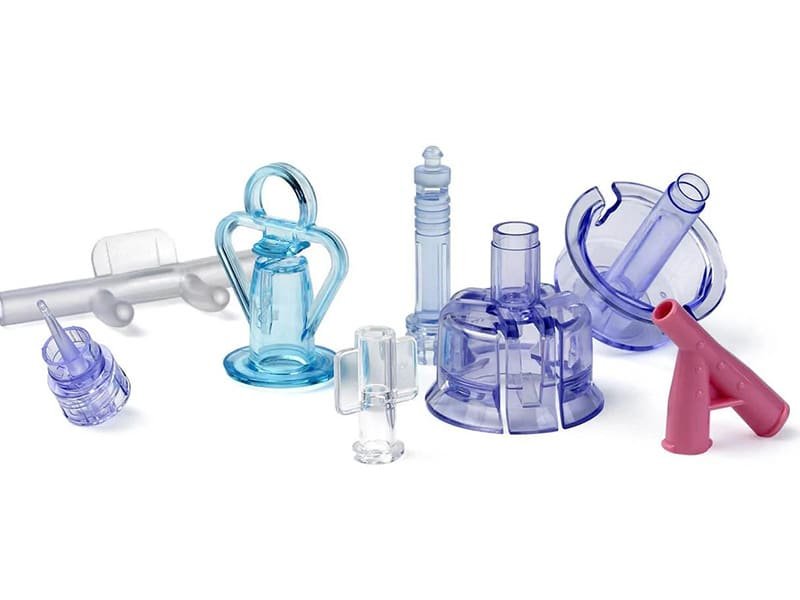
Many modern medical workflows rely on disposable components such as syringes, connectors, filters, and tubing interfaces. These parts are designed for one-time use but must still perform consistently every time. Medical injection molding makes it possible to produce these components in large volumes while keeping their functional behavior stable across every batch.
Ensuring Compatibility with Regulatory Pathways
Medical products often need to go through strict validation and approval processes before entering use. A repeatable molding process helps maintain stable part characteristics across production batches, which supports verification and documentation requirements during product qualification.
Enabling Scalable Production for Critical Demand
Healthcare products often face unpredictable demand, especially during emergencies or seasonal outbreaks. Medical injection molding allows production to scale efficiently without changing the core part design or performance. This helps ensure that essential components remain available when they are needed most.
Supporting Fast Iteration from Prototype to Production
Medical product development often moves through multiple validation stages. Injection molding allows the same process concept to be used from early prototypes to final production, helping teams evaluate design changes without switching manufacturing approaches.
Common Materials for Medical Injection Molding
Material selection is a foundational aspect of medical injection molding. Each polymer must meet stringent standards for biocompatibility, sterilization, and mechanical performance. Our team provides expert guidance in selecting the most suitable materials for your device:
Polycarbonate (PC)
Polycarbonate is widely used for medical device housings and enclosures due to its high impact resistance, optical clarity, and dimensional stability. It is compatible with sterilization methods, including autoclaving and gamma irradiation. PC parts are durable, lightweight, and ideal for devices requiring transparency or mechanical strength.
Applications: Surgical device housings, diagnostic equipment covers, protective casings.
Polyether Ether Ketone (PEEK)
PEEK is a high-performance thermoplastic known for its exceptional mechanical properties and chemical resistance. It is suitable for components exposed to high temperatures and aggressive sterilization processes. Its biocompatibility makes it a preferred choice for implantable and surgical instruments.
Applications: High-performance surgical instruments, implantable component supports.
Polypropylene (PP)
Polypropylene is lightweight, chemically resistant, and suitable for applications requiring flexibility. It is compatible with several sterilization methods, including steam and ethylene oxide.
Applications: Connectors, tubing adapters, non-structural housings.
ABS and Other Engineering Plastics
Acrylonitrile butadiene styrene (ABS) and other engineering plastics are used when impact resistance and dimensional accuracy are needed at a competitive cost. These materials support intricate design features while meeting biocompatibility standards.
Applications: Control panels, device enclosures, instrument handles.
Common Medical Injection Molding Processes
Medical components are rarely simple in function or structure. As devices become smaller, more integrated, and more application-specific, different injection molding approaches are used to meet these practical demands.
Micro Injection Molding
Micro injection molding is used when a component becomes so small that traditional molding methods can no longer maintain consistent detail or dimensional control. These parts are often found inside diagnostic devices, drug delivery systems, or minimally invasive surgical tools, where space is extremely limited but function is critical.
Thin Wall Injection Molding
Thin wall injection molding is commonly used for lightweight, disposable medical components such as syringe bodies, diagnostic housings, and fluid containers. In these applications, reducing wall thickness is not just about saving material—it directly affects response time, usability, and production efficiency.
Multi-Shot (Overmolding)
Multi-shot molding is used when a single part needs different material properties in different areas. For example, a rigid structure combined with a soft-touch or sealing layer. In medical devices, this is useful for grips, seals, or interfaces where both comfort and functional sealing are required in one integrated component.
Metal Injection Molding (MIM)
Some medical components need the strength and wear resistance of metal but in very small or complex shapes. MIM makes this possible by forming metal powders into detailed geometries that would be difficult or expensive to machine. It is often used in surgical tools, orthodontic parts, and small structural components where precision and strength must coexist.
Liquid Silicone Rubber (LSR) Molding
LSR molding is widely used for soft, flexible medical components such as seals, valves, tubing connectors, and wearable device parts. These components need to maintain elasticity over long periods and often come into direct contact with the human body or fluids.
Common Applications of Medical Injection Molding
Medical molding supports manufacturing across a broad spectrum of healthcare products, including:
Implants and Prosthetics: Artificial joints, dental implants, and other prosthetics
Surgical Instruments: Handles, forceps, and retractors.
Disposable Consumables: Syringes, test tubes, specimen containers, IV Components such as connectors, drip chambers, and valves.
Diagnostic Device Housings: Enclosures for blood glucose monitors or PCR machines, etc.
Laboratory Products: Components for microplates, pipettes, and diagnostic cartridges.
Sterile Packaging Components: Blister packs, vials, and containers.
Drug Delivery Systems: Inhalers and auto-injectors.
Regulatory Compliance & Quality Assurance
Medical injection molding is governed by stringent quality and regulatory frameworks:
ISO 13485: Quality management system requirements for medical devices.
ISO 10993: Biological evaluation and biocompatibility of materials.
ISO 14644: Cleanroom classifications, often Class 7 or 8 for molding and assembly.
FDA 21 CFR Part 11: Requirements for electronic records and process documentation to ensure traceability.
Good Manufacturing Practices (GMP): Hygienic and controlled production environments, including cleanroom gowning, material handling, and in‑process inspection.
Cooperate with Zhongde
Medical injection molding plays an important role in how modern healthcare devices are designed and produced. If you are currently developing medical or healthcare-related products, selecting the right process at an early stage can help avoid unnecessary redesigns later and make the transition from concept to production much smoother.
At Zhongde, we support a wide range of medical-grade production needs through custom injection molding services, from early prototyping to scalable production. If you would like to discuss your project or explore suitable manufacturing solutions, feel free to contact us and our team will help you evaluate the best approach for your application.
Start A New Project Right Now!