When people think of compression molding, it is usually associated with thermoset materials, while thermoplastics are more commonly linked to injection molding. Because of this, the idea of using thermoplastics in a compression-based process may seem unusual at first.
In reality, thermoplastic compression molding exists as a practical solution for specific structural and material requirements that cannot always be efficiently met by injection molding alone. It is not a replacement process, but a targeted manufacturing approach used in selected applications where material behavior and part geometry demand a different forming strategy.
What Is Compression Molding?
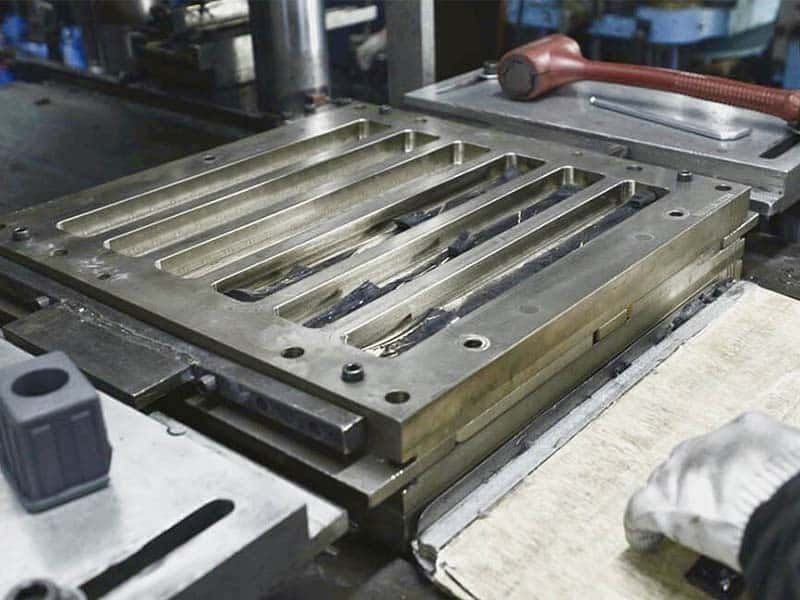
Compression molding is a forming process in which material is placed directly into a heated mold cavity and then shaped by applying pressure until it takes the final form of the part. Unlike injection molding, where material is forced into a closed cavity under high pressure, compression molding relies on pressing the material into shape inside the mold.
In this process, the mold is first opened, and a measured amount of material is placed inside. The mold is then closed, and pressure is applied so the material flows and fills the cavity. Under heat and pressure, the material gradually conforms to the mold shape and solidifies after cooling.
If you want to better understand compresstion molding process, check out our guide on Compression Molding Process Detail: You Need to Know.
What Are Thermoplastic Materials?
Thermoplastic materials are a type of plastic that becomes soft and moldable when heated and solidifies again when cooled. This process is reversible, meaning the material can be reheated and reshaped multiple times without fundamentally changing its chemical structure.
Unlike thermoset materials, which undergo an irreversible curing reaction during molding, thermoplastics rely on physical changes rather than chemical cross-linking. This gives them good recyclability and flexibility in processing, making them widely used in manufacturing processes such as injection molding, extrusion, and compression molding in specific applications.
For a more detailed comparison of their specific properties, see our guide on Thermoset vs Thermoplastic: What is the Difference?
Benefits of Combining Thermoplastics with Compression Molding
So why combine thermoplastic materials with a process that is traditionally associated with compression molding? The answer lies in the specific production challenges that certain parts present.
Better Suitability for Large and Simple Geometries
Thermoplastic compression molding is often chosen when parts are large in size but relatively simple in shape. Instead of forcing material through complex flow channels, the material is directly placed and shaped inside the mold, which makes the process more stable for wide or flat components.
Lower Processing Stress During Forming
Because the material is not injected under high pressure through narrow gates, the forming process can be more gentle. The thermoplastic is shaped gradually under compression, which helps reduce uneven flow behavior that can occur in some injection-based processes.
Simplified Mold Design in Certain Applications
Compared with complex injection systems, compression molds can be structurally simpler in some cases. When thermoplastics are used in suitable applications, this can help reduce tooling complexity and improve process stability.
Suitable for Reinforced or Composite Thermoplastics
In some cases, thermoplastic materials are combined with reinforcements such as fibers to improve strength and stiffness.
Compression molding provides a stable way to form these materials without excessively disturbing the internal structure, making it useful in composite-related applications.
How Does Thermoplastic Compression Molding Work?
Thermoplastic compression molding follows a relatively simple but controlled forming sequence. Instead of forcing molten material into a fully closed cavity, the process relies on placing material into the mold first and then shaping it under pressure and heat.
Material Preparation and Heating
The process begins by preparing thermoplastic material in a form suitable for molding, such as pellets or preheated sheets. The material is heated until it reaches a softened state where it can be easily deformed, but not fully degraded.
Placing Material into the Mold
Once the material reaches a workable state, it is placed into the open mold cavity. Unlike injection molding, there is no immediate high-pressure filling stage. The amount of material is typically controlled in advance to match the final part volume.
Mold Closing and Compression
The mold is then closed, and pressure is applied. Instead of relying on high-speed injection, the material is gradually compressed to fill the entire cavity. This controlled pressure helps the thermoplastic flow and conform to the mold shape more evenly.
Cooling and Solidification
After the cavity is fully formed, the material is cooled while still under pressure or in a controlled environment. This allows the thermoplastic to solidify while maintaining its final shape and dimensional stability.
Part Ejection
Once the part has cooled sufficiently, the mold is opened and the finished component is ejected. Depending on the application, minimal finishing may be required, as compression molding often produces stable and well-formed parts directly from the mold.

Compression Molding Service
How to Choose the Right Thermoplastic Material for Your Project
Now that we understand how the process works, the next step is choosing the right thermoplastic material for your custom part. Below are some commonly used thermoplastic materials and their typical applications in real production.
Polypropylene (PP)
PP is lightweight and chemically resistant, with moderate stiffness. In compression molding, it flows readily under heat and pressure, making it suitable for large panels, housings, and covers that need uniform thickness and stable dimensions. Its resilience under repeated thermal cycles helps maintain part integrity throughout production.
Polyethylene (PE)
PE is flexible and impact-resistant, which allows it to absorb repeated stress without cracking. During compression molding, its flow properties enable filling of molds with slightly deeper or complex features. It is commonly used for protective covers, trays, and industrial handling components where durability and toughness are important.
Polyamide (PA / Nylon)
PA offers higher strength and wear resistance compared to PP and PE, making it suitable for structural and load-bearing components. In compression molding, PA provides stable mechanical performance after forming, especially in applications requiring long-term durability. It is often used in parts that must maintain alignment or support other assembled components.
Polycarbonate (PC)
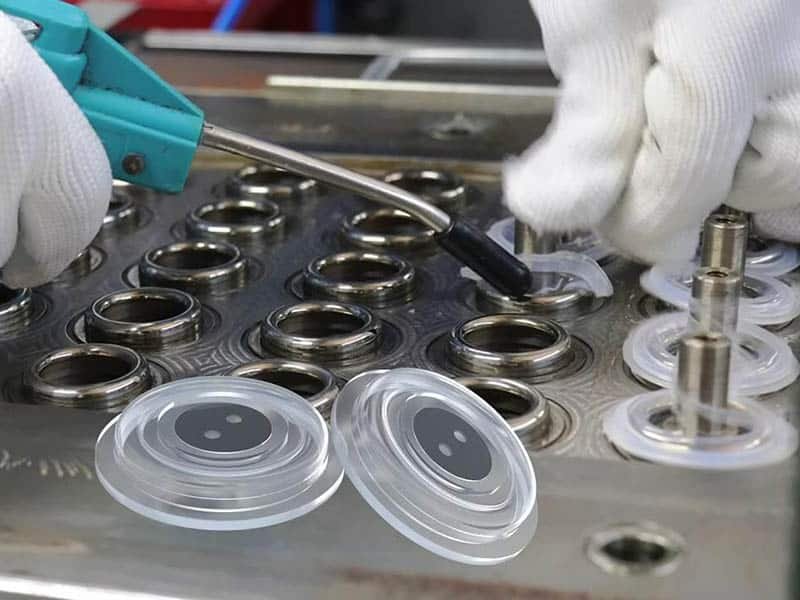
PC is a high-strength thermoplastic with excellent impact resistance and optical clarity. In compression molding, precise thermal control is essential to prevent surface defects and internal stresses. It is widely used for transparent covers and protective shields where strength and clarity are both critical.
Reinforced Thermoplastics
Reinforced materials such as glass-filled PP or PA are used when additional stiffness and dimensional stability are required. In compression molding, these materials exhibit higher strength but may also show more pronounced flow resistance and shrinkage behavior compared to unfilled grades. They are typically selected for structural components that must withstand higher mechanical loads over time.
Conclusion
Thermoplastic compression molding is a practical forming method that combines the flexibility of thermoplastic materials with the controlled shaping behavior of compression molding. If you have read this far, you should now have a clearer understanding of how the process works and how different thermoplastic materials can be matched to real production needs
At Zhongde, we provide custom plastic parts and rubber manufacturing solutions, including injection molding, compression molding, and other tooling processes for different industrial applications. If you are developing a new project and need support in material selection or process evaluation, feel free to contact our team for technical assistance and quotation support.
Start A New Project Right Now!