Silicone injection molding combines the unique properties of silicone with the precision of injection molding to create parts that are flexible, durable, and highly reliable. In this guide, we’ll explore how the silicone injection molding process works, its advantages, design considerations, and typical applications.
If you are not familiar with injection molding itself, you can learn more in our article on Injection Molding Explained.
What Is Silicone Injection Molding?
Similar to EPDM injection molding and rubber injection molding process, silicone injection molding is a manufacturing process where silicone is injected into a mold under pressure to form parts. This method, also known as silicone rubber injection molding services, uses a machine to heat and cure the material inside the mold. It differs from traditional methods like compression molding by offering automation and reduced cycle times. During the silicone rubber molding process, the process uses a two-component system: Part A (base silicone) and Part B (curing agent), which are mixed to start the vulcanization reaction. This homogeneous mixture is then injected into the mold, heated to cure the silicone, and finally, the finished part is ejected after molding.
Materials Used in Silicone Molding
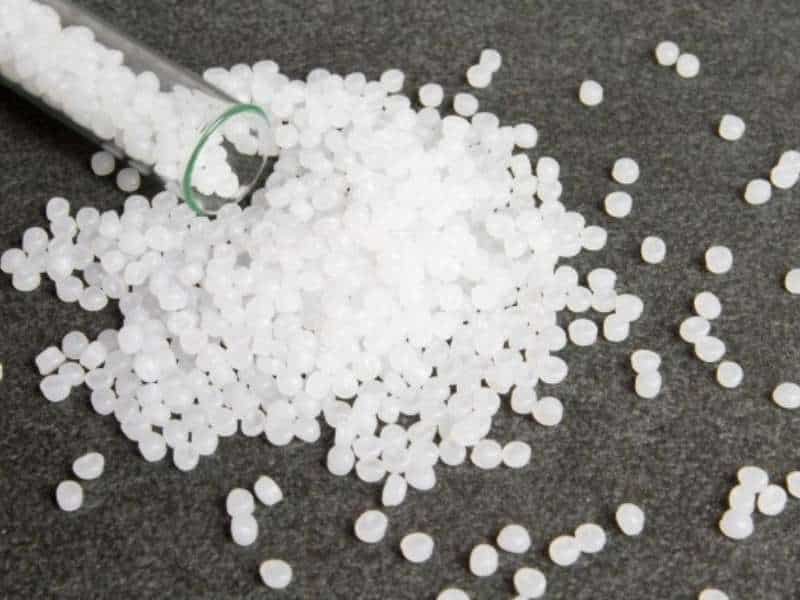
Several materials are used in the silicone molding process:
- Liquid Silicone Rubber (LSR): A two-part compound with low viscosity for easy flow into molds.
- High Consistency Rubber (HCR): Solid sheets that require pre-forming for general applications.
- Medical-Grade Silicone: Biocompatible material that meets standards for healthcare products.
- Fluorosilicone: Resistant to fuels and oils, used in harsh environments.
- Flame-Retardant Silicone: Designed to limit flame spread in electronics and automotive parts.
Advantages of Silicone Injection Molding
The unique properties of silicone, combined with injection molding, make it an ideal material for applications where flexibility, durability, and precision are critical.
Excellent Flexibility and Elasticity
Silicone parts can stretch, compress, and return to their original shape without permanent deformation. This makes them perfect for seals, gaskets, and components that require repeated movement or bending.
Wide Temperature Resistance
Silicone maintains its performance across extreme temperatures, from freezing cold to high heat. This allows injection-molded silicone parts to perform reliably in automotive, medical, and industrial applications.
Chemical and Environmental Resistance
Silicone is highly resistant to water, UV light, ozone, and many chemicals. Injection molding ensures consistent thickness and surface quality, so parts can withstand harsh environments without degradation.
Complex Geometry Capability
The flowability of silicone in injection molding allows for precise replication of intricate designs, undercuts, and thin walls that are difficult to achieve with other elastomers or conventional molding techniques.
Consistent Quality and Reproducibility
Injection molding produces parts with tight tolerances and repeatable performance. The process minimizes waste and ensures that each part meets dimensional and functional specifications.
Enhanced Surface Finish
Molded silicone can achieve smooth or textured surfaces depending on mold design. This allows functional surfaces like seals or aesthetically pleasing components like wearable devices to be produced in one step.
The Silicone Injection Molding Process
Silicone injection molding differs from conventional plastic injection molding because silicone is an elastomer that requires heat or a catalyst to cure rather than simply cooling to solidify. This fundamental difference affects every stage of the molding process.
Material Preparation
Silicone rubber usually comes as a two-part system that must be precisely mixed before molding. Additives, pigments, or fillers may be included to achieve desired flexibility, color, or mechanical properties. Proper mixing is crucial to ensure uniform curing and consistent part quality.
Mold Heating and Setup
Unlike standard plastic molds, silicone molds often require temperature-controlled heating to initiate the curing reaction. The mold is preheated to a precise temperature, which ensures the silicone flows properly and cures evenly without bubbles or incomplete sections.
Injection
The mixed silicone is injected into the mold using a piston or plunger system rather than a standard screw barrel. Because silicone is highly viscous, it requires slower, controlled injection to fill complex geometries and undercuts without trapping air.
Curing
After filling, the silicone must be held at the proper temperature for a set period to complete the cross-linking reaction. The curing time depends on material type, part thickness, and mold temperature. Unlike thermoplastics, which solidify almost immediately, silicone requires careful timing to ensure full strength and elasticity.
Demolding
Once cured, the flexible nature of silicone allows the part to be removed without significant ejection force, even from complex molds. Draft angles and mold surface finish still influence ease of demolding, but the elasticity of silicone generally makes ejection simpler than rigid thermoplastics.
Post-Molding Finishing
After demolding, parts may require trimming to remove flash or excess material. Some grades of silicone may also undergo additional treatments such as post-curing to enhance thermal stability or mechanical properties.
Design Guide for Silicone Injection Molding
Designing for silicone injection molding requires considering the unique properties of silicone elastomers, including their flexibility, shrinkage, and curing behavior. Thoughtful design ensures high-quality, functional parts with minimal defects.
Wall Thickness and Uniformity
Silicone parts should have consistent wall thickness wherever possible. Uneven walls can lead to differential curing, resulting in hard or soft spots and potential warping. For most liquid silicone rubbers (LSR), wall thickness typically ranges from 1.0 to 4.0 mm. Gradual transitions and fillets at corners reduce stress concentration and help the material flow evenly during injection.
Undercuts and Complex Geometries
Silicone’s elasticity allows for more complex shapes than rigid plastics. However, excessive undercuts can still complicate demolding. Incorporating side-actions, lifters, or split molds may be necessary for intricate designs, ensuring smooth removal without tearing the part.
Draft Angles
Even though silicone is flexible, draft angles help parts release cleanly from the mold and reduce surface marks. A small draft of 1–2 degrees per side is usually sufficient, especially for deeper sections or tall walls.
Ribs and Reinforcements
Ribs can be added to improve strength and dimensional stability. Keep rib thickness less than the nominal wall thickness to prevent sink marks, and use rounded corners to allow silicone to flow smoothly around these features.
Gate Placement and Flow Path
Proper gate placement is crucial to avoid air entrapment and ensure even filling. Short, direct flow paths help maintain consistent material distribution and curing. For larger or multi-cavity molds, balanced gating reduces cycle time variation and ensures uniform part quality.
Shrinkage and Tolerance
Silicone exhibits slight shrinkage during curing. Designers should account for this in mold dimensions to maintain tight tolerances. Critical features, such as sealing surfaces or snap-fit connections, may require additional design adjustments to compensate for dimensional changes.
Surface Finish and Texture
Silicone readily takes the surface finish of the mold. Polished molds yield smooth, glossy parts, while textured molds can add grip or aesthetic appeal. Consider the end-use of the part when specifying surface details.
Applications of Silicone Injection Molding
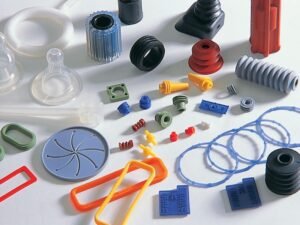
Silicone molded products find widespread use in numerous sectors due to their versatility and superior material characteristics:
Medical and Healthcare: Components like seals, diaphragms, catheters, implants, and valves.
Automotive Parts: Gaskets, seals, housings, buttons, and vibration dampeners.
Consumer Electronics Parts: Button keypads, covers, enclosures, and insulators.
Baby Products: Forms pacifiers, bottle nipples, and tableware.
Household and Kitchenware: Silicone molds, spatulas, and other utensils.
Industrial Equipment: O-rings and protective components.
Conclusion
Silicone injection molding offers a method for producing precise, durable parts through an efficient process. It has advantages in precision, waste reduction, and compliance. Zhongde provides capabilities in this area, including custom tooling and high-volume production for silicone rubber moldings. Contact Zhongde for solutions tailored to your procurement requirements.