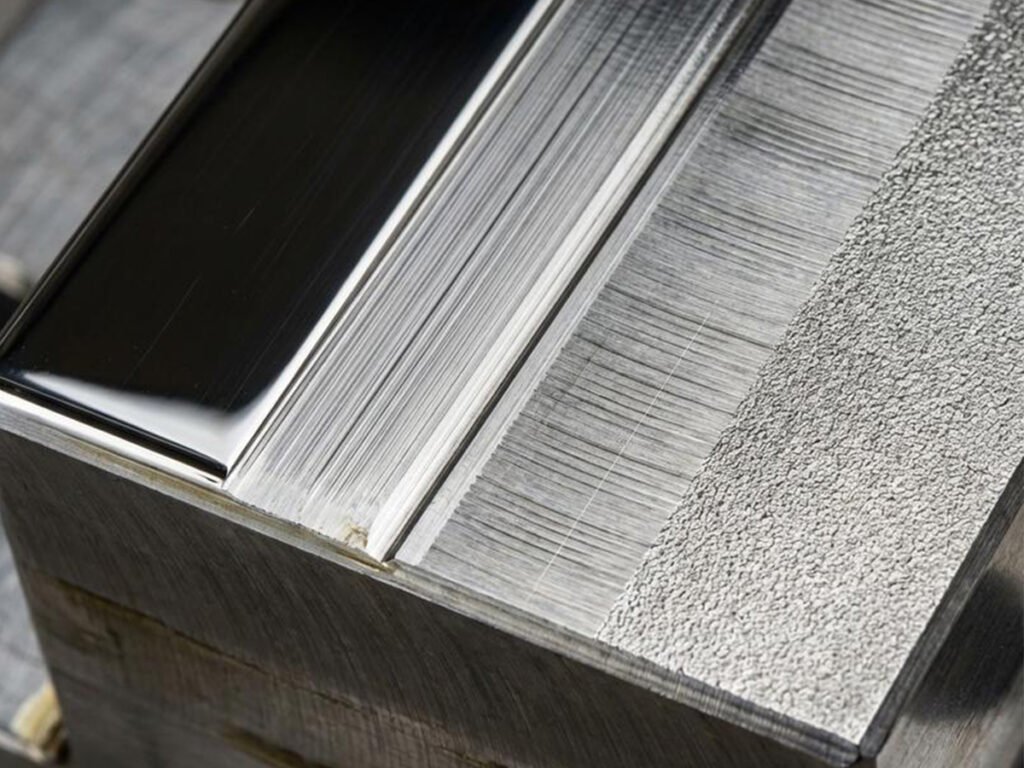
Among the various texture standards used in manufacturing, “Mold-Tech” comes up frequently in RFQs and technical drawings, yet many buyers aren’t entirely sure what it refers to or how it differs from other finish callouts. It’s easy to assume this is just another way of saying “textured surface,” but that’s not quite right.
In reality, Mold-Tech texture has a specific meaning in injection molding and tooling specifications. Understanding these texture references can help buyers communicate surface requirements more clearly and avoid confusion during the sourcing process.
What Is Mold-Tech Texture?
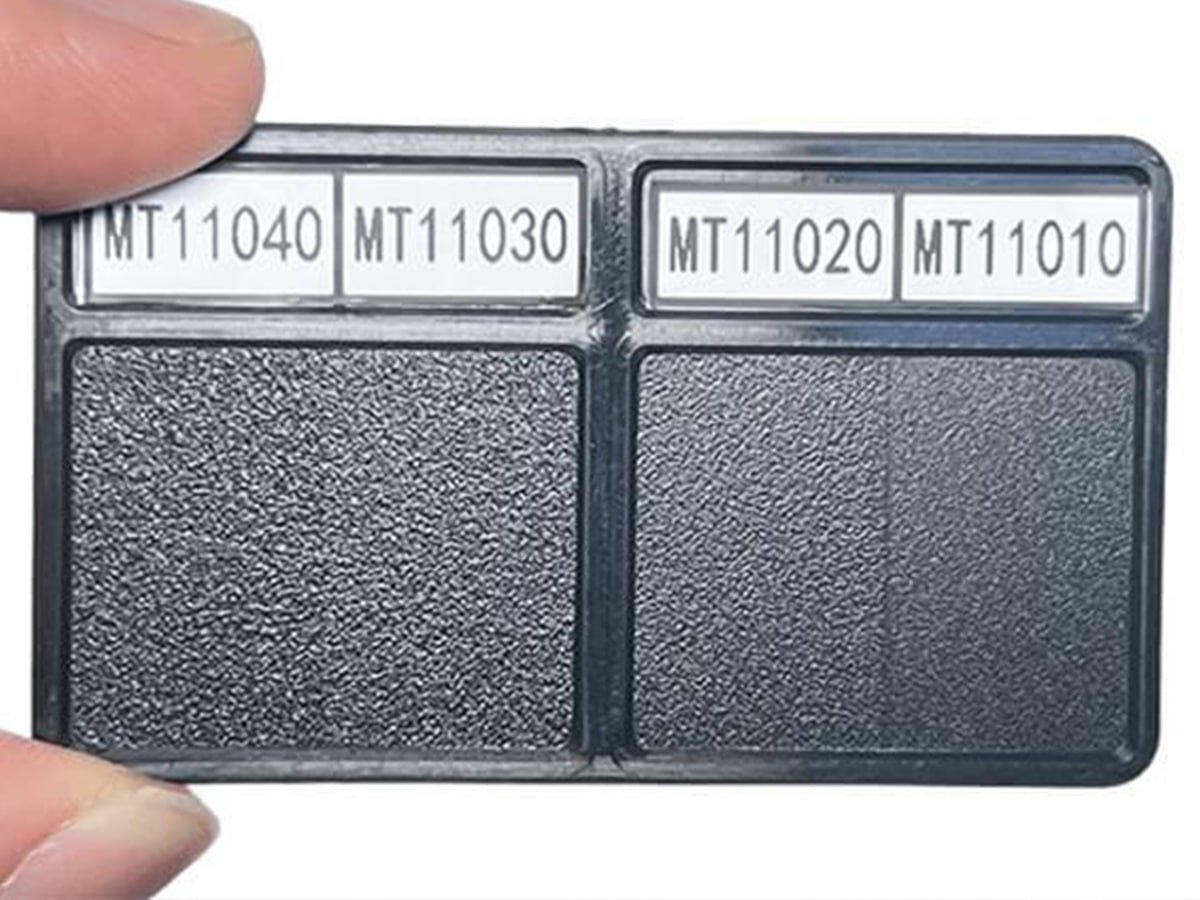
Mold-Tech texture refers to a proprietary system of mold texture patterns originally developed and cataloged by the Mold-Tech company. Rather than a single finish type, it is a catalog of predefined texture patterns—identified by specific codes (such as MT-11010 or MT-6000 series)—that can be applied to mold cavities through texturing processes to create consistent surface appearances on molded parts.
Mold-Tech vs. SPI and VDI: What’s the Difference?
It’s easy to group Mold-Tech together with SPI and VDI, since all three are commonly referenced in mold surface specifications. However, they describe different aspects of a mold finish.
SPI (Society of Plastics Industry) finishes primarily describe the level of polish and surface finish achieved on a mold, ranging from high-gloss finishes (A-series) to matte textures (D-series). SPI classifications focus more on surface appearance and polish level rather than specific decorative patterns.
VDI 3400 classifies EDM-generated textures based on surface roughness values. Each VDI number corresponds to a specific roughness range, making it a roughness-based reference rather than a pattern library.
Mold-Tech, by contrast, is pattern-driven rather than primarily roughness-driven. It focuses on identifiable visual and functional textures—such as leather grain, wood grain, and geometric patterns—cataloged by design. While suppliers may provide approximate cross-references between Mold-Tech textures and VDI values, the two systems are not directly interchangeable.
When to Use Mold-Tech Texture
Not every project requires a specific texture code, but in many sourcing situations, specifying a Mold-Tech texture instead of using a general surface description can make the design and sourcing process more efficient.
When You Need Clear Communication in RFQs
In cross-border sourcing, differences in language and terminology can create confusion during quoting and tooling discussions. A Mold-Tech code (such as MT-11010) provides a common reference for suppliers and tooling engineers familiar with the system, reducing reliance on subjective descriptions like “fine texture” or “matte finish.”
When Matching an Existing Product Surface Is Required
If a client needs to match the texture of an existing product, competitor part, or previous production run, Mold-Tech’s catalog-based system provides a reference point for selecting a similar texture pattern. This is more reliable than relying only on subjective descriptions.
When Texture Is Part of the Product’s Identity
For consumer-facing parts such as automotive interior components, handles, and enclosures, texture affects both visual appearance and user perception. Mold-Tech provides a wide range of recognizable patterns, including leather grains and geometric textures, allowing designers to specify a particular surface style rather than only a roughness level.
When Function and Appearance Both Matter
Some Mold-Tech textures provide functional benefits in addition to visual effects. Deeper patterns can improve grip, reduce the visibility of minor surface imperfections, and help maintain a consistent appearance during product use. Selecting the right texture allows designers to balance aesthetic requirements with practical performance.
Mold-Tech Texture Classifications
Mold-Tech texture catalogs contain hundreds of patterns, making it difficult to select a suitable option without understanding the general categories. In practice, these textures are commonly grouped by their visual characteristics and typical applications.
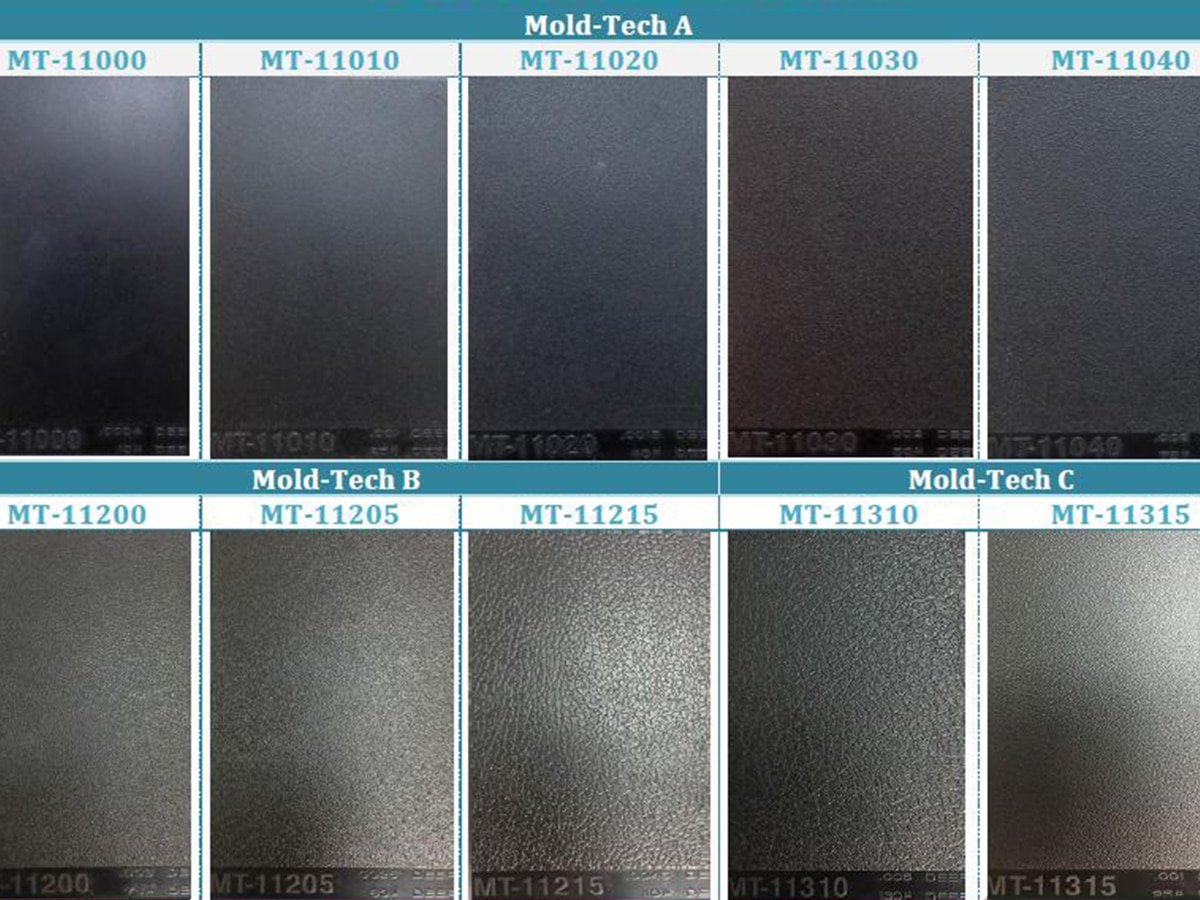
MT-11000 Series: Fine Matte & Light Textures
Fine matte textures are subtle, low-relief patterns designed to create a uniform surface appearance. They are commonly selected for plastic housings, covers, and enclosures where a clean appearance, reduced glare, and improved resistance to visible surface imperfections are desired.
MT-13000 Series: Leather Grain Textures
Leather grain textures reproduce the visual and tactile characteristics of natural or synthetic leather. They range from fine, tight grains to deeper pebble-like patterns and are widely used in automotive interiors, consumer products, and decorative molded components.
MT-14000 Series: Sand & Stipple Textures
Sand and stipple textures provide a consistent granular appearance between smooth and coarse finishes. They are often chosen for applications requiring a balance between appearance, grip, and the ability to reduce the visibility of minor molding marks.
MT-30000 Series: Geometric & Pattern Textures
Geometric textures feature engineered patterns such as lines, diamonds, or repeating structures. These textures are commonly used when designers want a distinctive appearance while adding functional benefits such as improved handling or grip.
MT-70000+ Series: Wood Grain & Specialty Textures
Higher-numbered Mold-Tech texture groups include specialty patterns such as wood grain and other decorative effects. These finishes are typically used when designers want to reproduce the appearance of natural materials or create a distinctive surface style.
Design Considerations for Mold-Tech Texture
A common misconception is that once a Mold-Tech code is applied to the mold cavity, the molded part will automatically reproduce the same texture appearance. In reality, final texture quality also depends on material behavior, part geometry, and molding conditions. Understanding general mold surface texture principles can help designers make better texture decisions.
Draft Angle Requirements
Textured surfaces generally require more draft angle than smooth surfaces to release cleanly from the mold. Fine textures may need only a small adjustment, while deeper patterns such as heavy leather grains may require 3° or more per side depending on texture depth, material shrinkage, and part geometry. Insufficient draft can lead to texture damage, drag marks, or ejection difficulties.
Material Flow Behavior Affects Texture Fidelity
Texture replication depends partly on how the polymer fills the cavity. Different materials have different melt viscosities and flow characteristics, which can affect how sharply a Mold-Tech pattern is reproduced. Areas with restricted or unstable flow—such as thin sections or regions near gates—may show weaker texture definition compared with areas filled under more consistent flow conditions.
Gate Location Influences Texture Appearance
Weld lines and certain gate-related flow areas may show differences in texture definition because multiple flow fronts or uneven filling can affect the surface replication process. This effect is more noticeable with high-contrast patterns such as leather grains or geometric textures. Proper gate placement helps maintain consistent appearance in visible textured areas.
Compatibility with Secondary Processes
If a part requires secondary operations such as painting, printing, or bonding, the selected Mold-Tech texture should be evaluated together with those processes. Fine textures often provide more predictable coating and printing results, while deeper patterns may require additional control to maintain uniform coverage and adhesion.
How to Choose the Right Mold-Tech Texture
Selecting a Mold-Tech texture is not only an aesthetic decision. The right texture should match the product’s appearance requirements, functional needs, manufacturing limitations, and application environment. Instead of choosing a pattern based only on visual preference, designers should evaluate several factors before finalizing a texture code.
Check Industry Norms Before Innovating
Certain industries have common texture preferences based on product expectations. Automotive interiors often use leather-grain textures, while medical devices, electronic housings, and industrial equipment frequently favor fine matte textures for a clean and controlled appearance.
Following these conventions is not mandatory, but choosing a texture that matches customer expectations can help the product feel more appropriate for its market.
Match the Texture to the End-Use Environment
Consider where and how the part will be used. A texture that looks attractive under controlled lighting may appear different outdoors, in industrial environments, or after repeated handling. Parts exposed to oils, dust, frequent cleaning, or heavy contact often benefit from finer, tighter textures, while consumer products may prioritize a stronger tactile effect.
Request Physical Texture Plaques, Not Just Photos
Photos and catalog images cannot fully represent texture depth, gloss interaction, or tactile feel. Requesting a physical texture plaque from your tooling supplier before final approval helps avoid mismatched expectations, especially when comparing similar texture codes.
Match Texture Scale to Part Size
Texture selection should consider the size and viewing distance of the final part. A deep grain that looks balanced on a large panel may appear excessive on a small component, while a fine texture may become visually insignificant on a large surface. Reviewing the texture at the actual part scale helps ensure the pattern matches the intended design effect.
Consider Color and Gloss Interaction
Texture and color aren’t independent choices. Darker colors tend to hide texture nuances, while lighter or glossy materials reveal grain patterns more sharply. If color hasn’t been finalized, it’s worth testing the shortlisted texture against your intended color/finish combination before locking in the mold design.
Conclusion
Choosing the right Mold-Tech texture requires more than selecting an attractive pattern. Texture type, part design, material, and molding conditions all influence the final appearance and performance of the molded part.
At Zhongde, we help customers integrate surface texture requirements into custom injection mold manufacturing, ensuring the mold design supports both appearance and production needs. Contact us to discuss your textured mold project.