In injection molding, a part can be designed correctly on paper but still behave differently once it enters production. Even small changes in material condition, temperature, or machine settings can start to influence how the part turns out.
Because of this, production is less about achieving a single perfect result and more about managing consistency over time. This is where quality control comes in—not as an additional step, but as a structured way of keeping those variations within an acceptable range throughout the entire process.
It is also the foundation of plastic injection molding quality engineering, where process stability and part consistency are managed systematically.
What Is Injection Molding Quality Control?
Injection molding quality control is a structured system used to monitor and manage every stage of the molding process to ensure consistent part quality.
In practice, it works as a combination of planned inspections and process monitoring activities. These checks are carried out before production starts, during molding, and after parts are produced, allowing potential issues to be identified and corrected at different stages rather than only at the end.
The goal is not only to detect defective parts, but also to maintain a stable and repeatable production process, so that each batch of parts stays within the required specifications for dimensions, appearance, and functional performance.
Why Injection Molding Quality Control Matters
Injection molding quality control is important because it turns product quality from a subjective judgment into a defined and traceable standard. Without it, decisions about whether a part is acceptable often rely on visual inspection or experience, which can vary between operators and production batches.
A structured quality control system provides measurable criteria for acceptance, such as dimensional limits, surface requirements, and functional checks. This makes it possible to evaluate parts consistently, even when production conditions change over time.
It also creates traceability across the entire production process. When an issue occurs, quality control records help identify whether the cause is related to materials, tooling, or process conditions, making problem-solving more systematic rather than reactive.
Injection Molding Service
Processes in Injection Molding Quality Control
Before production starts, there are already several key decisions and checks that shape how quality will be maintained later. These steps are built into different stages of the workflow, starting from tooling development and continuing through material preparation, production setup, and final inspection.
If you want to better understand what kinds of issues quality control is trying to prevent in real production, you can also take a look at 20 Common Defects in Injection Molding, which helps explain why each control stage matters in practice.
Tooling and Mold Design
Before any material is even introduced, the first question is whether the mold itself can consistently produce the part as intended. This is where quality control begins.
At the tooling stage, engineers look closely at how the part will actually behave inside the mold—how it fills, cools, and holds its shape over repeated cycles. Details such as cavity layout, cooling balance, and dimensional stability are reviewed not just as design features, but as potential sources of variation in production.
In many cases, issues discovered here are the easiest and least expensive to address, simply because nothing has been manufactured yet. This is why tooling is often considered the first real checkpoint in the entire quality control process.
Material Testing
Once the mold is ready, the next question is simple but critical: will the material behave as expected during real production?
At this stage, material testing is used to confirm consistency between batches and to check whether the material matches the required processing and performance characteristics. Even when the same material grade is used, small differences in viscosity, moisture content, or additives can influence how it flows, fills the mold, and cools during injection molding.
This is why materials are often evaluated before full production begins, rather than being assumed to perform identically every time.
Pre-Inspection
Before production starts, there is a short but important stage where everything is checked one more time to make sure the setup is truly ready. At this point, the focus is not on the design anymore, but on whether the actual production conditions match what the process requires.
At this point, attention shifts to the mold condition, machine setup, and basic process parameters. The mold is checked for assembly accuracy, surface condition, and proper movement of key components. At the same time, the production equipment is prepared to ensure that temperature, pressure, and cycle settings are aligned with the material and part requirements.
In-Process Inspection
Once production begins, quality control shifts from preparation to real-time monitoring. At this stage, the main focus is whether the process remains stable as parts are continuously produced.
Operators and engineers typically observe the first several shots closely to confirm that filling, cooling, and ejection behave as expected. After that, periodic inspections are carried out during production to check whether dimensions, appearance, and consistency remain within the required range.
What makes this stage important is that small changes can appear gradually rather than immediately. A slight shift in material behavior, mold temperature, or machine stability may not stop production, but it can slowly affect part quality over time. In-process inspection helps detect these changes early, so adjustments can be made before they develop into larger quality issues.
Post-Production Evaluation
After production is completed, quality control does not stop. This stage focuses on confirming whether the final output truly meets all defined requirements, both on paper and in real use conditions.
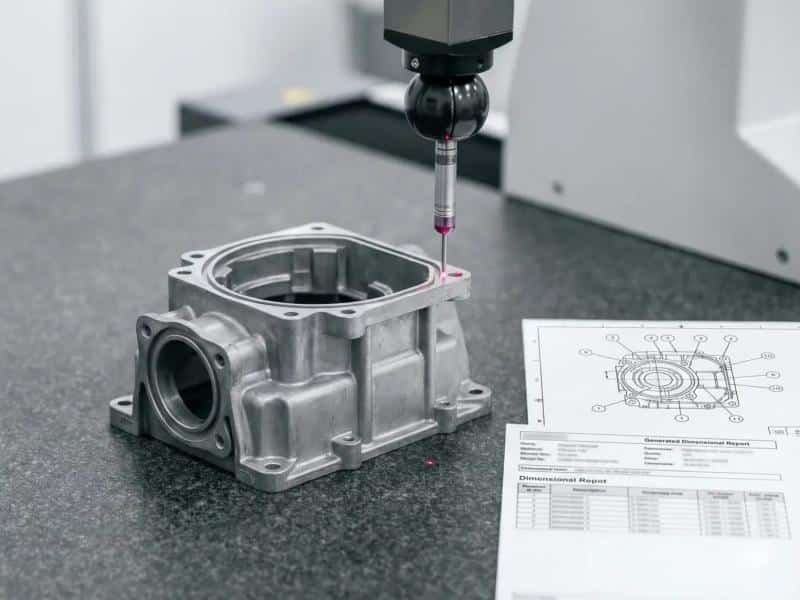
Finished parts are typically reviewed against key specifications such as dimensions, surface quality, and functional fit. In some cases, additional checks such as assembly testing or basic performance verification may also be included, depending on how the part will be used in the final product.
Beyond checking the parts themselves, this stage is also used to review overall process performance. If any deviations or issues were observed during production, they are recorded and analyzed so that future runs can be more stable and predictable. This feedback loop is an important part of injection molding process improvements and long-term process stability.
Conclusion
Quality control in injection molding is ultimately about keeping production predictable. For many projects, the real challenge is not simply detecting defects, but understanding where variation comes from and how it moves through the process. This is what makes plastic injection molding quality engineering valuable in real production environments.
At Zhongde, we support injection molding projects with a strong focus on process control and engineering consistency. From early-stage review to mass production, our team works to ensure each step is aligned with your requirements. You can learn more about our Injection Molding Services for custom plastic parts, or contact us directly to discuss your project in detail.
Start A New Project Right Now!