Plastics used in injection molding are generally divided into thermoplastics and thermosets, based on how they react to heat—simply put, whether they can return to their original form after heating. You might wonder, “If all I care about is the finished part, why does it matter whether it can be remelted?”
The answer is that this seemingly simple distinction affects almost every aspect of production, from part design and processing to performance and durability. By reading this article, you’ll gain a clear understanding of how thermosets vs thermoplastics differ in practice and how to choose the material that best fits your project needs.
Defining Thermoset vs Thermoplastic
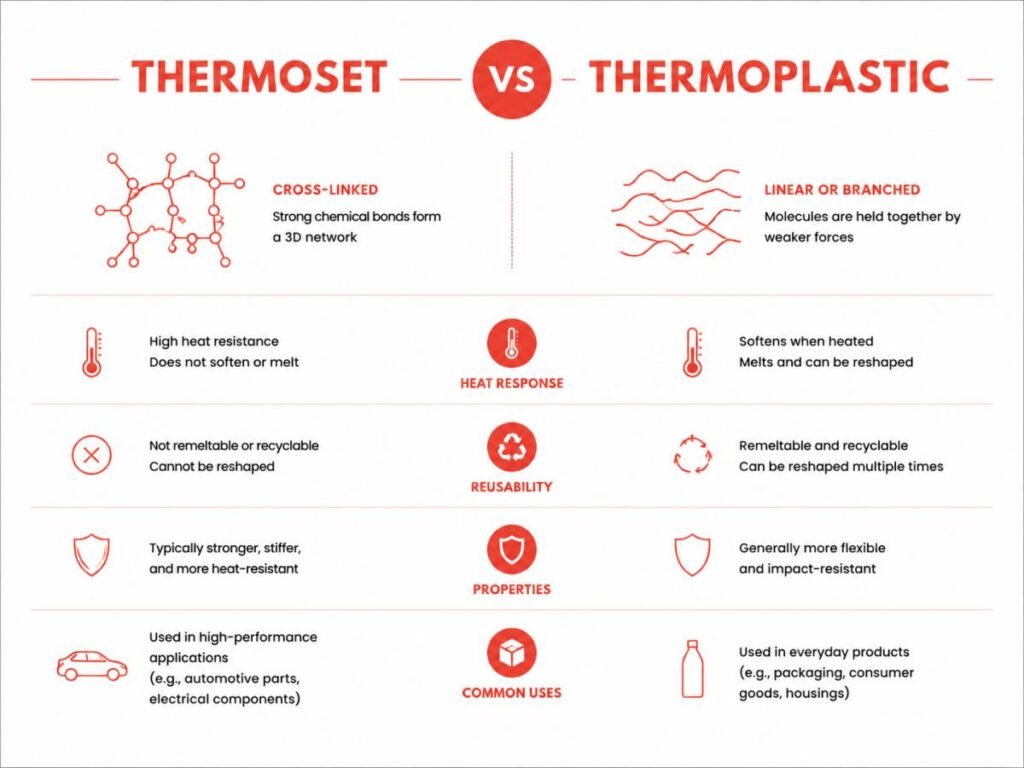
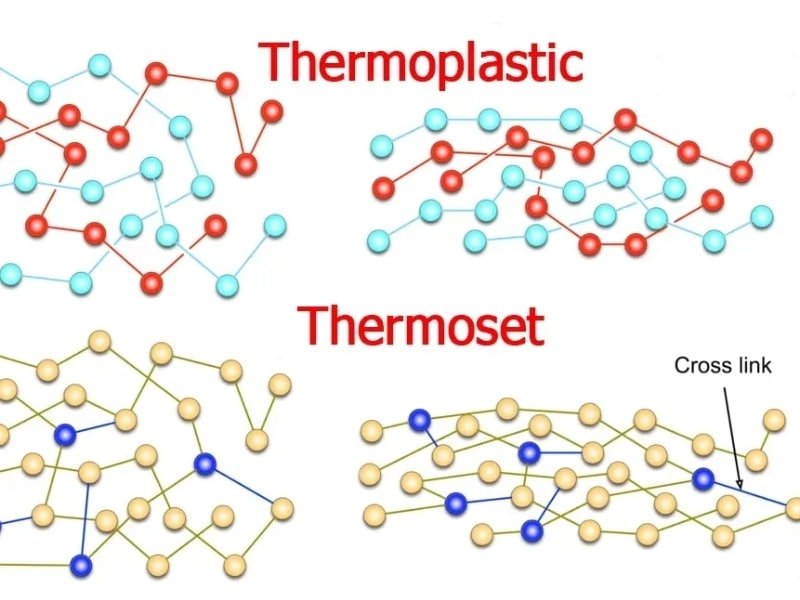
Think of thermosets and thermoplastics as two different ways materials respond to heat. Thermosets are like baking a cake: once the batter goes into the oven and sets, it becomes solid and cannot be melted back. This irreversible change is due to a chemical reaction that cross-links the polymer chains, locking the material into a rigid structure.
Thermoplastics, on the other hand, behave more like chocolate or wax: they soften when heated and harden when cooled, and this process can be repeated multiple times. Their polymer chains remain linear or branched, allowing the material to flow, reshape, and solidify repeatedly without undergoing a permanent chemical change.
For a more detailed comparison of their specific properties, see our guide on Thermoset vs Thermoplastic: What is the Difference?
Pros & Cons of Thermoset vs Thermoplastic
Thermosets
Thermosets are like concrete: once poured and set, their shape is permanent and strong.
Pros:
- Stable Under Stress: They maintain their shape and structural integrity even under heat or mechanical load.
- Heat and Chemical Resistance: Their cross-linked network makes them resistant to many chemicals and elevated temperatures.
- High Strength and Rigidity: Ideal for parts that must endure mechanical stress without bending.
Cons:
- Cannot Be Reshaped: Like concrete, once set, they cannot be remolded or recycled easily.
- Slower Production: Curing times can be longer than the cooling cycles of thermoplastics.
- Limited Flexibility: Their rigid nature can lead to brittleness under sudden impacts.
Thermoplastics
Thermoplastics are more like modeling clay: they can be heated, reshaped, and cooled repeatedly without permanent changes.
Pros:
- Reformable and Recyclable: Parts can be remelted and reprocessed, which is convenient for prototyping and waste reduction.
- Versatile for Complex Designs: They flow well into molds, enabling intricate shapes, thin walls, and detailed features.
- Efficient Production: Fast heating and cooling cycles make them suitable for high-volume manufacturing.
Cons:
- Sensitive to Heat Over Time: Excessive temperatures can deform parts.
- Lower Chemical Resistance: Certain thermoplastics can be attacked by solvents or harsh chemicals.
- Potential for Creep: Long-term loading may cause slow deformation in some thermoplastics.
Thermoset vs Thermoplastic: Practical Differences in Injection Molding
Understanding whether a plastic can be remelted after heating is not just a chemical curiosity—it directly impacts how parts are manufactured, how they perform, and the overall cost of production. Here’s a practical comparison of thermosets and thermoplastics across key industrial dimensions:
Processing and Manufacturing
Thermoplastics can be repeatedly melted and reshaped, which allows for easier trial runs, adjustments, and rapid production. In contrast, thermosets undergo an irreversible chemical reaction during curing, meaning once they solidify, they cannot be remelted. This makes their molding process more sensitive to temperature, timing, and mold design.
Product Performance
Thermosets generally offer higher heat resistance, rigidity, and dimensional stability, making them ideal for components exposed to high temperatures, heavy loads, or electrical insulation requirements. Thermoplastics provide flexibility, impact resistance, and ease of molding complex geometries, which is advantageous for consumer goods, packaging, and intricate parts.
Tooling and Production Cost
The irreversible nature of thermosets demands precise mold design and strict process control, often increasing tooling complexity and cost. Thermoplastics allow for more forgiving mold adjustments and rework during production, reducing risk and enhancing efficiency.
Production Volume and Flexibility
Thermoplastics’ ability to remelt and flow repeatedly makes them well-suited for high-volume production. Thermosets, with their longer curing times and sensitivity to mold precision, are typically better for smaller batches or specialized components where long-term performance outweighs throughput.
Sustainability and Waste Management
Thermoplastics can often be recycled or reprocessed, reducing material waste and environmental impact. Thermosets, once cured, cannot be remelted, which requires careful planning to minimize scrap and manage waste.
Material Selection Guide for Thermoset vs Thermoplastic Injection Molding
Now that we’ve explored the properties, advantages, and limitations of thermoset and thermoplastic materials, the next step is figuring out which one fits your project best. The tables below provide a clear overview of commonly used thermoset and thermoplastic materials, highlighting key characteristics such as hardness, toughness, heat resistance, and cost to help you make an informed choice.