In many projects, design problems rarely show up on the CAD screen—they appear later, during tooling, trial runs, or even mass production. That’s where Design for Manufacturability (DFM) becomes practical, helping bridge the gap between what is designed and what can actually be produced.
Instead of treating manufacturability as a final check, DFM brings it into the early design stage, where decisions about geometry, tolerances, and assembly can still be adjusted with minimal cost.
What Is Design for Manufacturability (DFM)?
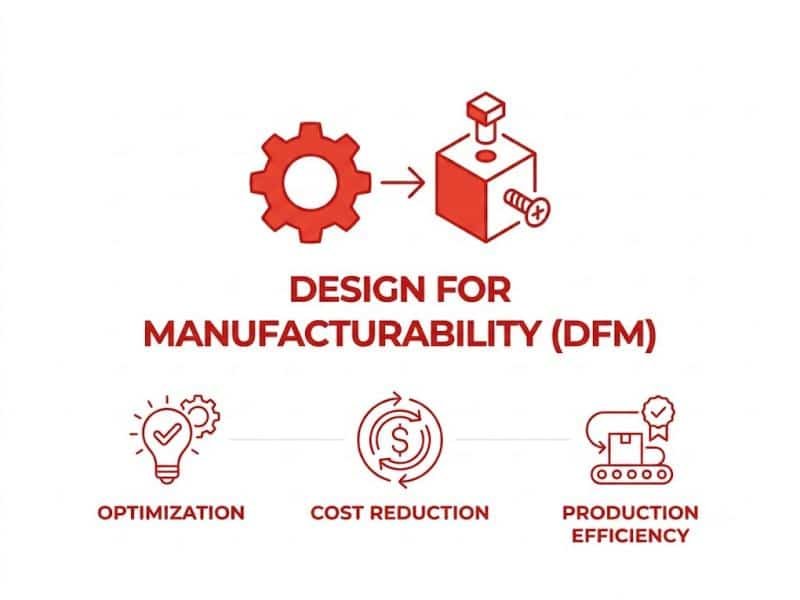
Design for Manufacturability (DFM) refers to the practice of designing parts in a way that aligns with real manufacturing capabilities. It focuses on making sure a product can be produced efficiently, consistently, and at a reasonable cost, without requiring unnecessary complexity in tooling or processing.
In practical terms, DFM is not about limiting design freedom, but about making design decisions with production in mind—such as geometry, tolerances, material selection, and process feasibility.
While DFM is often discussed on its own, it is closely related to two other concepts: Design for Assembly (DFA) and Design for Manufacturing and Assembly (DFMA). To avoid confusion, it is helpful to briefly separate them before moving into the core principles.
DFM vs DFA vs DFMA in Engineering Practice
DFM (Design for Manufacturability), DFA (Design for Assembly), and DFMA (Design for Manufacturing and Assembly) are often discussed together in product design and manufacturing, but in practice, the boundaries between them are not always strictly separated.
In many engineering contexts, the term “DFM” is commonly used in a broader sense to refer to manufacturability-related considerations in general. This is partly due to historical usage and partly because manufacturability issues are often evaluated at the part level before moving on to assembly-level optimization.
As a result, even when a process technically involves both manufacturing and assembly perspectives, “DFM” is frequently used as a shorthand in communication and documentation.
For this reason, this article uses DFM as the entry point to discuss design-for-manufacturing thinking, while still incorporating assembly-related factors where relevant.
DFM Principles for Manufacturable Product Design
A practical DFM process usually starts with a few core design principles that guide decisions before detailed manufacturing checks are performed. These principles are not strict rules, but they help reduce avoidable complexity and improve production stability from the early design stage.
Design Simplicity First
The most manufacturable designs are often the simplest ones. Every additional feature—whether it is a sharp transition, a deep pocket, or an unnecessary detail—adds cost and increases process sensitivity.
In DFM practice, simplification does not mean reducing functionality, but removing features that do not contribute to performance or assembly requirements. For example, replacing multiple small ribs with a single well-positioned reinforcement rib can often achieve the same stiffness with lower tooling complexity.
Standardization of Features
Reusing common features such as hole sizes, wall thickness ranges, and structural elements helps reduce manufacturing variability and tooling effort.
Standardized design elements also improve predictability across different parts in a product family, making scaling and maintenance easier.
For instance, using the same screw hole diameter (e.g., M3 clearance holes) across different enclosures allows shared tooling setups and reduces the number of drill or insert variations required in production.
Realistic Tolerance Strategy
Tolerances should reflect functional needs rather than manufacturing ambition. Overly tight tolerances often lead to unnecessary cost increases and lower yield without improving real product performance.
A DFM-oriented design defines which dimensions are critical and which can remain flexible within normal process variation. For example, a housing interface that only affects cosmetic alignment may not require the same tight tolerance as a shaft-fit feature responsible for mechanical positioning.
Assembly-Oriented Design
Even at the part level, assembly requirements should be considered early. Features such as alignment, fastening points, and orientation constraints can significantly affect downstream assembly efficiency. Poorly considered interfaces often lead to rework at the system level.
For example, adding chamfers or lead-in features on mating holes can reduce misalignment during assembly. Designing parts with asymmetrical features can also prevent incorrect installation without requiring additional labeling or fixtures.
Avoid Unnecessary Secondary Operations
Any additional post-processing step—such as manual trimming, rework, or secondary machining—adds cost and variability. A good DFM approach aims to minimize or eliminate secondary operations by integrating requirements into the primary manufacturing process whenever possible.
For instance, designing proper draft angles in injection-molded parts can eliminate the need for manual part release or trimming after molding, ensuring a more stable production flow.
DFM Evaluation Factors in Manufacturing Design
After setting the basic design principles, the next step is to check whether the design can actually work under real manufacturing conditions. This helps identify potential production risks early and ensures the design stays aligned with real process, material, and usage constraints.
Process Capability
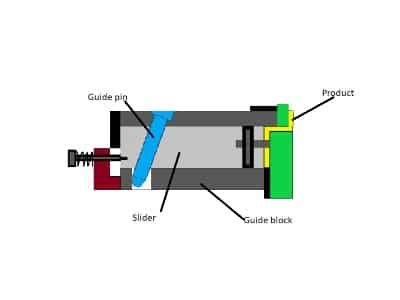
Every manufacturing process has inherent limitations that define what can be produced efficiently and consistently. These include mold release direction in injection molding, tool access in CNC machining, and layer resolution in additive manufacturing.
Deep, narrow ribs may be achievable in CNC machining with specialized tooling, but can become difficult to fill consistently in injection molding due to restricted material flow and venting limitations.
A robust design is one that stays within stable and repeatable process conditions, rather than relying on what is technically possible only under ideal setups.
Material Behavior
Materials respond differently under heat, pressure, and mechanical loading. Shrinkage, warpage, flowability, and stiffness all directly affect final part quality and dimensional stability.
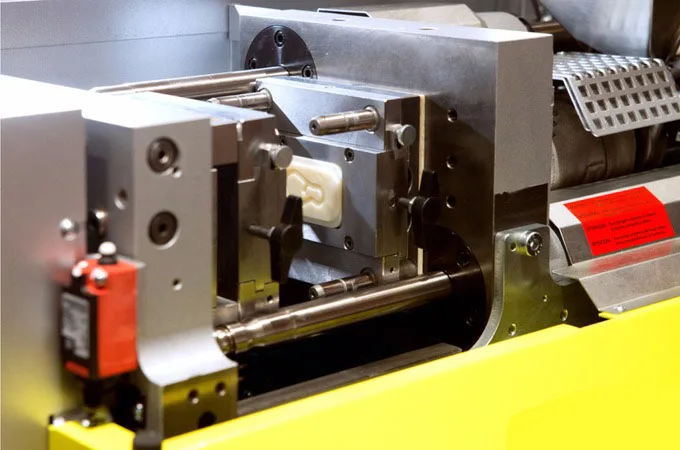
Material selection is also closely linked to the manufacturing process. For instance, in injection molding, different thermoplastics behave very differently during filling and cooling, which is further explained in our section on injection molding design.
Design Features and Geometric Constraints
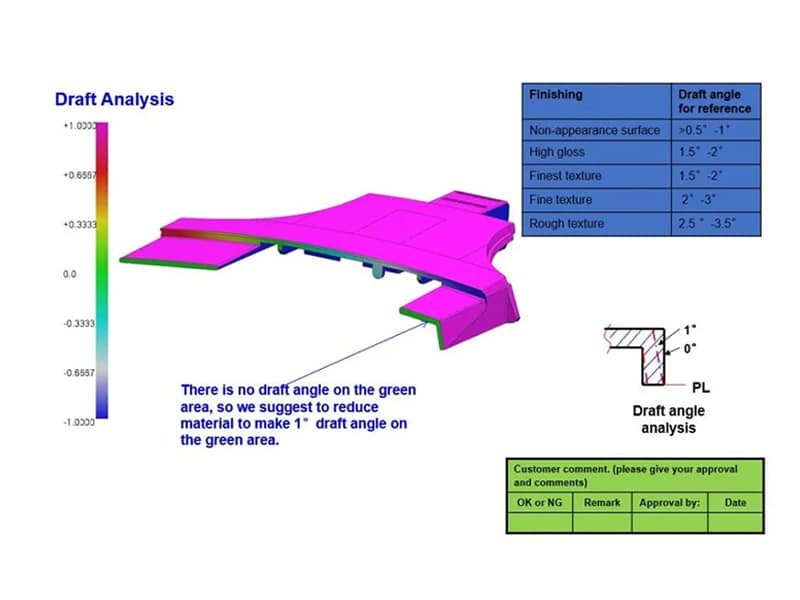
This factor evaluates whether specific geometric features can be reliably produced without introducing excessive manufacturing complexity. Wall thickness transitions, ribs, holes, undercuts, and draft angles all directly influence manufacturability.
A sharp internal corner may exist without issue in CAD, but in machining it increases tool wear and limits tool access, while in injection molding it can create stress concentration and flow disruption.
For a deeper look at how geometry and structure influence manufacturability, see our article on plastic part design.
Environmental and Operational Conditions
Real-world operating conditions also play a key role in manufacturability decisions. Temperature, load, chemical exposure, UV radiation, and long-term mechanical stress all influence both material selection and structural design.
An outdoor plastic enclosure, for example, may require UV-stable materials and reinforced rib structures to maintain dimensional stability over time. Similarly, load-bearing components often require thicker walls or internal reinforcement features to ensure long-term performance.
DFM Benefits in Custom Manufacturing Projects
In custom manufacturing, many issues only become visible once production actually begins. A solid DFM evaluation helps reduce these risks early, improving overall efficiency and production stability across different stages of the process.
Faster Iteration
DFM reduces unnecessary back-and-forth during design validation and tooling trials. When manufacturability is considered upfront, designs move through sampling and approval with fewer revisions, shortening the overall development cycle from concept to production.
Lower Cost
Manufacturing cost is often driven by design decisions such as geometry complexity, tolerance requirements, and secondary processing steps.
A design that follows DFM principles tends to stay within standard process capabilities, making tooling and production more straightforward and cost control more predictable.
Improved Part Quality and Consistency
Stable designs that align with process and material behavior are less likely to experience issues such as warping, incomplete filling, or dimensional variation.
As a result, production becomes more consistent across batches, with fewer quality fluctuations during mass production.
Better Communication Efficiency
DFM provides a shared reference point between design and manufacturing teams. It reduces ambiguity in technical discussions and makes engineering feedback more direct and actionable.
This helps both sides align earlier in the process and reduces repeated clarification during project development.
DFM Tools and Methods
DFM is not based on a single tool, but on a set of methods used to evaluate and improve manufacturability throughout the design process. These tools help bridge the gap between digital design and real production behavior.
CAD Software
Tools such as SolidWorks, Creo, and Fusion 360 are the starting point of most DFM work. They allow engineers to build and adjust geometry while checking basic manufacturability, such as wall thickness, draft angles, undercuts, and feature accessibility.
At this stage, many potential issues can already be identified visually before any physical tooling is involved.
Mold Flow Analysis
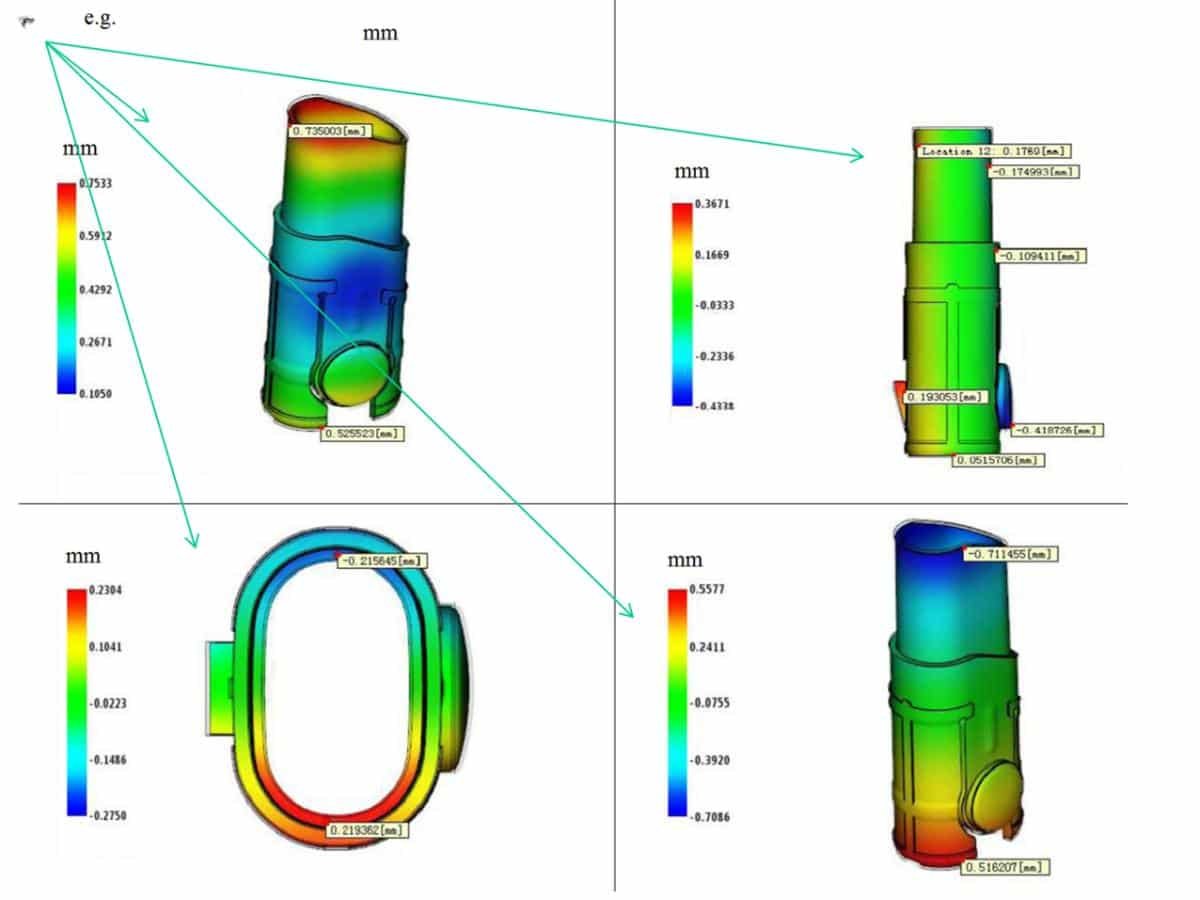
For injection molded parts, simulation tools like Autodesk Moldflow are commonly used to predict how molten material will behave inside a mold.
They help evaluate filling behavior, weld lines, air traps, and shrinkage risk. This makes it easier to identify areas where the design may cause incomplete filling or uneven cooling before the mold is manufactured.
For more insights on mold flow analysis, see our guide on Mold Flow Analysis in Plastic Injection Mold Design.
CNC Manufacturability Review
In CNC machining projects, CAM software such as Mastercam or Fusion 360 is used not only for programming toolpaths but also for checking tool access and machining feasibility.
Simulation helps identify deep pockets, inaccessible surfaces, or tool collision risks. It also provides a clearer picture of whether a feature requires multiple setups or special tooling.
Rapid Prototyping
3D printing (SLA, SLS, or FDM) is often used to quickly validate geometry before committing to tooling or machining.
Physical prototypes help confirm assembly fit, hand feel, and dimensional assumptions that may not be obvious in CAD models. This step is particularly useful for snap-fit structures or complex assemblies.
Engineering DFM Checklist
Many companies rely on structured DFM checklists during design review. These typically cover geometry rules, material constraints, tolerance ranges, and assembly considerations.
A checklist helps standardize evaluation across different projects and ensures that key manufacturability risks are not overlooked.
DFM Applications in Product Development
In custom manufacturing, DFM is not limited to a single process or tool. Instead, it is applied throughout different stages of product development, from early concept validation to production release. Its role changes depending on how mature the design is, but the goal remains the same—reducing manufacturing risk before production starts.
Early-Stage Concept Validation
In the early design stage, DFM is mainly used to test whether a concept is realistically manufacturable.
At this point, the focus is not on final details, but on identifying structural risks such as overly complex geometry, unrealistic wall thickness, or features that may require special tooling. Early evaluation helps prevent designs that look feasible in CAD but are difficult to produce in practice.
Pre-Tooling Design Review
Before any tooling or production commitment, DFM becomes more structured and detailed. Designs are reviewed for wall thickness consistency, draft feasibility, tolerance strategy, and potential assembly issues.
This is usually where most cost-related decisions are finalized, since changes after tooling starts are significantly more expensive and limited in scope.
Prototype and Iteration Stage
During prototyping, DFM focuses on validating how the design behaves in real physical form.
Prototypes often reveal fit, strength, or assembly issues that are not visible in CAD models. The feedback is then used to refine the design before moving into production, reducing the risk of larger issues during scale-up.
Production Readiness and Release
At the final stage, DFM ensures the design is stable enough for repeatable production.
The emphasis shifts from changing the design to ensuring consistency within acceptable process variation. This includes confirming that parts can be produced reliably across batches without unexpected deviation in quality or performance.
Cross-Project Standardization
In custom manufacturing environments, DFM is also used at a broader level to improve consistency across different projects.
Repeated use of standard geometries, interfaces, and structural patterns helps reduce redesign effort over time and improves development efficiency across product families.
Conclusion
If you’ve read this far, you’ve probably already noticed a simple pattern: most manufacturing issues don’t start on the shop floor—they start from small design decisions made much earlier. That is exactly where DFM matters.
At Zhongde, we support this early-stage evaluation through our injection molding service and CNC machining service, helping teams identify manufacturability risks before tooling and production begin. If you are working on a custom part and want a second opinion before committing to production, you can reach out to Zhongde for DFM review and manufacturing support.