Injection molding tonnage is one of the most important technical factors in producing consistent, high-quality molded parts. For wholesalers and buyers of custom components, understanding tonnage helps you choose the right supplier, reduce defects, and improve inquiry quality when sourcing custom rubber and plastic parts. This article explains what injection molding tonnage is, why it matters, the factors that influence it, how to choose the right tonnage, and how to calculate it.
What Is Tonnage in Injection Molding?
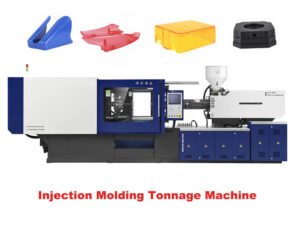
Injection molding tonnage refers to the clamping force a machine uses to keep the mold closed during injection. If the force is too low, molten material can escape from the parting line and create flash, short shots, or unstable part dimensions.
In simple terms, tonnage is the pressure that holds the mold shut while the material fills the cavity. It is usually measured in tons (one ton is equivalent to 2,000 pounds or 907 kilograms) , and larger or more demanding parts generally require higher tonnage.
Why Injection Molding Tonnage Is so Important?
Tonnage directly affects part quality, production stability, and cost efficiency. Using appropriate clamp tonnage helps the mold stay sealed, supports proper cavity filling, and reduces common defects such as flash and inconsistent packing.
For buyers of custom parts, choosing a supplier who understands tonnage helps ensure the right machine is matched to the part, which improves consistency, reduces defects, and supports stable repeat production.
Factors Affecting the Injection Molding Tonnage Requirements
Several factors influence the tonnage requirements in injection molding. Understanding these factors is essential for determining the appropriate tonnage for a specific molding project. Here are some key factors to consider:
Part Size and Complexity
Larger and more complex parts typically require higher tonnage to withstand the forces exerted during injection. The size and shape of the part, including features such as ribs, bosses, and thin walls, can impact the tonnage needed for proper mold closure.
Material Properties
Different materials have varying flow characteristics and viscosity, which can affect the required tonnage. High-viscosity materials or those with high melt flow rates may require higher tonnage to ensure complete filling of the mold cavity.
Mold Design and Layout
The mold design, including the number and configuration of cavities, affects tonnage requirements. Multi-cavity molds may require higher tonnage to accommodate the increased material flow and pressure. Multi-cavity mold has multiple cavities, allowing for the production of multiple identical parts in each injection cycle.
Wall Thickness and Flow Characteristics
Thicker walls or areas with restricted flow paths may require higher tonnage to overcome resistance and achieve proper filling. Parts with intricate geometries, such as thin ribs or complex curves, may also require higher tonnage for effective molding.
Injection Pressure and Injection Rate
The injection pressure and rate at which the molten material is injected into the mold influence tonnage requirements. Higher injection pressures or faster injection rates may necessitate higher tonnage to ensure proper mold filling and part quality. Click here to understand what injection pressure is.
It is important to evaluate these factors during the design and planning stages of an injection molding project to determine the appropriate tonnage. Working closely with mold designers and process engineers can help optimize the tonnage requirements for efficient and successful production processes.
Injection Molding Tonnage Calculating
To calculate the required clamping force, consider the part’s projected area and the material’s clamp pressure.
Determine Projected Area
Include the part, runners, gates, and any features contacting the mold. Measure in square inches (in²) or square centimeters (cm²).
Identify Clamp Pressure
Clamp pressure depends on material type, wall thickness, and cavity depth. Typical ranges:
- Standard plastics: 3–5 tons/in²
- Engineering plastics: 5–8 tons/in²
Apply the Formula
Clamping Force (tons)=Projected Area×Clamp Pressure
Example: 120 in² × 4 tons/in² = 480 tons
Add Safety Margin
Add 10–20% for process variation: 480 × 1.1 ≈ 530 tons
Check Machine Capacity
Ensure the selected machine can provide the calculated tonnage without overloading.
This method ensures stable mold closure, accurate part dimensions, and consistent production quality.
Conclusion
Understanding and selecting the correct injection molding tonnage is essential for producing high-quality, defect-free parts. By considering factors such as projected area, material properties, part geometry, and mold design, and by applying proper calculation methods with a safety margin, manufacturers can ensure stable and consistent production.
At Zhongde, we provide guidance on process parameters, tonnage selection, and precision molding for custom plastic and rubber parts. Contact us to discuss your project requirements and get a reliable quotation.