Polystyrene is one of the most versatile plastics used in injection molding, shaping everything from everyday packaging to intricate electronic housings. Its ability to flow easily into molds, maintain dimensional stability, and take on precise details makes it a favorite for both high-volume production and complex designs. In this article, we’ll explore the properties of polystyrene, why it’s ideal for certain injection-molded parts, and what to consider when designing and producing components with this material.
Overview of Polystyrene Plastic
Polystyrene (PS) is a rigid, transparent thermoplastic made from the polymerization of styrene monomers. It has a relatively low melting point, excellent dimensional stability, and good flow characteristics, which make it easy to mold into precise shapes. Chemically, PS is resistant to water and many acids, but it is sensitive to organic solvents and high heat, so its applications need to consider these limitations.

Classification of Polystyrene
- General Purpose Polystyrene (GPPS), known for its high transparency, is rigid but relatively brittle.
- High Impact Polystyrene (HIPS), enhanced with rubber additives, provides toughness and impact resistance.
- Expanded Polystyrene (EPS) is a foam-type PS often used for lightweight packaging and insulation.
- Syndiotactic Polystyrene (SPS), a crystalline form, excels in heat and chemical resistance for engineering applications.
Key Performance Properties of PS
- Clarity: GPPS boasts 90% light transmissibility, making it a cost-effective alternative to glass for transparent products.
- Lightweight: With a density of 1.04-1.09 g/cm³, PS reduces product weight, lowering shipping and material costs.
- Moisture Resistance: PS does not absorb water, maintaining dimensional stability even in humid environments.
- Chemical Resistance: PS resists acids and bases but is vulnerable to solvents, requiring careful environmental consideration.
- Radiation Resistance: Capable of withstanding gamma radiation up to 10,000 kGy, PS is ideal for sterilized medical components.
PS Injection Molding Process
Polystyrene (PS) behaves differently than other thermoplastics during injection molding, so the process requires some specific adjustments to achieve optimal results. Here’s how the PS injection molding process differs from standard practices:
Material Preparation and Drying
Unlike some hygroscopic plastics, general-purpose PS does not require extensive drying, but ensuring the resin is free from dust and contaminants is crucial. Contaminants can cause streaks or surface imperfections in the final parts.
Temperature Control
PS has a lower melting point than many engineering plastics, typically around 210–250°C. Maintaining precise barrel and mold temperatures is essential; overheating can cause yellowing or degradation, while underheating may lead to short shots or poor surface finish.
Injection Speed and Pressure
Because PS flows easily, high injection speeds are often unnecessary. Excessive pressure can cause flash or part distortion, so careful control of injection speed and holding pressure is required to produce crisp details.
Mold Design Considerations
PS parts tend to shrink more than other thermoplastics, so mold cavities must be slightly oversized to compensate. Sharp corners or thick sections should be avoided or properly radiused to reduce stress and warpage during cooling.
Cooling and Ejection
Rapid cooling can cause brittleness or internal stress in PS parts. Cooling channels should be designed to ensure even temperature distribution. Ejection systems must be gentle, as PS is relatively brittle compared with ABS or PC, making it prone to cracking if ejected too forcefully.
Post-Molding Treatment
Unlike some high-temperature plastics, PS parts generally do not require annealing. However, parts should be handled carefully to avoid scratches or breakage and may be subjected to light trimming to remove any small flash.
Advantages of PS Injection Molding
Using PS for injection molding offers multiple benefits:
- Excellent Flow Characteristics: PS’s low melt viscosity facilitates molding of intricate shapes and fine features.
- Cost-Effective: Compared to other engineering plastics, PS is budget-friendly while delivering adequate mechanical properties.
- High Dimensional Stability: Low shrinkage rates (typically 0.2% to 0.8%) ensure precision in molded parts.
- Broad Processing Temperature Range: PS adapts well to processing temperatures approximately between 180°C and 270°C.
- Versatility: Applicable for creating both rigid and foam products with variations in toughness and transparency.
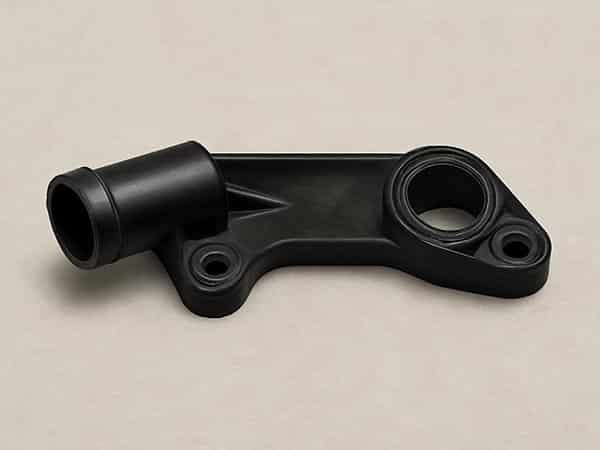
PS vs Other Plastics: Key Differences in Injection Molding
When selecting materials for injection molding polystyrene, understanding how PS compares to other plastics is essential:
- Polystyrene vs. Polypropylene (PP) Injection Molding: PS offers superior clarity and rigidity but lower impact resistance and heat tolerance. PP suits flexible, durable parts, while PS excels in transparent, cost-effective applications.
- Polystyrene vs. Polyethylene (PE) Injection Molding: PS has better dimensional stability and a higher melting point but is less flexible. PE’s toughness suits rugged uses, while PS is preferred for rigid, clear parts.
- Polystyrene vs. Polycarbonate (PC) Injection Molding: PC is tougher and more heat-resistant but significantly costlier. PS molding is ideal for disposable, transparent items where cost is a priority.
- Polystyrene vs. ABS Injection Molding: ABS provides better impact resistance and heat stability, but PS is cheaper and clearer, making it suitable for aesthetic-focused applications.
Complete PS Injection Molding Operation Guide
Achieving optimal results in polystyrene PS injection molding requires adherence to best practices across machine selection, processing parameters, and mold design:
Machine Selection
Opt for an injection molding machine with a screw L/D ratio of 17-24 and a compression ratio of 1.6-4.0 to ensure smooth material flow and consistent melting.
Temperature Settings
- Barrel and Nozzle: Typically set between 180°C and 270°C. Avoid exceeding 280°C to prevent degradation.
- Mold Temperature: Maintained between 40°C to 80°C to promote adequate cooling without warping.
Injection Pressure
Recommended between 60 MPa to 150 MPa, depending on part complexity and size.
PS Injection Molding Parts Design
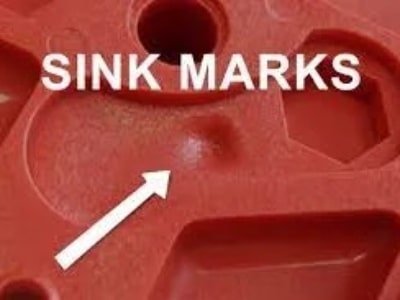
- Wall Thickness: Design parts with 1-3 mm thickness, with transitions under 25% to prevent defects like sink marks or voids.
- Draft Angles: Use 0.5-1° for GPPS and 1-2° for HIPS to facilitate easy ejection and reduce stress.
- Gate Design: Employ edge gates (0.5-1.5 mm) for GPPS to minimize flow marks and sub-gates for HIPS to enhance aesthetics.
- Venting: Incorporate vents (0.02-0.05 mm) to prevent burn marks and ensure complete mold filling.
- Ribs and Stiffeners: Designed at 50-60% of wall thickness to avoid sink marks.
- Fillets and Radii: Minimum radius about 25% of wall thickness to reduce stress concentration, especially for GPPS.
Material Selection
Choose GPPS for applications requiring clarity, HIPS for durability, or EPS for lightweight insulation, aligning with mechanical and environmental needs.
Applications of PS Injection Molding

Polystyrene PS injection molding supports manufacturing in diverse sectors:
- Medical: Laboratory consumables like petri dishes, test tubes, lab vials, and diagnostic equipment.
- Packaging: Food containers, disposable cutlery, and protective packaging foam.
- Automotive: interior trims, dashboards, and panels.
- Consumer Electronics: Housings for remote controls, insulators, and other components.
- Consumer Goods: Toys, appliance housings, and CD cases.
Zhongde Custom PS Injection Molding Services
For seeking quality PS molding solutions, Zhongde offers expert custom PS injection molding services. The dedicated team provides support for material selection, mold design consultation, and efficient production.