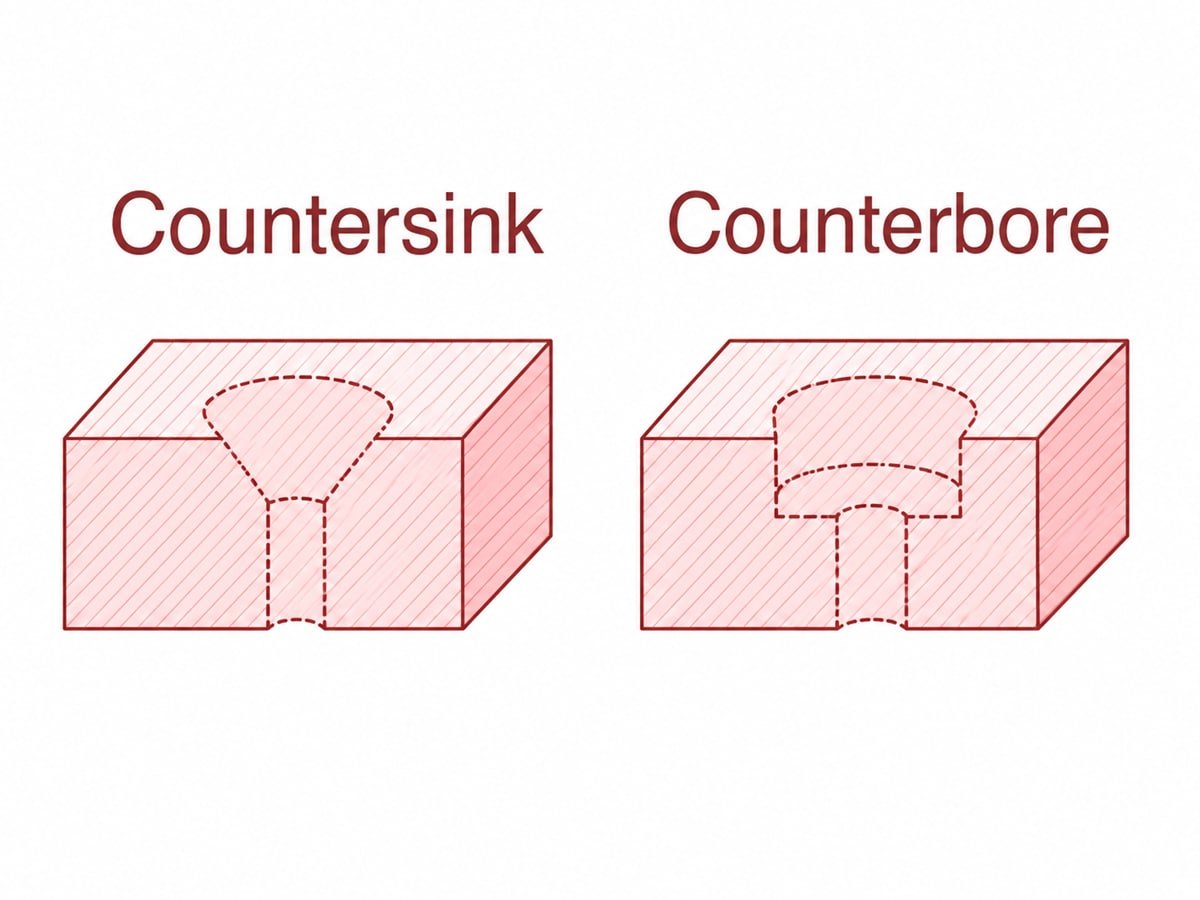
When assembling parts with socket-head or hex-head screws, a simple drilled hole often isn’t enough to secure the fastener properly. That’s where a counterbore comes in. Unlike a conical countersink, a counterbore is a flat-bottomed cylindrical recess that holds the screw or bolt head at or just below the surface.
If you’re not yet familiar with countersinks, reading Understanding Countersinks can help you better understand the differences and similarities between these two hole types.
What is a Counterbore Hole?
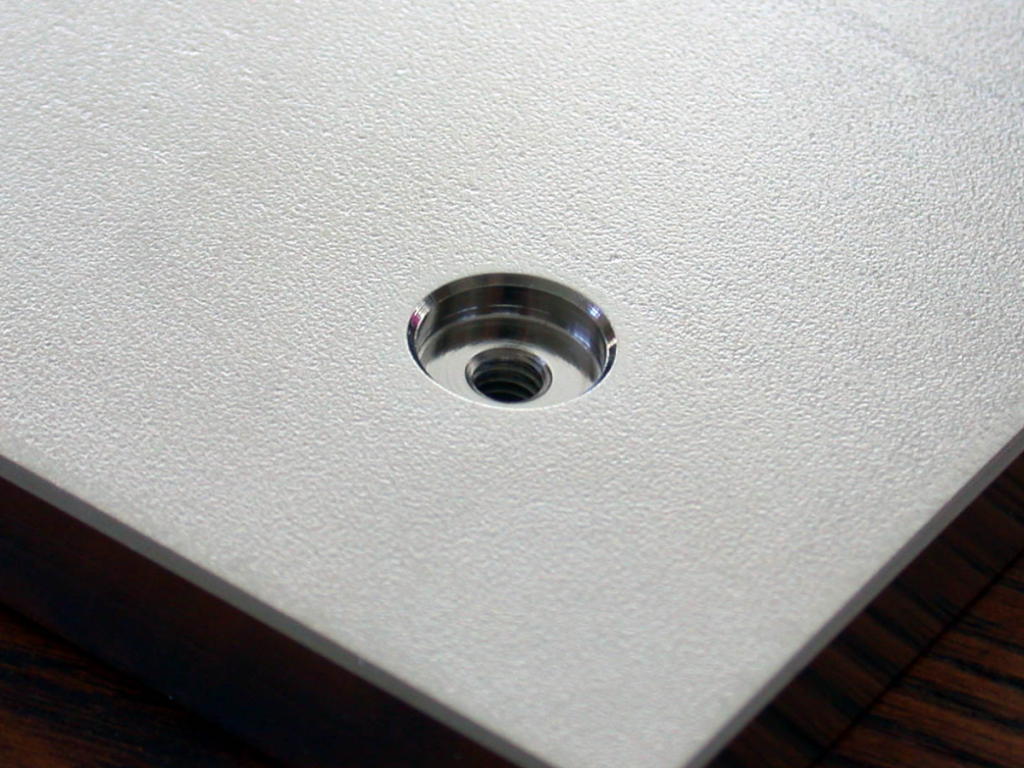
A counterbore is a cylindrical, flat-bottomed recess drilled into a hole to accommodate the head of a socket-head or hex-head screw. This helps prevent interference with other components, distributes load more evenly, and maintains a clean, professional assembly.
Components of a Counterbore
A standard counterbore hole consists of three main elements:
Flat-Bottomed Recess: fit the screw or bolt head securely.
Pilot Hole: the smaller hole beneath the counterbore that accommodates the screw’s threaded or smooth shaft.
Sidewall Cylinder: The vertical walls connecting the flat bottom to the surface create a defined boundary for the screw head. These walls help distribute pressure, protect surrounding material, and maintain the fastener’s position under torque.
Counterbore Symbols
In technical drawings, counterbores are represented by a symbol (⌴), which looks like a square or flat-bottomed recess, accompanied by the bore diameter and depth.
When to Use a Counterbore
Thicker or load-bearing parts: The cylindrical recess acts like a small platform, distributing the force from the screw head evenly and preventing the material from cracking under pressure.
Furniture or panel assembly: A counterbore allows screws to sit fully inside the surface. After painting or finishing, the screw heads and machining marks are visually hidden, creating a smooth, flawless appearance.
Preventing interference: In assemblies where moving parts pass nearby, a counterbore keeps the fastener fully seated so it won’t catch or block adjacent components. For example, in machinery covers or electronic housings, the fastener stays hidden and doesn’t snag wiring or gears.
Precision assemblies: Counterbores ensure screws sit exactly where intended, keeping parts aligned. In automotive brackets or mechanical fixtures, this accuracy prevents misalignment and wobbling, maintaining consistent performance.
Counterbore Holes vs. Countersink Holes
While both counterbores and countersinks are used to seat screws, their differences make counterbores preferable for certain applications.
Shape and Seating
- Counterbore: A flat-bottomed cylinder, like a tiny platform, holds the screw head fully and evenly. Ideal for socket-head or hex-head screws in machinery or furniture where stability is crucial.
- Countersink: A conical recess suited for flat-head screws. It does not offer the same flat support, making it less effective for thick or high-stress materials.
Load Distribution
- Counterbore: Spreads the force of the screw head evenly over the bottom surface, preventing dents or cracks in metal, plastic, or wood.
- Countersink: Concentrates pressure at the edges of the screw, which can damage thin or brittle materials if used improperly.
Assembly Guidance and Alignment
- Counterbore: Guides the screw shaft into place, keeping multi-screw assemblies aligned and reducing wobble. This is especially helpful in high-volume or precision production.
- Countersink: The angled shape provides less guidance for the screw shaft, so misalignment is more likely in multi-fastener assemblies.
Benefits of Counterbores
Counterbores do more than just hide screw heads—they enhance the entire assembly process and product performance in ways that are often overlooked:
Simplified Tooling and Machining
By creating a precise, flat-bottomed recess, counterbores reduce the need for extra jigs or clamps during assembly. The screw seats exactly where it should, saving setup time in production and reducing the risk of human error.
Predictable Torque and Fastening
When tightening socket-head or hex-head screws, the counterbore ensures that torque is applied evenly. This predictability minimizes over-tightening or stripping, especially in metals and engineered plastics.
Ease of Maintenance and Replacement
Fasteners embedded in a counterbore hole are easier to access with standard tools, without damaging the surrounding surface. This simplifies repairs and prolongs the lifespan of the product.
Enhanced Design Flexibility
Designers can integrate counterbores in creative ways: for modular furniture, stackable electronics, or adjustable fixtures, the recessed screws allow parts to slide, align, or pivot without obstruction.
Support for Automated Assembly
In automated manufacturing lines, counterbores act as “guides” for screwdrivers or robotic arms, reducing misalignment and cycle time. The uniform recess ensures consistent seating across hundreds or thousands of fasteners.
How to Design a Counterbore
Similar to a countersink hole, a counterbore hole should be clearly indicated on technical drawings or digital models to ensure proper application in design and manufacturing. However, unlike a conical countersink, a counterbore is a cylindrical recess, which simplifies certain considerations. The flat-bottomed shape typically has a 90° sidewall, so designers mainly need to specify:
- The diameter of the counterbore (top opening)
- The depth of the recess
- The diameter of the through-hole below the counterbore
Selecting Screw Types
Counterbores are most commonly used for:
- Socket-head cap screws (Hex)
- Hex-head bolts
- Flat-bottomed fasteners that require full seating without protrusion
Choosing the correct screw type ensures the fastener sits securely and aligns properly within the cylindrical recess.
Counterbore Dimensions and Standards
When designing counterbores, industry standards such as ANSI B18.3 and ISO 273 provide recommended dimensions. Below is a reference table for common metric and US screw sizes: