As electronic devices continue to become more compact and functionally complex, protecting internal components has become a critical engineering challenge. Low pressure overmolding (LPM) offers a more controlled and production-friendly alternative. Using low-viscosity materials and low injection pressure, it enables reliable encapsulation of sensitive components while improving manufacturing efficiency and consistency.
What is Low-Pressure Overmolding?
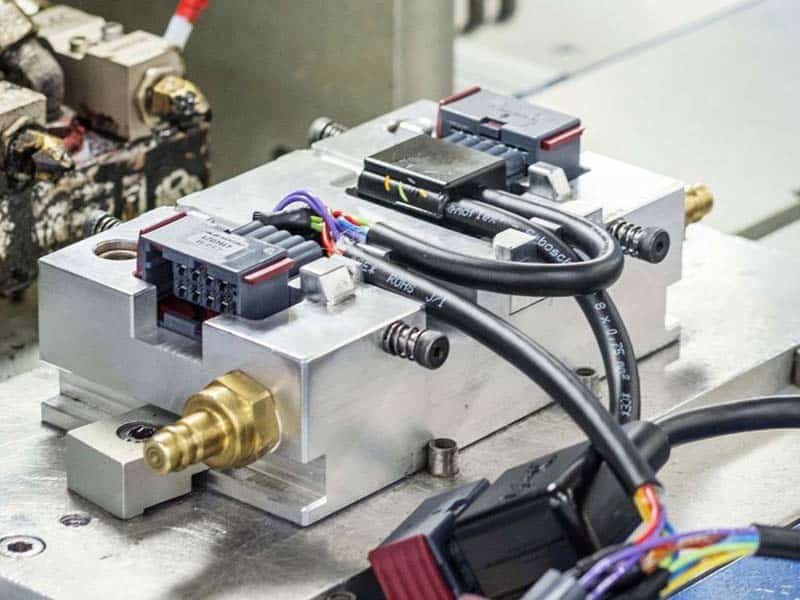
Low pressure overmolding (LPM) is a specialized encapsulation process that lets you protect sensitive electronic assemblies—such as PCBs, sensors, connectors, and cable harnesses—without risking damage to delicate components.
It uses low injection pressure (typically 3.5–14 bar or 50–200 psi) and low-viscosity thermoplastic materials. These materials flow gently around the parts. Because the aluminum mold remains relatively cool during the process, heat is quickly drawn away from the components. This keeps solder joints and heat-sensitive elements within safe temperature limits.
Once injected, the material cools and bonds directly to your substrate through natural adhesion. The result is a single, seamless, fully sealed enclosure that provides reliable protection against moisture, dust, vibration, and mechanical stress. Your finished part is compact, durable, and immediately ready for final assembly or testing—no additional housings, potting compounds, or multi-step curing required.
Materials Used in Low Pressure Overmolding
Materials specifically for low pressure overmolding should flow gently at low pressure, bond reliably to your substrates, and deliver consistent sealing in short molding cycles. Here are the three main families used.
Polyamide-Based Hot-Melt Materials (PA)
- Low viscosity at 180–240°C enables complete filling around delicate PCBs, sensors, and solder joints without high pressure or damage.
- Strong natural adhesion to circuit boards, metals, and plastics, eliminating the need for primers or additional bonding steps.
- Rapid cooling in aluminum molds supports 15–60 second cycles while maintaining IP67/IP68 sealing performance.
- Excellent resistance to thermal shock, vibration, and moisture across -40°C to 125–150°C operating ranges.
- Available in medical-grade (ISO 10993 tested), UV-stabilized, and hydrolysis-resistant versions for demanding environments.
- Some grades are up to 80% bio-based and reworkable for easier prototyping or field repairs.
Polyolefin-Based Materials (PO)
- Very low durometer (Shore A 30–80) delivers soft-touch surfaces and excellent vibration damping directly in the overmold.
- High elongation and flexibility create integrated strain relief for cables and connectors without separate parts.
- Optimized low viscosity at 160–220°C allows gentle flow and short cycle times while protecting sensitive components.
- Strong adhesion to PA and PO substrates, enabling multi-shot or hybrid soft-hard designs in a single molding step.
- Good chemical and abrasion resistance combined with IP67/IP68 sealing capability for wearable, medical, and outdoor electronics.
- Many grades meet biocompatibility requirements and remain flexible across -40°C to +100°C.
Thermoplastic Elastomer / Thermoplastic Polyurethane Materials (TPE/TPU)
- Very low durometer (Shore A 30–80) delivers soft-touch surfaces and excellent vibration damping directly in the overmold.
- High elongation and flexibility create integrated strain relief for cables and connectors without separate parts.
- Optimized low viscosity at 160–220°C allows gentle flow and short cycle times while protecting sensitive components.
- Strong adhesion to PA and PO substrates, enabling multi-shot or hybrid soft-hard designs in a single molding step.
- Good chemical and abrasion resistance combined with IP67/IP68 sealing capability for wearable, medical, and outdoor electronics.
- Many grades meet biocompatibility requirements and remain flexible across -40°C to +100°C.
Zhongde assists clients in material selection based on operating temperature range, chemical exposure, hardness requirements, and regulatory needs. Testing protocols confirm adhesion and sealing performance for each project.
What Items Can Be Low-Pressure Overmolded?
Low pressure overmolding works well for a wide range of delicate or sensitive items that need reliable protection without damage during production.
Printed circuit boards (PCBs) and electronic assemblies
You can directly encapsulate complete PCBs with components, sensors, and solder joints. The low-viscosity material flows around fine details without disturbing them, giving your board full moisture, dust, and vibration protection while keeping it compact.
Antennas and wireless modules
Sensitive antennas remain fully functional. The low-density overmolding material actually improves radio signal performance in many cases while adding mechanical protection and environmental sealing.
Sensors and connectors
You can overmold temperature, pressure, motion, or proximity sensors along with their connectors. The process creates a sealed, strain-relieved unit that performs reliably in harsh conditions.
Cable harnesses and wire assemblies
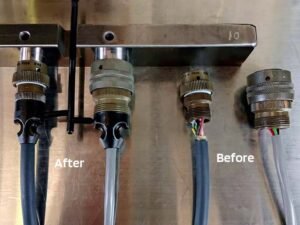
Integrated strain relief and full sealing at cable entries are achieved in one step. This replaces separate heat-shrink tubing or potting and reduces assembly time.
Batteries
Batteries can be encapsulated without reducing capacity. The protective layer shields them from shock, vibration, moisture, and corrosion, helping extend service life.
Magnets
Permanent magnets are overmolded without significant loss of magnetic strength. The surrounding material provides mechanical fixing and environmental protection.
Threaded inserts, metal rods, bolts, and clips
These metal components can be molded directly into the part. This creates strong, ready-to-assemble features without additional fasteners or secondary operations.
Key Advantages of Low Pressure Overmolding
Low pressure overmolding delivers practical benefits that directly help electronic products perform better.
Protects Sensitive Electronics Without Damage: The low pressure injection molding process ensures delicate components remain intact during encapsulation.
Provides Reliable Waterproof Sealing: With proper design, LPM can achieve IP67 or IP68 ratings, suitable for outdoor and harsh environments.
Replaces Multi-Step Processes: LPM combines encapsulation, sealing, and mechanical protection into a single operation.
Improves Production Efficiency: No curing required, reduced labor involvement, and the cycle time is as short as 15–60 seconds.
Lower Tooling Cost: Aluminum molds are faster and more cost-effective than steel tooling used in high-pressure injection molding.
Applications of Low Pressure Overmolding
Low pressure overmolding is used across several industries where electronic assemblies require protection.
- PCBs
- Electronic assemblies
- Sensors
- Control modules
- Connectors
- Handheld instruments
- Diagnostic sensors
- Wearable components
- Motor control boards
- LED drivers
Low Pressure Overmolding Compared to High-Pressure Molding and Potting
Low pressure overmolding differs from high-pressure injection molding and traditional potting in several measurable ways. The table below summarizes key parameters.