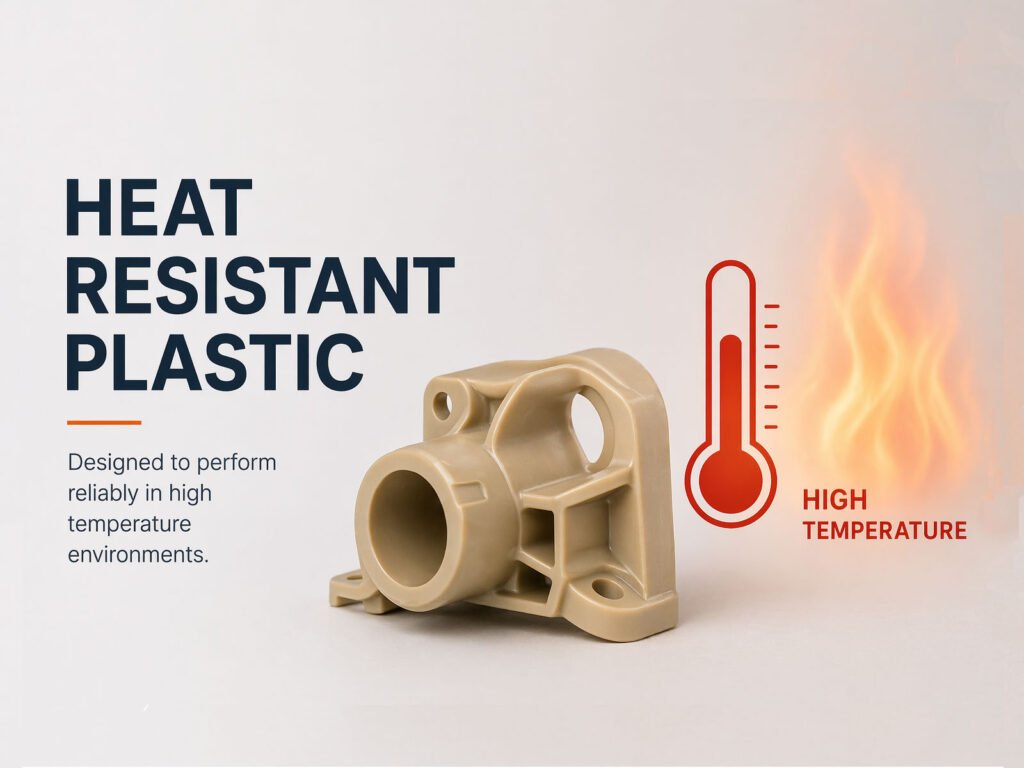
Plastic parts are often used in environments where the temperature is not stable. Some are close to motors, some sit inside electrical enclosures, and some need to keep their shape during repeated heating. In these cases, ordinary plastics may soften, deform, or lose performance too early.
That is why heat proof plastics are important. They are designed to maintain strength, shape, and functional stability under elevated temperatures. Depending on the application, they may also need to resist creep, shrinkage, or surface changes caused by heat exposure.
In this guide, we will look at what high temperature plastics are, the main types and materials available, and how to choose the right one based on real design needs.
What Are Heat Resistant Plastics?
Heat resistant plastics are polymers that can perform reliably in higher-temperature environments without losing their structural integrity too quickly. They are not all “heatproof,” but they are formulated to tolerate heat better than standard plastics used in general applications.
In practice, heat resistance can mean different things depending on the part. For some products, it means the plastic should not warp near a heat source. For others, it means the material should keep its mechanical strength during long-term use at elevated temperatures. In many cases, high temp plastics are selected because they offer a balance between thermal stability, strength, weight, and manufacturability.
Different Types of Heat Resistant Plastics
Heat resistant plastics can generally be divided into two groups based on their molecular structure: semi-crystalline plastics and amorphous plastics. The difference in crystallinity affects how plastics respond to heat, especially in terms of melting behavior, dimensional stability, and long-term temperature resistance.
Semi-Crystalline Heat Resistant Plastics
Semi-crystalline plastics contain both ordered crystalline regions and disordered amorphous regions. The tightly packed crystalline areas provide better resistance to heat, chemicals, and wear, allowing these plastics to maintain their strength at elevated temperatures.
Common examples include PEEK, PPS, and PPA. These materials are often selected for applications that require continuous exposure to high temperatures, mechanical stress, or harsh environments.
Amorphous Heat Resistant Plastics
Amorphous plastics have a more random molecular structure without clearly defined crystalline regions. Instead of melting at a specific temperature, they gradually soften when heated. This allows them to maintain good dimensional accuracy and stable appearance during temperature changes.
Common heat resistant amorphous plastics include PEI, PES, and PSU. These materials are widely used in applications where dimensional stability, transparency (in some cases), or long-term heat exposure are important.
Common Heat Resistant Plastic Materials
Although many plastics are designed to resist heat, they do not all perform in the same way. Some materials are chosen for extremely high operating temperatures, while others are valued for balancing heat resistance with cost, strength, or chemical stability.
That is why selecting a heat resistant plastic material often starts with understanding how different materials behave under heat and where they are most commonly used.
PEEK (Polyetheretherketone)
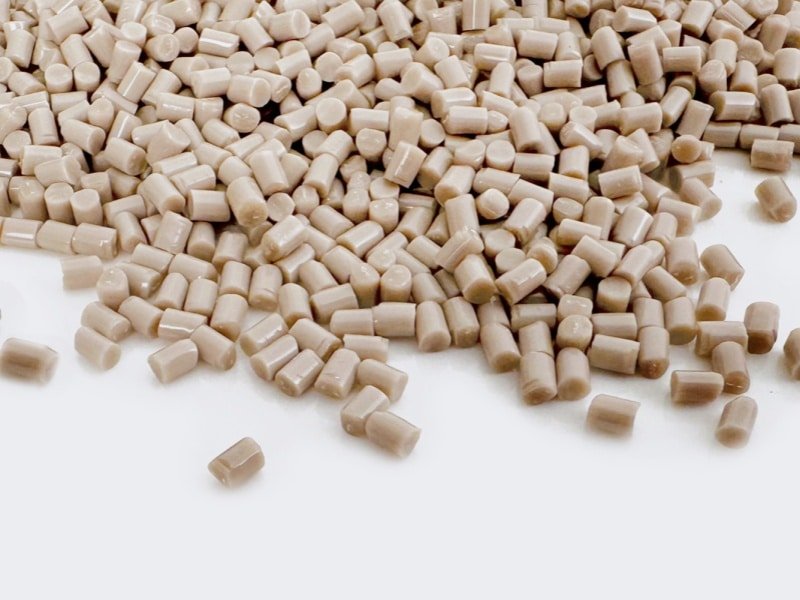
When applications involve high temperatures and demanding mechanical loads, PEEK is often one of the first materials engineers consider. It offers outstanding thermal stability and can maintain its mechanical properties at temperatures around 250°C.
This combination of heat resistance, strength, and wear performance makes PEEK suitable for aerospace components, automotive systems, and precision industrial parts. Although it is one of the more expensive options, it is often chosen where long-term performance is critical.
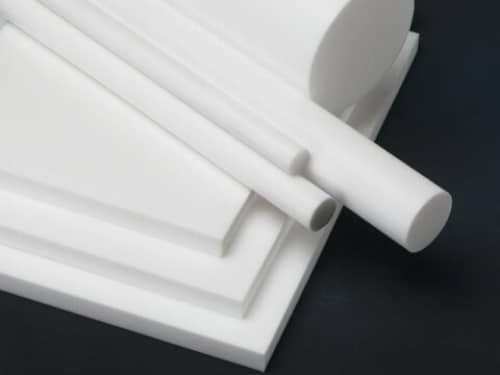
PTFE (Polytetrafluoroethylene)
PTFE is famous for its exceptional chemical resistance and very low friction. It can handle high temperatures, typically up to around 260°C continuously, without losing its shape or performance. This makes it ideal for seals, gaskets, and sliding parts in chemical and food processing applications. Unlike some other heat resistant plastic materials, PTFE is extremely resistant to most solvents and acids, which is why it’s widely used in laboratory and industrial settings.
PPS (Polyphenylene sulfide)
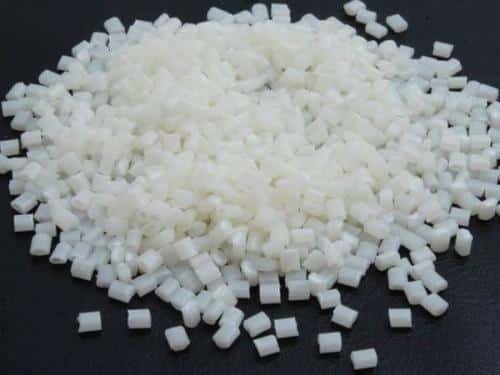
For applications that involve both elevated temperatures and chemical exposure, PPS is a common choice. It can withstand continuous temperatures around 200–220°C while maintaining good dimensional stability.
Because PPS also performs well in contact with automotive fluids and aggressive chemicals, it is widely used in pump components, electrical housings, and under-hood automotive parts where both thermal and chemical resistance are required.
PEI (Polyetherimide)
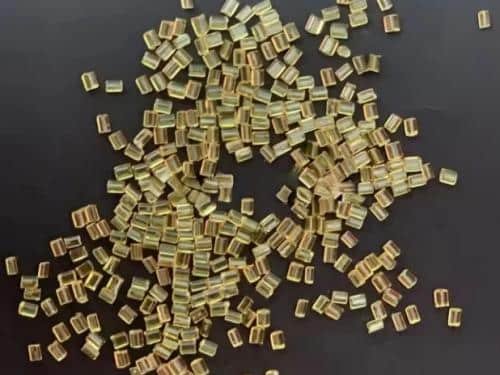
When precision and heat resistance need to be balanced, PEI is often selected. It provides reliable thermal performance up to around 170–180°C and maintains dimensional accuracy under heat.
Its natural flame resistance makes it especially useful for electrical connectors, medical equipment, and precision molded parts where stability is important.
PI (Polyimide)
PI, including forms like Kapton®, is renowned for its ability to maintain strength, dimensional stability, and electrical insulation in very high temperature environments—up to 300°C or more. It is widely used in electronics, flexible circuits, insulating films, and aerospace applications where thermal endurance is critical.
Phenolic
Unlike high-performance thermoplastics, phenolic is a thermoset material that becomes permanently rigid after curing. This structure allows it to remain stable under heat while also providing excellent electrical insulation.
Because of these properties, phenolic materials are often used in electrical components, brake parts, and industrial systems where rigidity and heat resistance are both necessary.
How to Choose Heat Resistant Plastics
Choosing the right heat resistant plastic is not only about selecting a material with the highest temperature rating. A plastic part must continue to perform under its actual working conditions, including mechanical loads, chemical exposure, dimensional requirements, and manufacturing limitations.
Consider the Working Temperature
The first step is to understand the temperature your part will experience during operation. Check both the continuous service temperature and any short-term temperature peaks.
For example, a plastic component used near an engine or industrial heater may require materials such as PEEK or PPS that can withstand prolonged high temperatures. However, for parts exposed to moderate heat, materials like PEI or high-temperature nylon may provide sufficient performance at a more reasonable cost.
Evaluate Mechanical Requirements
Heat resistance alone does not guarantee that a plastic part will work properly. The material must also maintain its strength, stiffness, and wear resistance at the operating temperature.
For example, a high-temperature gear or bearing needs not only thermal stability but also low friction and good wear resistance. In this case, PEEK or PPS may be more suitable than a material that only has a high heat rating but poor mechanical performance under load.
Check Chemical and Environmental Conditions
Many heat resistant plastics are used in environments where they are exposed to oils, fuels, solvents, or cleaning chemicals. The material should be compatible with the surrounding environment to avoid swelling, cracking, or loss of performance.
For example, components used in chemical processing equipment may require PPS or PEEK because of their excellent chemical resistance. On the other hand, a heat-resistant plastic used in an electrical enclosure may prioritize insulation properties rather than chemical resistance.
Consider Dimensional Stability and Precision
Some applications require parts to maintain tight tolerances after repeated heating and cooling cycles. Materials with low thermal expansion and good dimensional stability are often preferred.
For example, precision components in electronics or medical equipment may use PEI or PES because they can maintain accurate dimensions while operating at elevated temperatures.
Balance Performance and Cost
Higher heat resistance often comes with higher material and processing costs. The goal is not always to choose the plastic with the highest temperature rating, but the one that meets the actual requirements.
For example, a medical device component that must withstand repeated sterilization may justify the use of a high-performance plastic, while a protective cover exposed to moderate heat may only need a more economical heat resistant material.
Conclusion
High temperature resistant plastics offer different levels of thermal stability, strength, and processability, so the right choice depends on the actual demands of the application. Operating temperature, load, environment, and manufacturing method all play an important role in material selection.
With experience in processing different plastic materials, we provide custom plastic parts that balance heat resistance, durability, and cost. Whether you need a prototype or high-volume production, Zhongde is ready to support your project with professional manufacturing services.