
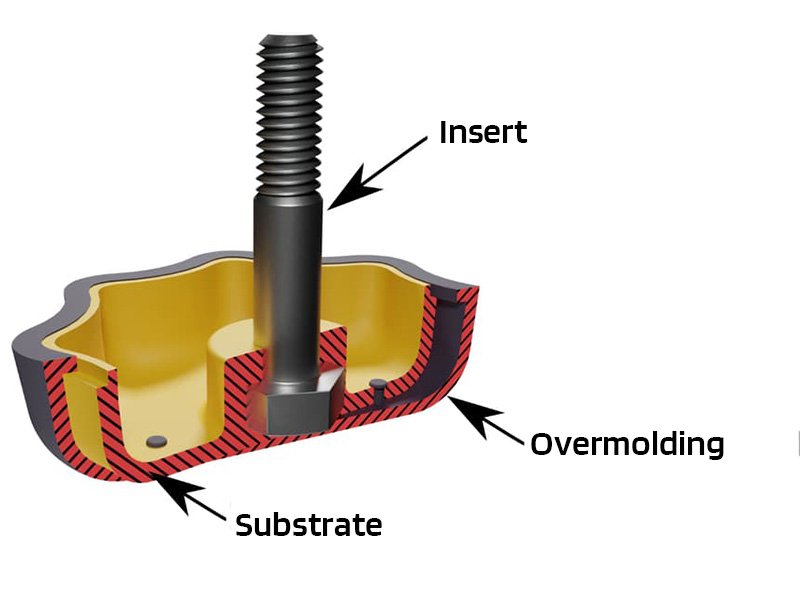
In the manufacturing industry, plastic overmolding has become a common method for combining materials to create functional parts. This technique involves applying a layer of plastic over a substrate, which can be metal or another plastic. One specific application is overmolding plastic on metal, which is used in products requiring strength and additional features like insulation or grip.
What is Plastic Overmolding?
Plastic overmolding is a technique that involves injecting plastic material over a substrate, which can be either metal, plastic, or even a rubber component. The objective is to create a durable and functional part that combines the benefits of both materials. The plastic is typically injected into a mold containing the substrate, forming a strong bond as the plastic cools and solidifies. This process is used in a wide range of applications, from automotive components to consumer electronics, where the final product requires both the strength of metal and the flexibility, insulation, or aesthetic features of plastic.
The Plastic Overmolding Process
The plastic overmolding process follows several key steps that ensure the final product meets the required standards of quality and durability.
- Substrate Preparation: The substrate is prepared. If it is a pre-formed part, such as a metal insert, it is cleaned and positioned in the mold. For plastic substrates, they might be molded in the same cycle.
- Injection Molding: The molten plastic is injected into the mold, covering the pre-formed substrate. The plastic must be able to flow around the substrate and form a consistent, uniform layer. Temperature, pressure, and material flow rate are carefully controlled to ensure that the plastic adheres properly to the substrate and that no air pockets or defects are present.
- Cooling and Solidification: Once the plastic has been injected, it is allowed to cool and solidify. During this phase, the plastic bonds firmly with the substrate, forming a durable part that exhibits the combined properties of both materials.
Overmolding Plastic on Metal
Overmolding plastic on metal combines the rigidity of metal with the versatility of plastic. This method is used for parts that need high strength and additional features like electrical insulation or ergonomic grips. Common applications include tool handles, electrical connectors, and automotive components. However, several factors must be considered to achieve a successful overmolded part.
Material Options for Overmolding Plastic on Metal
The materials used for overmolding on metal substrates include thermoplastics like ABS, polycarbonate, and nylon. Metals commonly used in overmolding include aluminum, steel, and brass. The choice of plastic must be compatible with the metal to ensure a strong bond and optimal performance.
Advantages and Disadvantages of Overmolding Plastic on Metal
Advantages of Overmolding Plastic on Metal
- Combines insulation with structural strength
- Improves heat resistance performance
- Maintains electrical conductivity where required
- Enhances surface appearance and ergonomics
- Reduces total component count
- Lowers long-term assembly costs
- Integrates seals or cushioning features directly
Disadvantages of Overmolding Plastic on Metal
- Higher initial tooling investment
- Precise insert positioning required
- Risk of delamination without proper surface preparation
- More complex process control
- Longer cycle times due to insert placement
- Increased production handling requirements
Functionality of Overmolding Plastic on Metal
Overmolded plastic parts on metal are commonly used in applications where the metal provides strength, and the plastic offers other features like electrical insulation, aesthetic appearance, or weather resistance. Common examples include connectors, handles, and housings for automotive and electronic components.
Durability of Overmolding Plastic on Metal
The durability of overmolded parts depends on the compatibility of the plastic and metal materials, as well as the precision of the overmolding process. When done correctly, overmolding can produce parts that are both long-lasting and resistant to harsh environmental conditions, including high temperatures, corrosion, and mechanical wear.
Overmolding Plastic on Plastic
Overmolding plastic on plastic involves layering one type of plastic over another. This is common for creating soft-touch surfaces on rigid bases, such as in remote controls or kitchen utensils.
Material Options of Overmolding Plastic on Plastic
Similar plastics are typically used when overmolding plastic onto plastic. Materials like ABS, polypropylene (PP), and polycarbonate (PC) are often chosen for their compatibility and the properties they impart to the final product. The plastic layers must have similar shrinkage rates to ensure uniform bonding.
Advantages and Disadvantages of Overmolding Plastic on Plastic
Advantages of Overmolding Plastic on Plastic
- Lower overall part weight
- Reduced material cost
- Easier thermoplastic processing
- Improved production efficiency
- Enables multi-color designs
- Allows textured surface finishes
- Enhances product appearance
Disadvantages of Overmolding Plastic on Plastic
- Lower structural strength than metal-based options
- Limited suitability for high-load applications
- Bonding sensitivity to material compatibility
- Requires precise process control
- Risk of weak interlayer adhesion
Functionality of Overmolding Plastic on Plastic
Plastic-on-plastic overmolding is ideal for applications where aesthetic considerations, such as color or texture, are important. It also allows for greater design flexibility, especially in applications, where lightweight and cost-effective solutions are prioritized.
Durability of Overmolding Plastic on Plastic
Durability depends on material selection; compatible pairs resist peeling and cracking. These parts perform well in everyday use but may not match the longevity of overmolding plastic on metal in extreme conditions.
Plastic Overmolding Techniques
There are several techniques employed in plastic overmolding, each offering its own set of benefits depending on the requirements of the application. Three commonly used methods are:
Insert Molding: This technique involves placing a pre-formed part (either metal or plastic) into a mold before injecting the second material. It is commonly used for small, intricate parts where precision is crucial.
Co-injection Molding: Co-injection molding involves injecting two different materials simultaneously into the same mold. This technique is ideal for creating multi-material parts.
Multi-shot Molding: This method uses multiple injection cycles to inject different materials or colors onto a part. Multi-shot molding is particularly useful for creating parts with complex geometries or for parts that require multiple materials in a single piece.
Best Practices for Plastic Overmolding
To ensure the highest quality in overmolded parts, it is essential to follow certain best practices:
Surface Preparation: Proper cleaning and roughening of the substrate to achieve a strong bond between the plastic and the substrate.
Material Compatibility: The choice of plastic and substrate material must be compatible in terms of their chemical properties and shrinkage rates. Design parts with mechanical features like grooves for better interlocking.
Prototyping and Testing: Before mass production, it is essential to create prototypes and conduct tests to evaluate the strength of the bond and the overall functionality of the part.
Conclusion
Whether overmolding plastic onto metal or plastic, the process offers significant advantages in terms of functionality, durability, and cost-effectiveness. Zhongde provides a professional plastic overmolding process. Welcome to contact us and get a custom solution for your project.


