As the demand for custom plastic parts grows, so does the complexity of material selection. One of the key decisions in a custom injection molding project is whether to use virgin or recycled plastic. This choice affects not only the performance and aesthetics of the final product but also cost, sustainability, and compliance.
What is Virgin vs Recycled Plastics?
Before selecting a material for custom parts, it is important to understand the fundamental differences between virgin and recycled plastics.
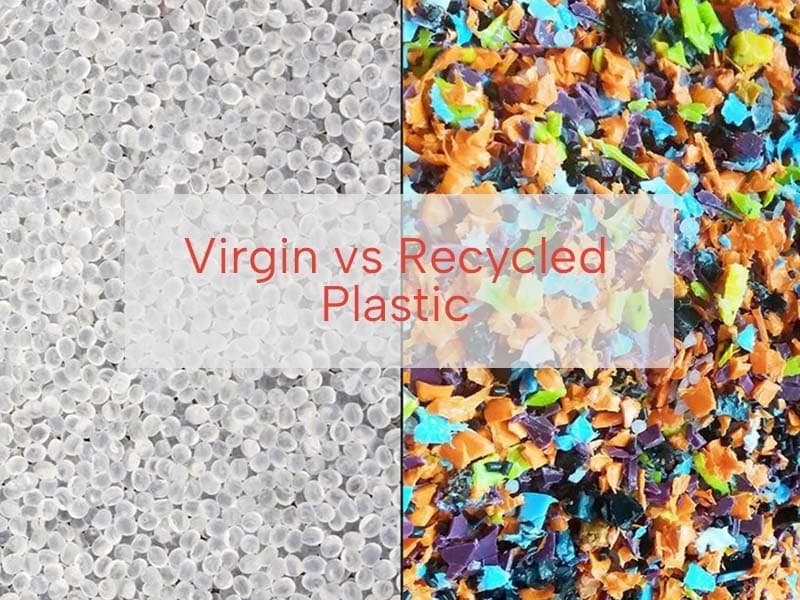
Virgin Plastic is a material that has been manufactured directly from petrochemical feedstocks. It has never been processed or used before and is typically produced under strictly controlled conditions. Virgin plastics are pure, property consistent, and predictable.
Recycled Plastic, on the other hand, comes from post-consumer or post-industrial waste. This material is reprocessed, cleaned, and pelletized for reuse in manufacturing. Recycled plastics are increasingly popular because they reduce environmental impact and can lower material costs. However, properties such as mechanical strength, color consistency, and thermal stability may vary depending on the source and reprocessing methods.
A quick comparison of the two materials:
| Property | Virgin Plastic | Recycled Plastic |
|---|---|---|
| Purity | High, consistent | Variable, depends on source |
| Mechanical strength | High and predictable | Slightly lower, may vary |
| Aesthetic quality | Uniform color and finish | Color and surface may vary |
| Cost | Higher | Lower, but fluctuates |
| Environmental impact | Higher carbon footprint | Lower, supports circular economy |
Virgin vs Recycled Plastic Performance Considerations
When sourcing materials for custom injection molded parts, material performance is the most important consideration.
Virgin Plastic Performance
Virgin plastics’ high mechanical strength, excellent impact resistance, and dimensional stability make them ideal for applications requiring precise tolerances and long-term durability. These materials typically provide uniform color, smooth surface finishes, and minimal odor. Additionally, virgin plastics exhibit predictable processing behavior in injection molding, including consistent melt flow and thermal stability, which helps reduce cycle times and ensures reliable part quality.
Recycled Plastic Performance
Recycled plastics can offer cost-effective and environmental benefits, but their mechanical properties may vary slightly depending on the source and reprocessing method. While many recycled materials are suitable for moderate-stress applications, slight variations in tensile strength, toughness, or dimensional accuracy may occur. Aesthetic qualities, such as color consistency and surface smoothness, may also differ between batches, potentially requiring additional finishing or quality checks. Recycled plastics can behave differently from virgin materials in mold filling and thermal performance.
Virgin plastics are generally preferred for high-precision, high-performance parts, while recycled plastics can be a cost-effective and sustainable choice for applications where slight variations in performance or aesthetics are acceptable.
Virgin vs Recycled Cost and Supply Considerations
Cost is a critical factor in material selection for custom injection molding projects.
Virgin Plastic Cost and Supply
Virgin plastics generally come with a higher cost. However, their supply is reliable and stable. The consistent quality of virgin materials reduces the risk of defects, rework, or delays in custom injection molding projects, which can translate to lower long-term costs for companies producing high-volume or precision parts.
Recycled Plastic Cost and Supply
Recycled plastics are typically more cost-effective. However, the availability and quality of recycled materials can fluctuate, depending on sourcing, processing methods, and market conditions. This variability may require additional testing, quality validation, or slight adjustments in mold design, potentially affecting production timelines.
Choosing between virgin and recycled plastics involves balancing initial material cost, supply reliability, and potential impact on production efficiency. Zhongde is an experienced custom injection molding manufacturer. We will help to select the optimal material for a specific application based on the customer’s considerations.
Virgin vs Recycled Sustainability Considerations
Increasingly, companies are evaluating materials based on environmental impact and corporate sustainability goals.
- Virgin plastics, although more resource-intensive, are often necessary for applications where safety, performance, and regulatory compliance are paramount. The environmental impact can be mitigated through efficient processing, energy recovery, and responsible sourcing.
- Recycled plastics help reduce reliance on virgin feedstocks, lower energy consumption, and divert waste from landfills. Using recycled plastics in custom injection molding projects can enhance brand reputation and demonstrate tangible sustainability efforts.
The balance between sustainability and performance is essential. Companies should consider how material choices align with their sustainability goals without compromising product quality or compliance.
Virgin vs Recycled Regulatory and Compliance Factors
Regulatory requirements also need to be considered in material selection for custom injection molding. Certain applications, such as food contact, medical devices, and children’s products, require materials that meet strict standards for safety and performance.
- Virgin plastics often simplify compliance because their properties are consistent, traceable, and well-documented.
- Recycled plastics may require additional testing and certification, especially if they come from mixed sources.
Practical Tips for Choosing Materials
- Conduct Material Trials: Testing both virgin and recycled plastics in the intended manufacturing process helps verify mechanical properties, aesthetics, and processing behavior.
- Partner with Trusted Suppliers: Collaborate with manufacturers who offer both virgin and recycled plastics, ensuring reliable supply and quality control.
- Consider Hybrid Solutions: Blending virgin and recycled materials can optimize performance, cost, and sustainability, particularly for multi-component products.
- Evaluate Long-Term Costs: Consider the total cost of ownership, including potential rework, quality control, and sustainability benefits, rather than focusing solely on upfront material cost.
- Leverage Technical Expertise: A knowledgeable injection molding partner can provide guidance on material selection, mold design, and processing parameters, ensuring that custom parts meet specifications efficiently.
Conclusion
Both virgin and recycled plastics have their own advantages and limitations. Today, material selection often involves blending virgin and recycled plastics. Using recycled plastic in non-visible or lower stress parts while reserving virgin material for critical features. This approach maintains product performance while reducing overall material costs. As a custom injection molding manufacturer, we provide material recommendations, conduct compatibility tests, and produce samples to confirm outcomes for specific designs. Welcome to contact us for your plastic injection molding project.