Polyvinyl chloride is one of the most versatile and widely used thermoplastics in modern manufacturing. PVC injection molding has become an efficient and precision manufacturing method for various industries. In this article, we will explore the polyvinyl chloride material properties and injeciton molding process.
If you are not familiar with injection molding, you can learn more in our article on Injection Molding Explained.
Overview of PVC Plastic Material

PVC
PVC plastic, or polyvinyl chloride, is a thermoplastic polymer synthesized from vinyl chloride monomers (VCM). PVC’s unique properties include chemical resistance, durability, and recyclability, which make PVC plastic highly adaptable for injection molding plastics. PVC’s ability to be tailored with additives like plasticizers, stabilizers, and lubricants. These additives allow PVC material for injection molding to be formulated into two primary forms: rigid and flexible, each serving distinct purposes.
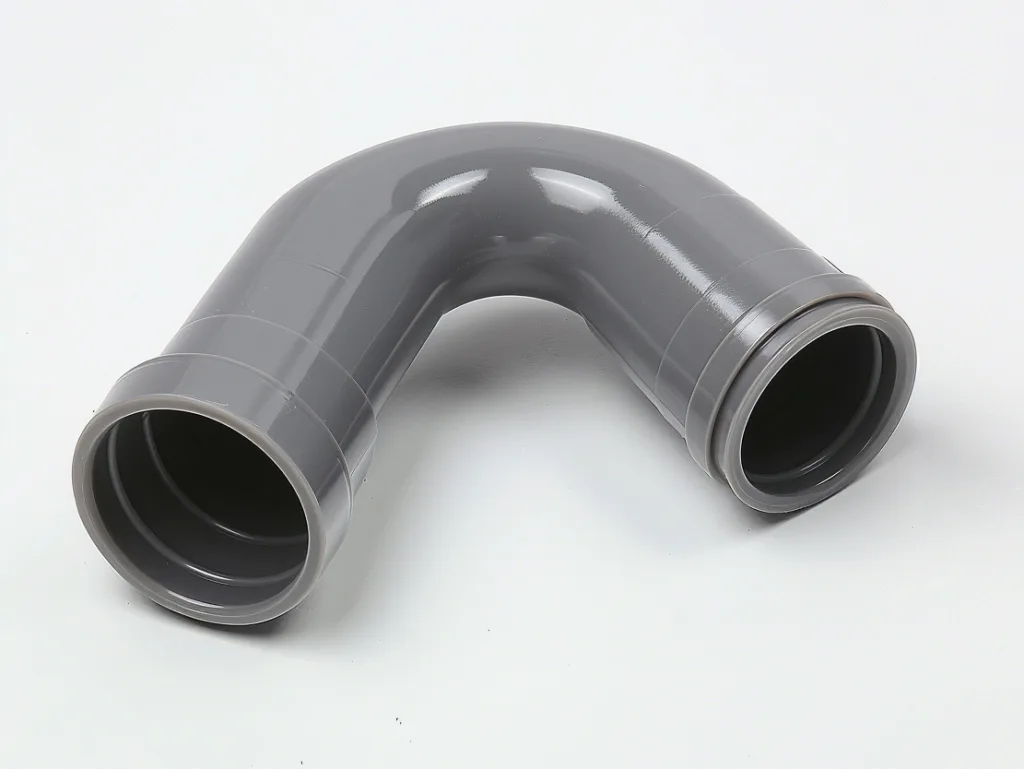
- Rigid PVC (Unplasticized PVC or uPVC): Rigid PVC offers outstanding stiffness and flame retardancy, making it an ideal material for load-bearing applications. It’s widely used in construction for durable components like pipes, window frames, and electrical housings.
- Flexible PVC: By adding plasticizers, PVC transforms into a soft and elastic material with enhanced flexibility. This flexibility makes it suitable for applications such as medical tubing, wire and cable insulation, automotive parts, and other goods requiring pliability and resilience.
Advantages of PVC Injection Molding
The inherent properties of PVC, when combined with the precision of injection molding, result in parts with excellent performance and wide versatility.
Durability and Chemical Resistance
PVC parts are highly resistant to corrosion, acids, and alkalis, making them ideal for automotive components, plumbing systems, and industrial applications. This resistance ensures long-lasting performance even in harsh environments.
Versatility in Design
PVC can be easily formulated in rigid or flexible grades, allowing for a wide range of part geometries. From thin-walled housings to intricate fittings, injection molding of PVC supports complex designs without sacrificing strength.
Cost-Effectiveness
PVC is generally more affordable than engineering plastics, and its injection molding process allows for high-volume production with minimal waste. This makes it a practical choice for both large-scale manufacturing and cost-sensitive applications.
Ease of Coloring and Finishing
PVC readily accepts pigments and additives, enabling consistent color throughout the part. It can also be textured or coated for aesthetic or functional purposes, enhancing the appearance and usability of molded components.
Dimensional Stability
With proper mold design and processing parameters, PVC parts maintain consistent dimensions and structural integrity, reducing the risk of warpage or shrinkage compared to some other thermoplastics.
Polyvinyl Chloride Injection Moulding Process

The pvc injection moulding process is a highly controlled manufacturing method tailored to the unique properties of PVC material for injection molding. Here’s a detailed breakdown of the essential steps:
- Material Preparation: PVC material for injection molding begins as pellets or powder. Proper drying is necessary to reduce the moisture content below 0.1%.
- Melting and Plasticization: The dried PVC is fed into a heated barrel, where it is melted to a molten state. Additives such as thermal stabilizers and lubricants are incorporated to enhance flow and prevent thermal degradation during the PVC moulding process.
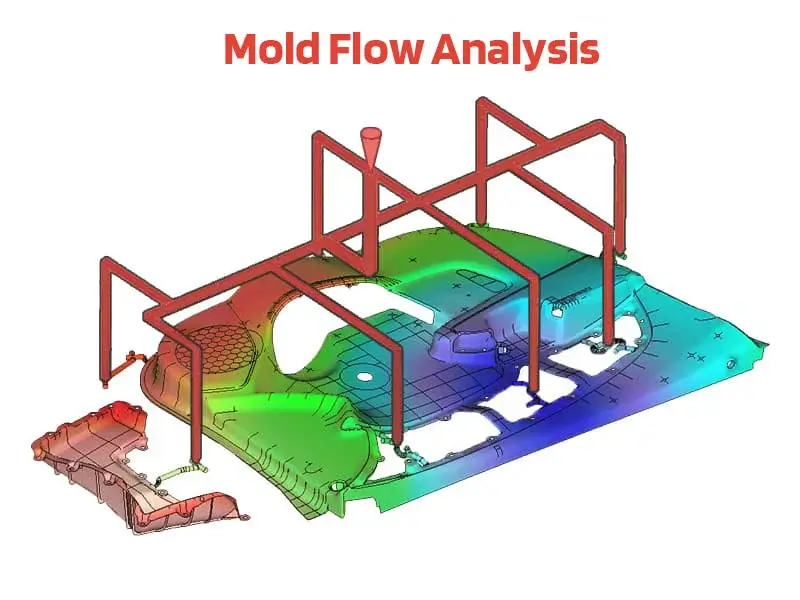
- Injection: The molten PVC is injected under high pressure into a temperature-controlled mold cavity. The mold design includes gates and runners to guide precise flow and filling of the part shape.
- Cooling and Solidification: The mold cools rapidly to solidify the part, locking in its shape and dimensions.
- Ejection and post processing: Once solidified, the mold opens, and the part is ejected into a collection bin. Post-processing, such as trimming or surface finishing, may follow to achieve the desired specifications.
PVC Injection Molding Process Guide
PVC injection molding differs slightly from other thermoplastics due to its unique thermal sensitivity and flow characteristics. Following the right process steps ensures high-quality parts with consistent performance.
Material Preparation
PVC is sensitive to heat and moisture. Before molding, it should be properly dried to prevent bubbles or degradation during processing. Drying also helps maintain consistent color and mechanical properties throughout the part.
Melt Temperature Control
PVC has a relatively narrow processing window. The barrel and nozzle temperatures must be carefully controlled to avoid decomposition or scorching. Typically, rigid PVC is processed at slightly higher temperatures than flexible grades, but overheating must always be avoided.
Injection and Filling
The molten PVC is injected into the mold cavity at controlled pressure and speed. Smooth, steady flow is critical, especially for complex geometries, to prevent voids, flow marks, or incomplete filling. Proper gate design helps guide the material evenly throughout the mold.
Cooling and Solidification
PVC parts cool more slowly than some other plastics. The cooling system should ensure even heat removal to minimize warpage and shrinkage. Cooling channels must be properly positioned to maintain uniform temperatures across the mold.
Ejection
Once the part has solidified, it is ejected carefully to avoid scratches or deformation. Draft angles and proper mold design facilitate smooth removal without damaging the part’s surface or structure.
Post-Molding Considerations
After molding, PVC parts may require trimming or minor finishing to remove flash or sprues. Some flexible PVC parts may also benefit from post-molding stress relief to maintain dimensional stability over time.
PVC Injection Molding Design Guide
Designing for PVC injection molding requires attention to both the material’s properties and the practical aspects of the molding process. Thoughtful design ensures high-quality parts with minimal defects.
Wall Thickness
PVC parts should have uniform wall thickness wherever possible. Sudden changes in thickness can cause sink marks, warpage, or uneven cooling. For rigid PVC, walls are typically designed between 1.5 to 4 mm, while flexible grades may allow thinner sections. Gradual transitions and fillets at corners reduce stress concentrations.
Ribs and Reinforcements
Adding ribs or gussets can improve structural strength without increasing wall thickness. Avoid overly thick ribs, as they can create sink marks or increase cycle time. PVC flows better around ribs if they are less than 60% of the nominal wall thickness.
Draft Angles
Draft angles facilitate smooth ejection and reduce surface defects. Even a small angle of 1–2 degrees per side can make a significant difference, especially for vertical walls and deep cavities.
Gate and Runner Design
The gate location and type influence how PVC fills the mold. Proper placement ensures even flow, minimizes stress, and prevents trapped air. Narrow or long flow paths should be avoided to reduce shear and maintain part quality.
Avoiding Sharp Corners
Sharp corners increase stress concentrations and make filling more difficult. Fillets and rounded edges help PVC flow smoothly, reduce warpage, and maintain part strength.
Accounting for Shrinkage
PVC shrinks slightly as it cools, with rigid grades shrinking more than flexible ones. Designers should account for shrinkage in the mold layout to ensure dimensional accuracy of the final part.
Special Additives
If the part requires flame retardancy, UV resistance, or flexibility, incorporating additives into the PVC formulation must be considered during design to maintain flow properties and structural integrity.
Applications of Injection Molded PVC

The versatility of PVC plastic makes it indispensable across a wide range of industries, with PVC injection molding enabling the production of tailored components:
- Automotive: Interior trims, dashboards, cable insulation, instrument panels, and tubing, connectors and housings.
- Medical Devices: Medical tubing, catheters, blood bags, masks, and other healthcare products
- Construction: Pipes, window and door frames, siding, gutters, and fittings.
- Consumer Goods: Packaging, bottle caps, wire spools, furniture components, and household items.
- Electronics: Enclosures and insulating components.
Choosing Zhongde for PVC Injection Molding
When sourcing a manufacturer for PVC injection molding, reliability and expertise are matter. Whether for rigid PVC components or flexible customized parts, Zhongde’s expertise in minimizing warping, sink marks, and flash support guarantees high quality results. As a trusted provider of injection molding service, Zhongde ensures precision and durability across diverse applications. Contact Zhongde today to get custom PVC injection molding solutions.