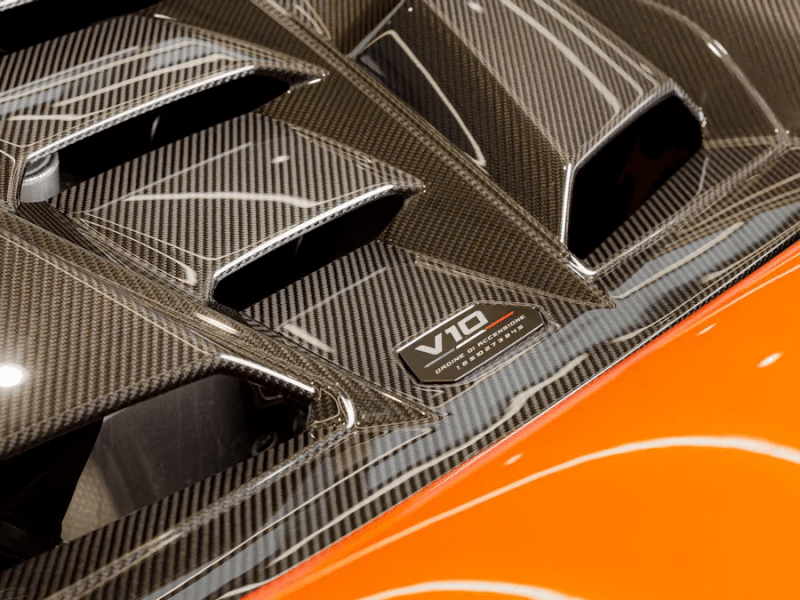
You might know carbon fiber as the ultra-light, high-strength material used in aerospace or racing cars—but did you know it can also be combined with plastics for injection molding? Carbon fiber injection molding enables manufacturers to create lightweight, durable, and complex parts at scale. In this guide, we’ll explore what carbon fiber injection molding is, why it matters, how the process works, design tips, and where it’s commonly used.
If you are not familiar with injection molding itself, you can learn more in our article on Injection Molding Explained.
What Is Carbon Fiber Injection Molding?
Carbon fiber injection molding is the process of incorporating short carbon fibers into a thermoplastic resin, such as Nylon (PA), PEEK, or PP, then shaping the composite in a mold under heat and pressure.
Material Properties
- High Strength-to-Weight Ratio: Carbon fiber reinforces the plastic, producing parts much stronger than unfilled thermoplastics while remaining lightweight.
- Thermal Stability: Fibers reduce thermal expansion, helping parts retain dimensional accuracy under heat.
- Chemical Resistance: Composite parts resist corrosion and many industrial chemicals.
- Electrical Conductivity: Depending on fiber content, parts can have mild conductivity, which may be desirable for certain applications.
Advantages of Carbon Fiber Injection Molding
Choosing carbon fiber for injection molded parts brings multiple benefits that go beyond strength. Understanding these advantages helps you see why this material is increasingly popular in high-performance applications.
Lightweight Yet Strong
Even with short carbon fibers, the injected parts gain remarkable stiffness and load-bearing capacity. Imagine a car bracket or a drone frame: the same part can support heavy stress while weighing far less than its metal counterpart. This weight reduction improves fuel efficiency in vehicles and enhances performance in lightweight applications.
High-Volume Production Capability
Unlike hand-laminated composites, carbon fiber injection molding allows automated, repeatable manufacturing. Complex parts can be produced in hundreds or thousands without losing precision, making it ideal for industries requiring consistent quality at scale.
Design Flexibility for Complex Geometries
Carbon fiber composites flow into molds, filling intricate shapes that would be difficult or impossible to machine from metal or pure plastic. Thin walls, integrated ribs, or overmolded features can be achieved, giving designers freedom to optimize both strength and aesthetics.
Thermal and Chemical Resistance
Carbon fiber composites resist thermal expansion better than unfilled plastics, keeping dimensions stable under heat. They also withstand many industrial chemicals, oils, and solvents, expanding the range of potential applications.
Potential for Conductivity or EMI Shielding
Depending on fiber content and orientation, parts can exhibit mild electrical conductivity. This can be leveraged in applications where electrostatic discharge (ESD) protection or electromagnetic interference (EMI) shielding is desired.
Carbon Fiber Injection Molding Process
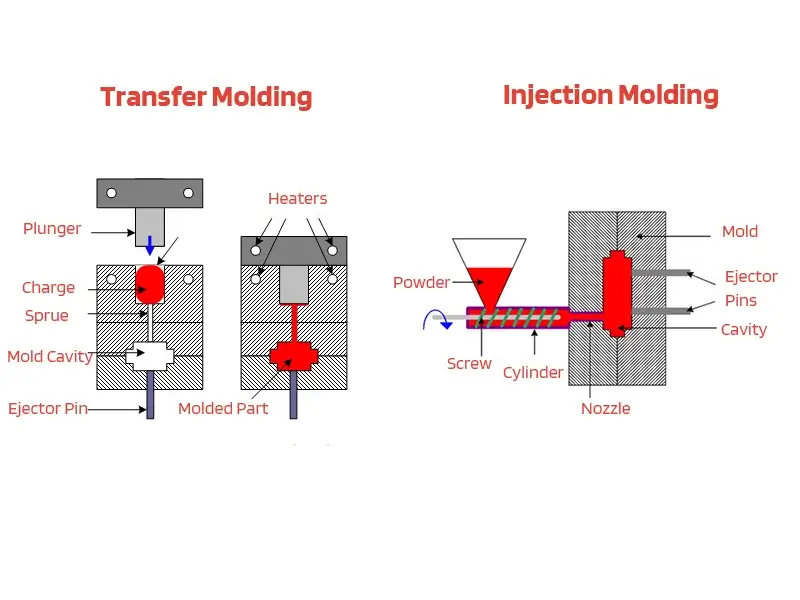
Molding carbon fiber-reinforced plastics is similar to conventional injection molding, but the addition of fibers changes how materials flow, fill the mold, and behave under heat and pressure. Here’s how the process unfolds:
Material Preparation
Short carbon fibers are pre-mixed with thermoplastic resin, forming a composite pellet. Proper drying is essential because moisture can cause voids or weak spots. Imagine tiny, rigid fibers suspended in molten plastic, ready to align as they flow into the mold.
Injection
The composite pellets are fed into an injection molding machine. Because the material is more viscous than standard plastics, precise control of temperature and pressure is crucial. The molten composite must flow evenly through the mold channels, pushing the fibers into alignment while avoiding fiber breakage.
Cooling
Once the mold is filled, the part must cool uniformly. Carbon fibers reduce thermal expansion, but uneven cooling can still cause warping or internal stresses. Engineers often design cooling channels carefully to ensure consistent temperature across the mold.
Ejection
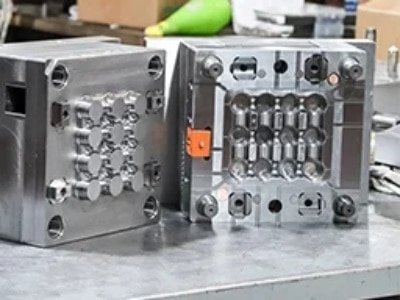
After cooling, the part is ejected. The presence of fibers makes the part stiffer but slightly more brittle than standard plastics, so ejection must be gentle to avoid cracking. Well-designed lifters and ejector pins help release the part smoothly.
Post-Processing (If Needed)
Most parts come out of the mold near final form, but some may require minor trimming, machining, or finishing. The goal is to maintain fiber alignment and preserve the high-strength properties imparted by the carbon fibers.
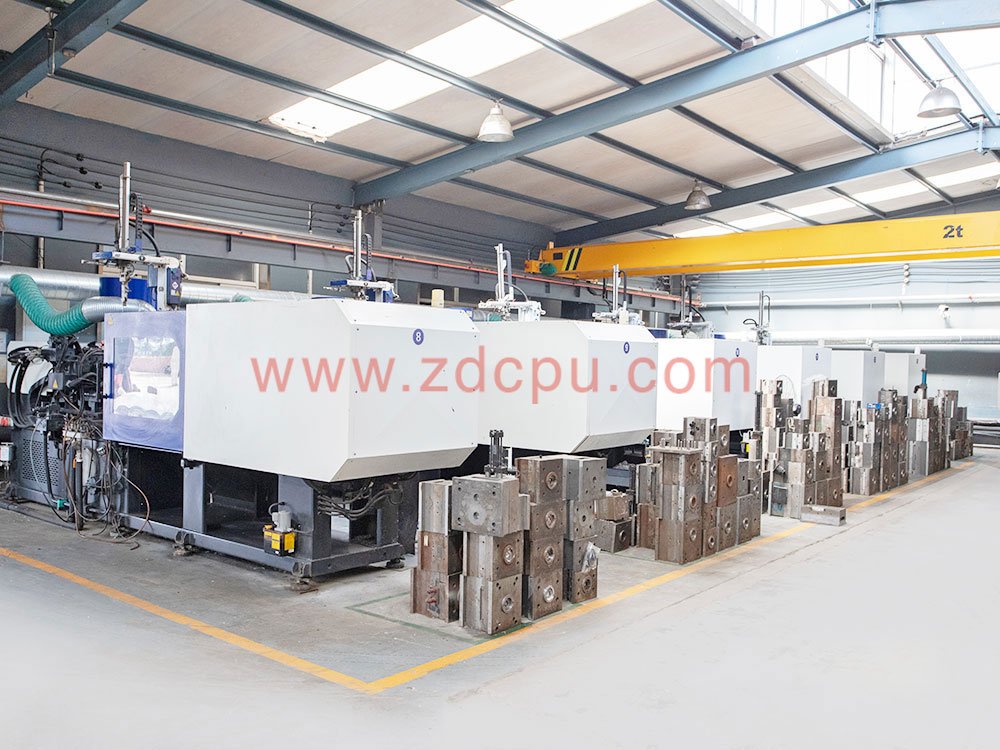
Injection Molding Service
Design Considerations for Carbon Fiber Injection Molding
Designing parts for carbon fiber injection molding is more than just shaping a component—it’s about directing fibers, controlling resin flow, and ensuring structural integrity. Thoughtful design from the start reduces defects, improves strength, and ensures consistent quality.
Fiber Orientation
The direction in which carbon fibers align during injection affects stiffness and strength. Designers should plan gate locations and flow paths to guide fibers along the load-bearing directions of the part. Misaligned fibers can reduce performance and lead to weak spots.
Wall Thickness
Uniform wall thickness is critical. Thick sections can create sink marks, voids, or uneven fiber distribution, while overly thin sections may be difficult to fill or break during ejection. Designers often balance strength and manufacturability with carefully planned thickness.
Ribs and Reinforcements
Ribs and gussets can enhance rigidity without significantly increasing material use. Placement should consider fiber flow to avoid trapping fibers in corners, which could cause short shots or stress concentrations.
Gate and Runner Design
Gate placement not only affects fill time but also fiber alignment. Proper gate sizing and location help achieve uniform fiber orientation, reduce voids, and minimize weld lines or weak spots in critical areas.
Draft Angles and Ejection
Although carbon fiber composites are stronger than standard plastics, they are more brittle. Including sufficient draft angles and designing ejection mechanisms carefully reduces the risk of cracking or surface damage during demolding.
Minimizing Sharp Corners and Complex Features
Sharp corners and overly complex geometries can interrupt fiber flow, leading to weak spots, warping, or incomplete filling. Smooth transitions and fillets guide resin and fibers more evenly through the mold.
Applications of Carbon Fiber Injection Molding
Carbon fiber injection molding is increasingly used wherever lightweight, strong, and high-precision components are needed. Its combination of high stiffness, low weight, and design flexibility opens doors to many advanced applications.
Automotive Components
Carbon fiber-reinforced parts are used for structural components, interior trims, and under-the-hood applications. Their light weight improves fuel efficiency, while high strength ensures safety and durability. Examples include reinforced brackets, air intake manifolds, and dashboard frameworks.
Aerospace and Aviation
In aerospace, every gram counts. Carbon fiber injection molded components, such as interior trims, seat frames, and brackets, reduce weight while maintaining high mechanical strength and dimensional stability under thermal stress.
Sports and Recreation
From bike components to protective gear and sporting equipment, carbon fiber injection molded parts offer high strength-to-weight ratios. These parts allow designers to create lightweight, ergonomic, and durable products.
Consumer Electronics
Housings, mounts, and structural frames for laptops, cameras, and smartphones can use carbon fiber injection molding to achieve lightweight, durable, and aesthetically appealing designs, especially where heat dissipation and dimensional stability are important.
Industrial and Mechanical Components
Carbon fiber injection molded parts are increasingly used in industrial applications, such as gears, machine housings, and high-precision components. They offer excellent wear resistance, reduced weight, and stable performance under repetitive mechanical loads.
Conclusion
If you’ve read this far, you should now have a solid understanding of carbon fiber injection molding—its properties, advantages, processing steps, design considerations, and practical applications. Carbon fiber offers a unique combination of strength, light weight, and design flexibility, making it ideal for high-performance parts across industries.
At Zhongde, we help bring these complex designs to life with tailored carbon fiber injection molding solutions, ensuring precision, efficiency, and reliability for your projects.
Start A New Project Right Now!