What Can We Customize in CNC Plastic Gears?

Because every application has a different load path, gear design parameters must be evaluated individually. From tooth profile and module to bore diameter, hub configuration, and material grade, every parameter can be customized to meet your torque requirements, operating environment, and assembly constraints.

Shape

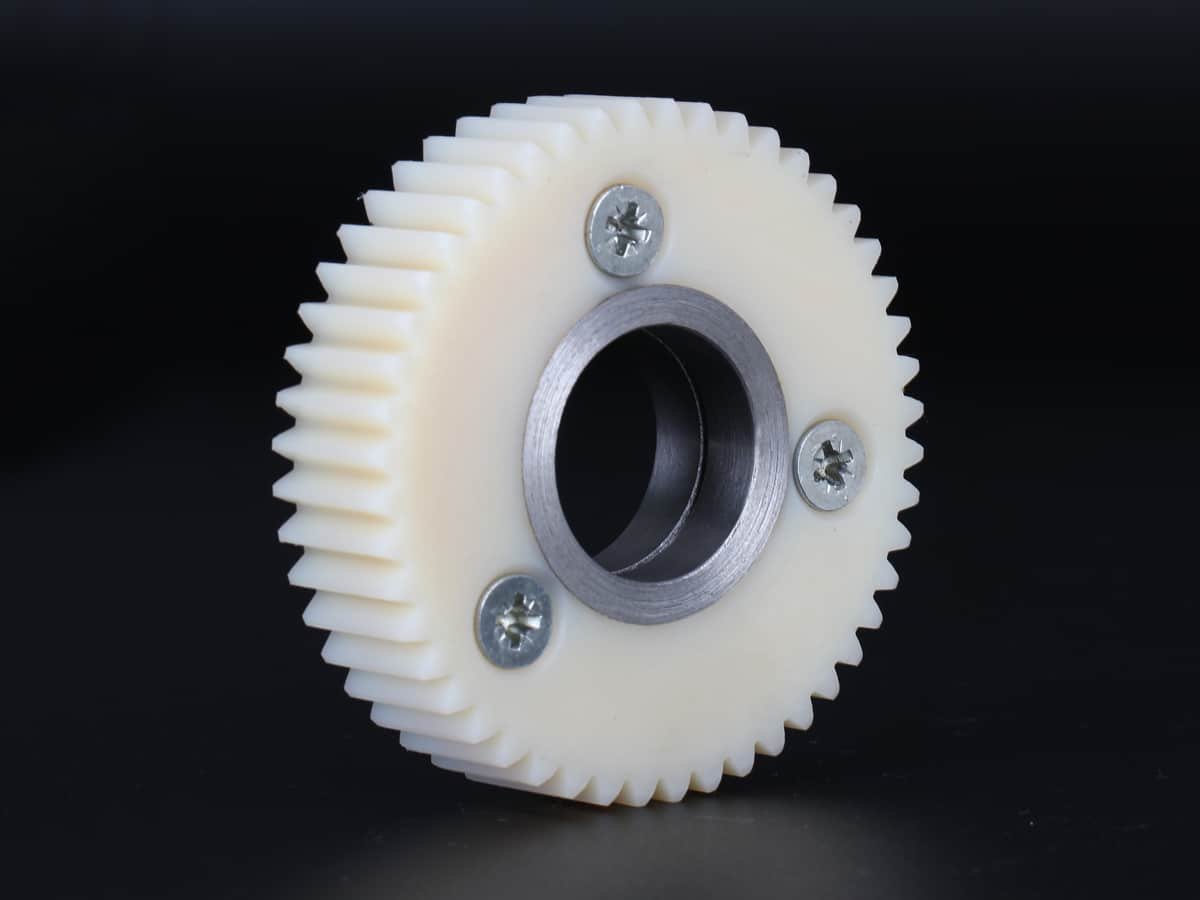
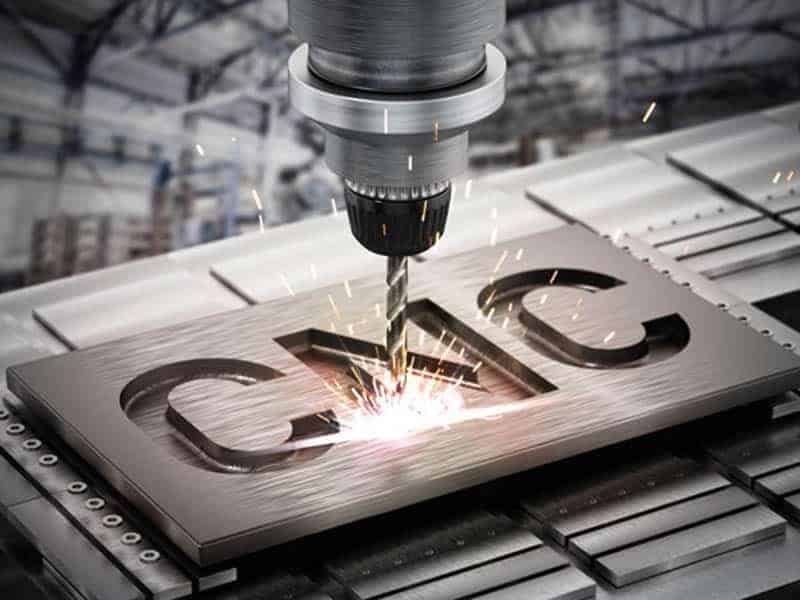
Tooth profile, pitch parameters, helix angle, and hub or web configuration — we machine each gear according to the geometry defined in your design or drawing. Before machining, every feature is reviewed against CNC manufacturing constraints, allowing us to optimize tool paths, fixture strategy, and cutting sequences for tighter tolerances, improved tool access around complex profiles, and consistent dimensional accuracy across production batches.

Dimensions

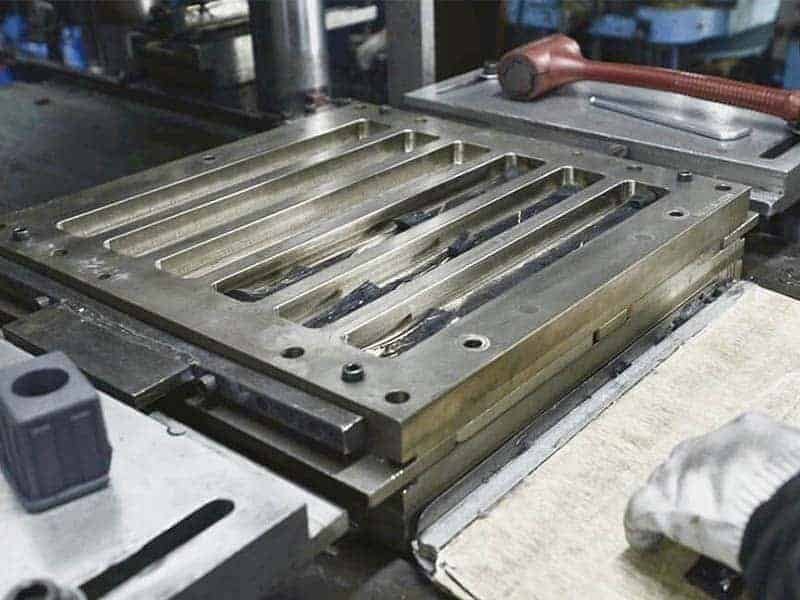
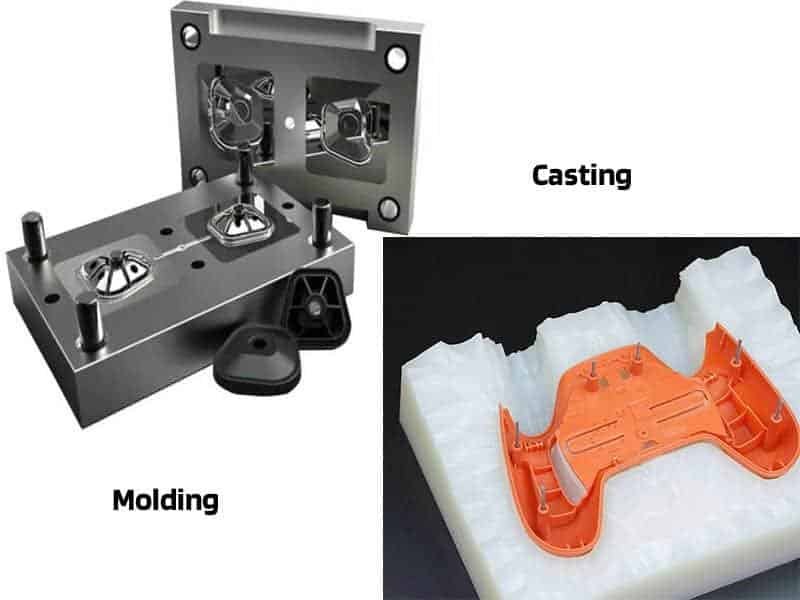
Without being restricted by mold dimensions, CNC machining supports gears across a wide range of sizes — from small precision gears with fine-pitch teeth to large-diameter gears that may require costly, oversized molds for injection molding. Bore diameter, face width, outer diameter, and overall thickness are machined according to your exact specifications, without the tooling investment or MOQ requirements associated with injection molding.

Material

Unlike injection molding, CNC machining allows gears to be cut directly from solid billet or rod stock, giving you more flexibility in material selection without being limited by moldability or flow characteristics. Material choice is driven primarily by the mechanical, thermal, and chemical requirements of your application.

We machine POM (Delrin) for dimensional stability and low friction, Nylon (PA6, PA66) for toughness and impact resistance, PEEK for high-temperature and chemically demanding environments, and UHMWPE for abrasion resistance and self-lubricating performance.

Since each gear is machined individually rather than produced from a dedicated mold, you can test different materials or produce low-volume quantities without the upfront tooling costs associated with injection molding.

Edge finish

Edge conditions and surface finishes can be customized based on your functional and aesthetic requirements — from deburred machined edges for standard applications to smoother finishes where friction reduction or low-noise operation is important. Chamfers, fillets, and edge break specifications can be customized for each gear design, ensuring the final finish is optimized for the gear’s operating conditions.

It is easy to fill the form.

Available for JPG, JPEG, PDF, DWG, DXF, PNG, STP, STEP, IGS and IGES files. Please note that all of your files will be kept confidential by Zhongde.

Why Choose Zhongde?

Plastic gear failures often start with more than material selection — they start with a mismatch between design intent and manufacturing reality: a tolerance that looks acceptable on paper but cannot be maintained under thermal expansion, or a tooth profile designed for molding but not adapted for machining. Years of solving these challenges across different industries and applications have shaped how we evaluate every drawing we receive.

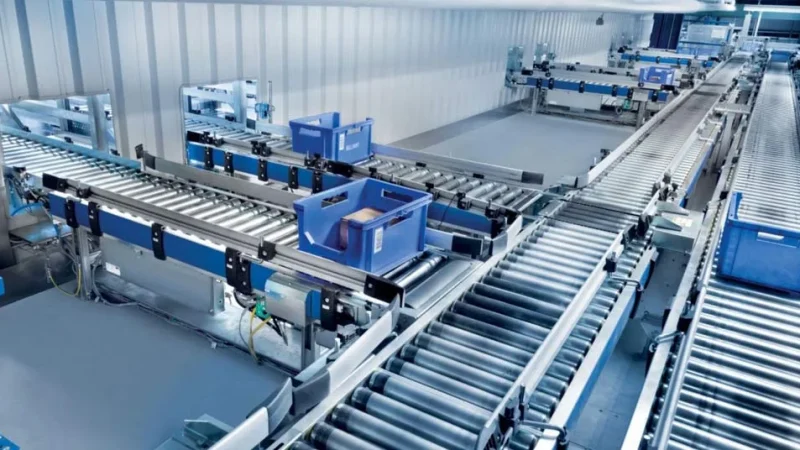
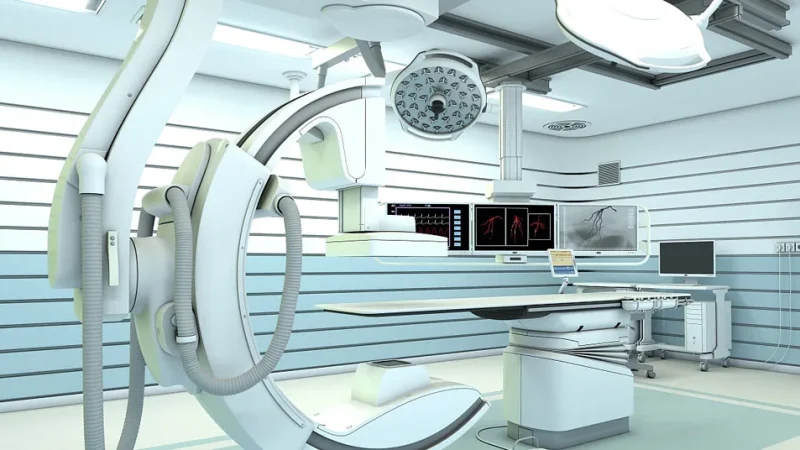
For example, a medical device customer needed a small-batch run of fine-pitch nylon gears for a diagnostic instrument. Injection molding was not practical at that volume, and standard gears could not meet the required bore tolerance. Machining directly from rod stock allowed us to achieve the specification without mold investment or tooling delays. In another case, an industrial automation customer experienced premature wear in POM gears operating under sustained load. By optimizing edge conditions and re-evaluating hub geometry within CNC design constraints, we extended service life without changing the material.

This problem-solving approach is supported by integrated capabilities in material selection, CNC machining, tolerance verification, and finishing. By keeping these processes closely connected, we reduce communication gaps and maintain quality consistency throughout the project. From prototype development to production runs, the same engineering team that reviews your design supports the manufacturing process.

Why Choose Zhongde 1

FAQs of CNC Plastic Gears

View our FAQ center for more questions.

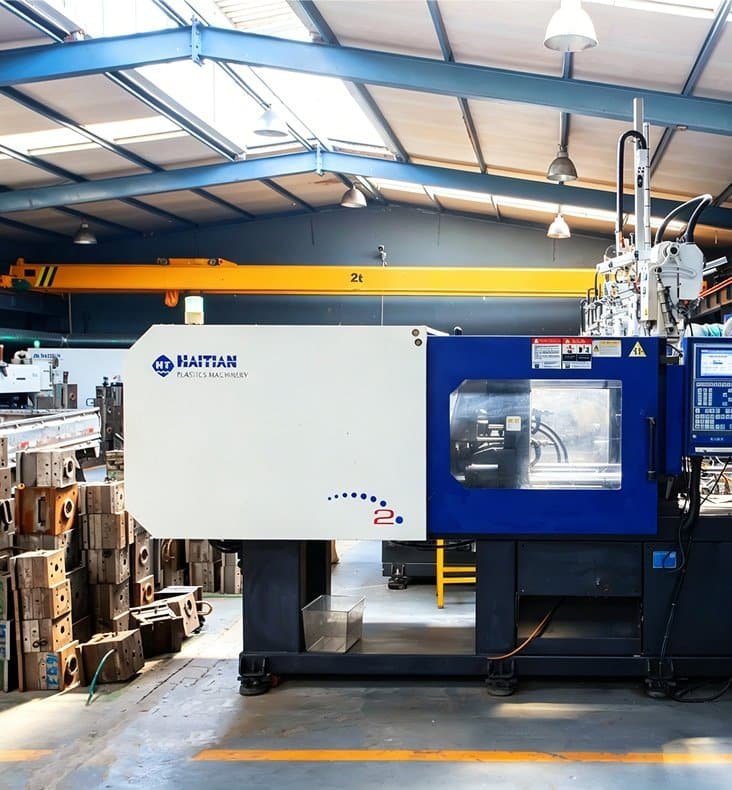
Injection molding requires a dedicated mold, which adds upfront tooling costs and makes design changes more difficult once production begins. CNC machining cuts gears directly from solid stock, making it a practical option for prototypes, low-volume production, and designs that require frequent iteration.

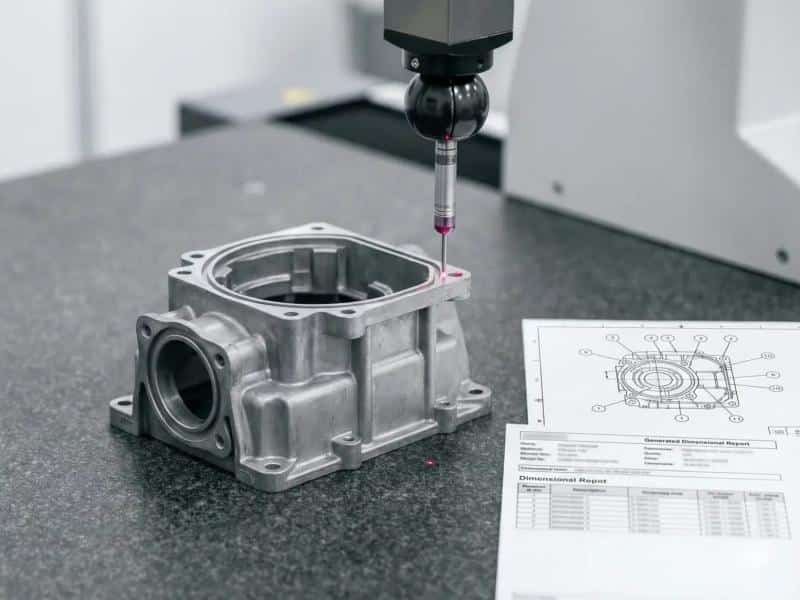
Achievable tolerances depend on gear size, material, and tooth geometry. CNC machining provides direct dimensional control for custom gears and avoids mold-related shrinkage variation. Specific tolerance requirements are reviewed and confirmed based on your drawing.

It depends on the material and operating conditions. UHMWPE and POM offer inherent self-lubricating properties suited to dry-running applications, while materials such as Nylon or PEEK may benefit from lubrication under high loads, speeds, or demanding environments.

Plastic gears can be finished with operations such as deburring, polishing, and edge chamfering to improve fit, reduce friction, or refine the running surface. Coating options are more limited than with metal gears because many engineering plastics already provide corrosion resistance and low-friction performance through the base material itself. If your application requires a specific surface modification, we can review the requirements.

Zhongde's Manufacturing Capabilities for Custom Parts

We offer various manufacturing methods to turn your custom parts designs into real components, from prototypes to full production, matching the right process to your needs.