Many plastic products are made, used, and then thrown away—but not all of that plastic has to become waste. In many cases, used plastic can be cleaned, reprocessed, and turned into new molded parts through injection molding.
This is known as recycled plastic injection molding, a process that allows manufacturers to reuse plastic materials instead of relying only on new resin. It can help reduce material costs and plastic waste, making it an attractive option for companies looking for more sustainable production solutions.
Of course, using recycled plastic is not as simple as melting old plastic and molding it again. The type of material, the recycling process, and the product requirements all affect the final result. In this guide, we’ll explain the benefits of recycled plastic injection molding, what plastics can be reused, how the process works, and the challenges to consider before using recycled materials.
Benefits of Recycled Plastic Injection Molding
When choosing materials for injection molding, most customers are not thinking about “recycling” first—they are thinking about cost, performance, and whether the material can actually work for their product. Recycled plastic becomes interesting only when it can meet these practical needs.
Lower Material Cost
One of the most direct benefits of recycled plastic is cost reduction.
Compared to virgin resin, recycled plastic is usually cheaper because it comes from reprocessed waste materials instead of newly produced polymers. For many projects, especially high-volume production, this difference can significantly reduce overall material spending.
For example, products like housings, storage parts, or non-structural components can often use recycled materials without changing their function, while still lowering unit cost.
Sufficient Performance for Non-Critical Parts
Not every plastic part needs the highest possible material performance.
Recycled plastic can still perform well in many everyday applications where extreme strength, heat resistance, or precision is not required.
For example, it is commonly used in:
- packaging components
- consumer product shells
- storage and utility parts
Easier Material Availability in Some Cases
In certain markets, recycled plastics can be more readily available than specific grades of virgin resin, especially when supply chains are tight or material prices fluctuate.
This can help customers maintain production stability without being overly dependent on virgin material pricing or shortages.
Flexibility for Large-Volume Production
For high-volume projects, even small savings in material cost can become significant when multiplied across thousands or millions of parts.
Recycled plastic injection molding allows companies to scale production while keeping material expenses under control, especially for products that do not require high-performance engineering plastics.
What Types of Plastic Can Be Recycled for Injection Molding
Not all plastics behave the same when they are recycled. Some materials can be reused quite easily in injection molding, while others require more careful control or are only suitable for limited applications.
From a customer’s point of view, the key question is not the chemical name, but rather: Can this material still perform well enough for my product after recycling?
Below are some of the most commonly used recycled plastics in injection molding.
Polypropylene (PP)
PP is widely recycled because it stays relatively stable even after being melted and reshaped multiple times.
It does not easily break down in normal recycling conditions, which means its basic strength and flexibility can still be maintained.
That is why recycled PP is often used for:
- storage products
- packaging parts
- household components
Polyethylene (PE)
PE has a simple molecular structure, which makes it easier to melt, reshape, and reuse.
Even after recycling, it usually keeps its flexibility and impact resistance, although with some performance variation.
Common applications include:
- containers
- caps and closures
- basic utility parts
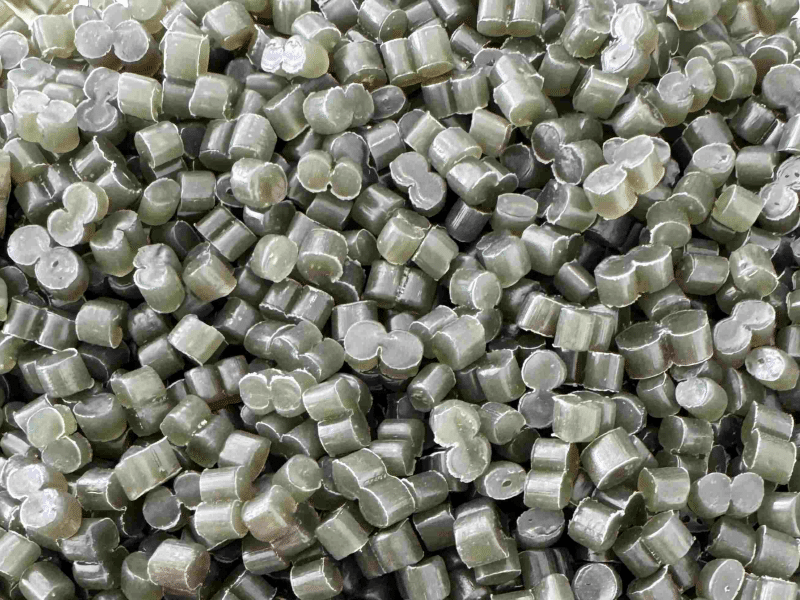
ABS
ABS can also be recycled, but it is more sensitive to heat history. After repeated processing, its surface quality and impact strength may slightly decrease.
That’s why recycled ABS is usually used in:
- non-critical housings
- internal components
- products where perfect appearance is not required
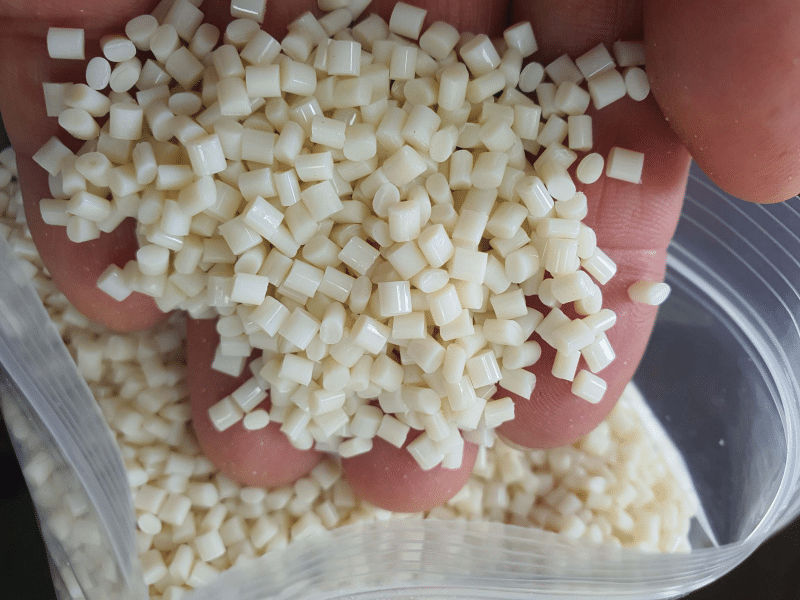
PET
PET can be recycled, but it needs tighter control during drying and processing.
If moisture is not properly removed, its performance can drop during molding.
That is why recycled PET is often used in:
- packaging-related products
- fibers and industrial applications
- parts where extreme precision is not required
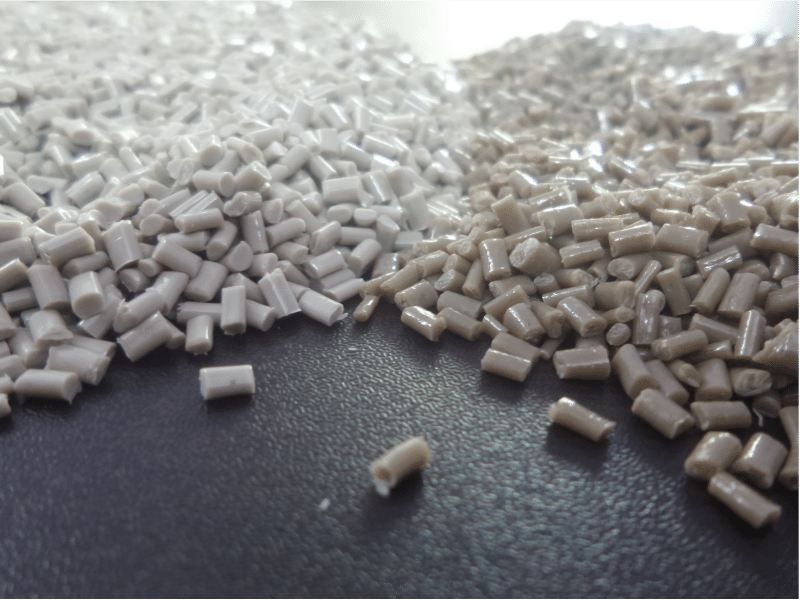
Nylon (PA)
Nylon can be recycled, but it absorbs moisture easily and can degrade if not handled properly.
With good drying and controlled processing, it can still be reused for:
- mechanical parts
- wear-resistant components
- industrial applications
Process of Recycled Plastic Injection Molding
Recycled plastic cannot be used directly in injection molding right away. Before it becomes usable material again, it needs to go through a series of preparation steps to make sure it is clean, stable, and suitable for molding.
If you’re new to the process, you can start with our guide on what is injection molding and how it works to understand the basics before exploring recycled materials.
Sorting the Plastic Materials
The process starts with sorting different types of plastic waste. This is important because different plastics behave differently when heated, and mixing them can lead to unstable material performance. For example, PP, PE, and ABS all need to be separated before further processing. From a practical point of view, this step ensures that the final recycled material behaves consistently during injection molding.
Cleaning and Removing Impurities
After sorting, the plastic is thoroughly cleaned to remove dust, labels, oil, or any other contamination. This step is critical because impurities can affect both the appearance and mechanical strength of the final molded part. In simple terms, clean input material leads to more stable and predictable injection molding results.
Crushing and Reprocessing into Pellets
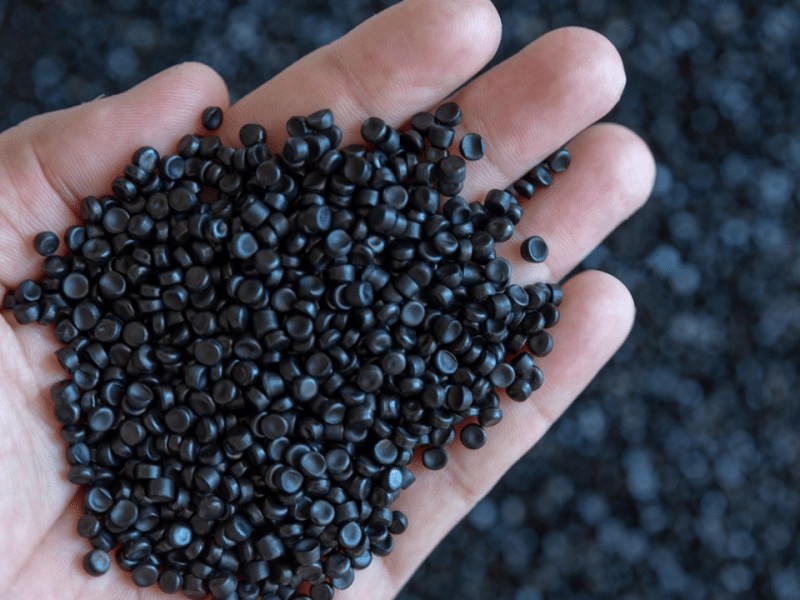
Once cleaned, the plastic is crushed into small pieces and then re-melted into uniform pellets. This step is what transforms waste plastic into a form that can be treated like standard raw material. After pelletizing, the material can be stored, transported, and used in injection molding machines just like virgin plastic.
Injection Molding into New Parts
In the final step, the recycled pellets are fed into the injection molding machine, where they are melted again and injected into molds to form new products. From a processing point of view, this stage is similar to traditional injection molding, although tighter control is often needed to maintain consistent quality due to variations in recycled material.