When part geometry is relatively simple, material performance is critical, and waste reduction matters, plastic compression molding offers higher efficiency and consistency than many other processes. Its relevance lies not in design freedom, but in control—control over material behavior, part density, and long-term stability.
What Is Plastic Compression Molding?
Plastic compression molding is a manufacturing technique that shapes plastic materials by applying heat and pressure within a mold. As the mold closes, heat and pressure act simultaneously, causing the plastic to soften, flow, or cure depending on its chemistry. Once the desired shape is achieved, the part is cooled or fully cured before demolding. Plastic compression molding minimizes flow distance and shear stress.
The Steps of Plastic Compression Molding Process
The plastic compression molding process consists of several sequential steps designed to transform raw plastic materials into finished products.
Material Preparation
For thermoset plastics, this often involves using pre-compounded forms. These are cut or weighed to fit the mold. Preheating may be applied to soften the material, reducing the required pressure and cycle time.
Loading Material
The material is loaded into the open, heated mold cavity. Molds are typically made from hardened steel or aluminum, heated to temperatures between 150°C and 200°C, depending on the plastic type. The mold closes, and pressure is applied. This forces the material to flow and fill the cavity. For thermoset plastics, heat triggers cross-linking, a chemical curing process that solidifies the part irreversibly.
Curing and Cooling
The material dwells under pressure for a duration that varies from one to ten minutes. This ensures complete polymerization and minimizes defects like voids. After curing, the mold cools to stabilize the part, often using water channels integrated into the mold design.
Mold Opening and Finishing
Finally, the mold opens, and the part is ejected. Post-processing includes trimming flash—excess material that escapes the mold edges—and surface finishing if needed.
Types of Plastics Used in Compression Molding
Plastic compression molding materials fall into two primary categories: thermoplastics and thermoset plastics. Each behaves very differently under heat and pressure.
Thermoplastic Compression Molding Plastics
Thermoplastic materials soften when heated and solidify upon cooling without undergoing chemical change. Thermoplastic compression molding plastics are valued for their recyclability, chemical resistance, and dimensional consistency when properly cooled. However, they demand precise temperature control to ensure full consolidation without thermal degradation.
PTFE compression molding and UHMWPE compression molding are the two most common types. Besides, there are other common thermoplastics used in compression molding,
- PTFE
- UHMWPE
- HDPE
- PPS
- PEEK
Thermoset Plastics in Compression Molding
Thermoset plastics behave very differently. Once heated, these materials undergo irreversible chemical crosslinking, transforming from a moldable state into a rigid, three-dimensional network. After curing, they cannot be remelted or reshaped. The primary advantage of thermoset plastics is their thermal stability and dimensional rigidity. Shrinkage is minimal after curing, and mechanical stability is good even at elevated temperatures. Electrical insulation performance is also a key strength.
Common thermoset plastics used in compression molding include:
- Phenolic resins
- Polyester
- Epoxy
- Melamine
- Urea-formaldehyde
Design Guidelines for Plastic Compression Molding
Plastic compression molding relies heavily on thoughtful design to achieve consistent quality, minimize defects, and optimize production efficiency.
Wall Thickness
Uniform wall thickness is preferred to ensure consistent flow and curing. Avoid sudden changes in thickness (>50% variation) to prevent flow hesitation, trapped air, or uneven curing.
Draft Angles
Draft facilitates part ejection without damage. More draft is better, especially on textured or reinforced surfaces.
Corners, Radii, and Fillets
Sharp internal corners restrict material flow and create stress concentrations. Larger external radii are preferred for strength and aesthetics. Generous fillets at wall junctions improve flow and reduce flash risk.
Advantages of Plastic Compression Molding
Plastic compression molding presents several advantages that make it a preferred method for certain applications.
- Tooling costs are lower compared to injection molding, as molds lack complex runners or gates, simplifying design and fabrication.
- The process can manufacture large, thick-walled parts without size limitations by machine tonnage. Parts can be molded efficiently, even weighing several kilograms.
- Material utilization is high, with minimal waste since excess can be reused in thermoset preforms.
- Fiber-reinforced materials’ mechanical performance is good. Plastic compression molding allows for high filler content, resulting in parts with excellent stiffness and impact resistance.
- Surface quality is controllable, often achieving Class A finishes suitable for visible components like vehicle exteriors.
Disadvantages and Limitations
Despite its strengths, plastic compression molding has notable disadvantages.
- Cycle times are extended, typically one to ten minutes per part, due to heating and curing requirements.
- Flash formation is a common issue, where material squeezes out between mold halves, necessitating manual trimming. This adds labor and potential inconsistencies.
- The process is difficult for high-precision, thin-walled, or undercut geometries, as material flow is less controlled than in injection methods.
- Automation is less straightforward, and labor intensity remains high, with manual loading prevalent in many setups, increasing operational costs and error risks.
Applications of Plastic Compression Molding
Plastic compression molding finds extensive use across industries.
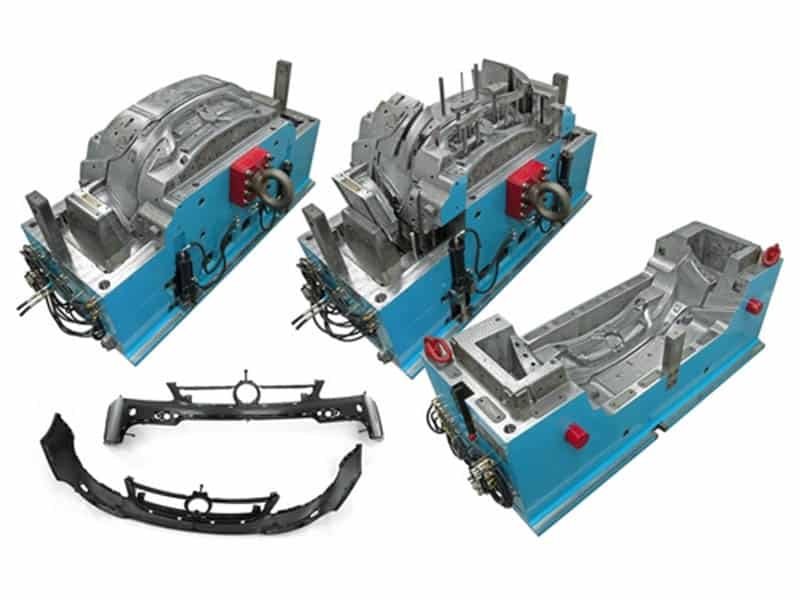
- Automotive: Body panels, bumpers, engine covers, and underbody shields.
- Electrical and Electronic: Switch panels, junction boxes, insulators, and circuit breaker housings.
- Aerospace: Brackets, interiors, and structural reinforcements.
- Household: Washer and refrigerator components, handles, and enclosures.
- Construction and infrastructure: Bathtubs, shower trays, cooling tower elements, and electrical cabinets.
Plastic Compression Molding VS Plastic Injection Molding
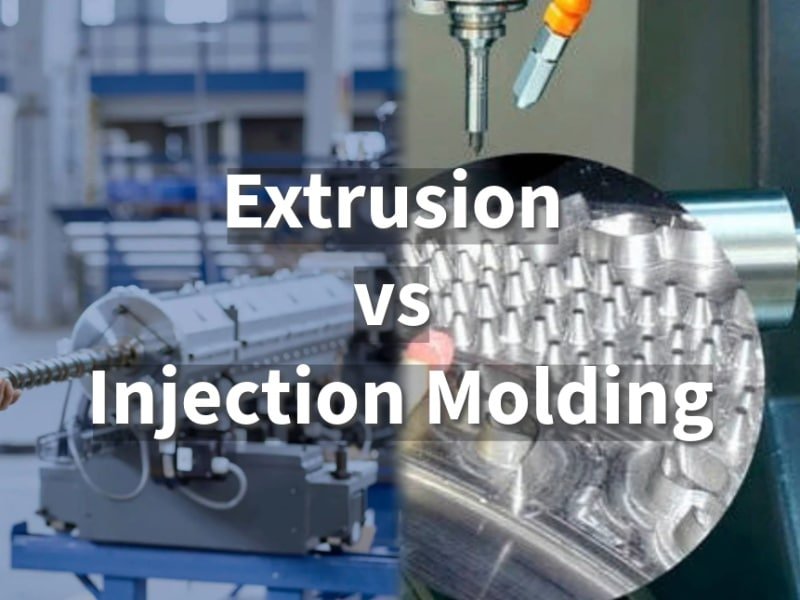
Plastic compression molding and injection molding are common processes. Here is a comparison of two processes.
Manufacturing Process
- Compression molding involves placing pre-measured material into an open mold cavity, then closing the mold under heat and pressure to shape and cure it.
- Injection molding melts plastic pellets and injects them at high pressure into a closed mold for rapid forming.
Suitable Products
- Compression molding suits large, thick-walled parts with simple shapes, like rubber components or thermoset plastics (e.g., electrical insulators).
- Injection molding excels for small, complex, thin-walled precision parts (e.g., gears, housings).
Production Speed
- Compression molding has slower cycle times (often 2-5 minutes per part) due to manual loading and longer curing.
- Injection molding is much faster (10-60 seconds per part), enabling high-volume output.
Mold Cost
- Compression molds are simpler and cheaper to produce, ideal for low-to-medium runs.
- Injection molds are more complex and expensive due to precision requirements and high-pressure design.
Conclusion
Plastic compression molding remains a technically robust and economically viable manufacturing process when applied correctly. Its process, materials, and applications underscore its role in manufacturing durable components. Zhongde provides professional plastic compression molding service. Welcome to contact us and get a custom solution for the project.