Plastic toys are everywhere — from collectible mini figures to educational blocks, toy vehicles, and baby playsets. Behind their cheerful colors and precise shapes lies a sophisticated manufacturing process: toy injection molding. For brands and toy companies looking for consistent quality, safety, and cost efficiency, injection molding remains the most trusted production method. At Zhongde, we provide custom toy injection molding services tailored to meet specific project requirements, from prototype development to large-scale production.
Why Injection Molding is Ideal for Toy Production
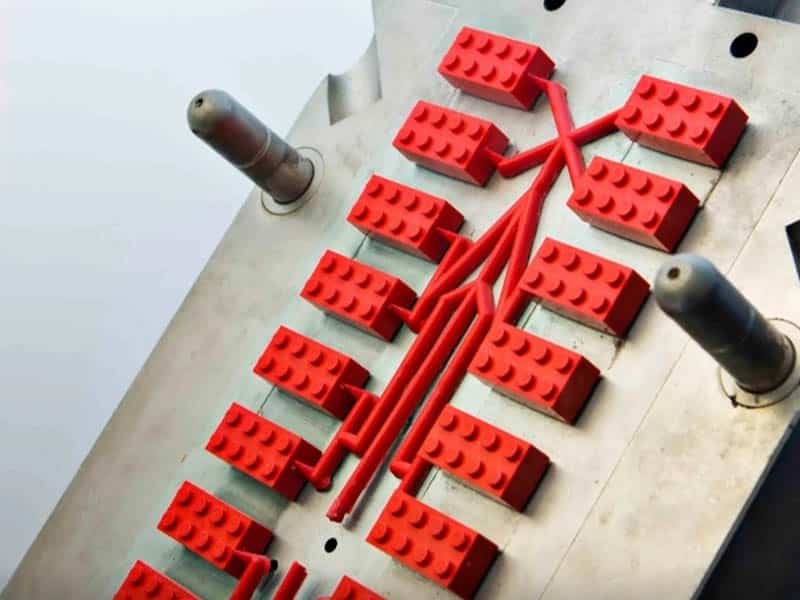
Injection molding is a process in which molten plastic is injected into a steel or aluminum mold under high pressure to form the desired shape. This technique offers several advantages that make it ideal for toy manufacturing:
High Precision and Detail: The process reproduces complex shapes with fine surface textures, perfect for small toy parts, interlocking components, and detailed figures.
Scalable Efficiency: Once the mold is ready, thousands of identical parts can be produced with consistent quality — a must for large toy production runs.
Material Flexibility: Injection molding supports multiple plastics and colors, offering wide creative freedom.
Safety and Durability: Toys made through injection molding resist wear, impact, and temperature changes, ensuring long-lasting performance for children’s play.
Low Cost per Unit: After the initial mold investment, production costs are significantly reduced for medium to high volumes.
Flexible Production: We support small batches, prototypes, and high-volume runs with quick turnaround, meeting diverse customer needs.
Materials for Toy Injection Molding
Selecting the right material is essential in toy injection molding. Toy-grade plastics are formulated to meet safety standards, ensure durability, and enable processability. Common plastics used in toy production include:
- ABS (Acrylonitrile Butadiene Styrene): Known for impact resistance and surface finish quality, ABS is suitable for rigid toys like building blocks, action figures, and structural components.
- Polypropylene (PP): PP offers flexibility and fatigue resistance, ideal for components with living hinges, such as doll joints or toy vehicle doors.
- PVC (Polyvinyl Chloride): Used for soft toys, PVC can be formulated to meet non-toxicity and phthalate-free standards.
- PS (Polystyrene): Lightweight and easy to mold, PS suits cost-effective toys and outdoor components. Zhongde recommends PS material for parts that require dimensional stability and smooth surface finishes.
- PC (Polycarbonate): PC offers high durability and transparency, making it ideal for premium or clear toys.
Zhongde Custom Toy Injection Molding Process
From concept to production, Zhongde provides an end-to-end service pathway that ensures smooth project management and efficiency.
DFM & Mold Design: Clients can share 3D drawings or sketches, and our engineering team conducts a design-for-manufacturing (DFM) review to optimize structure, wall thickness, and tooling feasibility.
Mold Fabrication: Using precision CNC and EDM machining, Zhongde produces molds with high accuracy. Depending on production volume, we offer both steel molds for mass production and aluminum molds for prototyping or small batches.
Material Preparation & Injection: Selected toy-grade resins are dried and melted before being injected under controlled pressure and temperature to form consistent parts.
Cooling & Ejection: Our optimized cooling channels ensure even shrinkage prevention while automated ejection systems handle parts efficiently.
Post-Processing & Assembly: After molding, toys may undergo trimming, surface painting, pad printing, ultrasonic welding, or multi-part assembly. We ensure every final piece meets safety and aesthetic expectations before packaging.
Regulatory Compliance in Toy Injection Molding
Compliance with global toy safety standards is critical. Our services adhere to:
ASTM F963 (USA): Mandatory mechanical and chemical safety standard covering small parts, sharp edges, heavy metals, and phthalates.
CPSIA (Consumer Product Safety Improvement Act, USA): Requires third-party testing and tracking labels; limits lead and phthalates to trace levels.
EN 71 Series (European Union): EN 71-1 (mechanical/physical), EN 71-2 (flammability), EN 71-3 (migration of elements). The most comprehensive toy safety framework.
ISO 8124 (International): Harmonized test methods for mechanical, physical, and chemical hazards accepted in over 50 countries.
REACH & RoHS (EU): Restricts hazardous substances in plastics and additives.
Additional requirements: Canada’s SOR/2011-17, Australia’s AS/NZS ISO 8124, and China’s GB 6675.
Common Toy Molding Challenges and Zhongde Solutions
Even with injection molding, toy production can face challenges. Below are the most frequent issues, their root causes, and Zhongde’s proven solutions.
Warping and Shrinkage
Uneven cooling rates between thick and thin sections, differential shrinkage of semi-crystalline resins, or poor cooling channel layout. Toys with large flat surfaces or ribs are especially vulnerable.
We optimize mold design and cooling channels to prevent deformation.
Sink Marks
Thick sections (bosses, ribs, or logos) cool and shrink more slowly than surrounding thin walls, pulling the surface inward and creating visible depressions.
Uniform wall thickness and strategic rib placement reduce surface defects.
Short Shots (Incomplete Filling)
Low injection pressure, high material viscosity, narrow flow paths, or trapped air in thin toy features.
Controlled injection parameters ensure complete mold filling.
Flashing
Excessive injection pressure, worn mold parting lines, or insufficient clamping force on multi-cavity family molds.
Precision mold tolerances (±0.005 mm) and high-tonnage clamping pressures prevent excess material.
Weld Lines
Multiple flow fronts meet in visible areas (common in multi-gate toys)。
Centralized gravimetric dosing systems and flow-leader design in molds to relocate weld lines to non-visible areas.
Small-Batch and Prototyping Solutions
While injection molding is known for high-volume production, Zhongde also caters to small-batch orders and early-stage prototypes. Using rapid aluminum tooling and optimized molding parameters, we support production runs as small as a few hundred pieces. This flexibility allows toy designers and startups to test new ideas, validate functionality, or launch limited collections cost-effectively.
Get Started with Zhongde
Whether you are developing your first plastic toy prototype or expanding mass production for retail, Zhongde delivers tailored toy injection molding solutions that combine quality, efficiency, and flexibility. Contact us today to discuss your toy project — our engineering team will provide material recommendations, manufacturability feedback, and a free quote to accelerate your product development journey.
FAQ
Can small batches be produced?
Yes. Zhongde supports small batch runs and rapid prototyping using aluminum molds or flexible tooling.
Can recycled material be used?
Some toy-grade plastics can include recycled content. We ensure all recycled material meets safety and quality standards.
Can complex shapes and multiple colors be molded?
Yes. We offer multi-cavity molds, family molds, and post-processing options for color and assembly customization.
How quickly can a prototype be produced?
Prototypes can typically be delivered within weeks, depending on complexity, allowing fast market testing and iteration.